Tag Archives: movie reviews

Man On Fire

The Fall Guy

by Hope Madden

From the first notes of the Kiss classic playing behind a montage of stunt moments across cinema’s recent history, The Fall Guy defines itself as a love story. This movie loves stunt performers.

And why not?

It’s pretty clever in getting audiences on board by casting maybe the most lovable movie star working today, Ryan Gosling, as Colt Seavers, hapless stuntman. (Yes, that is the same name used by Lee Majors in the kitschy 80s TV detective show, but mercifully the PI angle is dropped for the feature.)

Colt, longtime stunt double for megastar Tom Ryder (Aaron Taylor-Johnson), is smitten with the camera operator on his latest film. But an accident takes him out of the stunt game and out of Jody’s (Emily Blunt) life. That is, until producer Gail (Hannah Waddingham) comes calling: Ryder’s missing and Colt must fill in on set or Jody’s first film as a director, Metalstorm, will go bust.

When David Leitch made his feature directing debut in 2017 with Atomic Blonde, his decades in stunt work and stunt coordination showed. His instinct was not just to string together one fascinating piece of stunt choreography after another (though he did do that). He took advantage of his cast’s natural physical abilities to help sell the action.

And where Charlize Theron is grace, strength and ability, Gosling and Blunt are goofy and adorable. That’s the vibe from start to finish. The leads share a sweet, infectious chemistry. Winston Duke is underused but fun as Metalstorm’s stunt coordinator and Colt’s bestie, and Taylor-Johnson’s full-blown McConaughey riff is a riot.

The film has some glaring problems, though. The Fall Guy’s heart is not really in its plot, and that’s fine. But at a full and noticeable 2  hours, the film needed to prune. The opening third of the film could easily lose 15 minutes because the sheer chemistry between Blunt and Gosling carries the love story without the heavy and lengthy exposition.

It’s too long and it feels it, but there’s still much to be delighted by. The set pieces are fun, funny, practical and quite impressive. And they lead to a climax that lets a full cast of stunt performers and technicians just go to town.

The Fall Guy is not the most memorable way to spend two hours and 9 minutes (you will want to stick it out through the credits, BTW), but it is mindless—if overlong—fun.

Reinvention

New Life

by Rachel Willis

From the first moments of director John Rosman’s film, New Life, you know you’re in for a tense thriller.

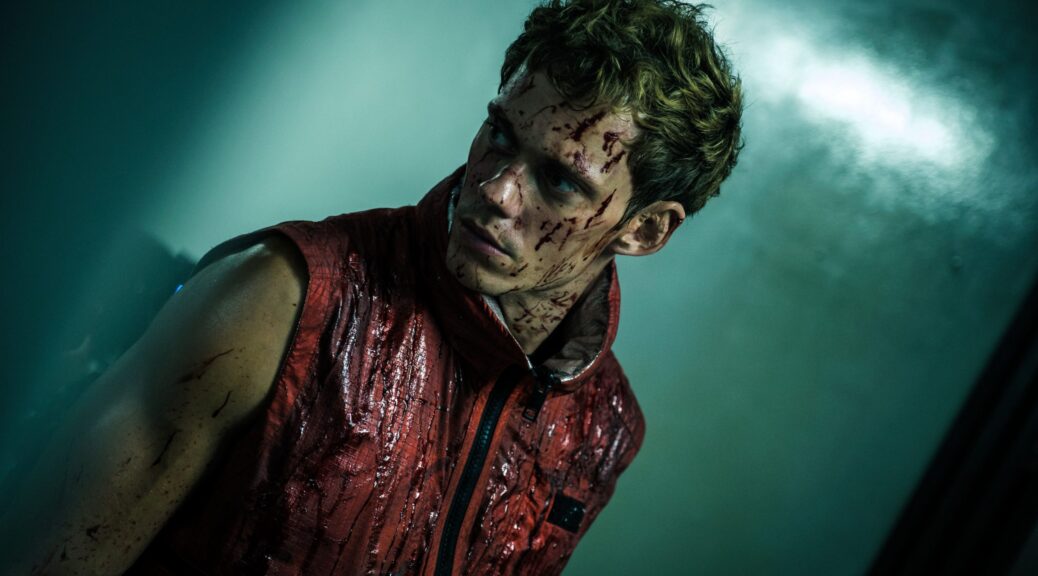
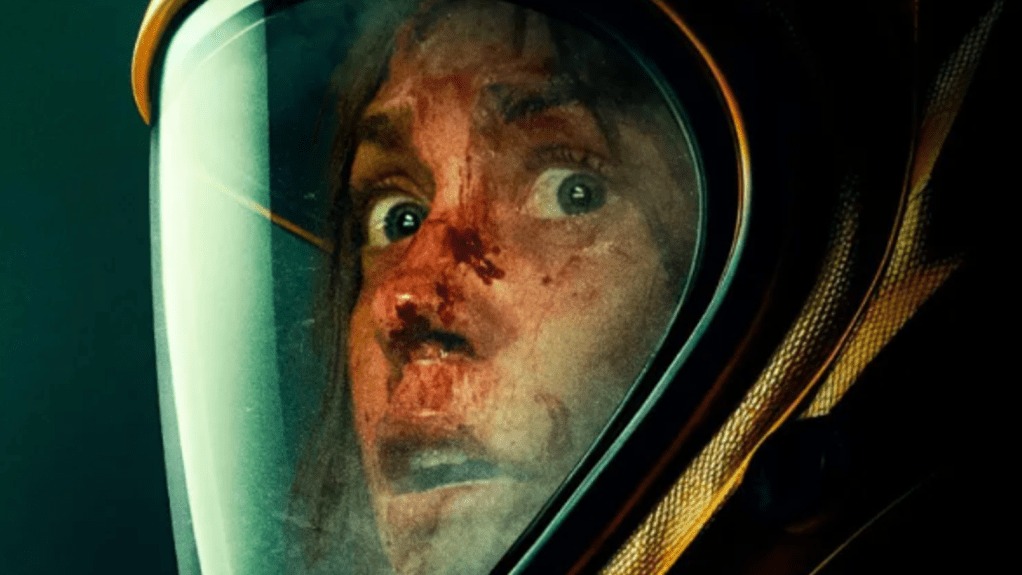
The film opens with the sounds of a woman in distress. Soon, the woman (Hayley Erin) is revealed, covered in blood and trying walk to quickly but nonchalantly down a quiet neighborhood street.

After this opening leaves you wondering just what is going on, the film slows down, giving our main character, Jessica, (and us) time to catch her breath. New characters are introduced, including a fixer named Elsa (Sonya Walger). Her task is to hunt down Jessica.

The reasons for Jessica’s bloody entrance, and the race to find her, are unveiled slowly. Flashbacks are worked into the film at perfect moments, revealing just enough to keep us intrigued until more is revealed.

As the focus of the film shifts between Jessica and Elsa, we learn a little more about each character, and Rosman effectively fosters sympathy for both. Not an easy feat when one is a hired gun, and the other is a walking time bomb. Erin brings a sweet naivety to Jessica; Walger’s Elsa is more pragmatic.   

The film’s only poor moment is filled with too much exposition. What starts as a tense conversation with just enough information to answer a few questions, devolves into something more tedious. Rosman would have done better to show more of this information through additional flashbacks, but it is a small misstep in an otherwise finely crafted film.

There is also a certain cynicism to the film, whether intentional or not, that emphasizes mean world syndrome. Those who show kindness to Jessica suffer for that choice, and one wonders if this intentional. Are we really to believe that kindness is a liability?

Perhaps we are. As New Life heads toward its climax, our focus shifts away from Jessica and toward Elsa. Our pragmatist understands things in a way Jessica does not, and it’s an interesting dynamic that leads us through this world. For a first feature, Rosman has brought to the table a film that preys on some of our most innate fears, those that might be especially raw considering recent global events. Add in some truly disturbing and bloody practical effects, and we’re given a thriller that is effectively terrifying.

Lords of the Ring

In the Company of Kings

by George Wolf

Resting somewhere between personal memoir and an episode of ESPN’s 30 for 30, In the Company of Kings is buoyed by undeniable layers of passion and gratitude.

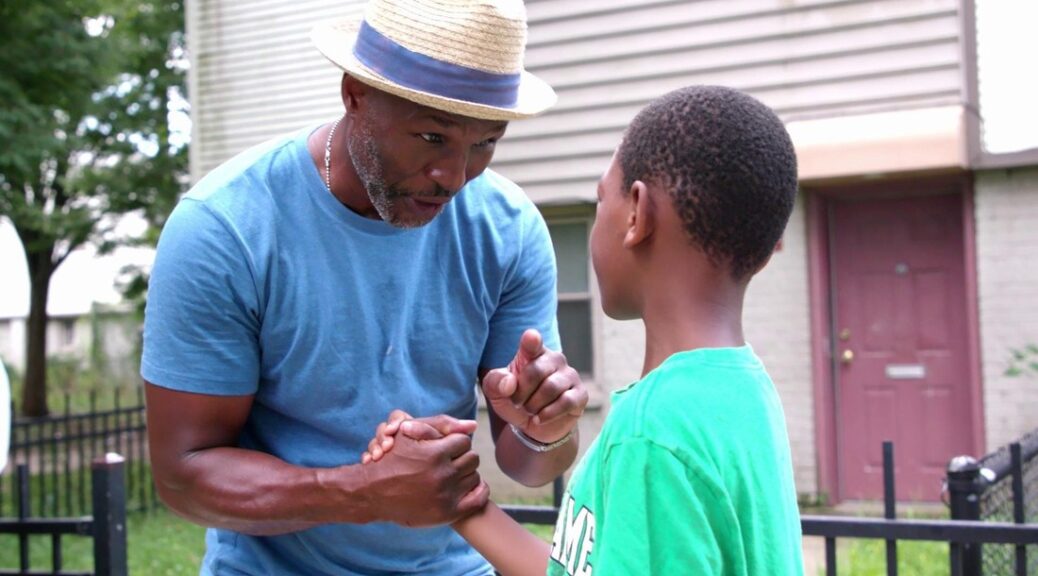
In a brisk 70 minutes, director Steve Read and producer/narrator Robert Douglas reveal the inspiration they have taken from legends of boxing, while putting the spotlight on 8 boxers with very personal stories of struggle, sacrifice and success.

Drawn by the lure of the fight game, Douglas tells of his move from Liverpool to a hardscrabble section of North Philadelphia. Feeling a kinship with those desperate to make it out, Douglas waxes poetic about his love for the men who found their ticket in the ring, with some impressively framed camerawork dotting the gritty landscape.

From legends such as Larry Holmes, Bernard Hopkins and Ernie Shavers to current prospect Tyhler Williams, the film delivers first person accounts of life in the fight game, sparked by intimate details of poverty, racism, hustle, crime and punishment.

Unsurprisingly, Muhammed Ali is the biggest obsession here. But though the filmmakers pay homage to the Greatest through time spent with promoters Don King and Bob Arum and manager Gene Kilroy, these segments only feed the scattershot nature of the film’s focus.

The passion of Read and Douglas is never in doubt, and while that passion sometimes threatens to run the film off the rails, it’s also provides the glue that keeps the film’s heart intact.

By that quick final bell, In the Company of Kings makes clear that it just wants to say ‘thank you’ for the fight, and the courage. More casual sports fans may not be moved, but those with a love of boxing—especially during the 70s and 80s—will take a few hits to the feels.

Desperate and Dateless

Prom Dates

by Hope Madden

Back in 2019, Olivia Wilde debuted Booksmart, a “smart, funny, raunchy yet quite loving tale of two besties.” It was maybe the best high school buddy comedy since Superbad, and held onto that coveted top spot until last year’s Bottoms.

Prom Dates, Kim O. Nguyen’s first feature after years of directing comedy for TV, treads similar hallowed halls.

Jess (Antonia Gentry) and Hannah (Julia Lester) have been BFFs their whole lives. Back in middle school they swore a blood oath that their senior prom would be the best night of their lives.

What? A blood oath. With actual blood. About prom. Who’s buying this?

Fast forward a few years. It’s the night before senior prom, and Hannah, who can bear no longer to pretend she’s heterosexual, breaks up with her clingy boyfriend (Kenny Ridwan) just as Jess finds her douchebro boyfriend (Jordan Buhat) cheating.

What?! They’re both dateless for prom! Which is [checks notes] how most kids go to prom anymore.

Nguyen’s episodic background shows, and writer D.J. Mausner’s years writing sketch comedy amplifies the film’s lack of cohesion. They stitch together one borrowed situation after another as the girls wildly seek a new date for the dance. Each attempt is meant to bring with it edgy hilarity—Shots! A stripper! Vomit! A cannibal (I’m sorry?)! Oh, the hijinks.

Ensemble performers are saddled with one-note caricatures (Ridwan is especially abused in his thankless role). But the reason Prom Dates doesn’t land the same way the others did is that the bond between Jess and Hannah never feels authentic or lived-in.

Lester elevates what she can with an instinct for earnest comedy, but every mistake Hannah makes has such a tidy resolution, you can’t help but feel the filmmakers’ sketch/TV influences.

As much as I wanted to like this movie, it’s simply a watered down Booksmart with no real stakes.

Triple Fault

Challengers

by George Wolf

“This is about winning the points that matter.”

Honestly, the relationship triangle at work in Challengers could probably work outside of a tennis court, but director Luca Guadagnino does wonders with the sports angle for a completely engrossing drama of intimate competition.

Anchored around a three-set challenge match between Art Donaldson (West Side Story‘s Mike Faist) and Patrick Zweig (Josh O’Connor from The Crown), the film drifts back and forth in time as it immerses us in their series of entanglements with tennis phenom Tashi Duncan (Zendaya).

Through Grand Slam victories, unrealized potential and one career-ending injury, writer Justin Kuritzkes examines how three distinct personalities push and pull throughout their young lives, and their differing views on the points that matter.

Kuritzkes is married to filmmaker Celine Song, and his script often feels like the cynical cousin of her Oscar nominated triangle drama Past Lives.

Guadagnino’s camera is a sumptuous wonder, often following the three leads like an on-court volley, and then coming in close to focus on sweat, bare skin, and the constant draw of physical contact. The tennis action itself is also intense and effective, buoyed by blistering forehands barreling down our sightline and some frenzied POV shots during the final set.

Zendaya, Faist and O’Connor deftly handle the growth of their characters from fresh-faced teens to hardened adults. All three deliver terrific, well-defined performances, and Challengers quickly becomes a film to get lost in, where you’re happy to be hanging on every break point.

Thinning the Herd

Humane

by Hope Madden

When Brandon Cronenberg decided to be a filmmaker—one keenly interested in corporeal horror—it felt both natural and brave. Natural because his father David is perhaps the all-time master of body horror. Brave for the same reason.

It turns out, Brandon Cronenberg is a natural. (If you haven’t, you should definitely see his films.) But the family affair doesn’t end with him. Daughter Caitlin Cronenberg’s feature debut Humane sets her slightly apart from the fellas, though.

Written by Michael Sparaga, Humane takes place in a near future where climate catastrophe requires that each country on earth purge itself of 20% of its population. A euthanasia program allows citizens to enlist, helping the nation reach its quota, helping the planet survive, and providing government funds to the family bereaved. But with numbers lower than expected, the nation is considering conscription.

Cronenberg’s tale focuses on one family in particular. Patriarch Charles York (Peter Gallagher), retired from a storied career as a TV journalist, invites his four adult children (Jay Baruchel, Emily Hampshire, Sebastian Chacon, Alanna Bale) home for an important dinner. Dad, and the kids’ stepmother Dawn (Uni Park), have decided to enlist.

With this dinner bombshell Cronenberg sets in motion a realistically cynical look at a government’s opportunistic manipulation of a thinning of the herd. She then zeroes in on the festering effect of privilege on the York children, simultaneously throwing shade at the “salt of the earth” types who are as violently judgmental as their position allows.

Gallagher’s great as the martyr desperate to leave a legacy, and Hampshire’s ferociously self-serving villain is a joy. Enrico Colantoni delivers the most fascinating, frustrating character, easily stealing every scene.

Humane makes two horror films in a row, following last week’s Abigail, where you don’t really root for anyone. Everyone’s terrible and it’s slightly disappointing that anyone survives at all. Worse, the big revelation that pushes characters toward the climax is unearned.

More problematic is that there are two fairly substantial omissions—not plot holes, just conveniently placed gaps in clarification that feel like intentional cheats. Beyond that, the writing often feels slightly behind the times. Jared York’s (Baruchel) claim that he “doesn’t see color” feels more suited to a tale set a decade ago rather than in a near-future dystopia.

These writing concerns don’t sink the effort entirely. An intriguing premise buoyed with darkly comedic performances, plus a brisk 90 minute runtime keep Humane entertaining, but it’s hard not to feel a bit disappointed.

Somewhere in Time

The Beast

by Hope Madden

“Fulfillment lies in the lack of passion.”

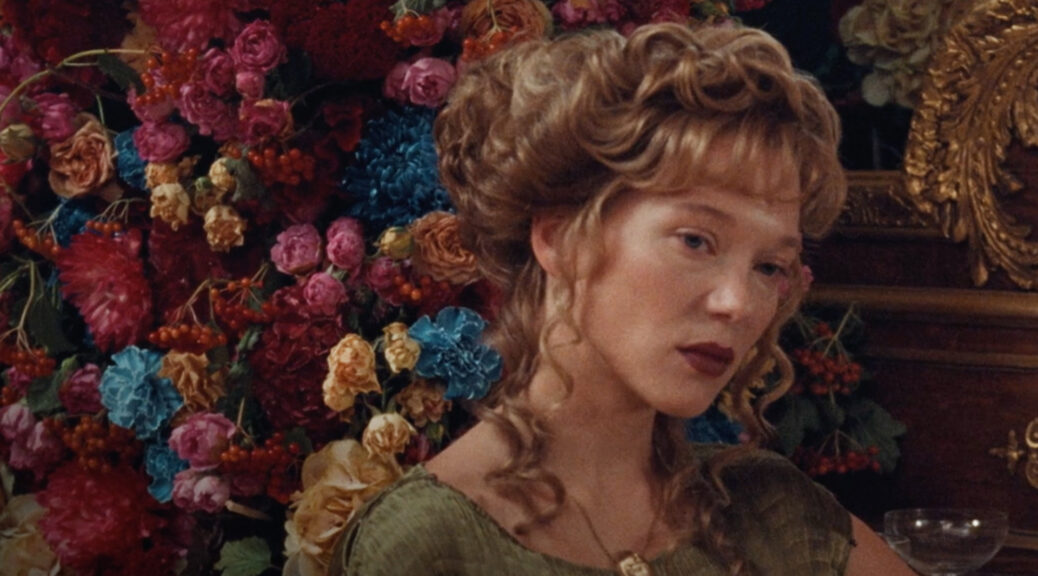
Filmmaker Bertrand Bonello reconsiders the Henry James novella The Beast in the Jungle, blending the fear of intimacy with a larger scale societal pressure to minimize our unruly natures.

Bonello, writing with Guillaume Bréaud and Benjamin Charbit, crosses three timelines to expand and deepen his vision: Paris 1910 during the Great Flood; LA 2014, when a 4.4 earthquake struck as the incel phenomenon was born; and back to Paris in 2044, long after AI has become master to humanity’s subservient species.

These are the timelines in which Gabrielle (Léa Seydoux) struggles with “the beast” — an overwhelming sense of impending disaster. Memories of Gabrielle’s previous lives are ignited by the 2044 cleansing process meant to minimize human emotion, making people more reliable workers.

In each storyline, Gabrielle dances around a possible relationship with Louis (George MacKay). Pressure to conform and the idea that emotional safety is key to happiness are obstacles to their passion. But it is Gabrielle’s obsession with impending doom that forever keeps the two from connecting.

Bonello revives James’s age-old terror of intimacy with the modern terror of AI, and does it with such nuanced humanity that even the occasional spot of stilted dialog can be forgiven.

Seydoux, forever a marvel of raw human emotion, perfectly animates the fight against sanding down the rough edges of humanity. But Bonello throws a wild curve ball with his 2014 plot, tangling psychotic entitlement within the story’s misunderstood concept of intimacy.

The shift in focus could pull you from the hypnotic romance of the other timelines were it not for the exceptional work of his cast. MacKay treads a narrow path of gentlemanly interest, effortlessly illustrating the heartbreaking proximity between tenderness, apathy and contempt.

The Beast is a lush affair, gorgeous to look at and nimble in the way themes echo across eras. It’s also an elegant reminder that an unruly heart is nothing to silence.

It’s a Brawl World After All

Boy Kills World

by George Wolf

Boy Kills World feels like a film the gamers are going to love.

For the rest of us, it offers a hyper stylized, uber-violent riff on The Hunger Games by way of Kill Bill while it harbors Deadpool aspirations and a coy surprise waiting in act three. But while the style is never in doubt, real substance is lacking.

Bill Skarsgård supplies plenty of physical charisma as “Boy,” whose family was murdered years earlier during a lethal event known as “The Culling.” Once a year in this post apocalyptic landscape, enemies of ruling matriarch Hilda Van Der Koy (Famke Janssen) are rounded up and executed for sport and entertainment. Though Boy survived the assault, he was left deaf and mute, and has spent several years training with a mysterious shaman (Yayan Ruhian) until the time was right to take his revenge.

Against the shaman’s advice, Boy feels the time is now. And though he’s evolved into a singular killing machine, Boy is not alone. He has an inner voice adopted from a favorite video game (veteran voice actor H. Jon Benjamin), and a fever dream imagination that often bickers with the ghost of his rebellious little sister (Quinn Copeland).

On the eve of another Culling, Boy’s martial arts rampage of blood begins, and one of his early weapons of choice is a cheese grater.

Go on.

In his debut feature, director and co-writer Moritz Mohr skillfully captures the frenzied, level-up mayhem of video games. Cinematographer Peter Matjasko, composer Ludvig Forssell and editor Lucian Barnard help complete the gaming pastiche, while the screenplay keeps Benjamin supplied with commentary that’s consistently fueled by meta-sarcasm that never hits the master level of self-awareness.

As Boy starts up the ladder of the Van Der Koy family (Michelle Dockery, Brett Gelman, Sharlto Copley) and their Head of Security (Jessica Rothe), he falls in with a group known as the Resistance before the narrative takes its unexpected pivot.

Boy’s states of delirium have already opened the door for an unreliable narrator, so Mohr commits considerable effort (and exposition) in making sure we understand the twist.

But what we need even more is a reason to care.

Much like Hardcore Henry almost ten years ago, the film’s gaming mindset results in action that is visually exciting, but as emotionally empty as a “Play again?” reset. There’s never any motivation to get invested in the stakes, or in the attitude that often reeks of desperation hipness.

So while Boy Kills World‘s target audience may be blown away, those outside the center will find some tedium inside this finely orchestrated mayhem.

There’s no doubt you’ll find a few new uses for your cheese grater.

Arachnophobia

Infested

by Hope Madden

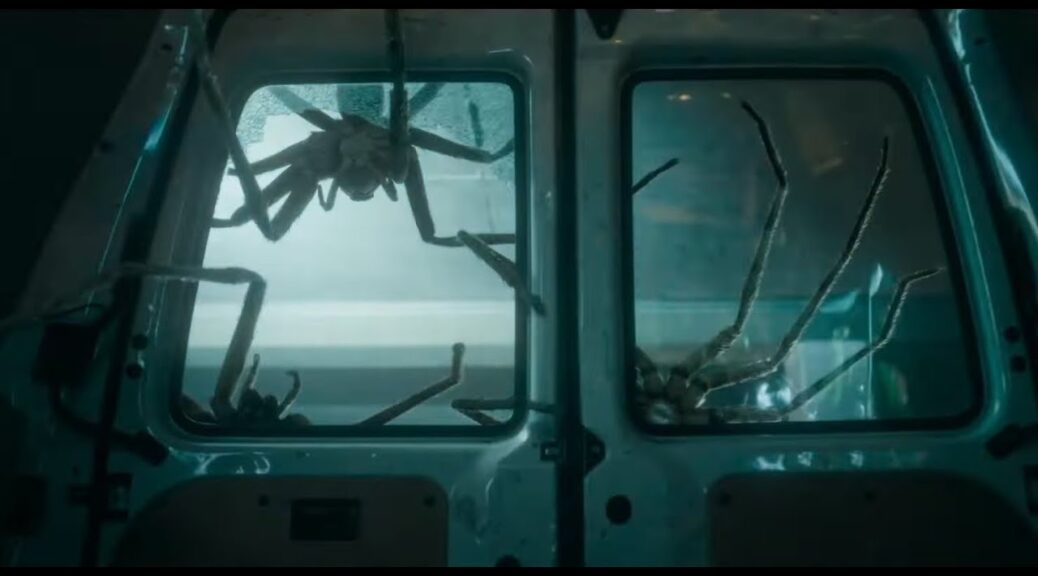
Remember Quarantine (or Rec, for that matter)? Remember that moment when you realize you’re locked inside an apartment building, trapped with the ravenous undead?

OK, so that but spiders.

Nice, right?!

Sébastien Vanicek’s Infested (co-written with Florent Bernard) doesn’t steal from other movies as much as it mines the primal fears that have plagued the most effective horror movies from the beginning.

Kaleb (Théo Christine) is a well-meaning dumbass. He lives in a dump of a high rise, but he loves the place, loves the neighbors, and cherishes the memory of his mother. That’s why, unlike his sister Manon (Lisa Nyarko), Kaleb doesn’t want to leave. In fact, he’s made a cozy home in his room for any number of exotic little beasties—the latest of which he just picked up from the super-secret back room of a dodgy shop.

“Careful, it’s probably poisonous,” the shopkeeper calls as Kaleb carries his rubber-banded plastic container and the very poisonous, extremely nasty spider inside.

Jumping ahead, Kaleb does not heed the warning.

Apartment horror can be so creepy when it’s done well: dark hallways, grimy elevators, creepy parking garages, too many floors until safety, and loads of places for spiders to nest. Vanicek makes excellent use of these spaces, and he shows solid instincts for creature FX—when to go practical, when to show little, when to show lots (and lots and lots). But his film succeeds on the lived-in world of these neighbors and friends.

Christine (Gran Turismo) delivers messy, loving authenticity as the guy who cares deeply and screws up everything. Finnegan Oldfield (Final Cut) is even better, and he brings with him a realism and natural charisma that cements the rag tag band of survivors as human beings to root for.

That realism doesn’t extend fully to the arachnid horror. Their reproductive mechanisms, their feeding habits, growth spurts—well, they’re not supposed to be from deep space or a nuclear accident, so the extremes seen in the building definitely strain credibility.

But damn! That doesn’t make it any less creepy! You may find yourself shaking out your sleeves and pulling the drawstring tight around your hoodie. I did. But at least the cockroaches are under control.