Tag Archives: MaddWolf

Fright Club: Best Canadian Horror

There are thousands of horror films that can be called Canadian horror, in that so many movies are filmed in Canada. But we weren’t looking for Hollywood on the cheap. No, we wanted to celebrate the subversive yet polite genre filmmaking flowing from the Canucks themselves. We were looking for films made by Canadians in Canada.

We didn’t want to zero in on just one guy, either. There are so many films by David Cronenberg that could have made the list (indeed – maybe he deserves an entire podcast?!), but we limited ourselves to one so that we could celebrate some of the horror variety you can find bundled up in America’s Hat.

5. Bloody Knuckles (2014)

Canadian writer/director Matt O’s Bloody Knuckles offers a gloriously nasty, Troma-esque mash note to freedom of speech.

Pasty malcontent Travis (Adam Boys) writes the underground comic series Vulgarian Invasions. One inflammatory comic book too many lands him on the hit list of local thug Leonard Fong, who saws off his disrespectful drawing hand. But even if Travis is ready to surrender, that dismembered appendage is not.

The effort and tone are reminiscent of the bargain basement horror comedies of Frank Henenlotter (think Frankenhooker) – good-natured but wildly tasteless. Unlike Henenlotter or the Troma films O so clearly admires, Bloody Knuckles has a point to make. Art should be dangerous. Safety is the refuge of the cowardly.

Most faults can be forgiven this film, especially if you pine for the silly fun of low-budget horror of a bygone time. Or if you just really like free speech.

https://www.youtube.com/watch?v=fwvjfv6C_Qs

4. American Mary

Twin sisters, Canadians, and badasses Jen and Sylvia Soska have written and directed a smart, twisted tale of cosmetic surgery – both elective and involuntary.

Katharine Isabelle (Ginger Snaps) stars as med student Mary Mason, a bright and eerily dedicated future surgeon who’s having some trouble paying the bills. She falls in with an unusual crowd, develops some skills, and becomes a person you don’t want to piss off.

The Soskas’ screenplay is as savvy as they come, clean and unpretentious but informed by gender politics and changing paradigms. They also prove skilled at drawing strong performances across the board. Isabelle is masterful, performing without judgment and creating a multi-dimensional central figure. Antonio Cupo also impresses as the unexpectedly layered yet certainly creepy strip club owner.

Were it not for all those amputations and mutilations, this wouldn’t be a horror film at all. It’s a bit like a noir turned inside out, where we share the point of view of the raven haired dame who’s nothin’ but trouble. It’s a unique and refreshing approach that pays off.

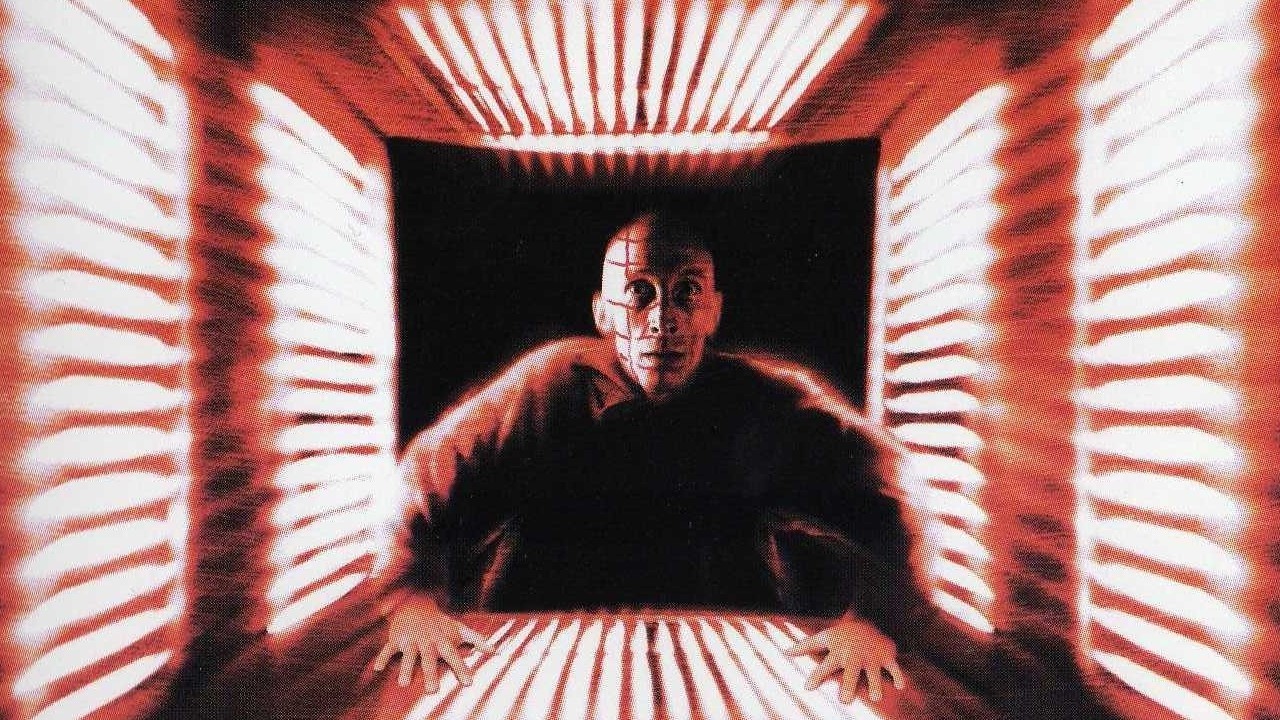
3. Cube (1997)

Making his feature directing debut in 1997, Vincenzo Natali, working from a screenplay he co-wrote, shadows 7 involuntary inmates of a seemingly inescapable, booby trapped mazelike structure. Those crazy Canucks!

Cube is the film Saw wanted to be. These people were chosen, and they must own up to their own weaknesses and work together as a team to survive and escape. It is a visually awe inspiring, perversely fascinating tale of claustrophobic menace. It owes Kafka a nod, but honestly, stealing from the likes of Kafka is a crime we can get behind.

There is a level of nerdiness to the trap that makes it scary, in that you know you wouldn’t make it. You would die. We would certainly die. In fact, the minute they started talking about Prime Numbers, we knew we were screwed.

What Natali was able to accomplish within the limitations he has – startlingly few sets, a very small cast, a 20 day shoot schedule – is astounding. An effective use of FX, true visual panache, and a handful of well-conceived death sequences elevate this far above Saw and many other films with ten times the budget.

https://www.youtube.com/watch?v=37EjGw7jV98

2. Ginger Snaps (2000)

Sisters Ginger and Bridget, outcasts in the wasteland of Canadian suburbia, cling to each other, and reject/loathe high school (a feeling that high school in general returns).

On the evening of Ginger’s first period, she’s bitten by a werewolf. Writer Karen Walton cares not for subtlety: the curse, get it? It turns out, lycanthropy makes for a pretty vivid metaphor for puberty. This turn of events proves especially provocative and appropriate for a film that upends many mainstay female cliches. Walton’s wickedly humorous script stays in your face with the metaphors, successfully building an entire film on clever turns of phrase, puns, and analogies, stirring up the kind of hysteria that surrounds puberty, sex, reputations, body hair, and one’s own helplessness to these very elements. It’s as insightful a high school horror film as you’ll find, peppered equally with dark humor and gore – kind of A Canadian Werewolf in High School, if you will.

https://www.youtube.com/watch?v=Zoa1A987A_k

1. Videodrome (1983)

Yes, there are many, many Cronenberg films that could have taken this or any other spot on the countdown. Videodrome was the last true horror and truly Canadian film in his arsenal, and it shows an evolution in his preoccupations with body horror, media, and technology as well as his progress as a filmmaker.

James Woods plays sleazy TV programmer Max Renn, who pirates a program he believes is being taped in Malaysia – a snuff show, where people are slowly tortured to death in front of viewers’ eyes. But it turns out to be more than he’d bargained for. Corporate greed, zealot conspiracy, medical manipulation all come together in this hallucinatory insanity that could only make sense with Cronenberg at the wheel.

Deborah Harry co-stars, and Woods shoulders his abundance screen time quite well. What? James Woods plays a sleaze ball? Get out! Still, he does a great job with it. But the real star is Cronenberg, who explores his own personal obsessions, dragging us willingly down the rabbit hole with him. Long live the new flesh!

Listen to the whole conversation on the FRIGHT CLUB PODCAST.
Day 31: It Follows

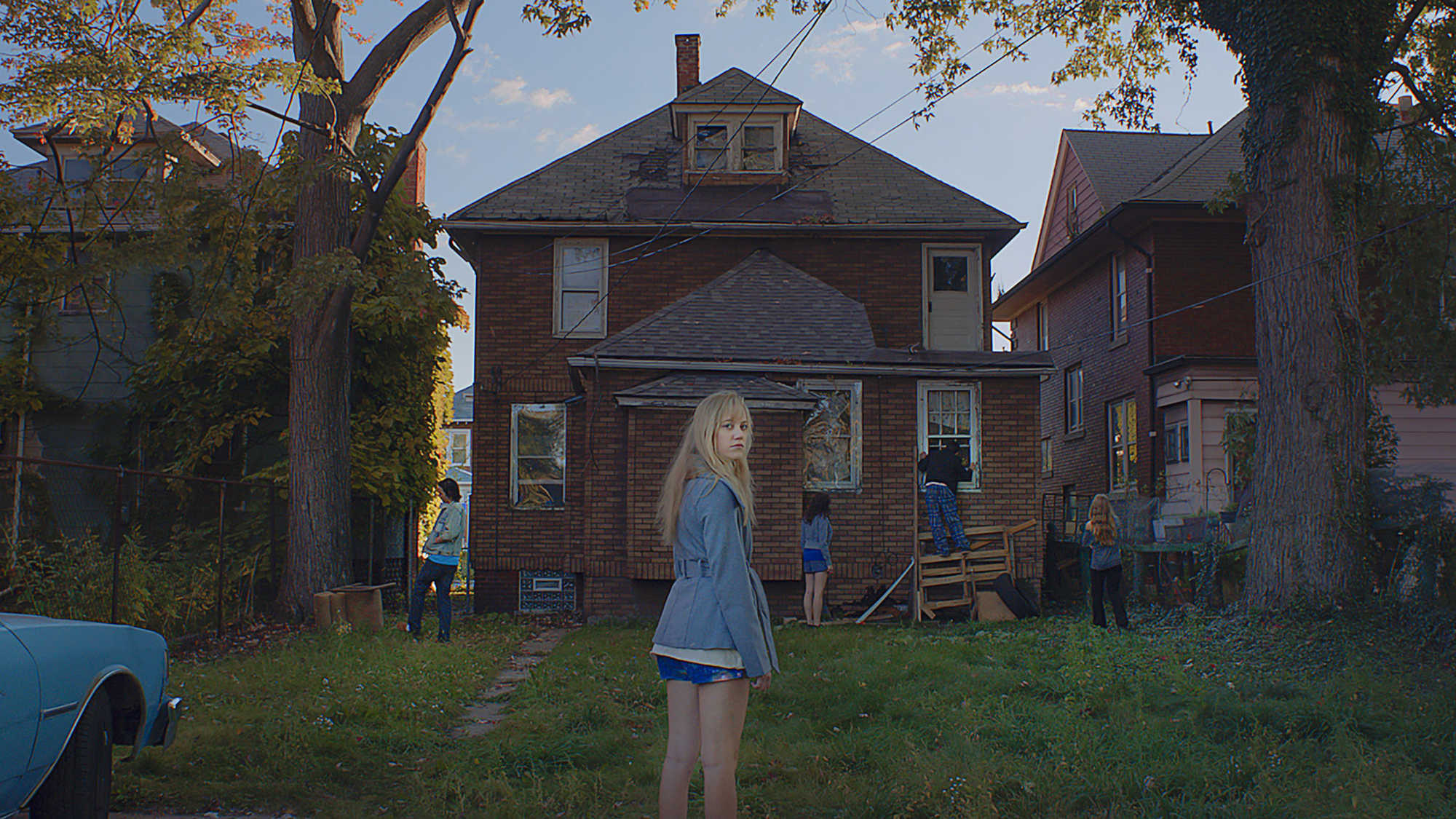
It Follows (2015)

David Robert Mitchell invites you to the best American horror film in more than a decade.

It Follows is a coming of age tale that mines a primal terror. Moments after a sexual encounter with a new boyfriend, Jay discovers that she is cursed. He has passed on some kind of entity – a demonic menace that will follow her until it either kills her or she passes it on to someone else the same way she got it.

Yes, it’s the STD of horror movies, but don’t let that dissuade you. Mitchell understands the anxiety of adolescence and he has not simply crafted yet another cautionary tale about premarital sex.

Mitchell has captured that fleeting yet dragging moment between childhood and adulthood and given the lurking dread of that time of life a powerful image. There is something that lies just beyond the innocence of youth. You feel it in every frame and begin to look out for it, walking toward you at a consistent pace, long before the characters have begun to check the periphery themselves.

And though the entire effort boasts the naturalism of an indie drama, this is a horror film and Mitchell’s influences are on display. From the autumnal suburban loveliness of the opening sequence to the constantly slinking camera, the film bears an unabashed resemblance to John Carpenter’s Halloween.

Mitchell borrows from a number of coming of age horror shows, but his film is confident enough to pull it off without feeling derivative in any way. The writer/director takes familiar tropes and uses them with skill to lull you with familiarity, and then terrify you with it.

Maika Monroe – hot off an excellent turn in The Guest – anchors a cast of believable teens, absent mindedly bored with their adolescence. The performances across the board are fresh and realistic. The gang of buddies movies languidly toward adulthood in a time outside time – their lives speckled with TV antennas and wall phones but also e-readers. This inconcrete time period allows the film a nostalgic quality that any audience can tap into.

The shape shifting entity itself appears in a variety of forms, each a more lurid image direct from some nightmare.

Mitchell’s provocatively murky subtext is rich with symbolism but never overwhelmed by it. His capacity to draw an audience into this environment, this horror, is impeccable, and the result is a lingering sense of unease that will have you checking the perimeter for a while to come.

Listen weekly to MaddWolf’s horror podcast FRIGHT CLUB. Do it!

Be Prepared

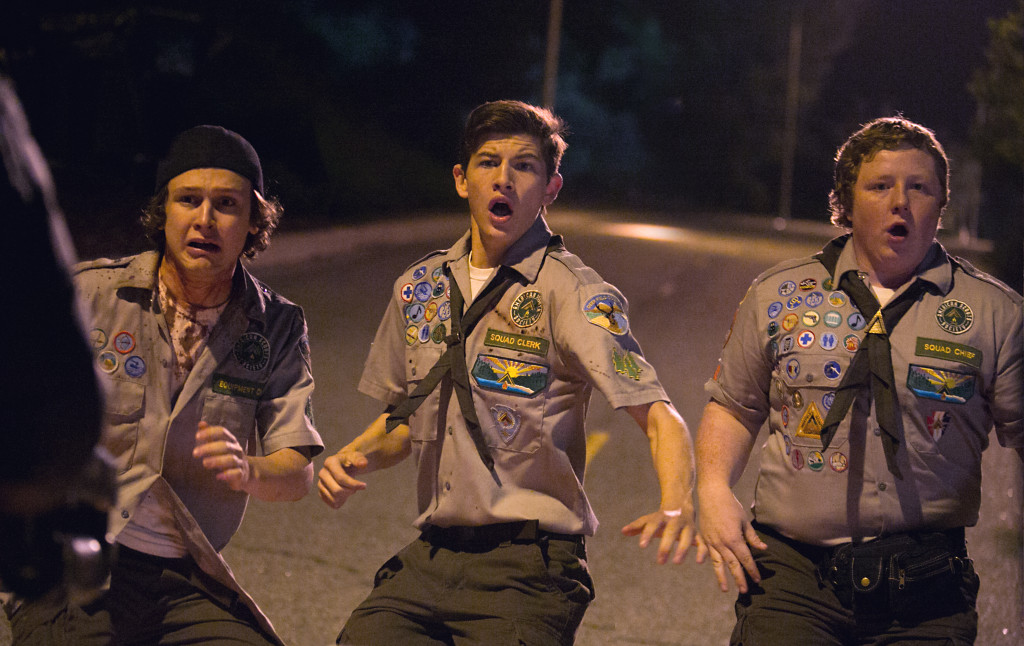
Scouts Guide to the Zombie Apocalypse

by Hope Madden

“Do you know what’s cooler than cool? Scouting!”

OK, maybe not, but Boy Scouts are exactly the people you need on your zombie survival team. Who doesn’t know that? They know how to tie knots properly, they can forage, find their way around in the woods, and they’re handy. They’re prepared. Duh.

Director Christopher Landon, working with a team of writers, puts this wickedly logical premise into action with his new horror comedy Scouts Guide to the Zombie Apocalypse.

The only three scouts left in Scout Leader Rogers’s (a characteristically wacky David Koechner) troop are at a crossroads. Augie (Joey Morgan) thinks scouting is the best. “Scouts forever!”

Carter (Logan Miller) wants to ditch the uniforms and badges before their high school reputations are ruined forever. “Junior year is the year all the girls become sluts!”

Ben (Tye Sheridan) is torn between both really convincing arguments.

And then zombies overrun the town and they’re glad 1) they weren’t invited to the super-secret cool kids’ party, and 2) they have mad scouting skills.

After a series of really impressive dramatic turns (The Tree of Life, Mud, Joe), Sheridan shoulders the lead in this coming-of-age comedy quite well. He’s a talented actor, able to fill out what could have been a one-dimensional good guy role.

Both Miller and Morgan fit the bill as the goofball sidekicks, while pros like Koechner and Cloris Leachman fill out the rank and putrid ensemble. (Not the actors – their characters.)

The film will win no feminism badges, but a story told from the point of view of three 15-year-old boys should probably be preoccupied with boobs and other assorted whatnot.

This is not a family film, though – make no mistake. This is definitely an R-rated movie, but for all its juvenile preoccupations and vulgar body horror, a childlike sweetness runs through it that keeps it forever fun to watch.

Says Augie upon entering a girl’s bedroom, “It smells like pixie stix and hope in here.”

Cleverly written, directed with a keen eye toward detail and pacing, brimming with laughs, gore, friendship, and dismembered appendages – but utterly lacking in cynicism or irony – it’s a blast of a film with a lot to offer.

Verdict-3-5-Stars

Day 30: The Exorcist

The Exorcist (1973)

For evocative, nerve jangling, demonic horror, you will not find better than The Exorcist.

Slow-moving, richly textured, gorgeously and thoughtfully framed, The Exorcist follows a very black and white, good versus evil conflict: Father Merrin V Satan for the soul of an innocent child.

But thanks to an intricate and nuanced screenplay adapted by William Peter Blatty from his own novel, the film boasts any number of flawed characters struggling to find faith and to do what’s right in this situation. And thanks to director William Friedkin’s immaculate filming, we are entranced by early wide shots of a golden Middle East, then brought closer to watch people running here and there on the Georgetown campus or on the streets of NYC.

Then we pull in a bit more: interiors of Chris MacNeil’s (Ellen Burstyn) place on location, the hospital where Fr. Karras’s mother is surrounded by forgotten souls, the labs and conference rooms where an impotent medical community fails to cure poor Regan (Linda Blair).

Then even closer, in the bedroom, where you can see Regan’s breath in the chilly air, and examine the flesh rotting off her young face. Here, in the intimacy, there’s no escaping that voice, toying with everyone with such vulgarity.

The voice belongs to Mercedes McCambridge, and she may have been the casting director’s greatest triumph. Of course, Jason Miller as poor, wounded Fr. Damien Karras could not have been better. Indeed, he, Burstyn, and young Linda Blair were all nominated for Oscars.

So was Friedkin, the director who balanced every scene to expose its divinity and warts, and to quietly build tension. When he was good and ready, he let that tension burst into explosions of terrifying mayhem that became a blueprint for dozens of films throughout the Seventies and marked a lasting icon for the genre.

Remember the stories of moviegoers fleeing the theatre, or fainting in the aisles midway through this film? It seemed like hype then, but watch it today, experience the power the film still has, and you can only imagine how little the poor folks of the early 1970s were prepared.

Even after all this time, The Exorcist is a flat-out masterpiece.

Listen weekly to MaddWolf’s horror podcast FRIGHT CLUB. Do it!

Day 29: The Woman

The Woman (2011)

OK, Halloween’s almost here. It’s time to get real. And by that we mean real nasty.

There’s something not quite right about Chris Cleese (an unsettlingly cherubic Sean Bridgers), and his family’s uber-wholesomeness is clearly suspect. This becomes evident once Chris hunts down a feral woman (an awesome Pollyanna McIntosh), chains her, and invites the family to help him “civilize” her.

The film rethinks family – well, patriarchy, anyway. Notorious horror novelist and co-scriptor Jack Ketchum may say things you don’t want to hear, but he says them well. And director Lucky McKee – in his most surefooted film to date – has no qualms about showing you things you don’t want to see. Like most of Ketchum’s work, The Woman is lurid and more than a bit disturbing. Indeed, the advanced screener I watched came in a vomit bag.

Aside from an epically awful performance by Carlee Baker as the nosey teacher, the performances are not just good for the genre, but disturbingly solid. McIntosh never veers from being intimidating, terrifying even when she’s chained. Bridgers has a weird way of taking a Will Ferrell character and imbibing him with the darkest hidden nature. Even young Zach Rand, as the sadist-in-training teen Brian, nails the role perfectly.

Nothing happens in this film by accident – not even the innocent seeming baking of cookies – nor does it ever happen solely to titillate. It’s a dark and disturbing adventure that finds something unsavory in our primal nature and even worse in our quest to civilize. Don’t even ask about what it finds in the dog pen.

Listen weekly to MaddWolf’s horror podcast FRIGHT CLUB. Do it!

… or Consequences

Truth

by Hope Madden

James Vanderbilt’s Truth is hardly the first film to point out the folly of marrying journalism and profit. From Sidney Lumet’s 1976 masterpiece Network to last year’s creepily spectacular Nightcrawler, cinematic history is littered with brilliant examples of this disastrous partnership.

Truth stands apart for two reasons. 1) The recent history lesson is, in fact, a real life event, and 2) Cate Blanchett stars.

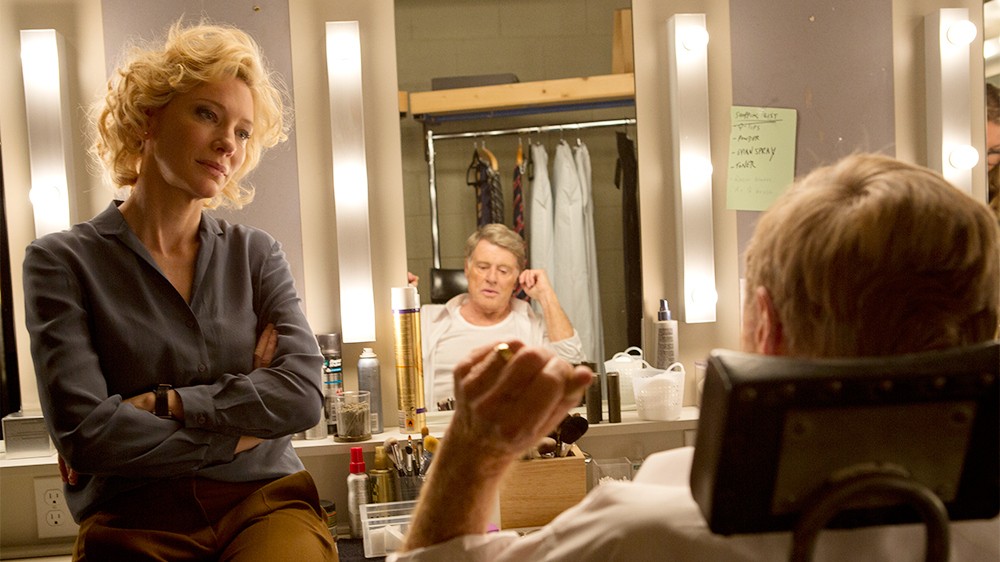
The film is at its best as an excavation of the bits and pieces of a 2004 story produced by Mary Mapes (Blanchett) and reported by Dan Rather (Robert Redford) for Sixty Minutes II, a now-defunct Wednesday night airing of the CBS news program.

In 2004, Mapes – having recently broken the story of Abu Ghraib prisoner abuse – chose to dig in to George W. Bush’s less-than-impressive Texas Air National Guard records. It was the middle of an election during which his opponent John Kerry’s military record was being “swift boated.” It was also the dawn of an age in journalism: make enough noise about an inconsequential detail and the story itself becomes nothing but background noise.

Vanderbilt’s screenplay, based on Mapes’s book “Truth and Duty: The Press, the President, and the Privilege of Power,” chronicles both the details of the reporting and the larger machinations of political power-wielding and corporate gutlessness, landing on some tragic consequences for a population interested in the truth.

Conservative bloggers insisted Mapes used forged documentation – a fact that could never be 100% corroborated or dispelled – and in one of the ugliest scenes of corporate media overreaction and cowardice, CBS fired Mapes and her team and forced Dan Rather into disgraced retirement.

Like Vanderbilt’s screenplay for the David Fincher film Zodiac, Truth is alive with details. Unfortunately, Fincher’s skill behind the camera gave Zodiac the compelling pull of a mystery, where Vanderbilt’s focus waffles between minutia and big picture without an elegant flow.

There are moments of real greatness here, especially as the story begins to crumble before Mapes’s eyes, and decisions made in the heat of story construction come back to haunt her. Basically, Blanchett is perfect, even when the writing fails her, even when the direction feels underwhelming. She’s fiery and raw, creating a character who is naturally in battle at all times.

Redford, on the other hand, comes casually to Dan Rather. He does not look the part. He looks like Robert Redford, which is curious given that he’s playing a public figure. But it isn’t long into the performance that you find an understated, dignified man whose professionalism and scruples have fallen out of fashion.

The film is a scary, flawed, but fascinating look at a frighteningly flawed and fascinating business.

Verdict-3-5-Stars

Day 28: Alleluia

Alleluia (2015)

For a lot of horror fans, French cinema is the way to go. But just north of that border is a country making a name for itself in genre filmmaking, thanks in part to the work of Belgian writer/director Fabrice Du Welz.

In 2004 he released the exquisite Calvaire, marking himself a unique artist worth watching. Ten years later he revisits the themes of that film – blind passion, bloody obsession, maddening loneliness – with his newest effort, Alleluia. Once again he enlists the help of an actor who clearly understands his vision.

Laurent Lucas plays Michel, a playboy conman who preys upon lonely women, seducing them and taking whatever cash he can get his hands on. That all changes once he makes a mark of Gloria (Lola Duenas).

Fans of Calvaire may remember that name. Is there a connection? Du Welz is tantalizingly vague about the specific relationship between Alleluia and Calvaire, although certain sets (a rustic, wooden cross, for instance) beg loads of questions.

Like 1969’s Honeymoon Killers and 2006’S Lonely Hearts, Alleluia is loosely based on the acts of American serial killers Martha Beck and Raymond Fernandez.

Lucas looks like an entirely different man this time around, and Du Welz’s close camera and off angles exaggerate the actor’s teeth, nose and height in ways that flirt with the grotesque. Likewise, the film dwells on Duenas’s bags and creases, heightening the sense of unseemliness surrounding the pair’s passion.

Duenas offers a performance of mad genius, always barely able to control the tantrum, elation, or desire in any situation. Her bursting passions often lead to carnage, but there’s a madcap love story beneath that blood spray that compels not just attention but, in a macabre way, affection.

Slow, atmospheric, and shot in grainy 16mm, Alleluia asks for your patience, but it repays you for that investment. It’s a film busting with desperation, jealousy, and the darkest kind of love.

Listen weekly to MaddWolf’s horror podcast FRIGHT CLUB. Do it!

Day 27: Kill List

Kill List (2011)

Never has the line “Thank you” had a weirder effect than in the genre bending adventure Kill List.

Hitman Jay (a volcanic Neil Maskell) is wary to take another job after the botched Kiev assignment, but his bank account is empty and his wife Shel (an also eruptive MyAnna Buring) has become vocally impatient about carrying the financial load. But this new gig proves to be seriously weird.

Without ever losing that gritty, indie sensibility, Ben Wheatley’s fascinating film begins a slide in Act 2 from crime drama toward macabre thriller. You spend the balance of the film’s brisk 95 minutes actively puzzling out clues, ambiguities and oddities. (The often impenetrable accents don’t exactly help with this sleuthing). The “What the hell is happening?” response to a film is rarely this satisfying.

As Kill List drifts toward its particular flavor of horror, Wheatley pulls deftly from some of the most memorable films of a similar taste. But because the less you know about this film the more fascinating it is, I won’t cover those here except to say: Nicely done!

Performances are disconcerting but well played. Michael Smiley, in particular, offers an outstanding supporting turn as the likeable mate. His longing, good nature, and conflicted religious leanings make not only for an intriguing gun-for-hire, but also an emotional anchor for the film.

For those looking for blood and guts and bullets, Kill List will only partially satisfy and may bewilder by the end. But audiences seeking a finely crafted, unusual horror film may find themselves saying thank you.

Listen weekly to MaddWolf’s horror podcast FRIGHT CLUB. Do it!

Day 26: The Orphanage

The Orphanage (2007)

Some of the world’s best horror output comes from distant lands – like this gem from Spain.

Laura (Belén Rueda) and her husband reopen the orphanage where she grew up, with the goal of running a house for children with special needs – children like her adopted son Simón, who is HIV positive. But Simón’s new imaginary friends worry Laura, and when he disappears, it looks like she may be imagining things herself.

This may seem like a well worn tale at first glance: Is the distraught mother losing her mind, as those around her assume, or is something supernatural afoot? But it’s director Juan Antonio Bayona’s understated approach, along with Rueda’s measured performance and Óscar Faura’s superb cinematography, that buoy the film above the ordinary ghost story.

A scary movie can be elevated beyond measure by a masterful score and an artful camera. Because Bayona keeps the score and all ambient noise to a minimum, allowing the quiet to fill the scenes, he develops a truly haunting atmosphere. Faura captures the eerie beauty of the stately orphanage, but does it in a way that always suggests someone is watching. The effect is never heavy handed, but effortlessly eerie.

The Orphanage treads familiar ground, employing such iconic genre images as the lighthouse, scary dolls, scarecrows, a misshapen child – not to mention the many and varied things that go bump in the night – but it does so with an unusual integrity. Creepy images from early in the film are effectively replayed in the third act to punctuate the very real sense of dread Bayona creates throughout the film. While most of the horror is built with slow, spectral dread, there are a couple of outright shocks to keep the audience guessing.

One of the film’s great successes is its ability to take seriously both the logical, real world story line, and the supernatural one.

Screenwriter Sergio Sánchez doesn’t shortchange his characters or the audience by dismissing Laura’s anguished state of mind, or by neglecting the shadowy side of his tale. The Orphanage is reminiscent of producer Guillermo del Toro’s The Devil’s Backbone, as well as The Others, and even of the classic The Innocents.

The Orphanage has more than the unsettling spectral images of children in common with these films; it boasts a sustaining, powerful female performance. Rueda carries the film with a restrained urgency – hysterical only when necessary, focused at all times, and absolutely committed to this character, who may or may not be seeing ghosts.

A good ghost story is hard to find. Apparently you have to look in Spain.

Listen weekly to MaddWolf’s horror podcast FRIGHT CLUB. Do it!

Fright Club: Best Stephen King Movies

We greet an honest to god expert for this week’s podcast, as Dr. Neil McRobert (you may know him better as NakMak!) joins us to talk about Stephen King films. Neil’s doctoral thesis concerned itself in part with King’s writings, and yet, somehow Hope decided she was still the more appropriate choice to determine the rankings of King films. Listen in and let us know who does a better job with the list. The whole conversation goes on HERE.

5. Dolores Claiborne (1995)

Taylor Hackford helms this generational saga of women in a man’s world. Not truly a horror film, it follows the tale of stern Mainer Dolores (the magnificent –as-always Kathy Bates), who’s been accused of murdering her contemptible boss, Vera Donovan (an outstanding Judy Parfitt). Dolores’s estranged daughter (Jennifer Jason Leigh) returns to the Maine island of her birth to support her mom from being railroaded, as the entire town believes Dolores has already gotten away with murder once.

The film is an achievement in casting above all things. Bates is brilliant, and so is David Strathairn, playing against type as abusive white trash husband and father. Tony Gilroy’s screenplay is delicately faithful to King’s novel, a character-driven drama that boasts some excellent lines – most of them landing in Parfitt’s mouth. Luckily she’s up to the challenge and makes it look easier than it should to be a bitch.

4. Misery (1990)

Kathy Bates had been knocking around Hollywood for decades, but no one really knew who she was until she landed Misery. Her sadistic nurturer Annie Wilkes – rabid romance novel fan, part time nurse, full time wacko – ranks among the most memorable crazy ladies of modern cinema.

James Caan plays novelist Paul Sheldon, who kills off popular character Misery Chastain, then celebrates with a road trip that goes awry when he crashes his car, only to be saved by his brawniest and most fervent fan, Annie. Well, she’s more a fan of Misery Chastain’s than she is Paul Sheldon’s, and once she realizes what he’s done, she refuses to allow him out of her house until she brings Misery back to literary life.

Caan seethes, and you know there’s an ass kicking somewhere deep in his mangled body just waiting to get out. But it’s Bates we remember. She nails the bumpkin who oscillates between humble fan, terrifying master, and put-upon martyr. Indeed, both physically and emotionally, she so thoroughly animates this nutjob that she secured an Oscar.

3. The Mist (2007)

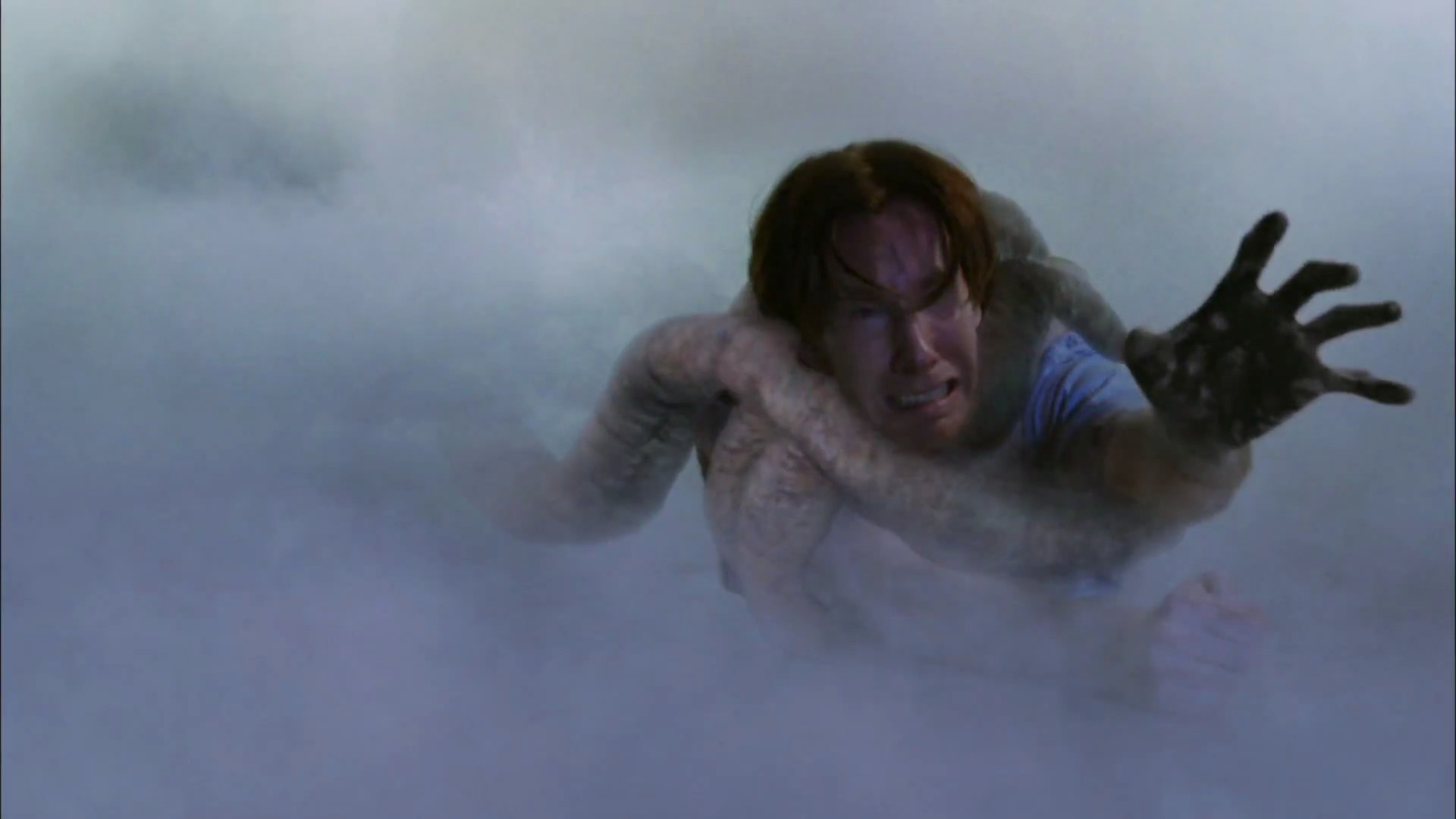
Frank Darabont really loves him some Stephen King, having adapted and directed the writer’s work almost exclusively for the duration of his career. While The Shawshank Redemption may be Darabont’s most fondly remembered effort, The Mist is an underappreciated creature feature.

David Drayton (Thomas Jane) and his young son head to town for some groceries. Meanwhile, a tear in the space/time continuum opens a doorway to alien monsters. So he, his boy, and a dozen or so other shoppers are all trapped inside this glass-fronted store just waiting for rescue or death.

Marcia Gay Harden is characteristically brilliant as the religious zealot who turns survival inside the store into something less likely than survival out with the monsters, but the whole cast offers surprisingly restrained but emotional turns.

The FX look good, too, but it’s the provocative ending that guarantees this one will sear itself into your memory.

2. Carrie (1976)

The seminal film about teen angst and high school carnage has to be Brian De Palma’s 1976 landmark adaptation of King’s first full length novel, the tale of an unpopular teenager who marks the arrival of her period by suddenly embracing her psychic powers.

Sissy Spacek is the perfect balance of freckle-faced vulnerability and awed vengeance. Her simpleton characterization would have been overdone were it not for Piper Laurie’s glorious evil zeal as her religious wacko mother. It’s easy to believe this particular mother could have successfully smothered a daughter into Carrie’s stupor.

One ugly trick involving a bucket of cow’s blood, and Carrie’s psycho switch is flipped. Spacek’s blood drenched Gloria Swanson on the stage conducting the carnage is perfectly over-the-top. And after all the mean kids get their comeuppance, Carrie returns home to the real horror show.

1. The Shining (1980)

It’s isolated, it’s haunted, you’re trapped, but somehow nothing feels derivative and you’re never able to predict what happens next. It’s Stanley Kubrick’s masterpiece rendition of Stephen King’s The Shining.

Though critics were mixed at the time of the film’s release, and both Kubrick and co-star Shelley Duvall were nominated for Razzies, much of the world’s negative response had to do with a needless affection for the source material, which Kubrick and co-scriptor Diane Johnson use as little more than an outline.

A study in atmospheric tension, Kubrick’s vision of the Torrance family collapse at the Overlook Hotel is both visually and aurally meticulous. It opens with that stunning helicopter shot, following Jack Torrence’s little yellow Beetle up the mountainside, the ominous score announcing a foreboding the film never shakes.

What image stays with you most? The two creepy little girls? The blood pouring out of the elevator? The impressive afro in the velvet painting above Scatman Crothers’s bed? That guy in the bear suit – what was going on there? Whatever the answer, thanks be to Kubrick’s deviant yet tidy imagination.

Next week we will look at the best Canada has to offer the genre.

The following week, we are thrilled to tackle our sophomore effort at live recording the Fright Club podcast! We will unspool The Orphanage (2007) at Gateway Film Center on November 11, counting down the best Spanish language horror at 7:30, just prior to the 8pm screening.

In the meantime, help us prep for upcoming podcasts. What filmmaker, actor or actress deserves an entire podcast? Let us know on Twitter @maddwolf, on facebook @maddwolfcolumbus, or leave us a comment here.