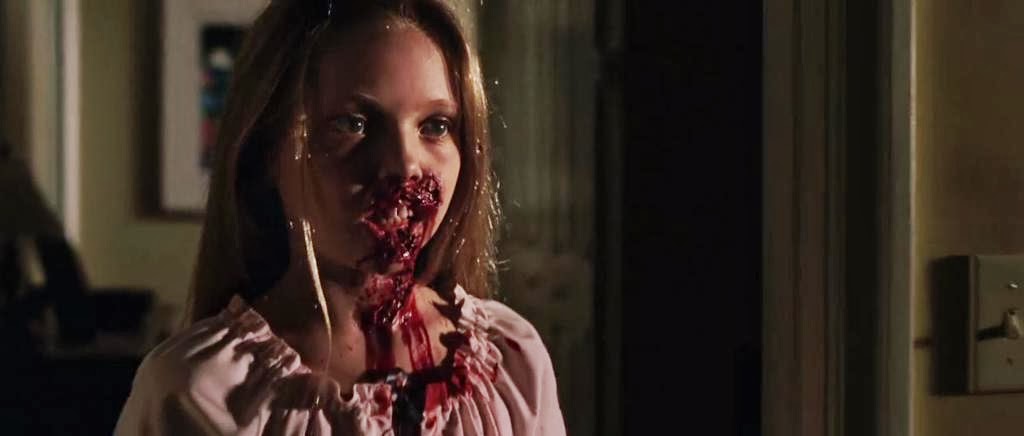
It’s crazy this film hasn’t been seen more. The always outstanding Michael Fassbender takes his girl Jenny (Kelly Reilly) to his childhood stomping grounds – a flooded quarry and soon-to-be centerpiece for a grand housing development. He intends to propose, but he’s routinely disrupted, eventually in quite a bloody manner, by a roving band of teenaged thugs.
Kids today!
The film expertly mixes liberal guilt with a genuine terror of the lower classes. The acting, particularly from the youngsters, is outstanding. And though James Watkins’s screenplay makes a couple of difficult missteps, it bounces back with some clever maneuvers and horrific turns.
Sure, the “angry parents raise angry children” cycle may be overstated, but Jack O’Connell’s performance as the rage-saturated offspring turned absolute psychopath is chilling.
There’s the slow boil of the cowardly self righteous. Then there’s this bit with a dog chain. Plus a railroad spike scene that may cause some squeamishness. Well, it’s a grisly mess, but a powerful and provocative one. Excellent performances are deftly handled by the director who would go on to helm The Woman in Black.
Don’t expect spectral terror in this one, though. Instead you’ll find a bunch of neighborhood kids pissed off at their lot in life and taking it out on someone alarmingly like you.
Listen weekly to MaddWolf’s horror podcast FRIGHT CLUB. Do it!
Plenty of filmmakers remade or reimagined George Romero’s flicks, but none did it as well as Zack Snyder. Snyder would go on to success with vastly overrated movies, but his one truly fine piece of filmmaking updated Romero’s Night of the Living Dead sequel with high octane horror. The result may be less cerebral and political than Romero’s original, but it is a thrill ride through hell and it is not to be missed.
The flick begins strong with one of the best “things seem fine but then they don’t” openings in film. And finally! A strong female lead (Sarah Polley) who seems like a real person. Polley’s beleaguered nurse Ana leads us through the aftermath of the dawn of the dead, fleeing her rabid husband and neighbors and winding up with a rag tag team of survivors hunkered down inside a mall.
In Romero’s version, themes of capitalism, greed, and mindless consumerism run through the narrative. Snyder, though affectionate to the source material, focuses more on survival, humanity, and thrills. (He also has a wickedly clever soundtrack.) It’s more visceral and more fun. His feature is gripping, breathlessly paced, well developed, and genuinely terrifying.
Plus, one truly good guy, one effective change-of-heart character, an excellent slimeball, and solid performances all around keep you invested in the characters.
You’ve got to kind of make up your own mind about the zombie-baby, though.
And who hates Nicole? I do. I hate Nicole.
Listen weekly to MaddWolf’s horror podcast FRIGHT CLUB. Do it!
We spend a lot of time examining skeletons in the closets of major celebrities – the god-awful horror movies where they got their start. But today, we celebrate that handful of aspiring actors who get their start in really decent horror movies – some you’ve probably seen, some you may not have. Before these guys were stars, they lucked into a good one, so check them out!
5. My Little Eye (2002)
This quasi-found footage style gem is hardly flawless, but it creeps around dark ideas and delivers some nasty moments. Five youngsters volunteer to live Real World-style for a year, being filmed for an online channel contest. If they all stay for the full year, they win a million dollars. If anyone leaves, they all lose the cash.
Co-written by James Watkins, who appears again on this countdown, the story remains claustrophobic until the introduction of one handsome, lost hiker (Bradley Cooper) who’s not what he seems.
This is just Cooper’s second feature, releasing shortly after Wet Hot American Summer, and his onscreen presence breathes life to an intentionally drab atmosphere. His character is a catalyst for horrors aplenty, but his performance offers a glimpse of good things to come.
4. A Nightmare on Elm St. (1984)
Johnny Depp made his film debut in Wes Craven’s groundbreaking nightmare. Craven said in interviews that he almost didn’t cast the future heartthrob, thinking he was too pasty and weird for the role, but his daughter’s swooning convinced him.
Depp plays Glen, boyfriend to bossy Nancy (Heather Langenkamp), epicenter of Freddy Krueger’s revenge from beyond. Though his performance doesn’t necessarily predict an Oscar-nominated future, he delivers his lines more thoughtfully than most of the cast. Plus, what a death scene!
3. A Perfect Getaway (2009)
This is another underseen flick, boasting some solid performances that make the most of decent, twisty writing in a identity reversal horror story. In his second feature, Chris Hemsworth is half of one of the three couples traveling through Hawaii that get mixed up in a mystery surrounding serial killers. The ever-versatile Steve Zahn plays beautifully against type, while Timothy Olyphant offers another hard-edged but fun performance.
For the film to work, you need to always be guessing as to who may or may not be the killer. Hemsworth’s performance is one you revisit, is-he-or-isn’t-he style. He’s menacing from his first appearance, but shows some of the versatility that would help him climb quickly out of supporting roles.
2. Eden Lake (2008)
Again with James Watkins! He writes and directs this brutal and brilliant culture clash, but his real talent may be in casting. Michael Fassbender proves here what everyone knows by now – he is a brilliant, limitless actor. His Steve takes girlfriend Jenny (Kelly Reilly – also excellent) to an old quarry about to be revitalized as an upscale community – to the distaste of the low scale community currently roaming its beaches.
Fassbender plumbs his character’s depths. By turns smug and cowardly, superior and kind hearted, Steve is a real human being – the kind rarely seen in a horror film. And while Reilly’s strength is another uniqueness that makes the film stand out, the introduction to Jack O’Connell’s evicerating talent as alpha thug is no doubt what makes Eden Lake so painfully memorable.
https://www.youtube.com/watch?v=_9kuMFPW0YI
1. American psycho (2000)
The star-studdedness just keeps growing! Jared Leto, Josh Lucas, Chloe Sevigny, Justin Theroux, Reese Witherspoon! But, of course, the main reason to remember the film is the lunatic genius of Christian Bale as Patrick Bateman, soulless Wall Street psychopath.
He’s helped, of course, by director Mary Harron’s faultless direction – effortlessly balancing the blackest of comedy with inspired bloodletting. So many scenes are iconic by this point, all of them involving Bale as the beautiful shell of a human being, filled mostly with vacuous musical taste and a lust for blood.
Listen to the whole conversation over on FRIGHT CLUB!
A giddy hatchet to the head of the abiding culture of the Eighties, American Psycho represents the sleekest, most confident black comedy – perhaps ever. Director Mary Harron trimmed Bret Easton Ellis’s novel, giving it unerring focus. More importantly, the film soars due to Christian Bale’s utterly astonishing performance as narcissist, psychopath, and Huey Lewis fan Patrick Bateman.
There’s an elegant exaggeration to the satire afoot. Bateman is a slick, sleek Wall Street toady, pompous one minute because of his smart business cards and quick entrance into posh NYC eateries, cowed the next when a colleague whips out better cards and shorter wait times. For all his quest for status and perfection, he is a cog indistinguishable from everyone who surrounds him. The more glamour and flash on the outside, the more pronounced the abyss on the inside. What else can he do but turn to bloody, merciless slaughter? It’s a cry for help, really.
Harron’s send up of the soulless Reagan era is breathtakingly handled, from the set decoration to the soundtrack, but the film works as well as a horror picture as it does a comedy. Whether it’s Chloe Sevigny’s tenderness as Bateman’s smitten secretary or Cara Seymour’s world wearied vulnerability, the cast draws a real sense of empathy and dread that complicate the levity. We do not want to see these people harmed, and as hammy as it seems, you may almost call out to them: Look behind you!
As solid as this cast is, and top to bottom it is perfect, every performance is eclipsed by the lunatic genius of Bale’s work. Volatile, soulless, misogynistic and insane, yet somehow he also draws some empathy. It is wild, brilliant work that marked a talent preparing for big things.
Listen weekly to MaddWolf’s horror podcast FRIGHT CLUB. Do it!
Prior to 28 Days Later, the zombie genre seemed finally dead and gone. But director Danny Boyle single-handedly resurrected the genre with two new(ish) ideas: 1) they aren’t dead, 2) therefore, they can move really quickly.
You know you’re in trouble from the genius opening sequence: vulnerability, tension, bewilderment, rage, and blood – it launches a frantic and terrifying not-zombie film.
Like zombie god George Romero, though, Boyle’s real worry is not the infected, it’s the living.
Activists break into a research lab and free the wrong effing monkeys.
28 days later, bike messenger Jim wakes up naked on an operating table.
What follows is the eerie image of an abandoned, desolate London as Jim wanders hither and yon hollering for anybody. In the church, we get our first glimpse of what Jim is now up against, and dude, run!
Danny Boyle is one of cinema’s visionary directors, and he’s made visceral, fascinating, sometimes terrifying films his entire career – Shallow Grave, Trainspotting, Millions, 127 Hours – but 28 Days Later is his one true horror film. And it is inspired.
He uses a lot of ideas Romero introduced, pulling loads of images from The Crazies and Day of the Dead, in particular (as well as Adrian Lyne’s Jacob’s Ladder). But he revolutionized the genre – sparking the rebirth of zombie movies – with just a handful of terrifying tweaks.
The vision, the writing, and the performances all help him transcend genre trappings without abandoning the genre. Both Brendan Gleeson and Cillian Murphy are impeccable actors, and Naomie Harris is a truly convincing badass. Their performances, and the cinematic moments of real joy, make their ordeal that much more powerful.
Sure, it’s tough to believe that among the ten or so people still alive in England, two are as stunningly attractive as Murphy and Harris. You know what, though? Boyle otherwise paints a terrifyingly realistic vision of an apocalypse we could really bring on ourselves.
Listen weekly to MaddWolf’s horror podcast FRIGHT CLUB. Do it!
Malala Yousafzai was a remarkable person years before becoming the youngest Nobel Peace Prize recipient at the age of 17. What is impressive about her is not her having survived a head shot by a Taliban gunman in 2012; it’s her courage and strength in speaking out in nonviolent protest. It is her continuing support of children’s right to an education despite the threats to her life and the lives of her family members.
Oscar-winning director Davis Guggenheim (An Inconvenient Truth) presents Malala’s story in his new documentary, He Named Me Malala.
As you might guess, the central relationship explored in the film is between Malala and the man who named her, her father Ziauddin. He named his baby girl after Malalai—a female folk hero that roused dispirited Afghani fighters to war against the British and was shot and killed in the attempt—quite something to live up to.
Ziauddin himself seems something to live up to. A rebel schoolteacher who refused to be silent under increasing Taliban restrictions, he fostered a love of learning in Malala and taught her to raise her own voice against oppression when the voices of so many women and girls were strangled.
The tension of Guggenheim’s film builds slowly throughout, even as the storyline bounces around from stories of the Yousafzai family, to the Taliban’s rise to power in the Swat valley, to Malala becoming an anonymous schoolgirl blogger for the BBC at age 11, to her present day activism, to Malala’s decision to break her anonymity and appear on camera in Pakistan speaking in support of girls’ education. Finally, the tension peaks with footage of the bus on which Malala and two of her friends were shot, not by a gunman, as her father says, but by an “ideology.”
However, the movie is not simply an encomium to an internationally famous humanitarian. Guggenheim shows Malala not just as the extraordinary public figure that she has become, but also as a teenage girl who tussles with her younger brothers, stresses about grades, and crushes on sports figures. Guggenheim also makes some effort to show the mixed response Malala gets in Pakistan, where some people think she’s just a mouthpiece for her father or an agent of Western Imperialism.
And he explores the question of whether Ziauddin, this man who slapped this famous name on Malala, really forced her into this public life without her buy-in. Twice Guggenheim includes Ziauddin’s worry that, upon waking from her coma, Malala would accuse him, “I was a child, you should have stopped me.” And Malala raises her voice to say that she’s made her own choices. That she, “…chose this life and now… must continue it.”
There is something eerily beautiful about Severin Fiala and Veronika Franz’s rural Austrian horror Goodnight Mommy (Ich seh, Ich seh).
During one languid summer, twin brothers Lukas and Elias await their mother’s return from the hospital. They spend their time bouncing on a trampoline, floating in a pond, or exploring the fields and woods around the house. But when their mom comes home, bandaged from the cosmetic surgery she underwent, the brothers fear more has changed than just her face.
Franz and Fiala owe a great debt to an older American film, but to name it would be to give far too much away, and the less you know about Goodnight Mommy, the better.
Inside this elegantly filmed environment, where sun dappled fields lead to leafy forests, the filmmakers mine a kind of primal childhood fear. There’s a subtle lack of compassion that works the nerves beautifully, because it’s hard to feel too badly for the boys or for their mother. You don’t wish harm on any of them, but at the same time, their flaws make all three a bit terrifying.
The filmmakers’ graceful storytelling leads you down one path before utterly upending everything you think you know. They never spoon feed you information, depending instead on your astute observation – a refreshing approach in this genre.
Performances by young brothers Lukas and Elias Schwarz compel interest, while Susanne Wuest’s cagey turn as the boys’ mother propels the mystery. It’s a hypnotic, bucolic adventure as visually arresting as it is utterly creepy.
The film is going to go where you don’t expect it to go, even if you expect you’ve uncovered its secrets.
Listen weekly to MaddWolf’s horror podcast FRIGHT CLUB. Do it!
The Inhabitants is a hodgepodge of horror elements cut and sewn awkwardly together to create a film that isn’t particularly scary and lacks thematic consistency.
But what a good location! The movie was filmed inside the Noyes-Parris House, formerly owned by the father of one of the girls who kicked off the Salem Witchcraft Trials. As such, you come in expecting a certain degree of paranoid atmosphere and the use of witchy tropes.
The story follows a young couple that decides to buy and renovate an old bed and breakfast. The screenwriters make no real attempt to explain how the couple can possibly afford the place or what exactly their goals for it are, but it’s hard to quibble with that issue when the acting quality and opening credit sequence has you squinching up in your seat—not from fear or anticipation, but from a justified suspicion that you’ve accidentally stumbled into a horror movie porn parody, given the minutes of static-y black and white footage featuring folks disrobing, bathing, and humping.
But, the movie then switches tone.
We are introduced to the main leads, who do somewhat exude the sense of ennui of two porn stars well into a long day of shooting, but after the odd soft-core porn sequence, the film covers up the skin and lurches along for another 80 minutes that drag like an ill-sewn leg on a reanimated cadaver.
The wife, Jessica, finds out that the original owner of the house was a midwife, tried and executed for witchcraft. Set in a historical location with ties to the famous trials, midwife/witch in the mix, even with the acting…I’m on board.
But, instead of focusing on this theme, the film tries to incite scares by randomly throwing elements at you that just don’t work or really seem to belong in the same movie, like the bank of AV equipment that allows the husband to spy on Jessica’s increasingly weird antics (but that undermines the likability of the husband), or the smokers in the woods that are intended to seem menacing (but just seem like furtive high school kids with a mild addiction to nicotine), or the dog that appears abruptly and seems attuned to the possible presences in the house (but then disappears unceremoniously), or the ghost Jessica sees…in the washing machine (washing machines aren’t scary).
Despite having access to the famous house, the setting and history of Salem is rather absent save for a brief trip to the Ye Olde Witch Museum. This trip, however, is nicely balanced by the couple’s trip into town…to grocery shop at Whole Foods.
This broke the sense of isolation and vulnerability that the directors were trying to achieve. My suspension of disbelief was shattered as soon as I saw the logo on that paper bag. Do not send your characters to Whole Foods unless you want us to be biting our fingernails worrying about their food budget.
Not bad enough to drunk-watch with friends, I suggest passing on this one. It’s not worth gathering the pitchforks and torches.
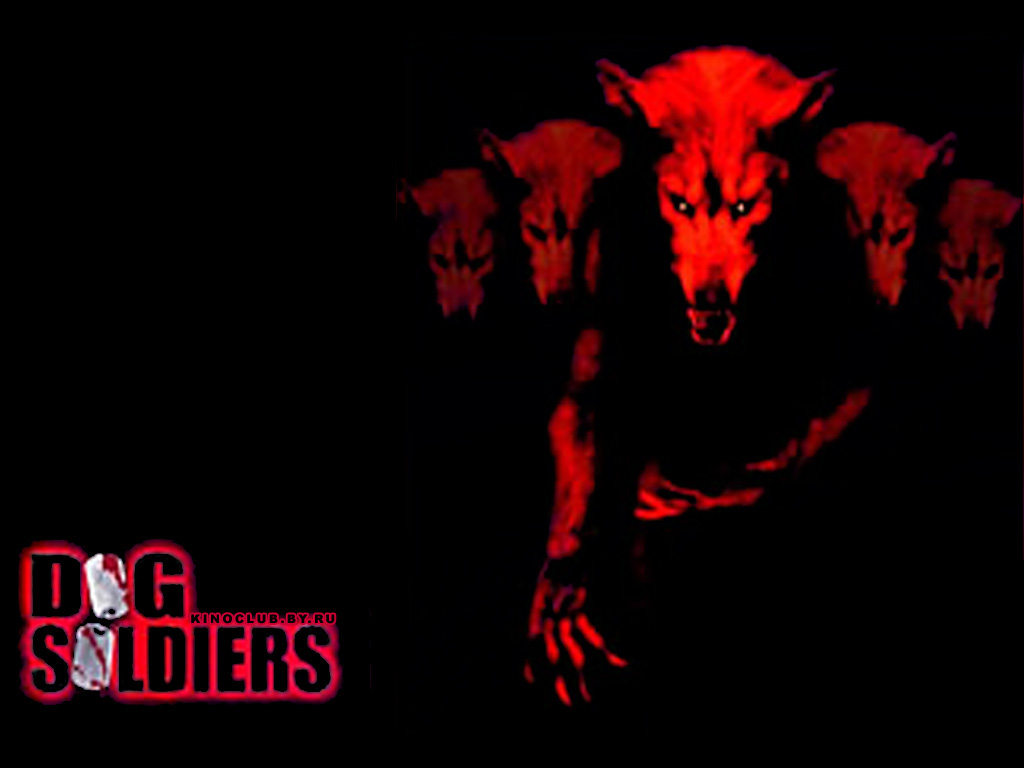
Let’s celebrate October with a fun, bloody, exciting trip to the Scottish highlands. Wry humor, impenetrable accents, a true sense of isolation, and blood by the gallon help separate Neil Marshall’s (The Descent) Dog Soldiers from legions of other wolfmen tales.
Marshall creates a familiarly tense feeling, brilliantly straddling monster movie and war movie. A platoon is dropped into an enormous forest for a military exercise. There’s a surprise attack. The remaining soldiers hunker down in an isolated cabin to mend, figure out WTF, and strategize for survival.
This is like any good genre pic where a battalion is trapped behind enemy lines – just as vivid, bloody and intense. Who’s gone soft? Who will risk what to save a buddy? How to outsmart the enemy?
But the enemies this time are giant, hairy, hungry monsters. Woo hoo!
The fantastically realized idea of traitors takes on a little extra something-something, I’ll tell you that right now.
Though the rubber suits – shown fairly minimally and with some flair – do lessen the film’s horrific impact, solid writing, dark humor, and a good deal of ripping and tearing energize this blast of a lycanthropic Alamo.
Listen weekly to MaddWolf’s horror podcast FRIGHT CLUB. Do it!
Who wants a little romance? How about the tale of a wallflower, the blossom of new love, the efficient use of veterinary surgical equipment, and a good sized freezer?
Few horror films are as touching, funny, heartbreaking, or bloody as May.
Lucky McKee’s 2002 breakout is a showcase for his own talent as both writer and director, as well as his gift for casting. The entire ensemble surprises with individualized, fully realized, flawed but lovable characters, and McKee’s pacing allows each of his talented performers the room to breathe, grow, get to know each other, and develop a rapport.
More than anything, though, May is a gift from Angela Bettis to you.
As the title character, Bettis inhabits this painfully gawky, socially awkward wallflower with utter perfection. McKee’s screenplay is as darkly funny as it is genuinely touching, and we’re given the opportunity to care about the characters: fragile May, laid back love interest Adam (a faultless Jeremy Sisto), hot and horny Polly (a wonderful Anna Faris).
Plus there’s a creepy doll! Hooray!
By day Polly flirts with a confused but needy May during their workday as veterinary assistants, and by night May pines for her tragically hip and beloved Adam. There’s nary a false note here, and those expecting a makeover that will turn May into the blooming rose we always knew she could be have tuned into the wrong film.
May’s vulnerability is painful yet beautiful to watch, and it’s impossible not to hope that cool outsider Adam is telling the truth when he reassures her, “I like weird.”
He’s not a liar, really. It’s just that he couldn’t possibly know how weird things would get.
Adam’s epiphany about May is not just the turning point in the film, but one of the most honestly heartbreaking moments in horror cinema.
McKee’s film pulls no punches, mining awkward moments until they’re almost unendurable and spilling plenty of blood when the time is right. He deftly leads us from the sunny “anything could happen” first act through a darker, edgier coming of age middle, and finally to a carnage laden climax that feels sad, satisfying, and somehow inevitable.
Listen weekly to MaddWolf’s horror podcast FRIGHT CLUB. Do it!