Rumor has it, 2024 is half over. No! Just no.
But in case that hideous lie is in fact the truth, we’ve compiled a list of our favorite films so far. Lots of great stuff still ahead, but we do always mark the occasion of mid-year with a look back, so here you have it, in alphabetical order, the 15 best films of 2024 so far.
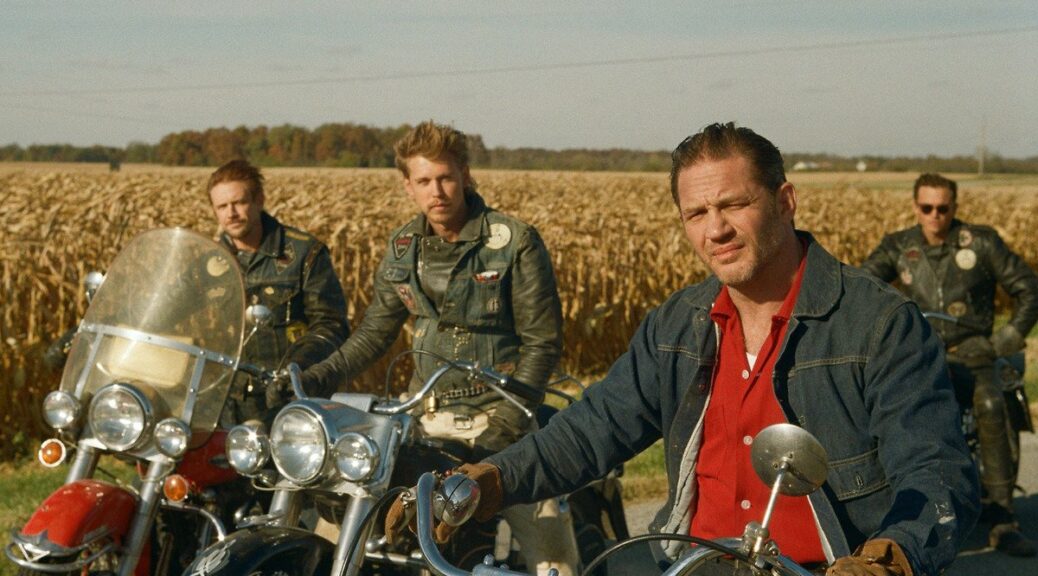
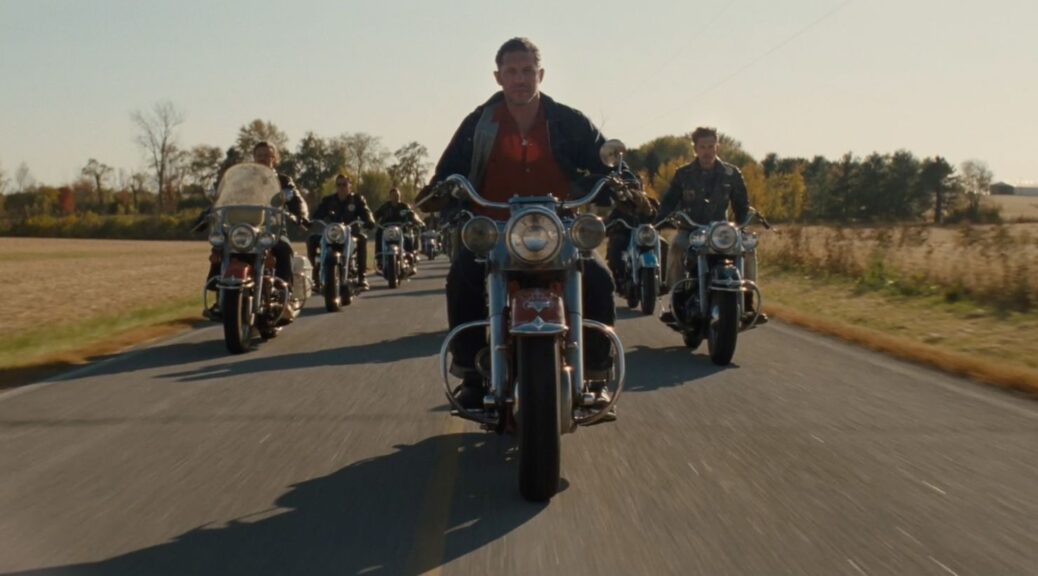
The Bikeriders
Based on Danny Lyon’s 1968 book of photos and interviews of the Chicago-based motorcycle club the Vandals, Jeff Nichols’s tale catches a moment in history. Tom Hardy stalks the screen in a deeply felt performance full of pathos, tenderness and fear. His spiritual opposite, Austin Butler haunts the film, a beautiful phantom forever outside anyone’s grasp. But it is Jodie it is Comer who drives The Bikeriders.
Nichols’s character building and patient, lyrical pace combine with cinematographer Adam Stone’s gritty, gorgeous, picture postcard pastiche for an immersive experience that gracefully echoes the source material. Pages are turned and stakes are raised for these characters, their way of life and the country they call home.
Challengers
The relationship triangle at work in Challengers could probably work outside of a tennis court, but director Luca Guadagnino does wonders with the sports angle for a completely engrossing drama of intimate competition. Anchored around a three-set challenge match between Art Donaldson (West Side Story‘s Mike Faist) and Patrick Zweig (Josh O’Connor from The Crown), the film drifts back and forth in time as it immerses us in their series of entanglements with tennis phenom Tashi Duncan (Zendaya).
Zendaya, Faist and O’Connor deftly handle the growth of their characters from fresh-faced teens to hardened adults. All three deliver terrific, well-defined performances, and Challengers quickly becomes a film to get lost in, where you’re happy to be hanging on every break point.
Civil War
Filmmaker Alex Garland uses a road trip to D.C. to bolster Civil War’s very ambitious ideas with tension-filled looks at the heartland. Through an uneasy stop for gas, the visit to a town the war forgot, a marksman’s simple rules of engagement, and a brutal citizenship test from an unforgettable Jesse Plemons, we’re immersed in a war-torn America that seems authentically terrifying.
But it’s all just a prelude to the carnage ahead. Because once it settles in D.C., the film becomes a war movie that will batter your senses with a barrage of breathless execution. As draining as it often is, Civil War is also an exhilarating, sobering and necessary experience. Smartly written and expertly crafted, the film manages to honor the work of wartime photojournalists as it delivers a chilling vision. It’s one beyond left or right, where the slippery slope of dehumanization breeds a willingly and violently divisible America we always professed to be beneath us.
Dune: Part Two
Dune: Part Two is as breathtaking a vision as Denis Villeneuve’s 2021 Part One. And it’s a better film, benefitting immeasurably from the freedom of exposition that weighed down Part One. The sequel rides intensity and action from its opening segment. Villeneuve’s world-building is again a wonder to behold. He immerses us in this world of sand and savagery, providing fully realized reminders of how much Herbert’s original vision has influenced iconic sci-fi tentpoles such as Mad Max and Star Wars.
While Part Two‘s 2 hours and 45-minutes eclipse the first film, you’ll also find more meat on the bone, and the finale sticks a damn fine landing. Overall, there’s just more earned tension, more thrills (get ready for the worms!) and more character arc to keep you invested in this fight.
Evil Does Not Exist
Two years ago, the magnificent Drive My Car became the first Japanese film to garner a Best Picture Oscar nomination, and earned Ryûsuke Hamaguchi well-earned noms for writing and directing. Now he rewards his wider audience with Evil Does Not Exist (Aku wa sonzai shinai), another thoughtful, gracefully intellectual tale that finds him in an even more enigmatic mood.
And though the one hundred six-minute running time might seem rushed for a filmmaker that has favored three, four, and even five-hour films, Hamaguchi’s storytelling here is more patient than ever. Yoshio Kitagawa’s exquisite cinematography often showcases nature’s beauty in wordless wonder, always buoyed by an Eiko Ishibashi score that is evocative and moving.
Furiosa: A Mad Max Saga
George Miller follows up his epic action masterpiece Fury Road with a look at what made our girl tick, what turns of event turned her into the baddest of all badasses. Writing again with Nick Lathouris, who co-write Fury Road, Miller invests more time in plotting than usual, creating a 15-year odyssey rather than a breathless and breakneck few day adventure.
Miller remains as true to his vision of the wasteland as he was back in ’79’s original Mad Max, but there is a depth to the storytelling here that sets it apart. We’ve had four films to see what turned Max Rockatansky mad, made him what he is. Now Miller lays out a single story that serves as both a thrilling prelude to Fury Road and a rich origin story in its own right. Plot does not take a front seat to action, though, so strap in for more glorious road wars.
Hit Man
What better way to have some breezy fun with our identity-challenged times than by embellishing the true-life story of one Gary Johnson? Johnson was a phony hitman in Texas who would don different disguises working undercover work for the police. After a 2001 article in Texas Monthly profiled his adventures, various screenwriters toyed with the project. And though Johnson died in 2022, he can sleep well knowing Richard Linklater and Glen Powell’s Hit Man finally does him proud.
Linklater’s direction is slick and well-paced, with a vibe that recalls a winning mix of Fletch whodunnit, Spy humor and Ocean’s 11 sex appeal. But Hitman still feels very much in-the-moment, with a repeated focus on how our point of view can shape our reality, and how our path to change starts by being honest with ourselves.
That’s right, Powell and Linklater find room for a serious message in Hit Man. But don’t worry, you’ll be having so much fun it won’t hurt a bit.
Immaculate
Working from a script by Andrew Lobel, director Michael Mohan mines the desperate helplessness of Rosemary’s Baby. And star/producer Sydney Sweeney does a fine job of swimming the murky waters of faith, innocence, and the wisdom born of innocence lost.
What’s most stunning is how well two male filmmakers channel female rage. Immaculate digs into the way organized religion constrains, punishes, silences, bullies, vilifies and oppresses women and then unleashes glorious fury. Fearless, cathartic, bloody, beautifully sacrilegious fury.
Inside Out 2
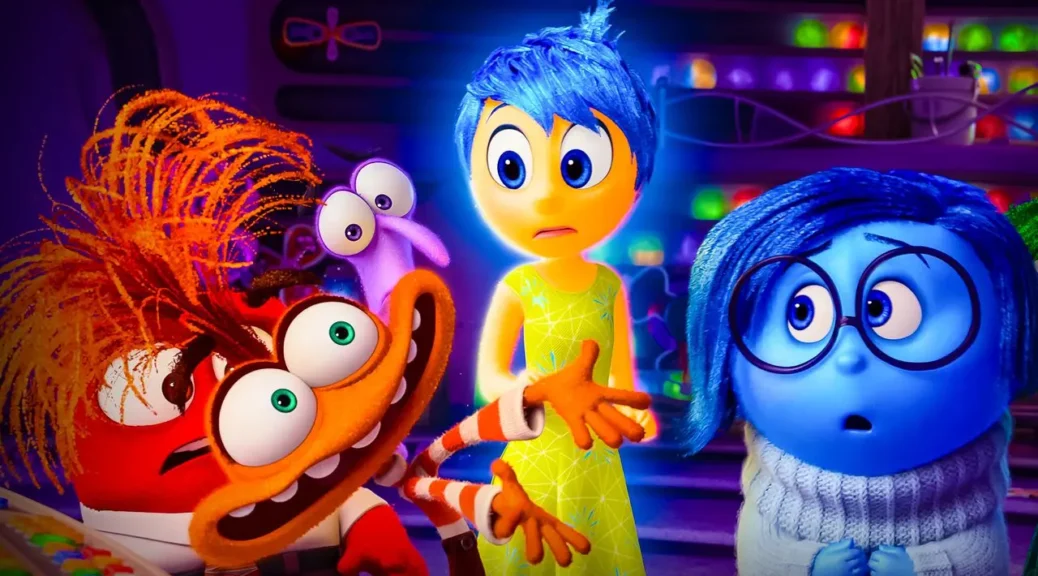
It’s been nine years since Pixar’s Inside Out took us on that wonderful ride through a young girl’s feelings. Almost a decade, and I’m still not over what happened to Bing Bong. Revisiting Riley (voiced by Kensington Tallman) when she hits her teen years seems like a natural exercise. And beyond that, Inside Out 2 delivers enough warmth, humor and insight to make the sequel feel downright necessary.
This is another very clever romp through all that builds the sense of self. The film’s battle between joy and anxiety is relatable for all generations, and it’s filled with levels of creativity, humor, and visual flair that are undeniably fun. Inside Out 2 is a completely entertaining two-hour guide toward understanding – or appreciating – the messy emotions of growing up.
I Saw the TV Glow
Fulfilling the promise of 2021’s We’re All Going to the World’s Fair, writer/director Jane Schoenbrun’s follow-up, I Saw the TV Glow, is a hypnotically abstract and dreamily immersive nightmare of longing.
Justice Smith (Dungeons & Dragons: Honor Among Thieves) is heartbreakingly endearing, while Bridgette Lundy-Paine (Bill & Ted Face the Music) provides a revelatory turn of alienation and mystery. It’s hard to take your eyes of either one of them, with Schoenbrun often framing their stares through close-ups that become as challenging as they are inviting. And that feels organically right. Because Schoenbrun is channelling characters who imagine life as someone else, to again emerge as a challenging and inviting filmmaker with a thrillingly original voice.
Love Lies Bleeding
Awash in the stink and the glory of new passion, Rose Glass’s Love Lies Bleeding treads some familiar roadways but leaves an impression solely its own. Glass blends and smears cinematic gender identifiers, particularly those of noir and thriller, concocting an intoxicating new image of sexual awakening and empowerment. She routinely upends images of power and masculinity, subverting expectations and associations and fetishizing the human body anew.
Anyone who’s seen Glass’s magnificent 2021 horror Saint Maud may be better prepared for the third act than newcomers to the filmmaker’s vision, but it’s a wild and unexpected turn regardless. It’s quite something—bold, original, and wryly funny in the most unexpected moments. There’s heartbreak and horror, sex and revenge, a little magic and a lot of steroids. Glass’s juice has the goods.
Monkey Man
After directing just two short films, Dev Patel moves to features with Monkey Man, an assured and thrillingly violent story of heritage and revenge. Patel teams with screenwriters John Colle and Paul Angunawela—plus producer Jordan Peele—to take some well known themes and move them progressively forward. Rebelling against the totalitarian tactics of Baba Shakti (Makrand Deshpandi) and the Sovereign Party, a forgotten and oppressed population turns to the Monkey Man for deliverance.
And as much as this feels like an origin story, it is a dark one. Patel has indeed delivered a statement, as much about his filmmaking prowess as it is about his worldview. The statement is grim and bloody, so strap in for the thrilling, visceral rise of Patel and the Monkey Man.
Ryuichi Sakamoto: Opus
Sakamoto, the Japanese composer and actor who earned Grammys, BAFTAs, Golden Globes, an Oscar and multiple other awards in his legendary career, was nearing the end of his long battle with cancer when he agreed to one final performance. Director Neo Sora – Sakamoto’s son – presents his father’s farewell with minimalistic virtuosity. There is only Sakamoto, his piano, and his wonderful talent, as a cascade of musical beauty fills in all the colors needed against Sora’s rich black-and-white pallet.
Give Ryuichi Sakamoto: Opus your time and complete attention, and you will be rewarded. This is a man talking to God through his piano.
Just let your soul be enriched.
Snack Shack
Four years ago, Adam Rehmeier’s Dinner In America arrived as a delightfully subversive 90s punk rock rom-com. Snack Shack finds the writer/director still navigating the 90s with hilarious R-rated delight, even as the punk rock ‘tude has been usurped by capitalistic dreams. You’ll know where some of this is going, but Rehmeier’s script delivers foul, horny hilarity, and outstanding turns by both Conor Sherry and Gabriel LaBelle stand out in a letter perfect ensemble. The time stamp is again spot on, with Rehmeier’s freewheeling style crafting an infectious mashup of The Way Way Back, Superbad and Project X.
And most importantly, Rehmeier captures that zest for life on the cusp of adulthood without a whiff of pandering or condescension. The boys will do some growing up during this one crazy summer, and the film will grow up with them. Slowly, parents don’t seem quite as lame, the hijinx aren’t as silly and some important lessons about love, sex, death and friendship hang in the air just long enough to hit just hard enough.
Stop Motion
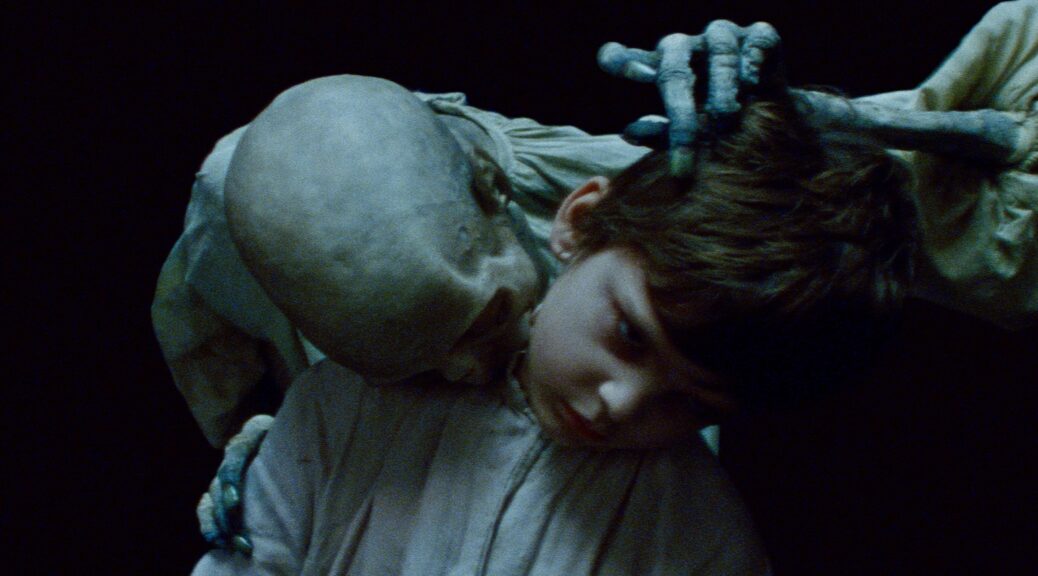
There will be moments when you’re watching Robert Morgan’s macabre vision Stopmotion that you’ll think you see the twists as they’re coming. That’s a trick. Morgan, writing with Robin King, assumes you’ll catch the handful of common horror twists, but he knows that you won’t predict the real story unfolding.
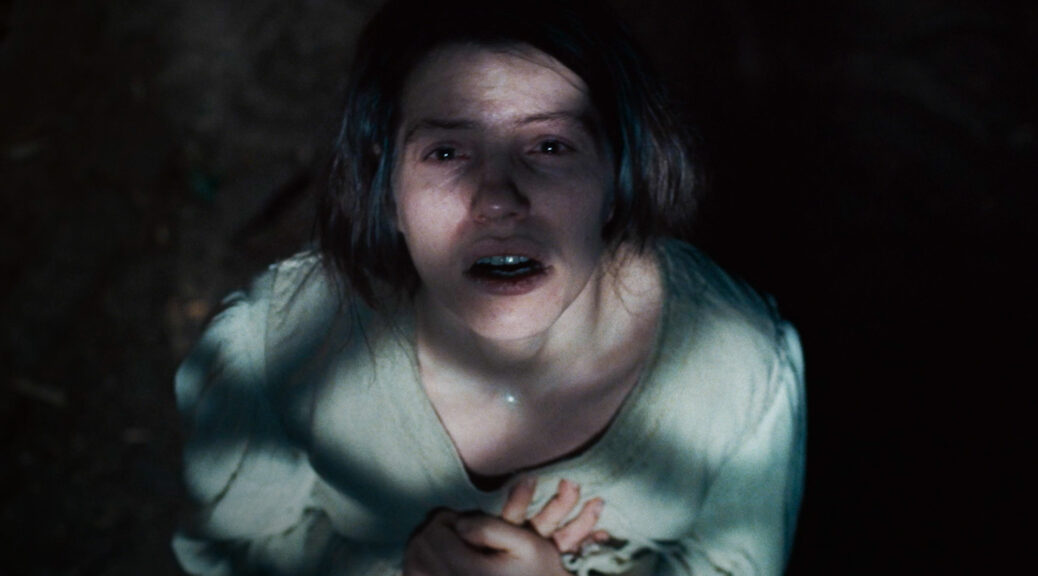
Aisling Franciosi (The Nightingale) is Ella. She’d like to make her own stop-motion animated film, but instead she’s helping her mom finish hers. Ella’s domineering mother Suzanne (Stella Gonet, very stern) is a legend in the field, and she makes Ella feel as if she has no stories of her own to tell.
Stopmotion delivers a trippy, uncomfortable, and deeply felt tale of a struggling artist. This is a descent into madness horror of sorts, but it’s also the story of an artist coming to a realization about what scares her most.