Tag Archives: horror

Fright Club: Best Dance Sequences in Horror

Who’d have guessed that deep inside the most notorious genre in film beats the heart of a dancer? Well, we guessed. You can’t hide your sensitive soul from us! We are here to admire your dancer’s heart and your boogie shoes as we count down the 5 best dance scenes in horror movies!

5. Prom Night (1980)

Saturday Night Fever meets Carrie in this high school slasher that’s utterly preoccupied with disco and Jamie Lee Curtis’s boobs. Who isn’t?! See it for the super-colossal dance-off. Go Jamie Lee and Jamie Lee’s thumbs, go! Is that Leslie Nielsen? Who brought all that glitter? And who’s the killer? Is it the pervy janitor? The disfigured escaped mental patient? The vindictive ex and her hoodlum new boyfriend? It all builds to a bloodbath on prom night, so just go with it and boogie down!

4. Night of the Demons (1988)

Do not be confused – Night of the Demons is not exactly recommended viewing. It’s terrible. Once you get past its dirt-cheap sets and TV-level staging, you’ll notice that Night of the Demons boasts among the most stilted and cardboard dialogue of any film from the Aquanet decade. But Angela (Amelia “Mimi” Kinkade) looks cool. Every goth chick – Fairuza Balk’s Nancy Downs from The Craft in particular – owes Angela a little respect. And professional dancer Kinkade does the demonic transformation justice. The acting is atrocious – all of it – but the film boasts a campy, nostalgic, oh-so-80s quality, and we never disagree with Bauhaus on a soundtrack.

3. Return of the Living Dead (1985)

The film has a lot to boast about. 1) It’s the first film to have zombies moan for braaaaiiiinnnnssss. 2) It’s a funny and clever twist on Romero’s foundation. 3) Eighties scream queen Linnea Quigley dons a ridiculous Eighties punk ‘do to dance nearly naked in a cemetery. Artistry among the headstones. So that’s the point today – wearing nothing but legwarmers and a wistful gaze, Quigley makes the film truly memorable.

https://www.youtube.com/watch?v=HwwpXN_CeSk

2. Calvaire (2004)

This is a weird film from the opening credits, but it takes a sharp turn toward seriously bizarre inside the local pub. As soon as those first piano keys slam and tinkle and those first boots stomp, slide and try to keep time, a whole new narrative takes shape. Things becomes clear in a way that you just don’t want them to, and we know that poor, poor Marc (Laurent Lucas) should not hope the townsfolk will be his salvation.

1. The Silence of the Lambs (1991)

Oh, Jame Gumm. Even after 30 years, your transformation to the tune of the Q Lazzarus song Goodbye Horses is still equal parts compelling and repellant. Ted Levine evolves from hulking, inarticulate caveman to slinking sex pot – sure, a sexpot with another woman’s scalp atop his head, but he’s doing his best! And let’s be honest, you forget all about that other scalp once you witness the Buffalo Bill Skin It Back.

https://www.youtube.com/watch?v=O0ilk2NfOyw

Fright Club: Military Horror

War is hell, which makes it obvious fodder for horror films. It’s kind of amazing there aren’t more that really mine the carnage and insanity of battle, but those that do it well can make social commentary while getting under the audience’s skin. The films we celebrate today do both really well, plus – monsters! Hooray!

5. The Devil’s Backbone (El espinazo del diablo) (2001)

The Devil’s Backbone unravels a spectral mystery during Spain’s civil war. The son of a fallen comrade finds himself in an isolated orphanage that has its own troubles to deal with, now that the war is coming to a close and the facility’s staff sympathized with the wrong side. That leaves few resources to help him with a bully, a sadistic handyman, or the ghost of a little boy he keeps seeing.

Backbone is a slow burn as interested in atmosphere and character development as it is in the tragedy of a generation of war orphans. This is ripe ground for a haunted tale, and writer/director Guillermo del Toro’s achievement is both contextually beautiful – war, ghost stories, religion and communism being equally incomprehensible to a pack of lonely boys – and elegantly filmed.

Plus the ghost looks awesome. Del Toro would go on to create some of cinema’s more memorable creatures, and much of that genius was predicted in the singular image of a drowned boy, bloody water droplets floating about him, his insides as vivid as his out.

Touching, political, brutal, savvy, and deeply spooky, Backbone separates del Toro from the pack of horror filmmakers and predicts his own potential as a director of substance.

4. The Crazies (1973, 2010)

We’re cheating here, but George Romero’s 1973 insanity plague flick offers much, as does its 2010 reboot by the otherwise useless Breck Eisner, so we’re combining.

Just three years after Night of the Living Dead, the master found himself interested in taking his zombiism concepts in a different direction. Romero is more literal in his thoughts on the Vietnam War in this film than in his previous efforts. Two combat veterans are at the center of the film, in which a chemical weapon is accidentally leaked into the water supply to a Pennsylvania town. Those infected go helplessly mad. Military incompetence, the needless horror of Vietnam, and the evil that men can do when ordered to do so are all central conceits in this film.

Romero may not have always had the biggest budget, best actors, or best eye for composition, but his ideas were so far ahead of their time that modern horror would not exist in its current form without him. His ideas were unique, not far-fetched, and they fed the imaginations of countless future filmmakers. You can see Romero’s ideas and images from this film repeated in 28 Days Later, Return of the living Dead, Signal, Cabin Fever, Super 8, even Rambo – and, obviously, in the remake.

Eisner’s version offers solid scares, inventive plotting, and far better performances than expected in a genre film. Both films begin by articulating humankind’s repulsion and fear of infection before introducing the greater threat – our own government. Eisner’s greatest strength is his cast. The eternally under-appreciated Timothy Olyphant and Radha Mitchell, unerringly realistic as husband and wife, carry most of the grisly weight, aided by solid support work from folks who are not afraid to be full-on nuts.

3. Jacob’s Ladder (1990)

Jacob’s Ladder is as unsettling and creepy as any movie you’ll watch. The entire 113 minutes transpires in that momentary flash between life and death, with both light and dark trying to make a claim on Jacob Singer’s soul.

Tim Robbins plays Singer with a weary sweetness that’s almost too tender and vulnerable to bear. In a blistering supporting turn, Elizabeth Pena impresses as the passionate carnal angel Jezebel. The real star here, weirdly enough, is director Adrian Lyne.

Known more for erotic thrillers, here he beautifully articulates a dreamscape that keeps you guessing. The New York of the film crawls with unseemly creatures hiding among us. Filmed as a grimy, colorless nightmare, Jacob’s Ladder creates an atmosphere of paranoia and dread.

By 1990, the Vietnam film has run its course, but with some distance from the post-Platoon glut, the “flashback” crisis that underlines Singer’s confused nightmare feels less stale. It allows the movie to work on a number of levels: as a metaphysical mystery, a supernatural thriller, and a horror film.

2. Dog Soldiers (2002)

Wry humor, impenetrable accents, a true sense of isolation, and blood by the gallon help separate Neil Marshall’s (The DescentDog Soldiers from legions of other wolfmen tales.

Marshall creates a familiarly tense feeling, brilliantly straddling monster movie and war movie. A platoon is dropped into an enormous forest for a military exercise. There’s a surprise attack. The remaining soldiers hunker down in an isolated cabin to mend, figure out WTF, and strategize for survival.

This is like any good genre pic where a battalion is trapped behind enemy lines – just as vivid, bloody and intense. Who’s gone soft? Who will risk what to save a buddy? How to outsmart the enemy? But the enemies this time are giant, hairy, hungry monsters. Woo hoo!

Though the rubber suits – shown fairly minimally and with some flair – do lessen the film’s horrific impact, solid writing, dark humor, and a good deal of ripping and tearing energize this blast of a lycanthropic Alamo.

1. 28 Days Later (2002)

You know you’re in trouble from the genius opening sequence: vulnerability, tension, bewilderment, rage, and blood – it launches a frantic and terrifying not-zombie film. Like zombie god George Romero, though, director Danny Boyle’s real worry is not the infected, it’s the living.

Boyle uses a lot of ideas Romero introduced, pulling loads of images from The Crazies and Day of the Dead, in particular (as well as Lyne’s Jacob’s Ladder).
The vision, the writing, and the performances all help him transcend genre trappings without abandoning the genre. Both Brendan Gleeson and Cillian Murphy are impeccable actors, and Naomie Harris is a truly convincing badass. Their performances, and the cinematic moments of real joy, make their ordeal that much more powerful.

It’s a tribute to the performances, Boyle’s direction, and writer Alex Garland’s (Ex Machina) vision that, even after a dozen or so terrifying set pieces, the most deeply unsettling scene is a quiet conversation between ragged survivor Jim (Murphy) and his alleged salvation, Major Henry West (Christopher Eccleston).

Deja Vu

Carnage Park

by Hope Madden

Writer/director Mickey Keating says his newest effort, Carnage Park, owes a debt to Sam Peckinpah and Peter Watkins – and their influence is certainly apparent, right down to the film’s title, cribbed from Watkins’s desert terror Punishment Park. Still, the film itself boils down to a poor man’s Wolf Creek as directed by Quentin Tarantino.

Actually, that sounds a lot better than it is.

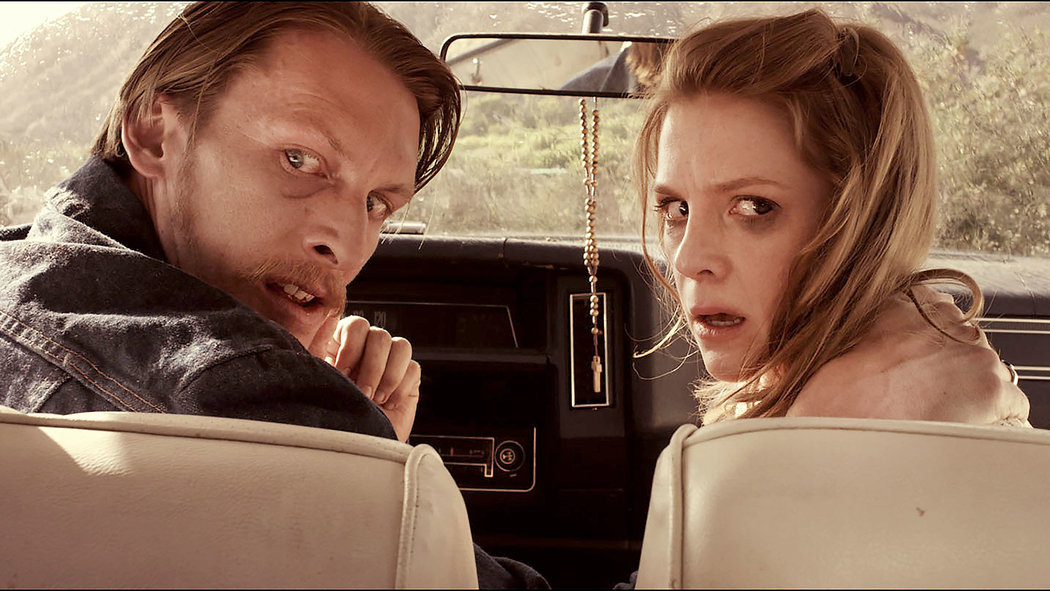
It’s the California desert of 1978. Two armed men carrying a bullet wound, bag of cash and hostage flee a small town bank heist. They lose a trail of cops via a hidden, hilly dirt road.

Big mistake.

All the swagger, dusty boots and retro Seventies soundtrack in the world can’t shield Scorpion Joe (James Landry Hebert) and farm girl hostage Vivian (Ashley Bell) from the much larger danger they’ve just driven into.

Keating’s amassing quite a list and variety of indie horror films. His style is homage. Where Carnage Park aspires to the gritty look and desperate feel of the road pics of the indie American Seventies, last year’s Darling offered a stylish ode to both Kubrick and Polanski.

This approach need not feel derivative. Let’s be honest, Tarantino’s become among the most lauded and watched filmmakers of his generation by doing the exact same thing. The big difference is that QT’s take on all the cinema that has come before is filtered through his own lunatic genius, the final product becoming uniquely, fantastically his own.

There’s something more workmanlike, less inspired in what Keating does.

That’s not to say Carnage Park is an abject failure. A game cast keeps the film intriguing. Bell is deceptively savvy (aside from a few wildly idiotic mistakes, but let’s be honest, screenwriter Keating is to blame for those). Genre favorite Pat Healy chews some scenery, playing against type as the damaged Vietnam vet cliché, while Larry Fessenden (a regular and welcome contributor to Keating’s canon) shows up for a quick and gory moment or two.

But from the bleached out yellow of the scenery to nearly every set piece, Keating’s habit of lifting from other films takes on the feel of compulsion. Larceny, even: The Hills Have Eyes, Texas Chainsaw Massacre 2, Reservoir Dogs – the list is bloody, hip and endless. And tired.

Keating has proven many strengths in his few years in filmmaking, but it is time for him to develop his own style.

Verdict-2-5-Stars

Fright Club: Evil Children

If horror films reflect the hysteria and fear of the moviegoing public, then we, as a planet, are definitely afraid of our children – or of children in general. There are countless examples of murdering, mutant, bloodthirsty, demonic youngsters. Whether they are born monsters or have been claimed by the Dark One, whether they belong to roving bands of toughs or happen to be your own evil offspring, children seem to play upon our deepest fears. So let’s celebrate that today with a count down of the scariest children ever!

6. Let The Right One In (2008)

In 2008, Sweden’s Let the Right One In emerged as an original, stylish thriller – and the best vampire flicks in years. A spooky coming of age tale populated by outcasts in the bleakest environment, the film breaks hearts and bleeds victims in equal measure. Kare Hedebrant‘s Oskar, with his blond Prince Valiant haircut, falls innocently for the odd new girl (an outstanding Linda Leandersson) in his shabby apartment complex. Reluctantly, she returns his admiration, and a sweet and bloody romance buds.

As sudden acts of violence mar the snowy landscape, Oskar and Ali grow closer, providing each other a comfort no one else can. The film offers an ominous sense of dread, bleak isolation and brazen androgyny – as well as the best swimming pool scene perhaps ever. Intriguingly, though both children tend toward violence – murder, even – you never feel anything but empathy for them. The film is moving, bloody, lovely and terrifying in equal measure.

5. The Bad Seed (1956)

The minute delicate Christine’s (Nancy Kelly) husband leaves for his 4-week assignment in DC, their way-too-perfect daughter begins to betray some scary behavior. The creepy handyman Leroy (Henry Jones) has her figured out – he knows she’s not as perfect as she pretends.

You may be tempted to abandon the film in its first reel, feeling as if you know where the it’s going. You’ll be right, but there are two big reasons to stick it out. One is that Bad Seed did it first, and did it well, considering the conservative cinematic limitations of the Fifties.

Second, because director Mervyn LeRoy’s approach – not a single vile act appears onscreen – gives the picture an air of restraint and dignity while employing the perversity of individual imaginations to ramp up the creepiness.

Enough can’t be said about Patty McCormack. There’s surprising nuance in her manipulations, and the Oscar-nominated 9-year-old handles the role with both grace and menace.

4. Them (2006)

Brisk, effective and terrifying, Them is among the most impressive horror flicks to rely on the savagery of adolescent boredom as its central conceit.

Writers/directors/Frenchmen David Moreau and Xavier Palud offer a lean, unapologetic, tightly conceived thriller that never lets up.

A French film set in Romania, Them follows Lucas and Clementine, a young couple still moving into the big rattling old house where they’ll stay while they’re working abroad. It will be a shorter trip than they’d originally planned.

What the film offers in 77 minutes is relentless suspense. I’m not sure what else you want.

Creepy noises, hooded figures, sadistic children and the chaos that entails – Them sets up a fresh and mean cat and mouse game that pulls you in immediately and leaves you unsettled.

3. The Brood (1979)

Dr. Hal Ragland – the unsettlingly sultry Oliver Reed – is a psychiatrist leading the frontier in psychoplasmics. His patients work through their pent-up rage by turning it into physical manifestations. Some folks’ rage turns into ugly little pustules, for example. Or, for wide-eyed Nola Carveth (Samantha Eggar), rage might turn into bloodthirsty, puffy coated spawn. This is Cronenberg’s reimagining of procreation, and it is characteristically foul.

Cronenberg is the king of corporeal horror, and The Brood is among the best of the filmmaker’s early, strictly genre work. Reed and Eggar both are unseemly perfection in their respective roles. Eggar uses her huge eyes to emphasize both her former loveliness and her current dangerous insanity, while Reed is just weird in that patented Oliver Reed way.

But it’s the climactic image of procreation – of motherhood and childbirth – and the way the filmmaker and his leading lady subvert that life-giving moment, turning it into something beastly, that will stick with you.

https://www.youtube.com/watch?v=RVQkJJxjdIM

2. The Omen (1976)

Gregory Peck brought impenetrable gravitas to this film, making everything seem very serious and worthwhile. This could be no ordinary horror flick – not with Atticus Finch in the lead.

Peck plays Robert Thorn, a rising politician and best friend to the President of the United States. He agrees to a delivery room switcheroo when he’s told his own son perished during childbirth, but another baby born simultaneously was orphaned. He brings home the tot, his loving wife (Lee Remick) none the wiser.

Eventually she does develop a sixth sense about the cherubic little Damien, though.
This mid-Seventies gem is gloriously over-the-top with its self-serious approach to the coming of the antichrist. Richard Donner – who would go on to direct a couple Superman movies, a bunch of Lethal Weapons, as well as the Goonies – made a name for himself as a director with this bloated and deadly serious bible thumper.

The film’s sinister elements – Mrs. Baylock, that dog, and Jerry Goldsmith’s intensely creepy (and Oscar winning) score – combine with Peck’s elegant heroism to keep the film fascinating, but all would have been for naught except for Harvey Stephens’s impish perfection as Damien.

1. The Ring (2002)

Gore Verbinski’s film achieves one of those rare feats, ranking among the scarce few Hollywood remakes that surpasses the foreign born original, Japan’s unique paranormal nightmare Ringu.

The Ring – thanks in large part to the creepy clever premise created by Koji Suzuki, who wrote the novel Ringu – is superior to its source material principally due to the imagination and edge of the fledgling director. Verbinski’s film is visually arresting, quietly atmospheric, and creepy as hell.

This is basically the story of bad mom/worse journalist Rachel (Naomi Watts) investigating the urban legend of a video tape that kills viewers exactly seven days after viewing.
The tape itself is the key. Had it held images less surreal, less Bunuel, the whole film would have collapsed. But the tape was freaky. And so were the blue-green grimaces on the dead! And that horse thing on the ferry!

And Samara.

From cherubic image of plump cheeked innocence to a mess of ghastly flesh and disjointed bones climbing out of the well and into your life, the character is brilliantly created. (It’s actually a full grown man who climbs herky-jerky out of the TV.)

Fright Club: Best Horror, First Half of 2016

The year is half over already?! Well, hell. Suppose we should argue over the best the genre has had to offer thus far? Senior Filmmaking Correspondent Jason Tastevin joins us to debate whether 10 Cloverfield Lane is a horror film or not, whether The Witch is any good, and to count down the best in horror so far this year.

5. Southbound

“For all you lost souls racing down that long road to redemption…”

Successful anthology horror is difficult to pull off. Southbound manages to do so as it spins its diabolical tale, interlocking five stories of travelers on a particularly lonesome road.

The film opens strong as two bloodied passengers rush to a desolate gas station to clean up and take stock of their situation – a situation we’re given very few clues about. But the immediately menacing, we-know-something-you-don’t-know atmosphere inside that gas station sets us up for the nightmarish episode that will unravel.

What follows are pieces on similarly distressed wayfarers – a rock trio with a flat tire, a distracted driver, a brother searching desperately for his missing sister, a family on an ill-planned vacation, then back to the original bloodied pair heading for gas.

Rather than feeling like five shorts slapped together with a contrived framing device, the segments work as a group to inform a larger idea – together they help to define this particular and peculiar stretch of highway.

4. Nina Forever

Brothers Ben and Chris Blaine crafted their feature debut as a “fucked-up fairy tale.” The truth is, that tag line sells their bleakly comedic, emotionally relevant, disquietingly familiar film short. Though you may laugh, Nina Forever swims a wellspring of sadness.

Check out girl Holly (Abigail Hardingham, wonderful) falls hard for mopey, over-aged stock boy Rob (Cian Barry), who’s still suicidal over the motoring death of his longtime girlfriend Nina (Fiona O’Shaughnessy). Whenever the two living lovers hook up, Rob’s viscera-and-glass-shard-covered ex writhes her way into their embrace.

As an analogy for those awkward relationships you just can’t seem to let go of, Nina Forever excels in its amplification of all that is awkward and unruly. The filmmaking duo, who also write, avoid clichés and easy answers while their talented cast creates unpredictable and dimensional characters.

There is real depth and authenticity to a film that constantly surprises without really feeling contrived. Few seasoned directors handle tonal shifts with as much confidence as the Blaines in their feature debut.

3. Baskin

If you’ve ever wondered what hell might look like, first time feature director Can Evrenol has some ideas to share. They are vivid. You’ll swear they even have an odor.

Evrenol’s Baskin is a loose, dreamily structured descent into that netherworld in the company of a 5-man Turkish police unit. (Baskin is Turkish for “police raid.”) The serpentine sequencing of events evokes a dream logic that gives the film an inescapable atmosphere of dread. We are trapped along with this group of somewhat detestable, somewhat sympathetic men as they respond to a call for backup in an “off the map” nearby area. What they find is deeply disturbing.

Evrenol’s imagery is morbidly amazing. Much of it only glimpsed, most of it left unarticulated, but all of it becomes that much more disturbing for its lack of clarity.

There are moments when Baskin feels like a classier, more stylishly made Nightbreed, but there’s no camp factor here. Just a surreal exploration of the corruptibility of the human soul, and its final destination.

2. Green Room

The tragic loss of 27-year-old talent Anton Yelchin makes this one bittersweet. Young punk band the Ain’t Rights is in desperate need of a paying gig, even if it is at a rough private club for the “boots and braces” crowd (i.e. white power skinheads). Bass guitarist Pat (Yelchin) eschews social media promotion for the “time and aggression” of live shows, and when he accidentally witnesses a murder in the club’s makeshift green room, Pat and his band find plenty of both.

Along with concertgoer Amber (a terrific Imogen Poots), they’re held at gunpoint while the club manager (Macon Blair from Blue Ruin) fetches the mysterious Darcy (Patrick Stewart, gloriously grim) to sort things out. Though Darcy is full of calm reassurances, it quickly becomes clear the captives will have to fight for their lives.

As he did with Blue Ruin, writer/director Jeremy Saulnier plunges unprepared characters into a world of casual savagery, finding out just what they have to offer in a nasty backwoods standoff.  It’s a path worn by Straw Dogs, Deliverance, and plenty more, but Saulnier again shows a knack for establishing his own thoughtful thumbprint. What Green Room lacks in depth, it makes up in commitment to genre.

Only a flirtation with contrivance keeps Green Room from classic status. It’s lean, mean, loud and grisly, and a ton of bloody fun.

1. The Witch (2015)

The unerring authenticity of The Witch makes it the most unnerving horror film in years.

Ideas of gender inequality, sexual awakening, slavish devotion to dogma, isolationism and radicalization roil beneath the surface of the film, yet the tale itself is deceptively simple. One family, fresh off the boat from England in 1630 and expelled from their puritanical village, sets up house and farm in a clearing near a wood.

As a series of grim catastrophes befalls the family, members turn on members with ever-heightening hysteria. The Witch creates an atmosphere of the most intimate and unpleasant tension, a sense of anxiety that builds relentlessly and traps you along with this helpless, miserable family.

As frenzy and paranoia feed on ignorance and helplessness, tensions balloon to bursting. You are trapped as they are trapped in this inescapable mess, where man’s overanxious attempt to purge himself absolutely of his capacity for sin only opens him up to the true evil lurking, as it always is, in the woods.

Fright Club: Sexiest Villains

Some people dream of the hero. There are folks who swoon during Avengers films, choosing their fave from the assemblage of good guys, or wait with baited breath for Wonder Woman to get her stand alone film.

But what about the bad guys? Are you saying that, just because we like a date with blood on their teeth, there’s something wrong with us? Surely not! Tell us you didn’t get a little weak in the knees for Skeet Ulrich in Scream, or swoon just a little when Catherine Deneuve seduced Susan Sarandon in The Hunger. Of course you did! And why not?

So today, we celebrate the sexy villains. Join us, won’t you?

George Pick #3: Elizabeth Olsen – Silent House (2011)

Olsen is a tremendous talent, consistently excellent even in lesser films. Silent House starts off strong but eventually relies too heavily on a gimmick and Olsen’s tight shirt to keep you interested. Still, Olsen’s vulnerable yet badass character is undeniably hot – tight shirt or no.

Hope Pick #3: Tony Todd – Candyman (1992)

No, he’s not classically handsome. In fact, on paper, Candyman is not that sexy of a villain. He has a hook for a hand, bees in his chest, that moldy velvet robe thing has to smell awful. But Tony Todd’s voice is the push over the cliff. When he tells Helen (Virginia Madsen) “Don’t fear the pain. The pain is exquisite,” you can’t help but want to believe.

George’s #2 Natasha Henstridge – Species (1995)

Species is more a SciFi thriller than a horror movies, but George gets to choose so it’s not up to Hope and her picky rules. No one could blame the guy for landing on this one – Henstridge is fierce and sexy and very naked. What is he, made of stone?

Hope’s #2: Johnny Depp – Sweeney Todd: The Demon Barber of Fleet Street (2007)

Sweeney Todd is to Hope what Chocolat is to normal people. Sure, Depp is a dreamboat regardless of his role, but with Sweeney Todd, director Tim Burton finally lets him get a little mean. When he lifts that blade above his head, singing of his “old friend,” he is hypnotic.

George’s #1: Salma Hayek – From Dusk til Dawn (1996)

Duh. Bow your head, dogs! When Salma Hayak appears in Robert Rodriguez’s From Dusk til Dawn, everybody pays attention – everybody in the bar Titty Twister, and everybody watching. Hayek is easily one of the most gorgeous humans on earth, and her snake-bedecked dance is no doubt enough to lure many voluntarily to her eternal servitude.

Hope’s #1: Rutger Hauer- The Hitcher (1986)

Hope had been nursing a crush on Hauer since Blade Runner, but it was The Hitcher that sent her over the edge. Unsettling, given the tender age at which she saw the film? No doubt, but his brilliant eyes and steely delivery and the way he seduced girlie C. Thomas Howell on that drive across the desert was just more than her bored little heart could bear. Don’t judge her.

Who did we miss? Let us know on twitter @maddwolf!

Fright Club: Best Clown Horror

Clowns! You hate ’em, we hate ’em. There may be nothing as universally terrifying as the clown, and yet, a proper clown horror film is a tough nut to crack.

So, before we launch into the 5 best clown films, let’s first pay tribute to the 5 scariest clowns to ever grace the screen:

5. Zombieland Clown (Derek Graf)

Zombie-Clown-zombieland-20358487-1280-1024

4. Captain Spalding (House of 1000 Corpses/Devil’s Rejects) (Sid Haig)

captainspaulding4_by_mortikye

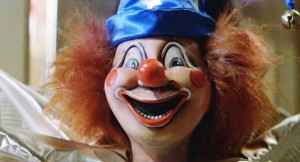
3. Poltergeist Clown

poltergeist_035pyxurz-annabelle-the-creepiest-doll-of-all-time-jpeg-144531

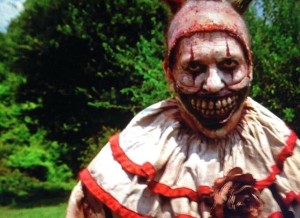
2. Twisty the Clown (American Horror Story: Freakshow) (John Carrol Lynch)

american-horror-story-freak-show

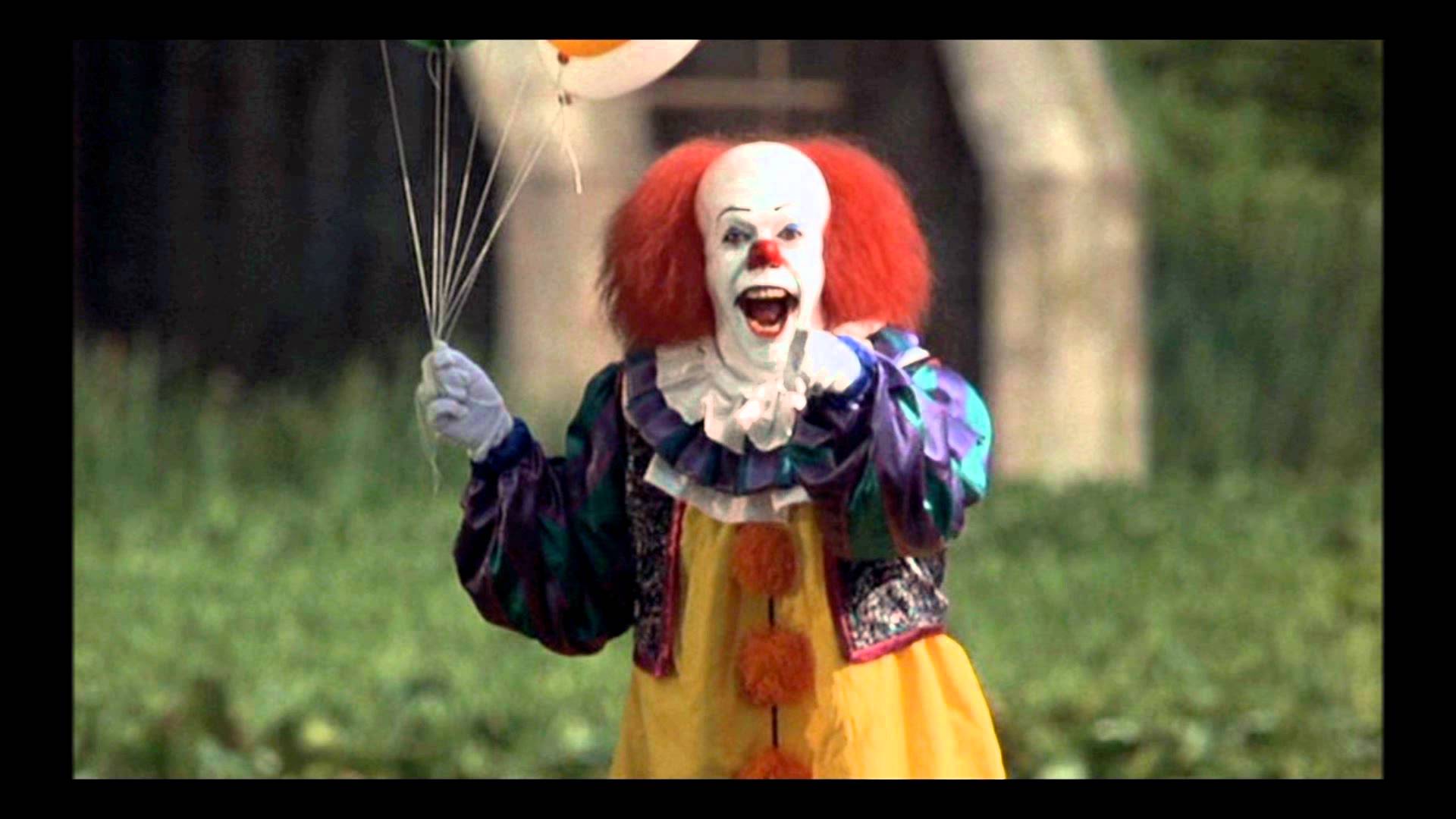
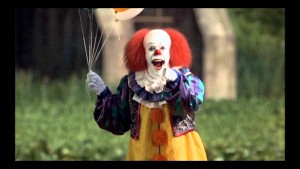
1. Pennywise (It) (Tim Curry)

maxresdefault

On to the main event! Here are the five clowniest horror movies!

5. Clownhouse (1989)

There are several fascinating pieces of information concerning the derivative yet uniquely weird Clownhouse. These range from odd to awful.

1) The Sundance Film Festival somehow found this film – this one, Clownhouse, the movie about 3 escaped mental patients who dress as clowns, break into a house where three brothers are home alone on Halloween night, and commence to terrify and slaughter them – worthy of a nomination for Best Drama. If you haven’t seen this film, you might not quite recognize how profoundly insane that is.

2) The great and underappreciated Sam Rockwell made his feature debut as the dickhead oldest brother in this movie. The clowns themselves – Cheezo, Bippo, and Dippo – are genuinely scary and garishly fascinating, but outside of them, only Rockwell can act. At all.

3) Writer/director Victor Salva would go on to create the Jeepers Creepers franchise. But first he would serve 15 months of a 3-year state prison sentence for molesting the 12-year-old lead actor in this film, Nathan Forrest Winters.

Basically, there are four really solid clown horror movies in the world and about 200 truly bad ones. Clownhouse does set itself above the rest of the muck with these disturbing points of interest.

https://www.youtube.com/watch?v=xi0ci-GjLx4

4. Clown (2014)

Sympathetic, surprising, and often very uncomfortable, Jon Watt’s 2014 horror flick, though far from perfect, does an excellent job of morphing that lovable party favorite into the red-nosed freak from your nightmares.

Kent (a pitiful Andy Powers) stumbles across a vintage clown outfit in an estate property he’s fitting for resale. Perfect timing – his son’s birthday party is in an hour. What a surprise this will be, unless the suit is cursed in some way and will slowly turn Kent into a child-eating demon.

It does! Hooray!!!

A weird-as-ever supporting turn from Peter Stormare helps the film overcome other acting weaknesses, but Watts gets credit for taking the horror places you might not expect, and for squeezing as much sympathy as possible before that last swing of the ax.

3. The Man Who Laughs (1928)

The German Expressionist director Paul Leni (Waxworks, The Cat and the Canary) worked with J. Grubb Alexander’s adaptation of Victor Hugo’s novel to cast a macabre spell with this film – one of our very favorites.

A nobleman offends the king, who kills the nobleman (iron maiden!) and has his son, Gwynplaine, disfigured by a surgeon so he can spend his life laughing at his fool of a father. The boy is tossed out, wandering in the snow. He finds a blind baby girl, and the two are saved by a traveling carny.

As is Hugo’s way, goodness is found in the tormented and hideous while the gorgeous society show themselves to be the true beasts. The film looks gloomily gorgeous, and in the hands of silent film star Conrad Veidt, Gwynplaine becomes Hugo’s most sympathetic and heartbreaking monster.

2. Stitches (2012)

There are a lot of scary clowns in films, but not that many can carry an entire film. Stitches can.

This Irish import sees a half-assed clown accidentally offed at a 6-year-old’s birthday party, only to return to finish his act when the lad turns 16.

Yes, it is a familiar slasher set up: something happened ten years ago – an accident! It was nobody’s fault! They were only children!! And then, ten years later, a return from the grave timed perfectly with a big bash that lets the grisly menace pick teens off one by one. But co-writer/director Connor McMahon does not simply tread that well-worn path. He makes glorious use of the main difference: his menace is a sketchy, ill-tempered clown.

Dark yet bawdy humor and game performances elevate this one way above teen slasher. Gory, gross, funny and well-acted – it brings to mind some of Peter Jackson’s early work. It’s worth a look.

1. The Last Circus (2010)

Who’s in the mood for something weird?

Unhinged Spanish filmmaker Alex de la Iglesia returns to form with The Last Circus, a breathtakingly bizarre look at a Big Top love triangle set in Franco’s Spain.

Describing the story in much detail would risk giving away too many of the astonishing images. A boy loses his performer father to conscription in Spain’s civil war, and decades later, with Franco’s reign’s end in sight, he follows in pop’s clown-sized footsteps and joins the circus. There he falls for another clown’s woman, and stuff gets nutty.

Like Tarantino, Igelsia pulls together ideas and images from across cinema and blends them into something uniquely his own, crafting a film that’s somewhat familiar, but never, ever predictable.

The Last Circus boasts more than brilliantly wrong-minded direction and stunningly macabre imagery – though of these things it certainly boasts. Within that bloody and perverse chaos are some of the more touching performances to be found onscreen.

Fright Club: Best Korean Horror

It’s time again to travel the globe and pull together a list of the best in horror to be found, this time in the ripe ground of Korea. Just a decade or two ago, Korea’s horror output tended to feel like an echo of Japan’s cinema, but by the early 2000s, a number of truly wonderful filmmakers began working in the genre and the outcome has been a breathtaking onslaught of the most extreme kind. Hooray!

Listen to the full podcast HERE.

5. Bedevilled (2010)
Cheol-soo Jang’s first feature film bears witnesses not only to some horrific deeds, but to an amazingly confident new filmmaker who knows how to sidestep expectations, turn the screw, and offer surprising insight in a genre that doesn’t always generate that kind of thoughtfulness.

The film opens as beautiful if cold Hae-won (Sung-won Ji) witnesses a crime and chooses not to involve herself. She takes a (somewhat involuntary) vacation on the remote island where she grew up, to find her childhood friend Bok-nam (Young-hee Seo). On the isolated, backward island – though Hae-won is treated to rest and nurturing by her adoring friend – Bok-nam’s life is about as far from ideal as possible.

Jang captures the rugged, isolated beauty of the island and offsets both ideas with his leads – one, an elegant and pristine beauty, the other a rough-hewn image – and sees two sides of the same humanity. This is a morality tale, but it’s also a brutal but sympathetic (and seriously bloody) comeuppance. Jang does not leave off where you think he might, instead crafting a compelling and satisfying whole that will stick with you.

https://www.youtube.com/watch?v=jbSZqvDvOFs

4. The Host (2006)
Visionary director Joon-ho Bong’s film opens in a military lab hospital in 2000. A clearly insane American doctor, repulsed by the dust coating formaldehyde bottles, orders a Korean subordinate to empty it all into the sink. Soon the contents of hundreds of bottles of formaldehyde find its way through the Korean sewer system and into the Han River. This event – allegedly based on fact – eventually leads, not surprisingly, to some pretty gamey drinking water. And also a 25 foot cross between Alien and a giant squid.

Said monster – let’s call him Steve Buscemi (the beast’s actual on-set nickname) – exits the river one bright afternoon in 2006 to run amuck in a very impressive outdoor-chaos-and-bloodshed scene. A dimwitted foodstand clerk witnesses his daughter’s abduction by the beast, and the stage is set.

What follows, rather than a military attack on a marauding Steve Buscemi, is actually one small, unhappy, bickering family’s quest to find and save the little girl. Their journey takes them to poorly organized quarantines, botched security check points, misguided military/Red Cross posts, and through Seoul’s sewer system, all leading to a climactic battle even more impressive than the earlier scene of afternoon chaos.

3. I Saw the Devil (2010)
An actor who can take a beating, Min-sik Choi plays Kyung-Chul, a predator who picks on the wrong guy’s fiancé.

That grieving fiancé is played by Byung-hun Lee, whose restrained emotion and elegant good looks perfectly offset Choi’s disheveled explosion of sadistic rage, and we spend 2+ hours witnessing their wildly gruesome game of cat and mouse.

Director Jee-woon Kim breathes new life into the serial killer formula. With the help of two strong leads, he upends the old “if I want to catch evil, I must become evil” cliché. What they’ve created is a percussively violent horror show that transcends its gory content to tell a fascinating, if repellant, tale.

Truth be told, beneath the grisly, far-too-realistic violence of this unwholesome bloodletting is an undercurrent of honest human pathos – not just sadism, but sadness, anger, and the most weirdly dark humor. You might even notice some really fine acting and nimble storytelling lurking inside this bloodbath.

https://www.youtube.com/watch?v=H2h52riooIc

2. Oldboy (2003)

So a guy passes out after a hard night of drinking. It’s his daughter’s birthday, and that helps us see that the guy is a dick. He wakes up a prisoner in a weird, apartment-like cell. Here he stays for years and years.

The guy is Min-sik Choi (remember him?). The film is Oldboy, director Chan-wook Park’s masterpiece of subversive brutality and serious wrongdoing.

This is not a horror film in any traditional sense – not even in South Korean cinema’s extreme sense. Though it was embraced – and rightly so – by horror circles, this is a refreshing and compelling take on the revenge fantasy that takes you places you do not expect to go. But that’s the magnificence of Chan-wook Park, and if you have the stomach, you should follow where he leads.

Choi takes you with him through a brutal, original, startling and difficult to watch mystery. You will want to look away, but don’t do it! What you witness will no doubt shake and disturb you, but missing it would be the bigger mistake.

1. A Tale of Two Sisters (2003)
A lurid Korean fairy tale of sorts – replete with dreamy cottage and evil stepmother – Jee-woon Kim’s A Tale of Two Sisters is saturated with bold colors and family troubles.

Kim also directed I Saw the Devil, but where Devil breathes masculinity, Tale is a deep, murky, and intensely female horror.

A tight-lipped father returns home with his daughter after her prolonged hospital stay. Her sister has missed her; her stepmother has not. Or so it all would seem, although jealousy, dream sequences, ghosts, a nonlinear timeframe, and confused identity keep you from ever fully articulating what is going on. The film takes on an unreliable point of view, subverting expectations and keeping the audience off balance. But that’s just one of the reasons it works.

The director’s use of space, the composition of his frame, the set decoration, and the disturbing and constant anxiety he creates about what’s just beyond the edge of the frame wrings tensions and heightens chills. The composite effect disturbs more then it horrifies, but it stays with you either way.

RSVP Required

The Invitation

by Hope Madden

Dinner parties are the worst.

This is especially true when said party is thrown by your ex and her new man in the house that used to be yours. So, why go?

Curiosity – which is what will or will not keep you invested in director Karyn Kusama’s new film The Invitation.

Will (Logan Marshall-Green) and his new girlfriend Kira (Emayatzy Corinealdi) tough it out. They drive out to the LA hills to join Will’s ex Eden (Tammy Blanchard) and all the friends Will has forgotten about since his son accidentally died in this very house a couple years back.

The party marks Eden’s return to the fold and an introduction to the new man in her life, David (Michiel Huisman), another grief survivor who, like Eden, owes his very sanity to the life-changing vision of Dr. Joseph.

Oh, God. Have they unwittingly submitted themselves to the one thing worse than a time-share opportunity gathering – a religious conversion attempt?

Kusama’s slow build mines societal tensions well. Besides the obvious ex-lover friction and the fear of cult propaganda, many in this once tight circle of friends have avoided the grief-stricken parents since the accident. It’s all very uncomfortable, though the film slowly turns the discomfort toward paranoia as Will begins to wonder where missing buddy Choi (Karl Yune) may be, why Eden has a bottle of barbiturates in her bedroom, and why David keeps all the partygoers locked inside.

Is something amiss, or is Will just dealing with those damaging issues of grief that Eden and David were able to overcome thanks to Dr. Joseph?

As The Invitation slowly evolves from tense drama to thriller to horror, Kusama is always throwing uncomfortable moments and unsettling clues at you. Were it not for the often tediously stilted dialog penned by Phil Hay and Matt Manfredi – whose track record includes the Ride Along series, if that tells you anything – The Invitation would have a consistently nightmarish, hypnotic quality that keeps you uncomfortably captive.

You know, just like that last dinner party you went to.

Fright Club: WTF?! Horror

Horror films have the power to freak you out, to terrify you, to disturb and unsettle you. And often enough, along with inspiring some combination of the aforementioned emotions, certain horror films just beg the question WTF?! Like, almost anything Takashi Miike has ever directed. Or Antichrist – I’m sorry, did that fox just speak? Whether the bizarre puppetry of Hausu or the skull sex of Headless, the orifice’s point of view camera angles in Enter the Void or the queasying sibling relationship in Pin, horror movies can hit that unsettling nerve. So let’s just embrace it today, shall we? Today we count down the five (or six!) best in WTF?! horror.

6. The Woman (2011)

There’s something not quite right about Chris Cleese (an unsettlingly cherubic Sean Bridgers), and his family’s uber-wholesomeness is clearly suspect. This becomes evident once Chris hunts down a feral woman (an awesome Pollyanna McIntosh), chains her, and invites the family to help him “civilize” her.

The film rethinks family – well, patriarchy, anyway. Notorious horror novelist and co-scriptor Jack Ketchum may say things you don’t want to hear, but he says them well. And director Lucky McKee – in his most surefooted film to date – has no qualms about showing you things you don’t want to see. Like most of Ketchum’s work, The Woman is lurid and more than a bit disturbing. Indeed, the advanced screener I watched came in a vomit bag.

Aside from an epically awful performance by Carlee Baker as the nosey teacher, the performances are more than just good for the genre, they’re disturbingly solid. McIntosh never veers from being intimidating, terrifying even when she’s chained. Bridgers has a weird way of taking a Will Ferrell character and imbibing him with the darkest hidden nature. Even young Zach Rand, as the sadist-in-training teen Brian, nails the role perfectly.

Nothing happens in this film by accident – not even the innocent seeming baking of cookies – nor does it ever happen solely to titillate. It’s a dark and disturbing adventure that finds something unsavory in our primal nature and even worse in our quest to civilize. Don’t even ask about what it finds in the dog pen.

5. Bad Boy Bubby (1993)

The hell?! Why? What?! Good God.

Nicholas Hope is astonishing as the titular Bubby, a 30-year-old manchild who’s never, ever left the room he keeps with his mum.

Remember the Oscar-winning indie film Room? Remember how tragedy is somehow skirted because of the courageous love of a mother for her son? Well, this was not Bubby’s mum. Bad things are happening in that room, and once Bubby is finally free to explore the world, his adventure is equal parts deranged and soul-crushing. Hope is so frustratingly empathetic in the lead that no matter what he does, you root for him. You root for friends who will love him, for someone who will care for him, but it’s the resigned cheerfulness with which he faces any kind of abuse that really just kills you.

This taboo-shattering film is so wrong in so many ways, and yet it’s also lovely, optimistic, sweet, and funny. And just so, so fucked up.

4. Baskin (2015)

Welcome to hell! Turkish filmmaker Can Evrenol invites you to follow a 5-man police squad into the netherworld, where eye patches are all the rage, pregnancy lasts well under the traditional 40 weeks, and you don’t want to displease Daddy.

The serpentine sequencing of events evokes a dream logic that gives the film an inescapable atmosphere of dread, creepily underscored by its urgent synth score. Evrenol’s imagery is morbidly amazing. Much of it only glimpsed, most of it left unarticulated, but all of it becomes that much more disturbing for its lack of clarity.
The further along the squad gets, the more often you’ll look in horror at something off in a corner, that sneaking WTF? query developing along with your upset stomach.

The central figures in this nightmare are one eye-patch wearing helper who enjoys tossing his or her hair over one shoulder, and the breathtaking father figure played by Mehmet Cerrahoglu. There is no one quite like him.

Cerrahoglu’s remarkable presence authenticates the hellscape. Evrenol’s imaginative set design and wise lighting choices envelope Cerrahoglu, his writhing followers, and his victims in a bloody horror like little else in cinema.

3. Calvaire (The Ordeal) (2004)

A paranoid fantasy about the link between progress and emasculation, The Ordeal sees a timid singer stuck in the wilds of Belgium after his van breaks down.

Writer/director Fabrice Du Welz’s script scares up the darkest imaginable humor. If David Lynch had directed Deliverance in French, the concoction might have resembled The Ordeal. As sweet, shy singer Marc (a pitch perfect Laurent Lucas) awaits aid, he begins to recognize the hell he’s stumbled into. Unfortunately for Marc, salvation’s even worse.

The whole film boasts an uneasy, “What next?” quality. It also provides a European image of a terror that’s plagued American filmmakers for generations: the more we embrace progress, the further we get from that primal hunter/gatherer who knew how to survive.

Du Welz animates more ably than most our collective revulsion over the idea that we’ve evolved into something incapable of unaided survival; the weaker species, so to speak. Certainly John Boorman’s Deliverance (the Uncle Daddy of all backwoods survival pics) understood the fear of emasculation that fuels this particular dread, but Du Welz picks that scab more effectively than any filmmaker since.

His film is a profoundly uncomfortable, deeply disturbing, unsettlingly humorous freakshow that must be seen to be believed.

https://www.youtube.com/watch?v=Hn3oba5HmH8

2. Possession (1981)

Speaking of sex and monsters – wait, were we? – have you seen Possession? WTF is going on there?

Andrzej Zulawski – writer/director/Czech – created this wild ride with doppelgangers, private investigators, ominous government agencies, and curious sexual appetites. It’s more precisely fantasy than horror, but it feels like David Cronenberg meets David Lynch, which is a pairing we can get behind.

Sam Neill plays Mark. Mark has just left his job – a mysterious position with some kind of lab. He’s being offered a lot of money to stay, but he needs to go home. We don’t know why.

Back at home, he greets his genuinely adorable son Bob (Michael Hogben). Bob – the names is so normal, and yet feels so unusual for a small child. Mark’s wife Anna (Isabelle Adjani) is also at home with Bob. There’s nothing normal about Anna.

Mark and Anna’s relationship boasts an intentional artificiality – a queasying sexuality – that makes it hard to root for either of them as their marriage deteriorates. Anna, it seems, is in love with someone else. Is it the sexually open – really, really open – Heinrich? Is it a bloody, mollusk-like monster? Is Mark boning Anna’s mean friend with a cast on her leg? Does Bob’s kindergarten teacher bear an unreasonable resemblance to Anna? Is anyone caring properly for Bob?

These questions and more go basically unanswered in a deviant, summary-defying, fantastical bit of filmmaking that mocks the idiocy, even insanity of obsession and boasts a handful of weirdly excellent performances. And sex with a bloody mollusk monster.

1. Gozu (2003)

If you are looking for genuine lunacy in film, your search should begin and quite possibly end with filmmaker Takashi Miike. His shit is nuts. Truth be told, there are scads of Miike films that could have populated this list because even his tamest, most logical, no-puppetry films are wild rides. So when he starts coloring way outside the lines, expect to be surprised.

This one starts off as a yakuza film – one guy on a mob-style assignment – then descends into absolute madness.

Minami (Yuta Sone) has been ordered to assassinate his feeble-minded yakuza boss Ozaki (Sho Aikawa), but he’s conflicted. Then he loses him and wanders, in search, into – you might say it was the Twilight Zone, except this place is considerably weirder. There’s a minotaur. An electrified anal soup ladle death scene. Some seriously, seriously weird shit.

Like a walk through somebody’s subconscious, the film is awash in repressed sexual desires of the very most insane and unspeakable. There’s a comical element that’s almost equally unsettling. Gozu is not as violent as many Miike films – it’s violent, don’t be mistaken, but the horror here is more in unseemly behavior and wildly inappropriate imagery. It’s just stuff you can’t unsee.

https://www.youtube.com/watch?v=penZT2N2xDw