Tag Archives: Hope Madden

Tear the Fascists Down

Nuremberg

by Hope Madden

There were many reasons to be hopeful for James Vanderbilt’s Nuremberg, chief among them its modern-day resonance and the satisfaction of watching Nazis suffer the consequences of their actions.

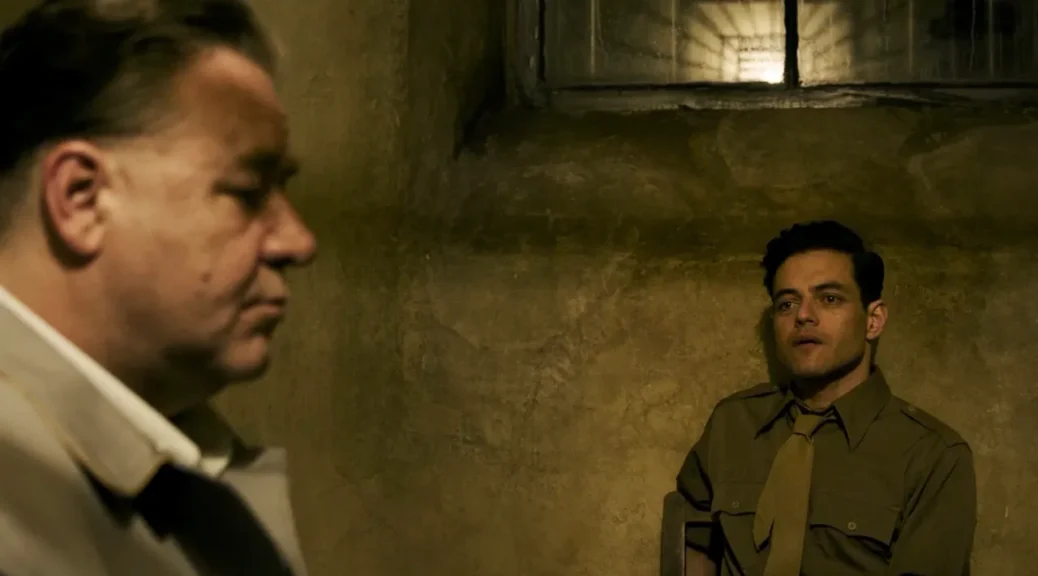
Vanderbilt’s impressive ensemble tells the true story of the global court case trying the Nazi high command for crimes against humanity. Russell Crowe delivers an almost fanciful turn as Hermann Göring, sparring with army doctor Douglas Kelley (Rami Malek), assigned to help the prosecution get inside the mind of the monster.

Vanderbilt adapts Jack El-Hai’s book The Nazi and the Psychiatrist, developing the relationship between these two characters as the film’s primary plot. A parallel storyline following Justice Robert Jackson (Michael Shannon) grounds the film in the importance of the trial and its single desired result: to annihilate pro-Nazi sentiment and the white supremacist authoritarianism that fueled it.

Richard E. Grant, John Slattery, Colin Hanks, and Mark O’Brien deliver solid performances, though the film would not have suffered by streamlining both O’Brien and Hanks entirely out of the movie.

Nuremberg‘s problem is not so much its length as its cumbersome scripting. To add the full (and imperative) B-story, the events and characters that orbit the psychiatrist and the Nazi should have been pruned.

Vanderbilt chooses showy direction throughout, cutting from one scene to the next with gimmicks that call to mind classic screwball comedies—a wild, almost horrific mismatch with the material.

There’s such obviousness to the telling of the tale, and not because we know the outcome of the trial but because the character points we shouldn’t know are telegraphed.

Now and again one brilliant line of dialog bursts through, which is almost as frustrating as the otherwise ostentatious script because there’s something here. Something worth telling, in need of telling.

But Vanderbilt buries it under forced emotion (when certainly none needs to be forced) and flamboyant staging. Hard as Nuremberg tries to connect the dots from past to present, it offers no insight. And that’s what’s most frustrating.

Killer Pictures

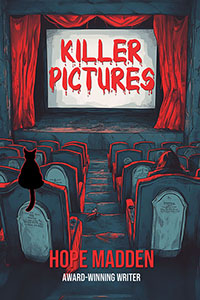
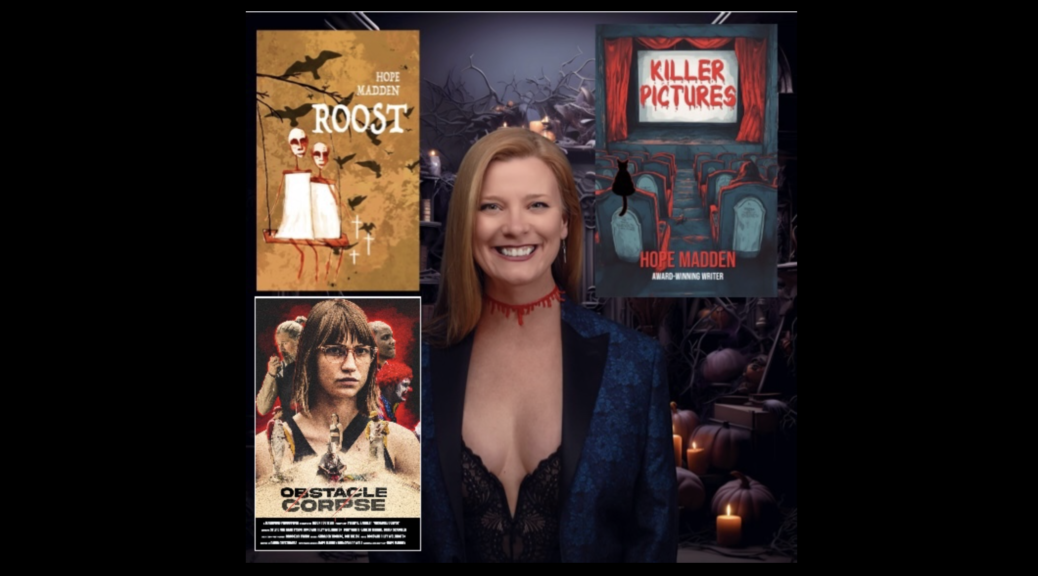
Maybe you know about Hope’s latest novel, Killer Pictures (get yourself an autographed copy right here in our store!)

It tells the story of Dez, who should go to bed, but instead, she keeps watching horror movies for the Mayhem & Madness Film Festival. She sees a new one pop up in her to-review queue: Adam. That’s a funny title, she thinks, since there’s another judge named Adam. But instead of watching, she goes to bed, and by the time she wakes up, the judge named Adam has killed his wife and himself, and the film Adam has disappeared from the judging queue.

In its place is a film called Grant — the name of another judge. Is Grant doomed to Adam’s fate? Will Dez see her own name as a film title? If she does, will she dare watch it?

Welcome to the Mayhem & Madness film festival, where the judges are committed and the pictures are killer.

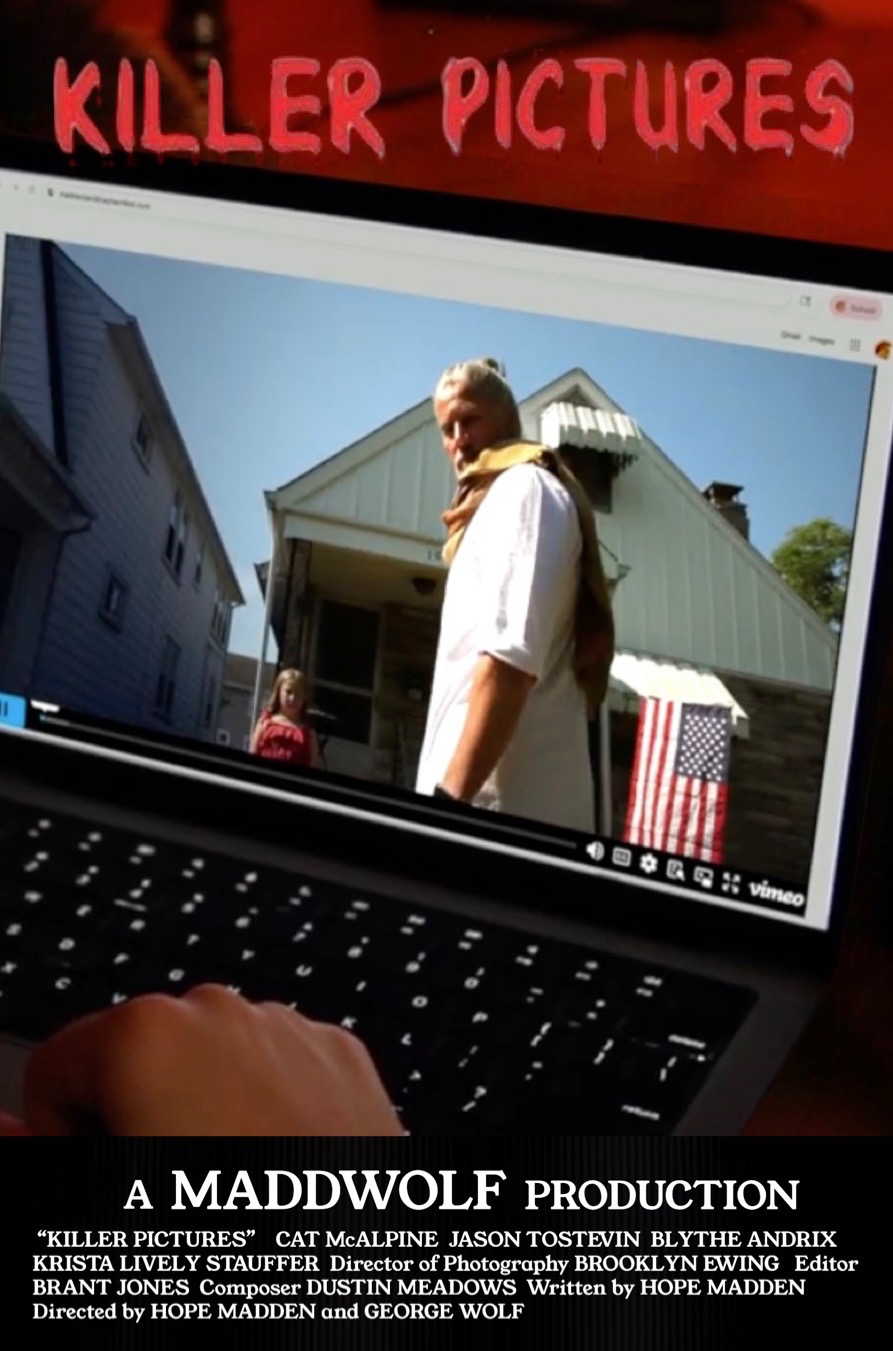
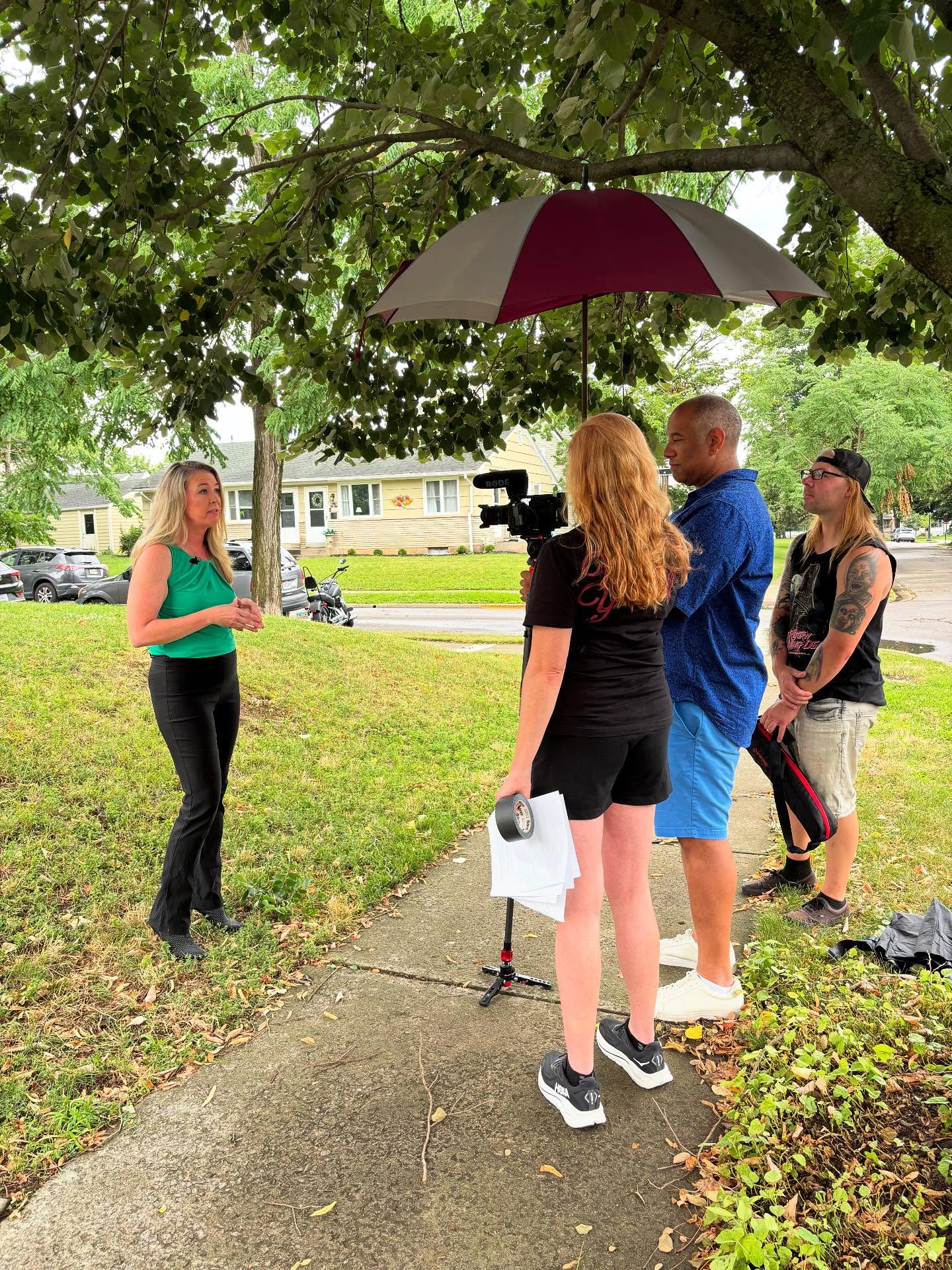
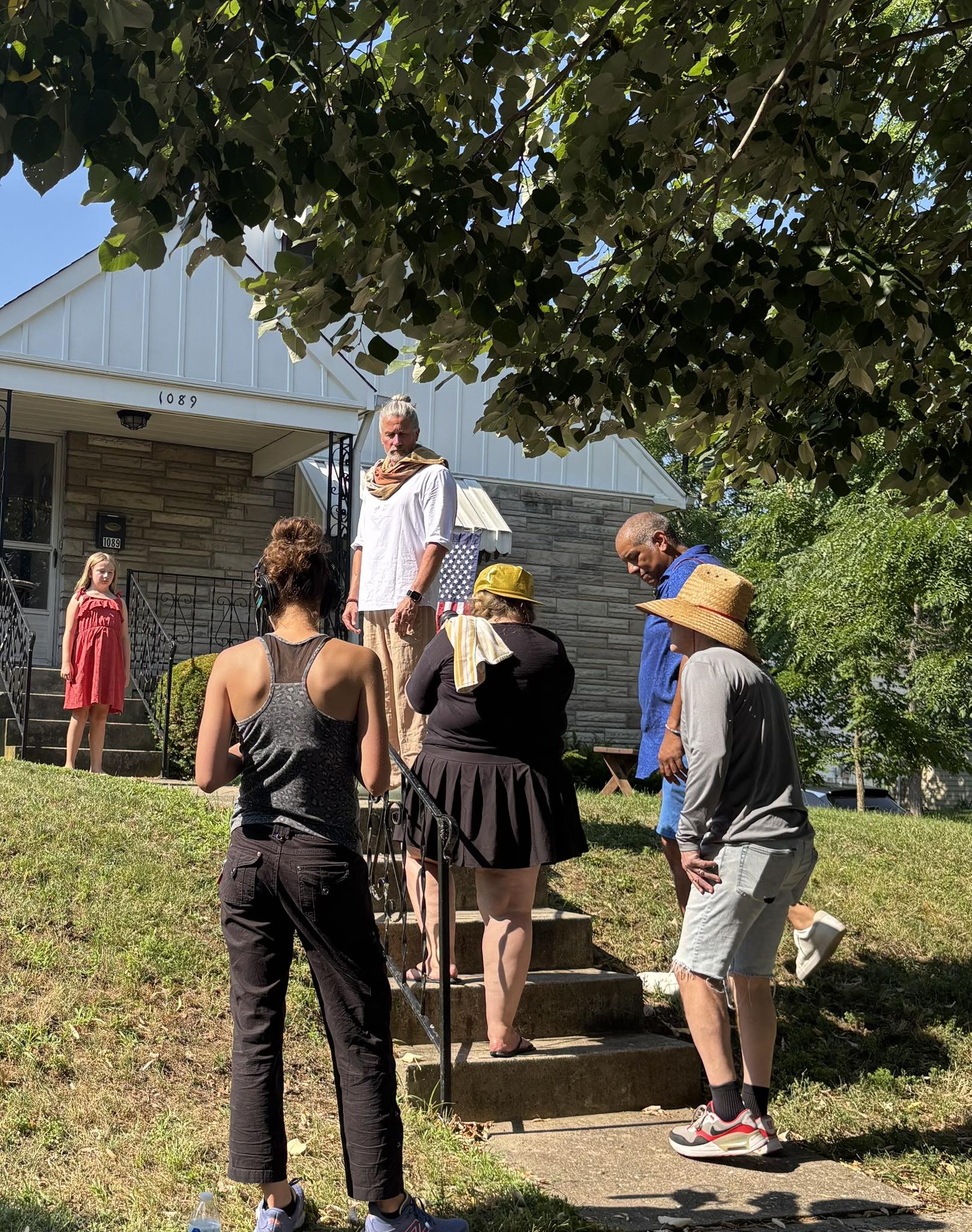
Intrigued? Well, treat yourself to our new short film, Killer Pictures, to watch as Dez falls into a mystery that may end her life.

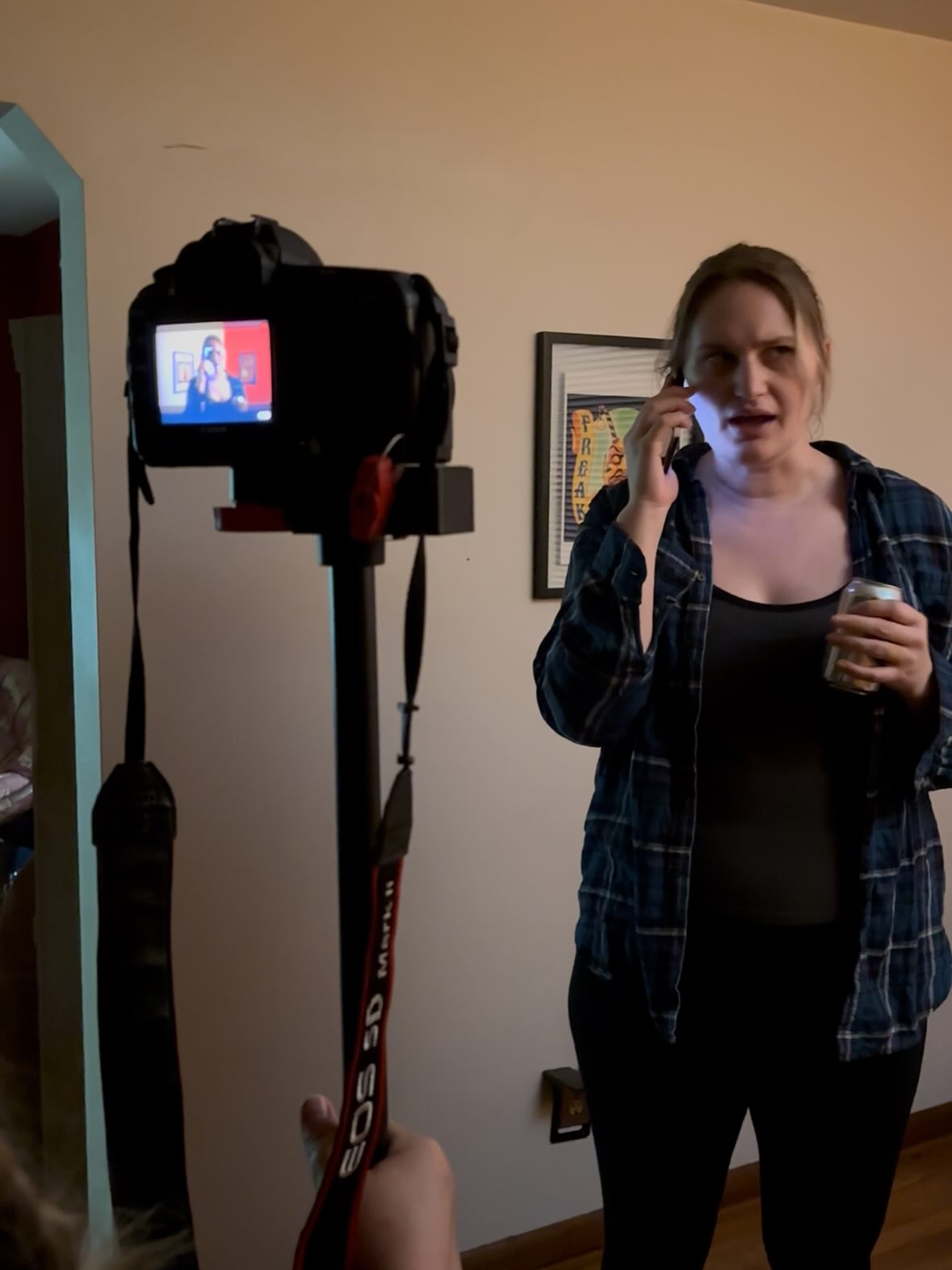
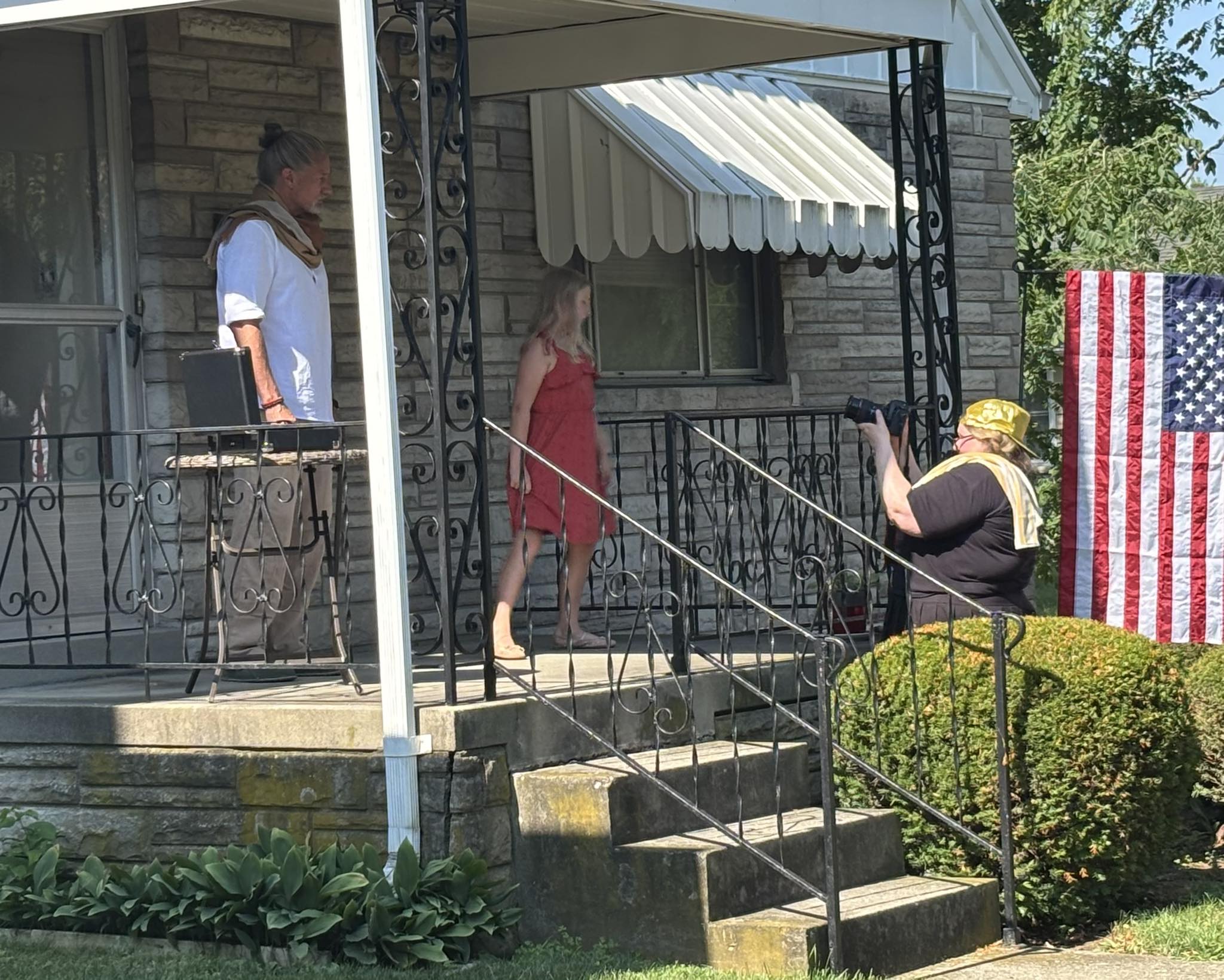
Behind the Scenes!

The Bees Knees

Bugonia

by Hope Madden

Humanity can be, individually and collectively, disappointing. No one picks that scab quite like Yorgos Lanthimos.

The filmmaker followed up his 2023 Oscar winner Poor Things, arguably his most hopeful and certainly his most mainstream film, with the blistering 3 hour anthology skewering the human condition, Kinds of Kindness.

Bugonia, his latest, reins in some of the excesses of Kindness, but the filmmaker’s observational insights on wasted, wounded humanity are as sharp as ever.

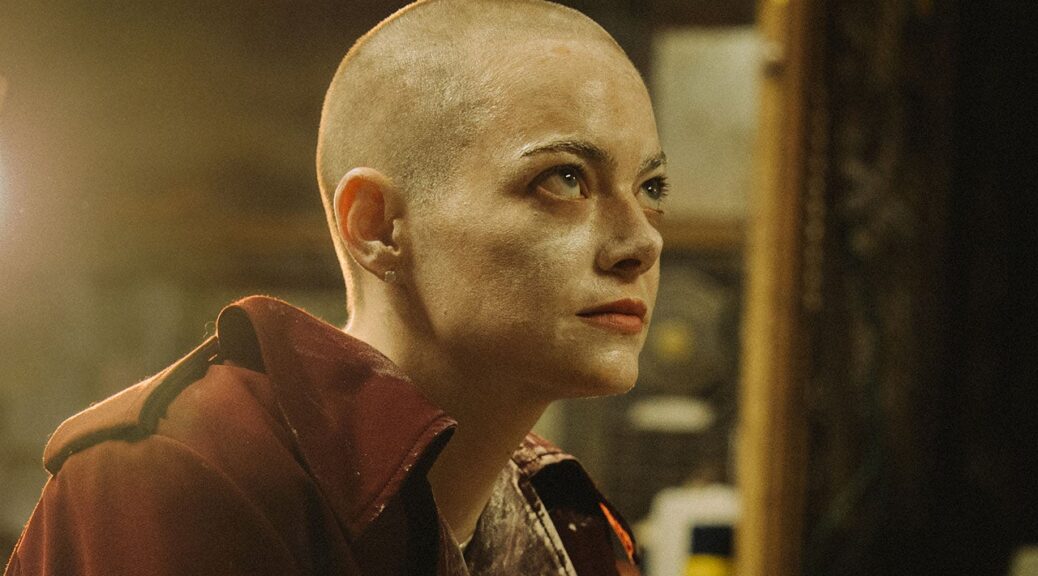
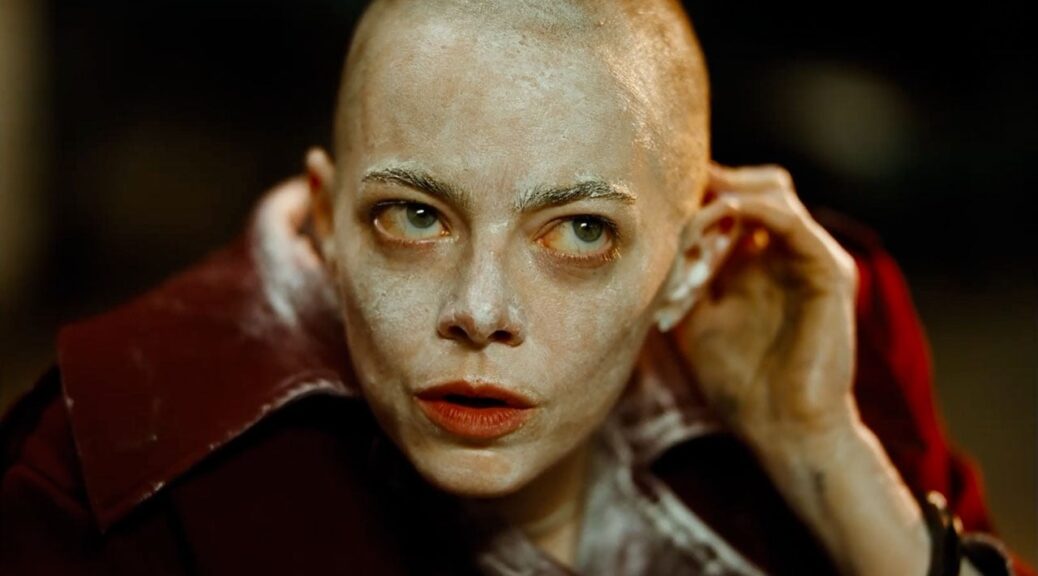
Emma Stone is Michelle Fuller, a pharmaceutical company CEO hailed on Forbes and Time and dozens of other framed magazine covers for her leadership and innovation. Jesse Plemmons is Teddy, the broken, broke, bumbling conspiracy theorist convinced she’s an alien. Teddy kidnaps the CEO/alien and drags Michelle back to the lonesome home where he grew up. The goal is not ransom, but to convince her to take him to the mother ship where he’ll persuade the aliens—responsible, as they are, for the obvious crumbling of human society—to leave earth in peace.

The script from Will Tracy and Jang Joon-hwan offers Lanthimos and his small but savvy cast fertile ground for the bleak absurdism the filmmaker does so well. Bugonia treads tonal shifts magnificently, slipping from comedy to thriller to horror and back with precision. Lanthimos’s control over audience emotion has never been tighter.

The same can be said for both Stone and Plemmons, who manage the absolutely impossible with these two characters. Their chemistry is without peer, each wrestling the audience’s sympathies from the other, both always horrifying and vulnerable.

Stone is the picture of leadership qualities. Even shorn and chained in a filthy basement, Michelle acts from a reserve of superiority and calm. Stone is utterly convincing as a survivor and fearless negotiator.

Plemmons’s range is breathtaking and Lanthimos takes advantage. Sad sack Teddy contains multitudes. He’s pathetic, terrifying, cruel, tender, manipulative, loving—all of it seamlessly integrated into a single character. Plemmons should be remembered come awards season.

The film’s final act is brazenly bizarre, but also startlingly emotional. It’s an about face that wouldn’t have worked in most films. But most films are not Yorgos Lanthimos films.

For Better, for Worse

Anniversary

by Hope Madden

Jan Komasa’s political thriller Anniversary certainly boasts an impressive cast. Diane Lane leads the film as Ellen Taylor, a Georgetown professor celebrating her 25th wedding anniversary to renowned DC chef, Paul (Kyle Chandler).

Their four children will be there: high schooler Birdie (Mckenna Grace), famous comic Anna (Madeline Brewer), environmental lawyer Cynthia (Zoey Deutch) and her husband (Daryl McCormack), and beloved son who never made much of himself, Josh (Dylan O’Brien). Plus, Josh brought new girlfriend, Liz (Phoebe Dynevor). That one can’t be trusted.

Komasa crafts a “they have it all” opening to prepare us for the inevitable downfall. Ellen and Paul truly love each other, and their bickering kids love them and each other as well. But there’s an invasive species at their garden party, and no matter how strong Ellen believes her family to be, bad stuff is coming.

To the film’s credit, Lori Rosene-Gambino’s script is no pulpy thriller about a vixen corrupting a family. True to the filmmaker’s previous output (Corpus Cristi, Suicide Room), Anniversary dives into the large scale and intimate damage one persuasive but errant prophet can do.

Liz has a belief system encapsulated in her new book, “The Change.” It advocates that the people, passionate and unified, step beyond this broken democracy and create a single party that will redefine the country’s future. What transpires between Ellen and Paul’s 25th and 30th anniversary parties is a debilitatingly likely image of America’s near future.

The ensemble works wonders with slightly written characters. Komasa and Rosene-Gambino outline the insidious evolution with clarity, but the tale is too superficial to mean much. It’s a very talky script, yet very few questions are answered. Anniversary is entirely vague on the actual philosophy of “The Change”, making it tough know what people cling to and what the Taylors reject.

Worse, character arcs exist exclusively to further the plot. Deutch bears the worst of this, but everything in the film—especially the character development—is tell, don’t show. Aside from O’Brien’s, no arc is character driven. Each is plot driven and some are absurd.

Dynevor fares best, carving out a memorable, broken antagonist, a delicate survivor not to be trusted. She and Lane are formidable as antagonist and protagonist, but Anniversary doesn’t know exactly what to do with them.

If I Cannot Inspire Love, I Will Cause Fear

Stitch Head

by Hope Madden

Is there anything more delightful than an animated tale suitable for Halloween? A Nightmare Before Christmas, ParaNorman, Frankenweenie, The Corpse Bride, Wendell & Wild, Coraline, Mad Monster Party­—each one is a fun way to get spooky, with the kids or without.

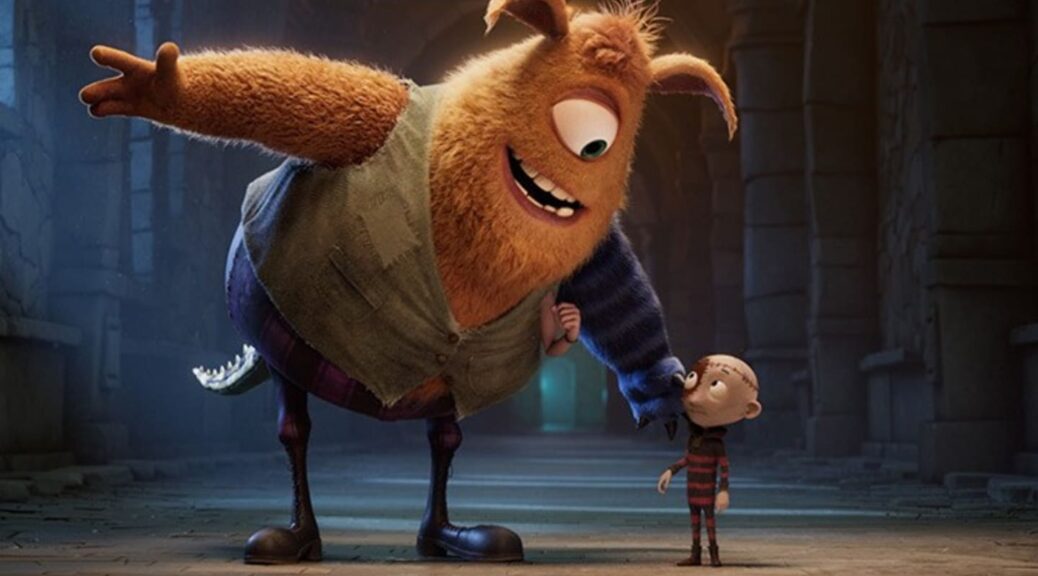
Steve Hudson extends that list with Stitch Head, a delightful, animated story about embracing your inner and outer monster.

Stitch Head (Asa Butterfield) was the first of the Mad Scientist’s creations. But the creator’s ADHD gets the better of him pretty quickly, and Castle Grotteskew is soon full to brimming with monsters. These include today’s beast, Creature (Joel Fry). Stitch Head’s taken on the eldest child duties around the castle, which includes helping each new beastie adjust their monstrous natures to avoid upsetting the townsfolk below. Don’t draw attention to yourself and you can avoid the angry mob.

“Welcome to almost life,” Stitch Head tells each new monster. “Patent pending.”

The film, especially Nick Urata’s music, certainly conjures Tim Burton. The songs Are You Ready for Monsters and Make ‘em Scream are both dancy fun, but neither are Elfman level memorable. Stitch Head lacks that macabre flavor of a Burton. Castle Grotteskew’s residents feel more akin to the working stiffs of Monsters, Inc. They’re nothing to be afraid of, they’re just different. Which is the point.

There’s also a bit of Pinocchio as Stitch Head, seeking the love he’s not receiving from his negligent parent, leaves the castle in favor of the circus, and finds—as we all must—that capitalism blows.

Butterfield’s delivery and Hudson’s animation create a tender central figure you root for. Fry’s big-hearted performance—plus Creature’s zany design—balance the delicate, tightly wound Stitch Head to create a sweetly peculiar odd couple.

Based on Pete Williamson and Guy Bass’s series of kids’ books, written for the screen by Hudson, Stitch Head delivers fun, eccentric characters, a warm adventure, and genuine lessons about the joys—even the necessity—of nonconformity.

“Just be whoever you’d be if you weren’t afraid.”

Sister’s Keeper

Shelby Oaks

by Hope Madden

Chris Stuckmann—film critic, podcaster, YouTube phenom, DIY filmmaker and Ohio native—delivers his directorial feature debut with Shelby Oaks, one woman’s odyssey to find her missing sister.

Stuckmann’s approach combines found footage style with something more cinematic, balancing the jarring authenticity of one with the macabre beauty of the other.

Mia (Camille Sullivan) is talking with a documentarian about her sister Riley’s cold case. Twelve years ago, Riley’s (Sarah Durn) popular ghost hunting show Paranormal Paranoids stumbled into an Ohio ghost town and disappeared. Viewers cried hoax until Riley’s producers and directors were found dead. Riley was not found at all. 

Mia hopes the documentary will reignite interest in her sister’s case, maybe generate some leads. In a way, it does, and Mia takes it upon herself to follow the breadcrumb trail back to Darke County, OH and the scene of the crime.

The found footage of the early film gives way to something more eerily beautiful as Mia explores an abandoned theme park, disused reformatory, and a little town long vacated. When Mia meets Norma (an intensely unnerving Robin Bartlett), the film takes a sinister turn.

Sullivan carries the film easily, utterly convincing as a protective older sister unintimidated by obstacles, however horrific, and unwilling to abandon her beloved little sister. Creature design is equally impressive, and Stuckmann’s choices to keep the image on the periphery of the film amplifies its unsettling effect.

Shelby Oaks delivers a spooky tale brimming with love of genre. It creates place well and develops an atmosphere of tunnel vision optimism that allows the audience to see what Mia cannot. But it doesn’t break any new ground. Pieces fit together well, the mystery and its solution possess integrity often lacking in genre fare, especially in found footage films. But there aren’t a lot of surprises here.

There are fun jumps, eerie images, creepy images and a solid mystery though. More than reason enough to look forward to whatever Stuckmann does next.

Fearless and Powerful

Frankenstein

by Hope Madden

Guillermo del Toro is a big ol’ softy. In many ways, that’s what makes Frankenstein a perfect property for him. His heart has always been with the monster, so why not tell the most heartbreaking and terrifying monster story?

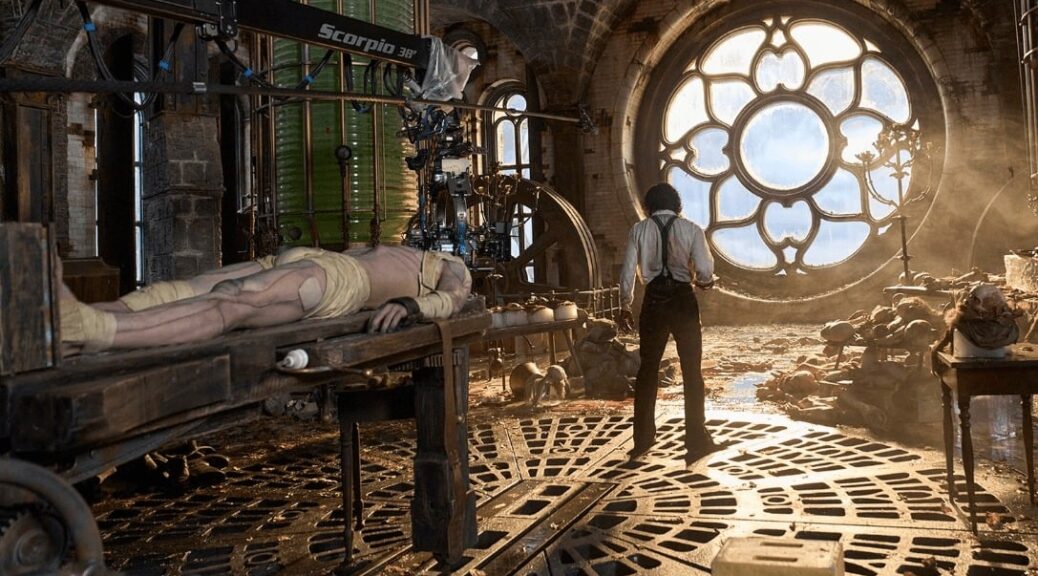
The filmmaker shares writing credit with Mary Shelley, and it’s a good partnership. From the opening moments on frozen tundra, GDT announces that he will cover more of the novel’s ground than any other adaptor. We meet Victor Frankenstein (Oscar Isaac) lying helpless on that ice. An explosion draws the crew of an icebound ship to his aid. But Victor is not alone, and soon he begins his yarn of the beast that circles the vessel.

The icy desolation looks fantastic, but the North Pole has nothing on the macabre Victorian splendor the maestro has in store. Lush and gorgeous, even when it is running with blood, the world del Toro creates for his gods and monsters is breathtaking. The way he punctuates images with red—a billowing veil, the doctor’s gloves, a tie, a kerchief—beguiles and alarms in equal measure.

His idea of a mad scientist’s lab is a gloriously goth work of art, as is the film’s costuming—particularly the wardrobe for dear Elizabeth (Mia Goth). The wild mix of colors and textures, metallics and gauzes, conjure ideas of nature and machine in gorgeous disharmony.

It is with the b-story, focusing on Elizabeth and her uncle (Christoph Waltz), where GDT veers most widely from Shelley’s text. The choices are fresh and odd, allowing for a rich image of creator and creation, the natural versus the magnificent.

Isaac is a marvel of angry arrogance made humble. As his creature, the long and limby Jacob Elordi offers a monster who’s more sensitive son than wounded manchild.

Goth delivers the same uncanny grace that sets so many of her characters apart, and del Toro’s script allows Elizabeth an arc unlike any previous adaptation.

Frankenstein is over long. Del Toro spends more time than necessary with young Victor, and the b-story could have used trimming. You feel the film’s length. It’s also as sentimental a movie as del Toro’s ever made, sometimes to its detriment.

But you don’t wander into a Guillermo del Toro film expecting less anything than glorious excess—another reason why Frankenstein and he were meant for one another.

Downbound Train

Barcelona Underground

by Hope Madden

Subways can be very scary places. An American Werewolf in London knew it. Del Toro’s Mimic. Midnight Meat Train. Jacob’s Ladder. A Quiet Place: Day One. These films amplified the claustrophobic subterranean atmosphere for all its hellscape potential.

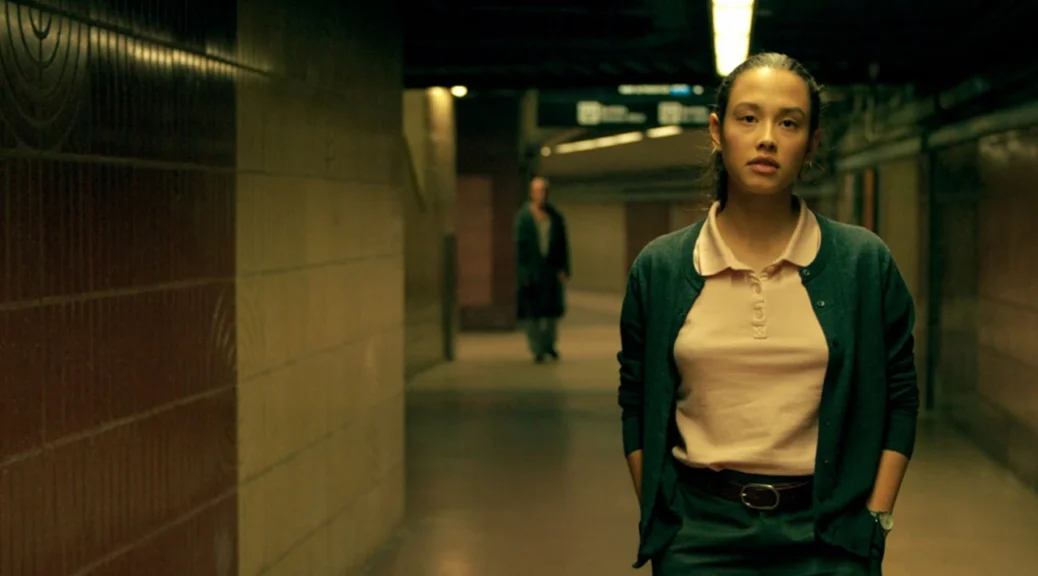
Luis Prieto’s Barcelona Underground (also variously called Last Stop: Rocafort St. and Rocafort Station) tries to tap into that mass transit terror. Laura (Natalia Azahara) has a new job manning the Rocafort stop on Barcelona’s subway system, which is legendary for its suicides. Three of every four subway suicides in the city take place at the Rocafort Street stop.

It all started back when Román (Javier Gutiérrez) was still a cop. He followed serial killer Elías Soro through the labyrinthine tunnels but wasn’t quick enough to save the family of four Soro had taken hostage.

Were they suicides? They were not. How is this connected to the suicides? And why is Laura haunted by hallucinations ever since she witnessed one? Who knows, honestly? I sat through the whole movie and feel confident in saying that Prieto never truly connects the folklore, exorcism, and police procedural threads to even begin to make sense of this plot.

Worse, he doesn’t capitalize on the horrific possibilities available in a subway tunnel.

Barcelona Underground is a hodgepodge of obvious cliches and worn-out tropes slapped together with nonsensical panache. Each piece is incredibly familiar, but not one fits snugly in place beside the next piece. It’s as if Prieto, writing with Ivan Ledesma and Ángel Agudo, lifted the most cliched scene from a dozen films and taped them together, hoping to create a single tale.

None of it works because none of it makes sense. Both Azahara and Gutiérrez do what they can with poorly written roles, but the senseless mishmash of a story arc keeps either from crafting a recognizable character.

Plus, it’s not scary.  

An American Werewolf in London is scary, though. Do with that information what you will.