On this week’s Screening Room Podcast, Hope & George review Faces of Death, You Me and Tuscany, Exit 8, Beast, Hunting Matthew Nichols, ChaO, Hamlet, Outcome, and Newborn!
On this week’s Screening Room Podcast, Hope & George review Faces of Death, You Me and Tuscany, Exit 8, Beast, Hunting Matthew Nichols, ChaO, Hamlet, Outcome, and Newborn!
by Hope Madden
Horror video game movies are having a moment. And the simpler the video game, the more unsettling the film adaptation.
Though the unendurable Return to Silent Hill might have sapped your will to live, both Iron Lung and The Mortuary Assistant honored their games’ uncomplicated storyline and reliance on viewer attention to generate dread and entertainment.
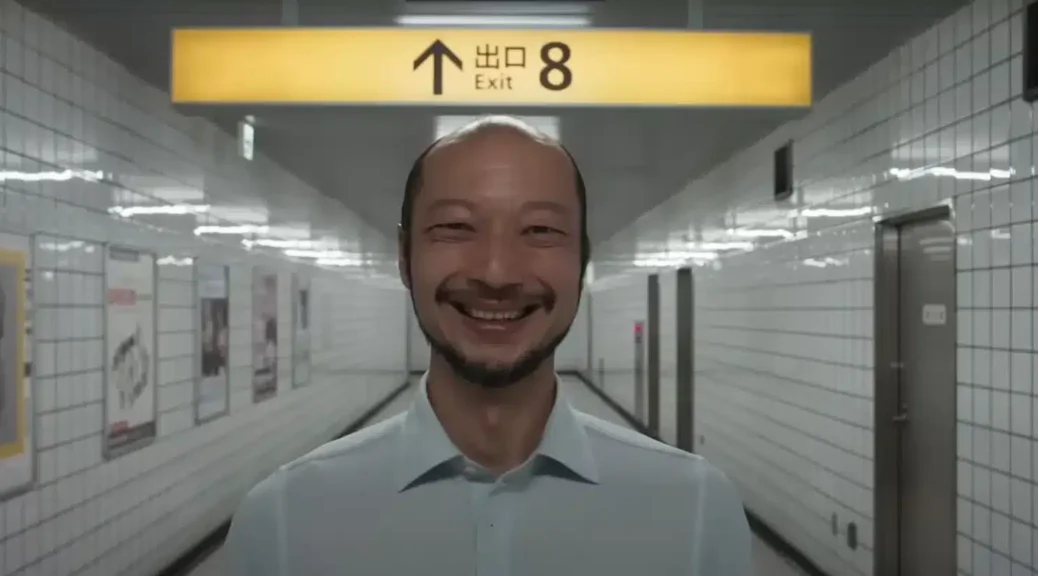
Perhaps the simplest and most unnerving is Genki Kawamura’s Exit 8, a captcha experiment in proving your humanity.
A minutes-long opening POV sequence announces the film as a video game, the first-person experience wearing thin just as Kawamura’s cinematic style alters. What has altered it? Our hero, faced with a deeply human choice, enters the bowels of the metro and loses his phone signal.
Kazunari Ninomiya is “Lost Man.” Buds in his ears, his eyes on his phone, he’s almost entirely unconnected from humanity. Even with no reception, he’s so oblivious that it takes him quite a while in the underground passages to realize he’s walking in circles, forever finding himself back at the exact same spot in search of Exit 8.
Finally, he notices an information sign. If you see an anomaly, backtrack immediately. If there’s no anomaly, keep moving forward.
The monotony and claustrophobia build as white tiled, fluorescently lit hallway after hallway deliver oppressive tension. As the numbers ascend—Exit 1, Exit 2, Exit 3—you may find yourself yelling at the screen. Slow down! Don’t get sloppy now! Because if Lost Man misses one anomaly, one misplaced doorknob, one altered advertisement, it’s back to Exit 0 and the whole nightmare begins again.
And nightmare it is. Blackouts, crying babies, frozen smiles, giant hairless rats with human noses are some of the more obvious anomalies.
It would all become too monotonous to bear were it not for the chapter breaks, which allow us to shift perspective briefly. Yes, the other two characters—Walking Man (Yamato Kôchi) and The Boy (Naru Asanuma)—are likewise trapped in the labyrinthine underground. But their presence offers some clues beyond the surface level anomalies, some hint at the quest to find our humanity.
Kawamura doesn’t dig too deep for character development, but the spare setting and liminal hellscape bring it forth. Exit 8 seems not like a game you play again and again. Likewise, the film is unlikely to be one you revisit every spooky season. But it is a uniquely challenging effort and another surprising win for horror video game adaptations.

by Hope Madden
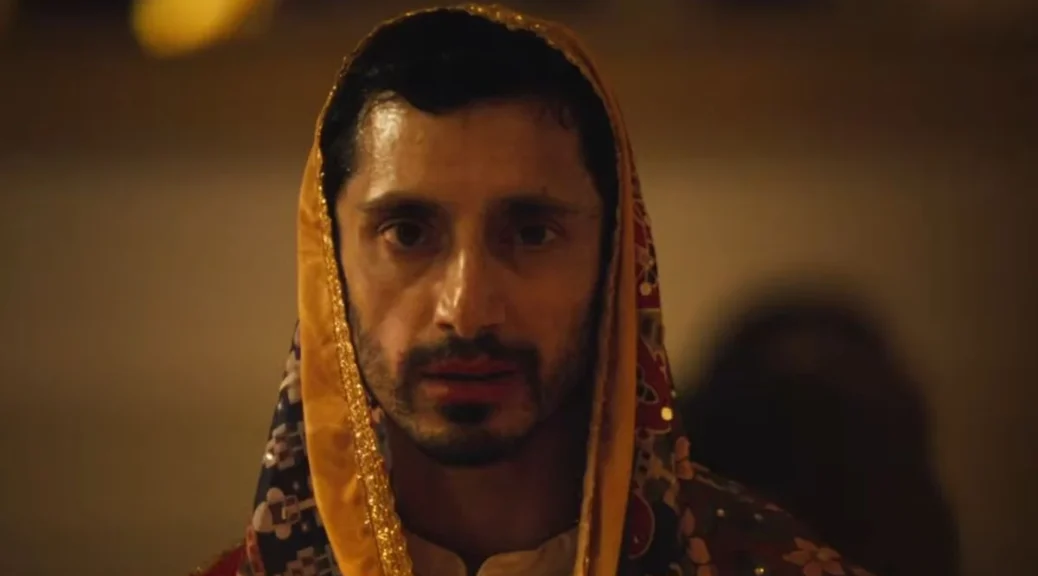
Filmmaker Aneil Karia concerns himself with the curious, sometimes questionable responses of individual men to escalating tensions. After 2020’s Surge followed a remarkable Ben Whishaw through a harrowing, disorienting descent, Karia won an Oscar for the short film The Long Goodbye. The live action short kept its eyes on Riz (RIz Ahmed) as the dystopian present came for him and his family.
If one man’s reaction to an overwhelming situation is Karia’s passion, Hamlet seems like a proper inspirational match.
Paired again with his Long Goodbye collaborator, Karia sets Shakespeare’s great tragedy in modern London. Hamlet returns from abroad for his father’s (Avidjit Dutt) funeral. The family’s ruthless development company, Elsinore, must now change hands to the patriarch’s brother, Claudius (Art Malik), who intends to marry his widowed sister-in-law, Gertrude (Sheeba Chaddha).
Though much streamlined, the Bard’s drama is not rewritten for the times. Karia’s instincts for visual storytelling provide enough imagery to understand the modernized context, and Shakespeare’s dialog proves timeless as ever.
Karia’s dizzying visual style gives Hamlet’s psychological descent an urban flavor, while graffiti and billboards provide cheeky reference points. The entire ensemble, especially Chaddha, excel. But you will not be able to look away from Riz Ahmed.
The role of Hamlet has been a make-or-break role for actors for four centuries. Ahmed makes it look effortless, so convincing is he in the grief of losing a father, the horror of a mother’s betrayal, and the pressure of tradition.
Joe Alwyn (Hamnet – guy likes this story, I guess!) as Laertes and Morfydd Clark (Saint Maud) as Ophelia bring depth and pathos to minimized characters.
Michael Lesslie adapts the tragedy. Though the writer’s gone on to blockbusters and superheroes, his first feature length script was Justin Kurzel’s impressive 2015 take on Macbeth. Once again, Lesslie proves adept at pruning what’s necessary only for the stage, giving his director room to tell the tale cinematically.
Reconsidering the cultural background within a South Asian culture doesn’t just freshen up the familiar. It impresses the universality and timelessness of the original work upon the viewer. The play within a play—Hamlet’s gift at the wedding—is the film’s showstopper. But Karia imaginatively stages some of the play’s most remembered scenes, adding vitality and action that takes advantage of the freedom from the stage while still amplifying the hero’s anxiety.

On this week’s Screening Room Podcast, Hope & George review the new releases: The Drama, The Super Mario Galaxy Movie, Pizza Movie, Blazing Fists, & Two Prosecutors.
by Hope Madden
As brightly colored, sugary, and likely to cause hyperactivity as anything in your kids’ Easter baskets, The Super Mario Galaxy Movie hits theaters this weekend. Sequel to the 2023 The Super Mario Bros. Movie, the new animated film boasts more characters, more planets, and more animation styles. No Bowser (Jack Black) solo tunage, though, which is a decided bummer.
Aaron Horvath, Michael Jelenic, and Pierre Leduc return to again direct a script from Matthew Fogel. The result is a vibrantly colored, manically paced series of video game levels aimed at those with a short attention span.
Brie Larson is Princess Rosalina. She’s been kidnapped by Bower’s son, Bower Junior (Benny Safdie), in an attempt to impress his father and, naturally, destroy the galaxy.
Princess Peach (Anya Taylor-Joy), Mario (Chris Pratt), Luigi (Charlie Day), and Peach’s sidekick Toad (Keegan-Michael Key) set out to save the day. They get separated, make dumb choices, chase a monkey, reunite, crash land, and finally work together to save Rosalina and a galaxy full of adorable little mushroom, star, turtle, and skeleton people. Plus, dinosaurs!
The filmmakers toy with various animation styles. When introducing Han Soloesque rogue pilot Fox McCloud (Glen Powell), TSMGM goes full anime. Nintendo-styled sequences—we watch the action on the screen as if it’s being played out in the old school, 2D, pixilated Nintendo video game animation—is a frequent and fun go-to.
The overall, Illumination style of animation benefits the kid-friendly games, and the filmmakers make no bones about their audience. While the movie will likely entertain longtime fans of the video games, it is aimed squarely at little kids. Nothing too scary, lots of cute, and constant, dizzying action.
We could have used some Donkey Kong, though.
There’s less depth and next to no character development here, and the peril never feels particularly peril-ful. Though Keegan-Michael Key gets off a handful of funny lines, the comic vibe of the film is more blunted than in the franchise’s first effort.
And again, no song.
But, if you have time to kill with kids this week and the weather’s not cooperating, you could do worse.

by Hope Madden
Just when you think you’ve figured filmmaker Takashi Miike out, he does something to remind you that, with more than 100 films to his credit, crossing every conceivable genre and several languages, you probably have not.
This week’s feature, Blazing Fists (also known as Blue Fight: The Breaking Down of Young Blue Warriors) delivers a weird mix of the ponderously earnest, the slyly comical, and—at long last—smashingly choreographed violence.
The film is loosely based on the autibiography of Mikuru Asakura, who serves as producer. We follow Ikito (Danhi Kinoshita) and Ryoma (Kaname Yoshizawa), who meet in juvenile detention. Things are terribly tidy and motivational speakers come by. One guard is rude.
Onward! Ikito’s father is in prison awaiting trial but never mind that because it goes essentially nowhere. The point is, the young men’s motivational speaker has convinced them that if they are undeterred in their preparation, they can do anything. So, they’ve decided to make it to the speaker’s MMA show, Breaking Down.
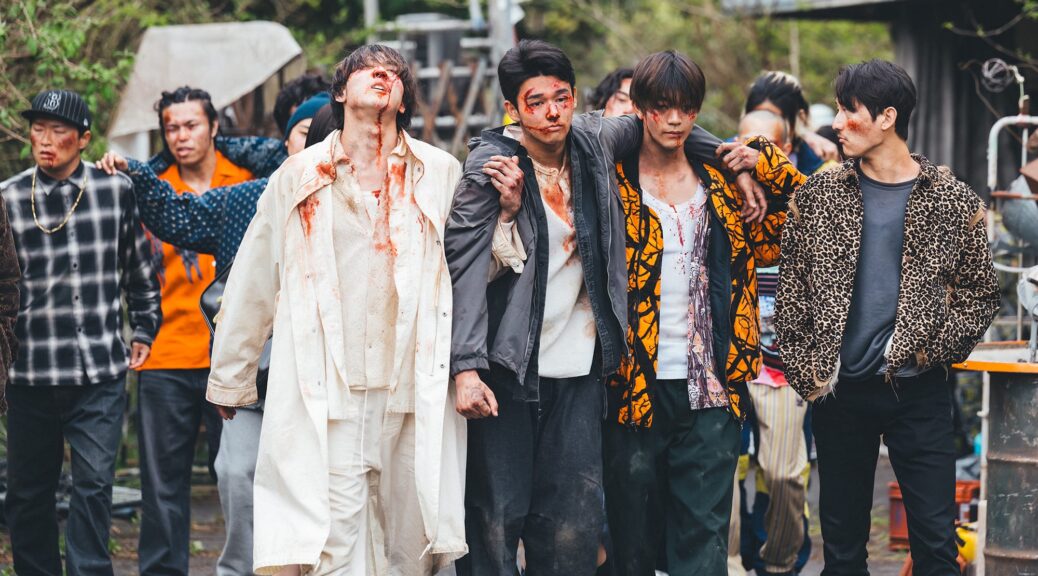
Cue the training montage (the first of several). On release, Ikito and Ryoma take jobs close to a gym. Job skill and training montage! But a colorfully dressed gang of bullies wants them gone. And there are love interests, but only for the bullies. Plus some kind of insane, leather clad Yakuza style gang, and a snotty rich kid who kickboxes for college. Everyone wants to fight!
There is too much Karate Kid style “boys learning something today,” too much bruised masculinity, and enough dialog heavy/reaction heavy scenes to bring every hint of momentum to a screeching halt.
Blazing Fists does boast a handful of Miike’s playfully weird scenes with random characters—usually oddly dressed old men—to inject a bit of fun into the film.
Miike can do just about anything: horror, samurai action, kid-friendly action, police procedurals, yakuza, fisticuffs action, historical drama, supernatural, grindhouse, surreal. He’s even done a musical! But the straight up sports drama does not seem a good fit for the genre maestro.
Miike avoids the obvious rags to riches climb to the top story arc that serves so many sports films. Instead, he squeezes in every possible beat and cliché into his 2-hour running time. Each trope is placed willy nilly. They certainly feel less predictable, strung together with no discernible rhyme or reason. They also never serve their generally accepted purpose of building tension.
Blazing Fists feels either like a long-form episodic program smashed into 2 hours, or like every sports film ever made, also smashed into 2 hours. Neither option makes the film any easier to watch.

This week Hope & George review They Will Kill You, Forbidden Fruits, Alpha, Mike & Nick & Nick & Alice, A Magnificent Life, Refuge, and The Serpent’s Skin. Plus News & Notes from The Schlocketeer, Daniel Baldwin!
by Hope Madden
“When the poor give to the rich, the devil laughs.”
This quote from Renaissance artist Benvenuto Cellini opens Kirill Sokolov’s new blood drenched action horror, They Will Kill You.
No one is more pleased than I am at the popularity in contemporary cinema of the theme that rich people are evil. Better still is the more recent trend (a resurgence of a topic popular in the late Sixties and Seventies) that the rich are not just evil, they are literally diabolical.
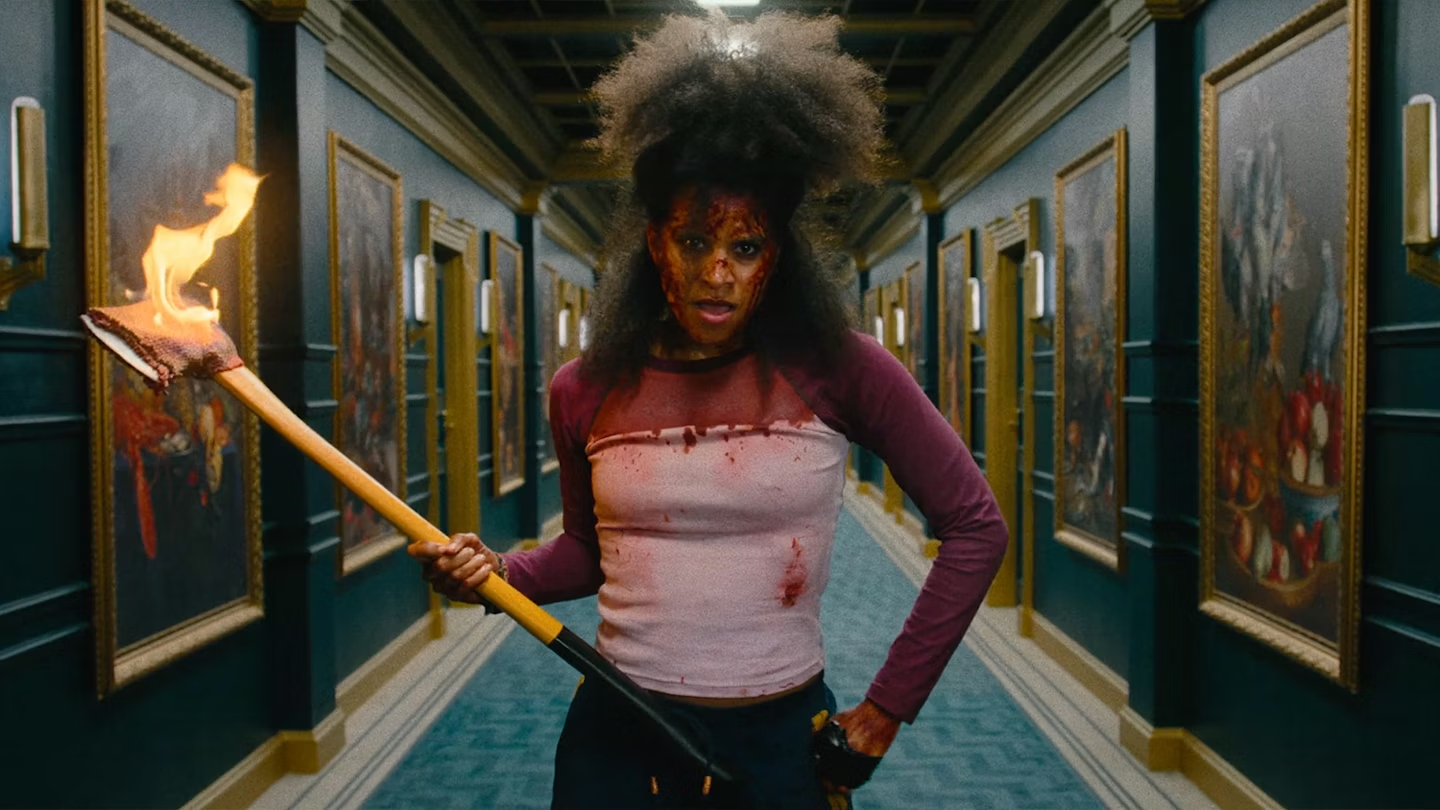
Zazie Beetz is Asia. She takes a gig as a maid in old school, elite Manhattan high rise, The Virgil. Asia has ulterior motives. The Virgil has ulterior motives. It’s a home for Satanists and she is to be their sacrifice. But Asia has mad skills and the best hair in action hero history, so The Virgil’s residents don’t have such an easy time of it.
What follows is room after crawlspace after room of absolute carnage.
Sokolov proved his immense talent for confined, blood drenched action choreography with 2018’s Why Don’t You Just Die? If you enjoy They Will Kill You, I implore you to find the filmmaker’s previous gem. It is amazing.
His instinct for confined, bloody action is almost unmatched. (I’m not saying he’s better than Gareth Evans, but he’s in the conversation.) Sokolov’s frenetic pacing and arterial spray-soaked humor, though, is entirely his own.
Beetz carries the action effortlessly and Sokolov surrounds her with an outstanding array of pasty creeps. Patricia Arquette is almost heartbreakingly convincing as the help who believes she’s family. Sokolov, working from a script he co-wrote with Alex Litvak, points to the racism that keeps the elite breathing rarified air. But almost all his jabs at our social woes are made visually.
They Will Kill You definitely bears a resemblance to last week’s Ready or Not 2: Here I Come. But this film is more hard-core, the stakes are higher, and the confined, goretastic action is superior.
What a time to be a horror fan!
by Hope Madden
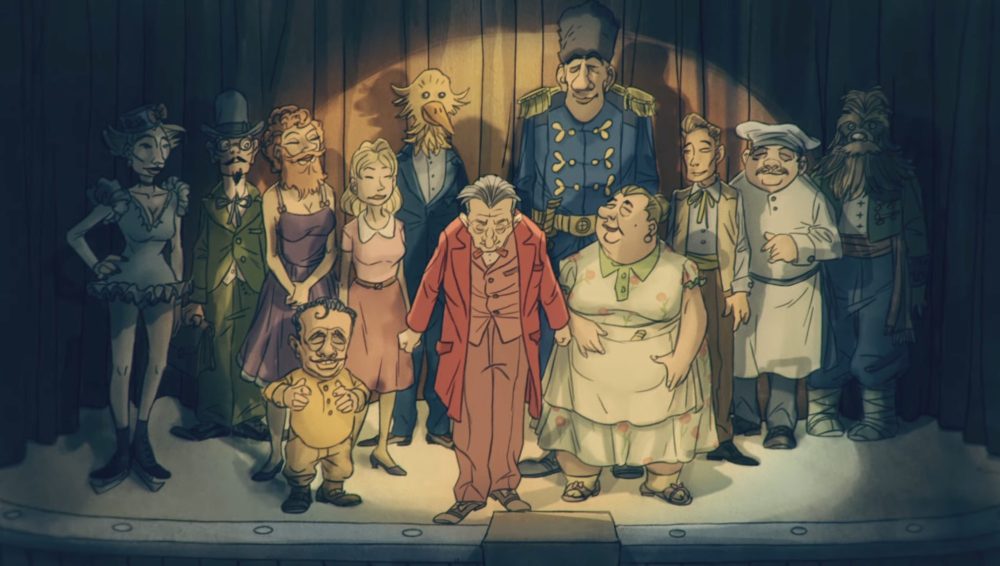
Sylvain Chomet is a filmmaker of eccentric, soulful films inspired by awkward, honest relationships, like The Triplets of Belleville. His films sparkle with love of vintage showmanship, the arts, and France. For those reasons, Chomet seems the ideal filmmaker to tackle a biopic about France’s prolific playwright and filmmaker, Marcel Pagnol.
Chomet’s animated feature A Magnificent Life opens in France of 1956. Pagnol is taking a bow, his early-career play having been successfully relaunched. But in a small party after the performance, he is listless. It seems the world has moved on, and he has nothing left to offer.
That emptiness, as we’ll see, is a post-success theme for the artist. Chomet positions these slumps as the points at which Pagnol would seek out a new challenge—from theater to film to literature.
The hand-drawn animation is an elegant wonder. The style for A Magnificent Life bears little resemblance to Chomet’s delightfully caricatured approach to Triplets or the endearingly wobbly look of The Illusionist. That’s not the only way the filmmaker’s latest animated feature changes pace.
A Magnificent Life follows a traditional biographical story arc, and that kind of reliance on familiar beats is out of character for Chomet. The film is also dialog heavy, which is wildly unusual for this filmmaker. In Chomet’s previous animated features, both Oscar nominees, any dialog became simply a blip or burble in a meticulously crafted sound design.
Pagnol’s life and career do seem fascinating. He rejected easy money, stood up to political and artistic pressures, and continually produced groundbreaking work. But A Magnificent Life gets mired in the detail and loses the larger themes. Since so many of those details deal with Paris’s difficulty with the Marseille accent so common in the writer’s work, the points are embarrassingly lost in the English language dub.
A Magnificent Life offers a perfectly lovely history lesson on one of France’s greatest playwrights and pioneers of cinema. But Chomet’s lost the off-center wonder of his earlier animated work, and a documentary might have been a better choice for a straightforward biopic.
by Hope Madden
There are drawbacks to being one of the most daring and original voices in cinema. Chief among them is expectation. Audiences anticipate that each new effort will somehow outshine the previous.
After 2016’s Raw, Julia Ducournau’s incandescent first feature, surely no one expected Titane. And I mean no one. Feral and unforgiving, homaging others but blazing its own wildly individual path, Ducournau’s sophomore effort took home Cannes’s Palm d’Or in 2021. The film that defies summarization managed to make Raw look tame, almost precious. Raw, by the way, is about a college freshmen overcome with cannibalistic frenzy whenever she’s aroused, if you haven’t seen it. Tame and precious.
So, expectations for Alpha, the filmmaker’s latest, were high.
The tale begins with its best scene. Amin (a wondrous Tahar Rahim) sits with his arm outstretched as his 5-year-old niece Alpha (Ambrine Trigo Oaked) makes his needle wounds pretty by connecting them, constellation-like, with a black marker. Simultaneously heartwarming and queasying, it seems the perfect opening to a Ducournau project.
We flash forward quickly to another disturbing scene. This time, 13-year-old Alpha (Mélissa Boros) has her arm outstretched. She’s barely lucid, surrounded by teens partying obliviously, as someone tattoos an enormous A on her arm. The work is not professional and draws plenty of blood.
From here, Alpha oscillates between two timelines in an alternate reality France. The core story of love and negligence, family trauma and addiction, sits in the context of a blood-borne epidemic. An epidemic to which Alpha has now made herself susceptible.
The AIDS analogy is clear but expect Ducournau’s visual style to turn the somber into something harrowingly beautiful. Sufferers of this unnamed virus show symptoms of smoke escaping their mouths when they cough. As the diseases progresses, bodies turn to something akin to blue veined, cracking marble.
It’s in this world that confused, self-destructive Alpha comes of age. Her mother (Golshifteh Farahani), a doctor, becomes passionately, almost blindly obsessed with keeping her junky brother and her reckless daughter safe.
The crisscrossing timelines often rob the film of its momentum. The real problem, though, is that in the end, Ducournau employs a fantasy trope to connect the timelines and embody the mother’s anxiety. Vague as she is about it, and powerful as the final moments are, Ducournau cannot breathe enough life into the cliché to elevate it above cliché.
There is a haunting ghost story at work here. Ducournau’s cast is astounding, and her visual style, though far more somber here than in her previous work, is still enough to draw a gasp. But Alpha boasts less imagination than either of the filmmaker’s previous efforts, and it’s hard not to be a tad disappointed.