Hope & George review this week’s new releases: The Running Man, Keeper, Now You See Me: Now You Don’t, In Your Dreams, The Carpenter’s Son, and Being Eddie.
Hope & George review this week’s new releases: The Running Man, Keeper, Now You See Me: Now You Don’t, In Your Dreams, The Carpenter’s Son, and Being Eddie.
by George Wolf
The mantra of this year’s The Running Man?
“When the stakes goes up, the shit goes down!”
And since 1987, which way have the original film’s stakes of weaponized disinformation, competitive cruelty and strategic class warfare been trending?
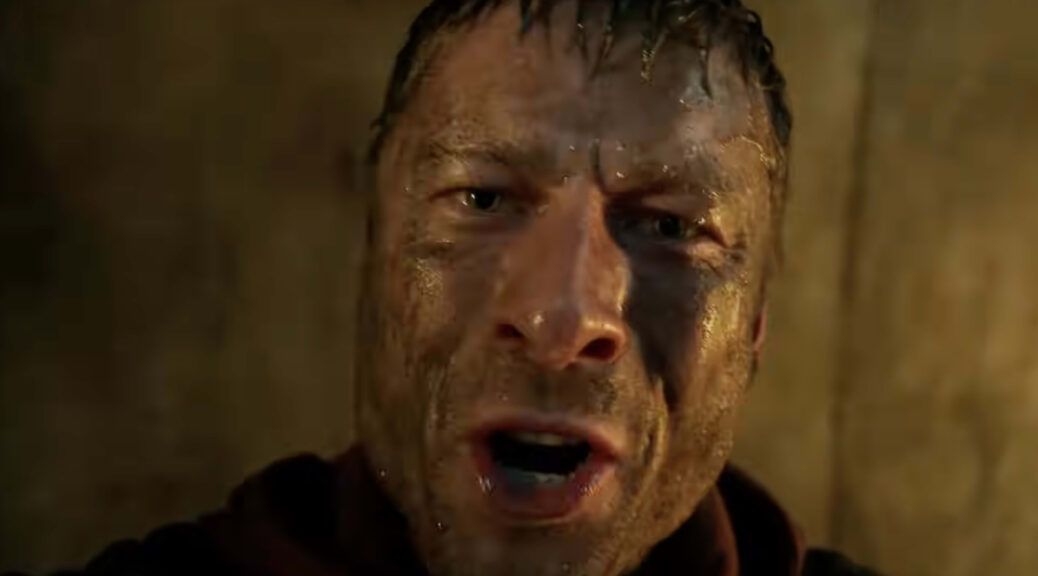
So enter director/co-writer Edgar Wright and star Glen Powell to get down to some dirty business in a pretty familiar dystopian future.
Powell is our new Ben Richards, who winds up on the The Running Man game show trying to win enough “new dollars” to pay for the care of his sick daughter and maybe even spring her and his wife Sheila (Jayme Lawson) out of the Co-Op City slums.
Producer Killian (Josh Brolin) likes the feisty cut of Ben’s jib, and is only too happy to start manipulating the game so Richards can become an engaging “final dude” for the cheering, bloodlusty hoards.
And this time, those common folk are joining the star “hunters” while the runners rely on underground friends and old, untraceable tech in trying to stay alive for 30 days.
In the Stephen King library, this material has always seemed like a more overt, in-your-face take on the themes he explored in The Long Walk. And while Wright avoids the high cheese factor of Arnold’s Running Man film, he keeps the lighter, glitzy tone that seems right for a game show aesthetic. Wright leans less on the trademark swipe cuts and wink-wink edits this time, but provides plenty of color splashes and engaging action set pieces to keep those eyeballs entertained.
Powell brings more than enough rogue-ish charm to make Ben a winning hero/anti-hero, Brolin is a perfect show biz menace and Colman Domingo is gloriously over-the-top as show host Bobby T. Both Michael Cera and CODA‘s Emilia Jones drive thru for some fun cameos, and the entire ensemble has no trouble keeping Wright’s vibe cooking.
Don’t expect subtlety. The moral lessons are clearly stated and the last act pulls in some explanatory (but nicely organic) speechifying before the crowd-pleasing finale. But hey, it’s telling us that those things we were worrying about almost 40 years ago have only gotten worse.
We already knew that. Might as well have some fun running with that fact for two hours.

by George Wolf
There are plenty of great reasons to want Nicolas Cage in your movie. Downplaying it alongside a young Jesus probably isn’t one of them.
But writer/director Lotfy Nathan seems undaunted, and he guides The Carpenter’s Son around Cage’s often distracting presence for a Biblical tale rooted in a more historical approach.
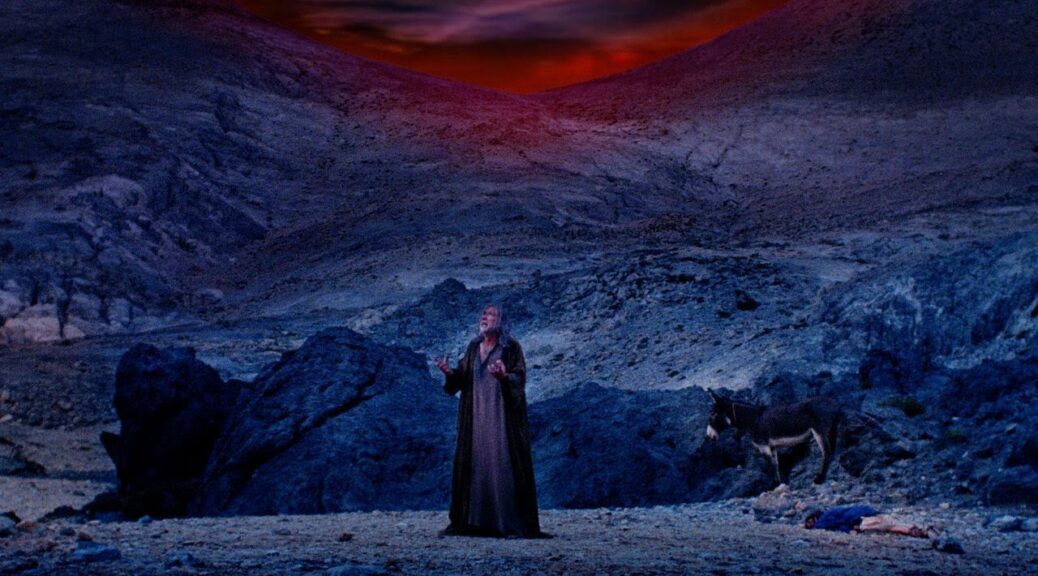
Nathan has based his script on “the Infancy Gospel of Thomas,” one of the apocryphal writings by early Christians that describe events missing in the New Testament. Cage is The Carpenter, who smuggles The Mother (FKA Twigs, saddled with an underdeveloped role) and their infant son out of the city before King Herod’s officers can sentence The Boy to death.
The family lays low for years, but by the time The Boy is a teenager (Noah Jupe), whispers are starting to spread about his mysterious powers. How Nic Cage lays low is another mysterious question, with his neatly trimmed beard and distinctly American accent adding to the feeling that he may have wandered in from another set.
And early on, the film seems headed for a disastrous collision of awkward tone and misguided ambition. But slowly, as Nathan focuses more on The Boy’s growing friendship with The Stranger (Isla Johnston), a compelling narrative begins to emerge.
Jupe (Suburbicon, Honey Boy, A Quiet Place, Ford v Ferrari) continues to impress as a now young adult, and Johnston delivers a standout supporting turn of intrigue. With their relationship at the center, the film becomes a unique coming-of-age story that offers both a relatable humanity and a possibility of Divine Providence.
Another part of the curiosity around this film is just what audience Nathan is going after. The faith-based crowd will find moments of blasphemy while the non-believers will scoff at the silliness. Folk horror fans will question how it earned that label, and plenty more will be waiting for a Cage rage that never materializes.
While it’s not the trainwreck you’re afraid it’s going to be, The Carpenter’s Son can’t build anything that’s truly satisfying. The blueprint may be provocative, but the support system remains plenty wobbly.

This week’s new releases in the screening room: Predator: Badlands, Christy, Die My Love, Train Dreams, Lost & Found in Cleveland, Nuremberg, and Down to the Felt.
by George Wolf
No matter what you think of Sydney Sweeney the celebrity glamour girl, you’ve got to give her props for not resting on her sexy laurels. I’m not saying her turn in the bikini-friendly Anyone But You didn’t show fine comic timing, but in five of her last seven films, Sweeney has chosen roles that downplayed her curves and provided the chance to challenge herself as an actress.
Okay, so Echo Valley, Eden, American, Immaculate and Reality didn’t make the box office buzz, but Christy continues Sweeney’s ambitious trend. And right on the cusp of awards season, she doesn’t waste the opportunity to impress, leading a stellar ensemble in giving some well-deserved flowers to a trailblazer in women’s sports.
In 1989, Christy Salters was a bored girl from West Virginian who played a very physical brand of basketball and bristled when her mother (Merritt Weaver) obsessed over the whispers about Christy’s relationship with girlfriend Rosie (Jess Gabor). After winning $300 in a local Toughman contest, Christy is introduced to boxing trainer/future husband Jim Martin (Ben Foster), who guides her, exploits her and violently abuses her on Christy’s path toward becoming Don King’s “Coal Miner’s Daughter,” the first woman to headline a PPV undercard.
Boxing films may carry the most inherent cliches of all sports stories and director/co-writer David Michôd can only steer Christy around them about half the time. As Christy’s fame and fortune grew, the level of abuse she suffered only intensified, to a level that will surprise many. And when Michôd (Animal Kingdom, The Rover) finds small moments to accentuate with a dramatic camera angle or well-timed edit, the performances from Sweeney and Martin find resonant depth.
We’re used to exemplary work from Foster, and here he makes Jim Martin a slippery, violent gas-lighter with just enough relatable edges to avoid caricature. Sweeney responds with committed grit, and Christy’s battles both in and out of the ring elicit sympathy, respect and admiration.
Even so, the biggest challenge to telling a story so personal is the temptation of throwing too many formulaic haymakers. When Christy can do that, it becomes a film worthy of Martin’s fight.
Winner by split decision.

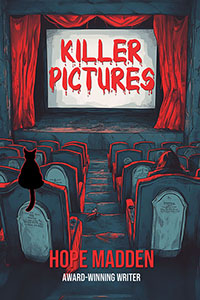
Maybe you know about Hope’s latest novel, Killer Pictures (get yourself an autographed copy right here in our store!)
It tells the story of Dez, who should go to bed, but instead, she keeps watching horror movies for the Mayhem & Madness Film Festival. She sees a new one pop up in her to-review queue: Adam. That’s a funny title, she thinks, since there’s another judge named Adam. But instead of watching, she goes to bed, and by the time she wakes up, the judge named Adam has killed his wife and himself, and the film Adam has disappeared from the judging queue.
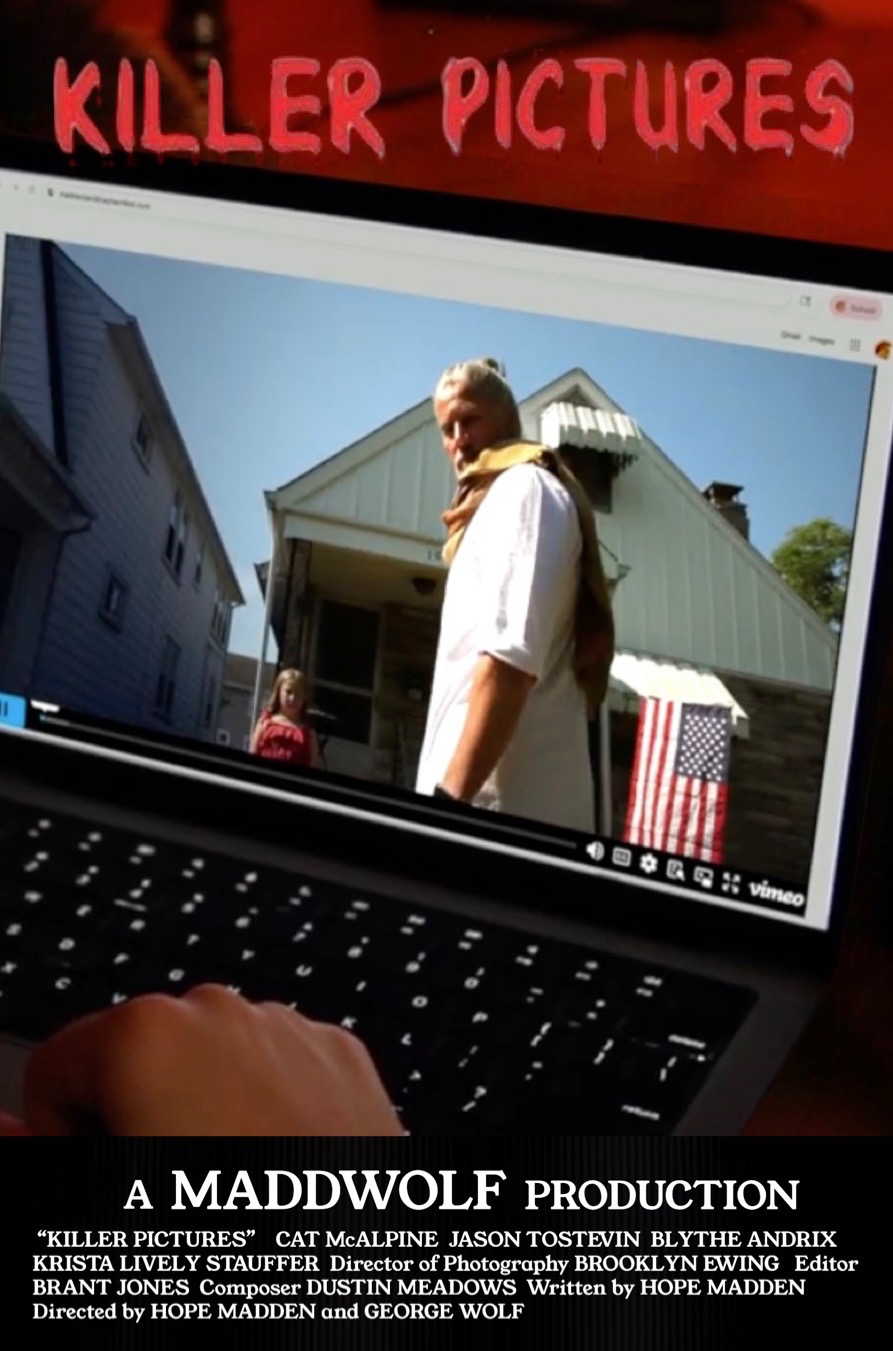
In its place is a film called Grant — the name of another judge. Is Grant doomed to Adam’s fate? Will Dez see her own name as a film title? If she does, will she dare watch it?
Welcome to the Mayhem & Madness film festival, where the judges are committed and the pictures are killer.
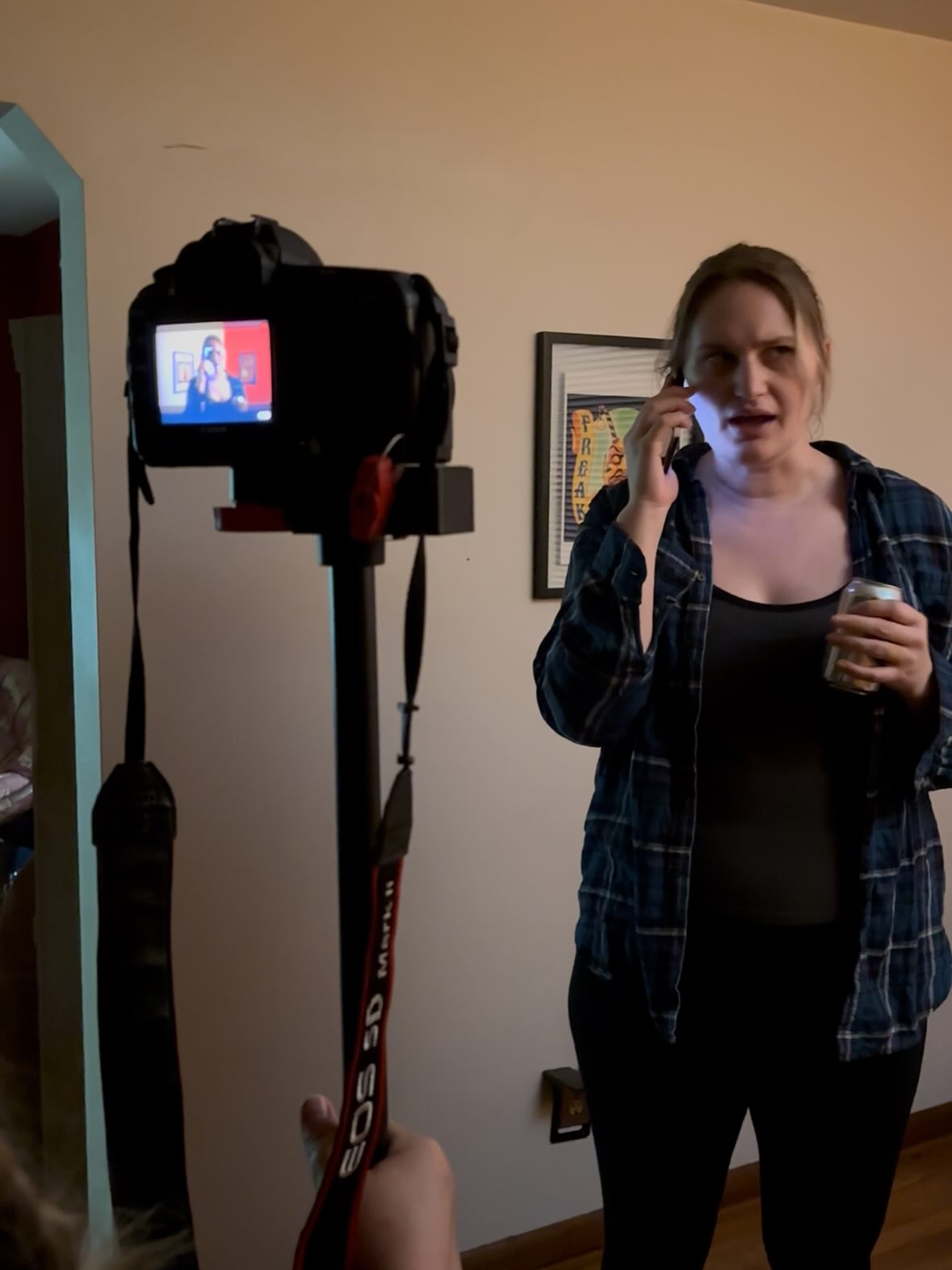
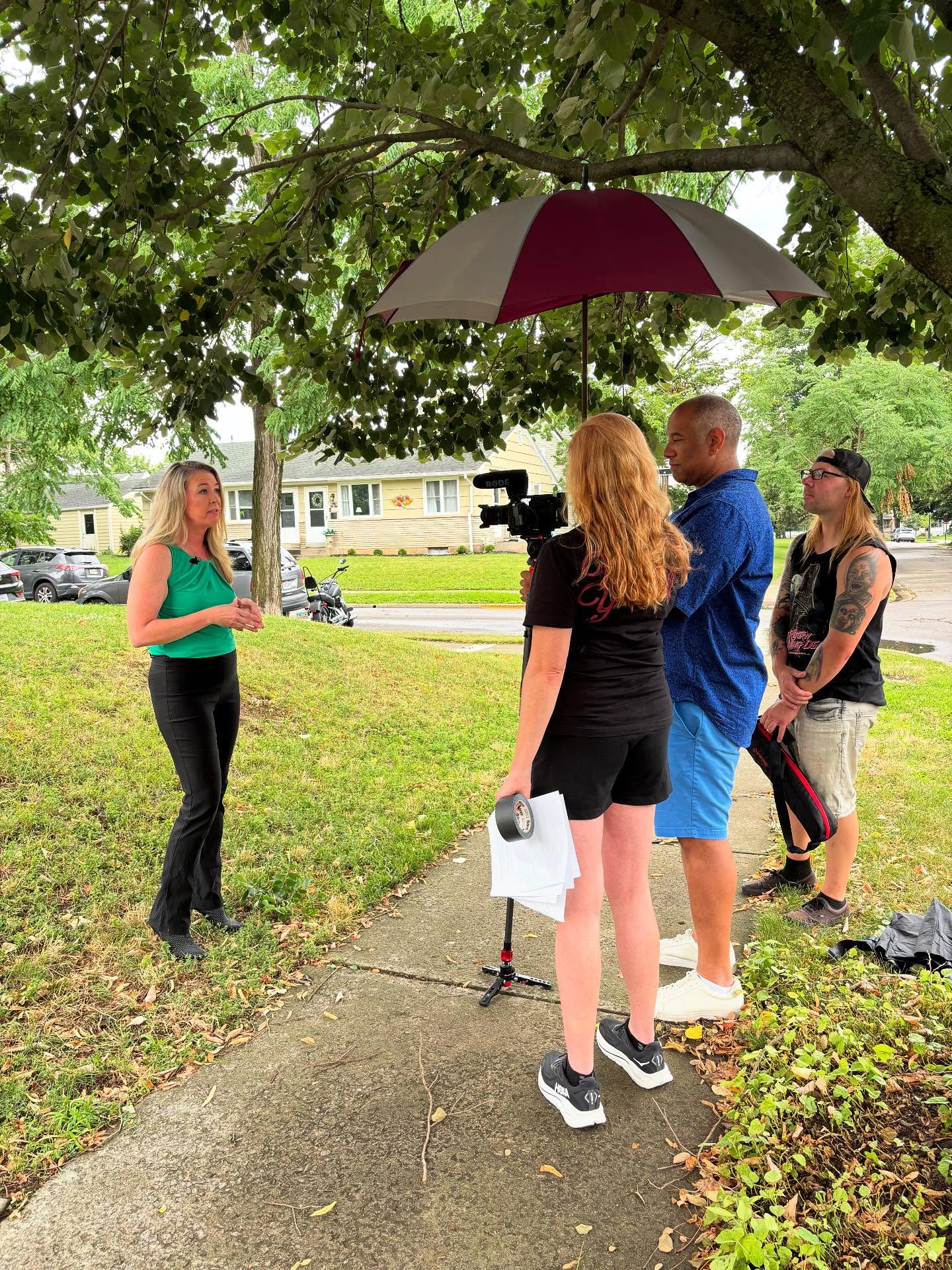
Intrigued? Well, treat yourself to our new short film, Killer Pictures, to watch as Dez falls into a mystery that may end her life.



New in the screening room this week: Bugonia, Stitch Head, Ballad of a Small Player, It Was Just an Accident, Anniversary, and Indera.
by George Wolf
Driving home one night with his wife and daughter, a man strikes and kills a stray dog that runs into the road. It is simply an accident, an innocent mishap.
But accidents and innocence are seldom part of Iranian filmmaker Jafar Panahi’s intricate parables, and 2025 Palme d’Or winner It Was Just an Accident quickly becomes the latest searing indictment of injustice and corruption in his homeland.
After hitting the dog, Eghbal (Ebrahim Azizi) takes his car in for service. At the shop, Vahid (Vahid Mobasseri) instantly thinks he recognizes Eghbal as the intelligence officer who brutalized Vahid and his fellow political prisoners years before.
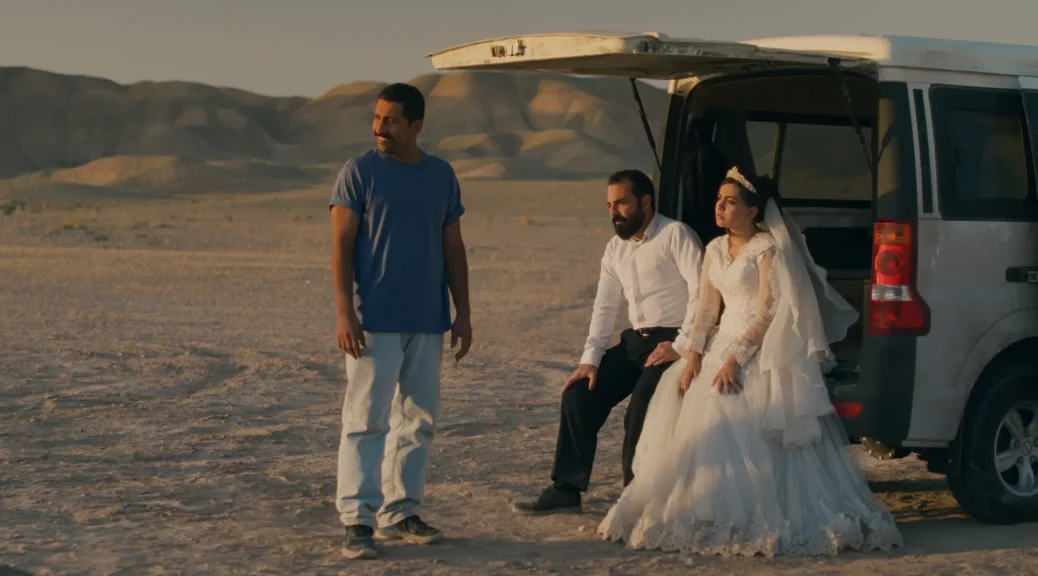
Vahid kidnaps Eghbal and is on the verge of killing him, when doubt creeps into his mind. Loading the unconscious Eghbal in the back of his van, Vahid heads out to find his fellow ex-inmates and some help in an airtight identification. The compatriots (including a bride, a groom, and a wedding photographer) react with a mixture and rage and uncertainty, and their travel over the course of one day allows Panahi to organically detail the abuse they once suffered and the casual corruption they still navigate daily.
This is the first film for Panahi (No Bears, Taxi, Closed Curtain) since Iran lifted his decade-long filmmaking and travel ban, and while he’s no longer filming himself in secret, Panahi’s storytelling still bursts with intimacy and courage.
The first rate ensemble makes the anger palpable, and Panahi masterfully weaves it into the mystery surrounding Eghbal’s guilt to create a thriller of simmering tension, comic sidebars and complex moralities.
If Eghbal is indeed their tormentor, is vengeance justified? And even if it is, would mercy actually bring them more peace?
True to form, Panahi closes with a shot that seems to close one chapter and open another, and the fade to black may require a few minutes to decompress.
But that’s the kind of effect Panahi’s films can have. It Was Just an Accident is more proof that he is one of the true modern-day masters, with a clear and distinctive voice that demands attention.

by George Wolf
Many fans of Lawrence Osborne’s 2014 book Ballad of a Small Player won’t be surprised to learn how long the film adaptation was stuck in development. The tale presents a tricky narrative tone, mixing metaphor, dark comedy and psychological mind games for a ride of desperate obsession.
Director Edward Berger and star Colin Farrell are all in for the Netflix version, but they leave the final table a little short of the jackpot.
Farrell is Lord Doyle, on the run in the Chinese region of Macau. Doyle needs to settle a $350,000 casino tab in three days or he’ll be arrested. But there are plenty of other glitzy casinos to visit, and Doyle works whatever angle he can to get credit at the baccarat tables, always promising that big score that never comes.
He seems to meet a kindred spirit in Dao Ming (Fala Chen), a casino manager who takes pity on Doyle’s lonesome loser nature. It is the Festival of the Hungry Ghosts in Macau, and Dao Ming may have some surprising burnt offerings in mind.
While the two begin to form a fragile bond, private investigator Cynthia Blithe (Tilda Swinton) is on Doyle’s tail, and may finally force him to confront the secret life he has been hiding.
Farrell brings sympathy to Doyle’s downward spiral in writer Rowan Joffe’s adaptation, making it easier to accept a third act that surprises no one. Swinton carves her usual glory out of limited screen time, and Chen gives Dao Ming the mysterious grace of possible salvation. Kudos as well to Deanie Ip as Grandma, an ultra-rich gambler who has no trouble sizing Doyle up in hilarious fashion.
Berger (All Quiet on the Western Front, Conclave) brings his own air of desperation, filling each frame with a forced showiness that wears out its welcome pretty quickly. There’s no doubt many set pieces are bursting with color and beauty, but the attempts to blur the real and surreal are so forced it begins to detract from the pleasure of watching these actors claw closer to that final reveal.
Ballad of a Small Player has no problem reminding you that the source is probably a great read. Watching it unfold – in select theaters, or on Netflix – is just too frustrating to rise above pretty good.
Hope and George cover this week’s new releases: Springsteen: Deliver Me From Nowhere, Frankenstein, Blue Moon, Shelby Oaks, The Hand That Rocks the Cradle, Stiller & Meara: Nothing Is Lost, and Last Stop: Rockafort St..