Tag Archives: documentary film

I Must (Un)Break You

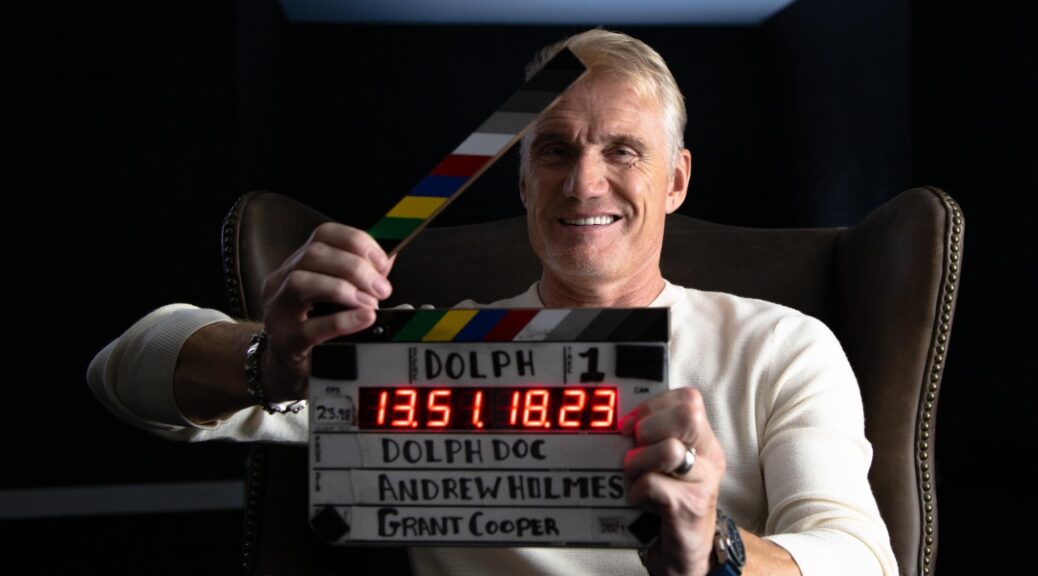
Dolph: Unbreakable

by Daniel Baldwin

Before the age of 27, Dolph Lundgren was an international karate champion, had a master’s degree in chemical engineering, was set to go MIT on a Fullbright Scholarship for his doctorate, and was both the bodyguard and boyfriend of singer/model/actress Grace Jones. In other words, he had already had a wildly successful and varied life by that point. The fact that he also became an international movie star after all that is just icing on the cake.

Dolph: Unbreakable covers all of the important mile-markers in Lundgren’s life. His early years in Sweden. His time abroad as a college student/martial artist. And then, yes, his crazy ride through the Hollywood system as a bodyguard turned action star turned director. Many of your favorite Dolph movies get some play here, but one should not sit down with this film expecting it to be an expose on his action movies.

Sure, the likes of Rocky IV, Masters of the Universe, The Punisher, Universal Soldier, The Expendables, Creed II, and many more are all brought up, but only ever in relation to where Dolph was at in his life and in his head as they occurred. This is a documentary about the man, not the movie star. Instead, we are given a story about an incredibly intelligent and athletically-gifted child who has endured an unending barrage of life’s pains and pleasures across decades, growing into a man who is grateful to still be around in this world.

Childhood abuse, academic success, athletic championship, failed relationships, blockbuster stardom, embarrassing paycheck gigs, substance abuse, severe kidney cancer, etc. All of it is covered in a manner more open and personal than one tends to find in similar documentaries. Our subject is unafraid to talk about his failures as much as he does his successes. You will see Dolph break stones and Rocky Balboa, but you’ll also see him break down crying as well.

If there’s a fault with this film, it’s only in that it isn’t longer. At 74 minutes, the film leaves a few areas of Lundgren’s life that could have been covered a bit more deeply. As it stands, it’s still an engaging and emotional piece of work. One that will no doubt be of interest to Dolph’s fans, as well as perhaps others who have casually enjoyed his work throughout the decades.

Dolph: Unbreakable is an intimate portrait of a man who has lived a very remarkable life full of extreme highs and extreme lows, and it’s a pretty good portrait at that.


Solid Choice

The History of Concrete

by Brandon Thomas

The mundane is probably the last thing that comes to mind when I think of the world of documentaries. Documentaries are meant to be serious business that deals with serious subject matter. Well, that and the slew of celebrity-focused films being released these days. It’s a balance, I guess.

Maybe that’s what makes John Wilson’s (HBO’s How to With John Wilson) The History of Concrete so fresh and appealing. There’s not an ounce of self-seriousness in Wilson’s film, yet by the time the end credits begin to roll, you still feel like you got a peek into what drives him, what he finds beautiful, and what frightens him about our changing world. 

As someone who’d never seen an episode of Wilson’s previous work, the bait-and-switch of the film’s title is a bit of a delightful surprise. Yes, The History of Concrete isn’t really about the history of concrete. Concrete is ever-present in the film’s periphery, but the real meat comes from Wilson’s side quests, if you will. The runners who run the same lap around an NYC block for 52 days, a concrete salesman who moonlights as an actor (or is that the other way around?), and the oldest concrete road in America. These are just a few of the detours Wilson takes, and they are certainly not the strangest. 

It might sound like I’m giving Wilson too much credit for knowing exactly what this film would be about and how he was going to approach it. Fortunately, the film itself doesn’t even do this. From a long prologue where Wilson attends a seminar on writing a Hallmark movie, to various Zoom calls where the filmmaker struggles to even describe the film he wants to make to potential investors, the “fly by the seat of your pants” aspect of the first third of the film is thrilling and ultimately a necessary part of Wilson’s organic approach.

In a world where even documentaries are playing it safe, The History of Concrete is a fantastic cinematic breath of fresh air.

Lost in Tarndanya

Mockbuster

by Matt Weiner

The disastrous production documentary has become a classic genre of its own. It’s easy to love a great movie, but there’s no highwire act like watching potential disaster unfold in real time, with the hope that artistic brilliance can still win out. And then there are the unfiltered geniuses working to the edge of madness, filmmaking greats like Coppola, Gilliam, Herzog, Coppola somehow again 45 years later … and now we can add to those luminaries the people who brought you Sharknado, Abraham Lincoln vs. Zombies, and Transmorphers.

Australian director Anthony Frith turns in two features in one with Mockbuster, a documentary that follows his last best chance to direct a real Hollywood feature movie. The studio willing to give him a shot just happens to be the Asylum, the B-movie powerhouse behind the Sharknado series plus hundreds of other films that tend to be either blatant Hollywood ripoffs (“mockbusters”) or public domain material.

Frith enjoys a successful if artistically unfulfilling career in Adelaide directing corporate films.  He still holds out hope for that last big break to create a real feature film, the kind he always dreamed of making as a kid. The Asylum gives him an immediate yes, and why wouldn’t they? The generous behind-the-scenes access portrays them as strict but self-aware schlockmeisters. And their studio process, while hectic, stays mostly on the rails. Frith’s role seems as much about watching the clock on a ludicrous six-day filming schedule as it is actually directing the production. And even then, the Asylum pairs him with in-house producer Brendan Petrizzo to make sure Frith gets his feature out of this. (And, perhaps, so Frith’s documentary also gets a happy ending that makes the studio look good.)

Frith is an affable subject, and he relays the right amount of incredulity at each new Asylum quirk such as not having a script just weeks before the shoot, or approving costumes on the first day of filming. But his ultimate embrace of “the Asylum Way” and the tightly budgeted—and mostly controlled—chaos that comes with it defangs his documentary’s more pointed critiques. The Asylum higher-ups are happy to lean into their roles as anti-Hollywood rogues. Co-founders David Rimawi, David Latt and Paul Bales all feature heavily in Frith’s interviews and know what they’re doing when they toss out soundbites like “We make shitty movies for people with bad taste.”

And these are shitty movies. They get churned out with the same ruthless efficiency as Hallmark, complete with in-house rules about runtime, plot beats and a stable of reliable names who can spout as much exposition as it takes to answer any lingering script questions that a six-day shoot didn’t have time to address.

It’s hard to root against Frith, who is likeable, competent and surprisingly unflappable in the face of near-impossible constraints. But it’s also hard not to see the same studio cynicism lurking beneath the Asylum’s B-movie gloss. Asylum movies are profitable, which is more than can be said for many studio films. But their system locks Frith into the same directorial trappings and lack of agency as any Marvel movie. Just because they’re doing it for a fraction of the cost doesn’t mean the result is anything that could meaningfully qualify as art versus content. Nor does it have anything helpful to say about the future of moviemaking.

Frith must know this as well. Why else do one for the arts and one for the charts with the same movie? Frith’s positive tone doesn’t address whether his experience would’ve been so rewarding if he hadn’t also had the chance to follow his actual dreams with Mockbuster. Yes, he succeeds on his own terms, in that Mockbuster is a far more enjoyable and introspective 90-minute movie than any Asylum film. But the cotton candy confection comes at the expense of the documentary compared to more probing films like Burden of Dreams, Lost in La Mancha or Hearts of Darkness.

Frith sums up the Asylum by declaring that “making a bad movie is better than making no movie at all.” But that’s easy for him to say. If we only had The Land That Time Forgot, his contractual Asylum film, would audiences come to the same conclusion? Would he?