Mockbuster
by Matt Weiner
The disastrous production documentary has become a classic genre of its own. It’s easy to love a great movie, but there’s no highwire act like watching potential disaster unfold in real time, with the hope that artistic brilliance can still win out. And then there are the unfiltered geniuses working to the edge of madness, filmmaking greats like Coppola, Gilliam, Herzog, Coppola somehow again 45 years later … and now we can add to those luminaries the people who brought you Sharknado, Abraham Lincoln vs. Zombies, and Transmorphers.
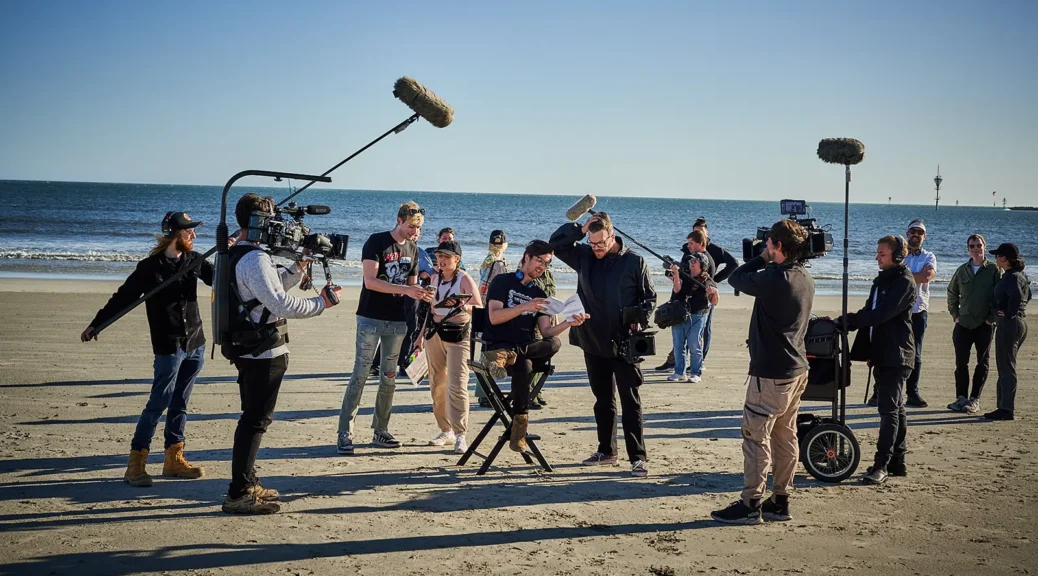
Australian director Anthony Frith turns in two features in one with Mockbuster, a documentary that follows his last best chance to direct a real Hollywood feature movie. The studio willing to give him a shot just happens to be the Asylum, the B-movie powerhouse behind the Sharknado series plus hundreds of other films that tend to be either blatant Hollywood ripoffs (“mockbusters”) or public domain material.
Frith enjoys a successful if artistically unfulfilling career in Adelaide directing corporate films. He still holds out hope for that last big break to create a real feature film, the kind he always dreamed of making as a kid. The Asylum gives him an immediate yes, and why wouldn’t they? The generous behind-the-scenes access portrays them as strict but self-aware schlockmeisters. And their studio process, while hectic, stays mostly on the rails. Frith’s role seems as much about watching the clock on a ludicrous six-day filming schedule as it is actually directing the production. And even then, the Asylum pairs him with in-house producer Brendan Petrizzo to make sure Frith gets his feature out of this. (And, perhaps, so Frith’s documentary also gets a happy ending that makes the studio look good.)
Frith is an affable subject, and he relays the right amount of incredulity at each new Asylum quirk such as not having a script just weeks before the shoot, or approving costumes on the first day of filming. But his ultimate embrace of “the Asylum Way” and the tightly budgeted—and mostly controlled—chaos that comes with it defangs his documentary’s more pointed critiques. The Asylum higher-ups are happy to lean into their roles as anti-Hollywood rogues. Co-founders David Rimawi, David Latt and Paul Bales all feature heavily in Frith’s interviews and know what they’re doing when they toss out soundbites like “We make shitty movies for people with bad taste.”
And these are shitty movies. They get churned out with the same ruthless efficiency as Hallmark, complete with in-house rules about runtime, plot beats and a stable of reliable names who can spout as much exposition as it takes to answer any lingering script questions that a six-day shoot didn’t have time to address.
It’s hard to root against Frith, who is likeable, competent and surprisingly unflappable in the face of near-impossible constraints. But it’s also hard not to see the same studio cynicism lurking beneath the Asylum’s B-movie gloss. Asylum movies are profitable, which is more than can be said for many studio films. But their system locks Frith into the same directorial trappings and lack of agency as any Marvel movie. Just because they’re doing it for a fraction of the cost doesn’t mean the result is anything that could meaningfully qualify as art versus content. Nor does it have anything helpful to say about the future of moviemaking.
Frith must know this as well. Why else do one for the arts and one for the charts with the same movie? Frith’s positive tone doesn’t address whether his experience would’ve been so rewarding if he hadn’t also had the chance to follow his actual dreams with Mockbuster. Yes, he succeeds on his own terms, in that Mockbuster is a far more enjoyable and introspective 90-minute movie than any Asylum film. But the cotton candy confection comes at the expense of the documentary compared to more probing films like Burden of Dreams, Lost in La Mancha or Hearts of Darkness.
Frith sums up the Asylum by declaring that “making a bad movie is better than making no movie at all.” But that’s easy for him to say. If we only had The Land That Time Forgot, his contractual Asylum film, would audiences come to the same conclusion? Would he?

