Tag Archives: Carrie

Fright Club: Best Horror of the Seventies

The Seventies is when horror really took off. Blockbuster masterpieces like Alien and Jaws affected countless viewers and at least as many future filmmakers. Maverick young directors like Brian De Palma, Wes Craven, Tobe Hooper, John Carpenter, David Cronenberg and Dario Argento developed into the cinematic voices of a generation. Major studio efforts with A-list casts like The Omen kept the genre on the front burner for all movie goers, and Blaxploitation reached into the genre with the Blacula series.

We had to leave a lot off this list. In what may be the most crowded field of any decade, here we boil down the five best horror films (strictly horror – sorry Jaws & Alien!) of the 1970s.

5. Nosferatu the Vampyre (1979)
In 1922, F.W. Murnau directed maybe the best vampire film we’ll ever see: Nosferatu. In 1979, Werner Herzog lovingly remade it. Both films are obviously based on Bram Stoker’s Dracula novel, but where Stoker saw romance, these German filmmakers saw pestilence.

The effortlessly weird Klaus Kinski may play Dracula, but his look is 100% Orlock from Murnau’s film. Pasty and bald with hollowed eyes, pointy ears and rat teeth, this vampire relates far more to the vermin spreading the Black Plague across Europe than to the sultry beast luring women and men to an erotic end.

Herzog’s images are dreamy and wonderful, and the twists he gives the fairly tired storyline are genius. Isabel Adjani’s Lucy gets to be the hero, and the alteration to her beloved Jonathan Harker’s character is the work of dark genius.

4. Halloween (1978)

No film is more responsible for the explosion of teen slashers than John Carpenter’s babysitter butchering classic.

Sure, you’ve seen it, but from the creepy opening piano notes to the disappearing body ending, this low budget surprise changed everything. Carpenter impeccably develops anxiety, breaking tradition by planting it right in a wholesome Midwestern neighborhood. You don’t have to go camping or take a road trip or do anything at all – the boogeyman is right there at home.

Michael Myers – that hulking, unstoppable, blank menace – is terrifying. Pair that with the down-to-earth charm of lead Jamie Lee Curtis, who brought a little class and talent to the genre, and add the bellowing melodrama of horror veteran Donald Pleasance, and you’ve hit all the important notes. Just add John Carpenter’s spare score to ratchet up the terror. Nice.

3. Carrie (1976)

The seminal film about teen angst and high school carnage has to be Brian De Palma’s 1976 landmark adaptation of King’s first full length novel, the tale of an unpopular teenager who marks the arrival of her period by suddenly embracing her psychic powers.

Sissy Spacek is the perfect balance of freckle-faced vulnerability and awed vengeance, but she may be overshadowed by Piper Laurie’s glorious evil zeal as her religious nutjob mother. (Both were Oscar nominated.) We feel proud and cautiously optimistic when Carrie finally stands up to her mother, but Senior Prom, or “Love Among the Stars,” doesn’t go as well as it might have for poor Carrie White or her classmates. One ugly trick involving a bucket of cow’s blood, and Carrie’s psycho switch is flipped. Spacek’s blood drenched Gloria Swanson on the stage conducting the carnage is perfectly over-the-top. And after all the mean kids get their comeuppance, Carrie returns home to the real horror show.

De Palma and screenwriter Lawrence D. Cohen wisely streamline King’s meandering finale. From the prom sequence onward, De Palma commits to the genre, giving us teen carnage followed by the profoundly upsetting family horror, finished with one of cinema’s best “gotcha” moments.

The prom scene inspired a Halloween costume for us a couple years ago – we won best costume and a free round!
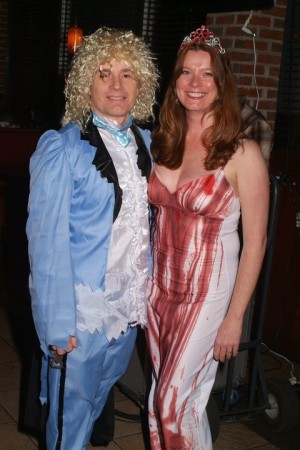
IMG_1827

2. The Texas Chainsaw Massacre (1974)

Not everyone considers The Texas Chainsaw Massacre a classic. Those people are wrong. Perhaps even stupid. It is classic because Hooper masterfully enlisted a low rent verite for this bizarre story to do something utterly new. The camera work, so home-movie like, worked with the “based on a true story” tag line like nothing before it, and the result seriously disturbed the folks of 1974. It has been ripped off and copied dozens of times since its release, but in the context of its time, it was so absolutely original it was terrifying.

Hooper sidestepped all the horror gimmicks audiences had grown accustomed to – a spooky score that let you know when to grow tense, shadowy interiors that predicted oncoming scares – and instead shot guerilla-style in broad daylight, outdoors, with no score at all. You just couldn’t predict what was coming.

Poor, doomed, unlikeable Franklin Hardesty, his pretty sister Sally, and a few other friends head out to Grampa Hardesty’s final resting place after hearing the news of some Texas cemeteries being grave robbed. They just want to make sure Grampy’s still resting in peace – an adventure which eventually leads to most of them making a second trip to a cemetery. Well, what’s left of them.

We got to meet Gunnar Hansen (Leatherface) and Marilyn Burns (Sally) a couple years ago. We were pretty geeked!
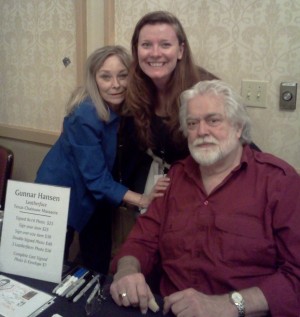
FullSizeRender

1. The Exorcist (1973)

Slow moving, richly textured, gorgeously and thoughtfully framed, The Exorcist follows a very black and white, good versus evil conflict: Father Merrin V Satan for the soul of an innocent child. But thanks to an intricate and nuanced screenplay adapted by William Peter Blatty from his own novel, the film boasts any number of flawed characters struggling to find faith and to do what’s right in this situation. And thanks to Friedkin’s immaculate filming, we are entranced by early wide shots of a golden Middle East, then brought in a little closer to watch people running here and there on the campus at Georgetown or on the streets of NYC.

Then we pull in a bit closer: interiors of Chris MacNeil’s (Ellen Burstyn) place on location, the hospital where Fr. Karras’s mother is surrounded by loons, the labs and conference rooms where an impotent medical community fails to cure poor Regan (Linda Blair).

Then closer, in the bedroom, where you can see Regan’s breath in the chilly air, examine the flesh rotting off her young face. Here, in the intimacy, there’s no escaping that voice, toying with everyone with such vulgarity.
The voice belongs to Mercedes McCambridge, and she may have been the casting director’s greatest triumph. Of course, Jason Miller as poor, wounded Fr. Damien Karras could not have been better. Indeed, he, Burstyn and young Linda Blair were all nominated for Oscars.

So was Friedkin, the director who balanced every scene to expose its divinity and warts, and to quietly build tension. When he was good and ready, he let that tension burst into explosions of terrifying mayhem that became a blueprint for dozens of films throughout the Seventies and marked a lasting icon for the genre.

So that’s it! We hope you agree, but let us know if you don’t, and be sure to listen to the entire podcast on Fright Club!

Halloween Countdown, Day 14

Carrie (1976)

The seminal film about teen angst and high school carnage has to be Brian De Palma’s 1976 landmark adaptation of Stephen King’s first full length novel, the tale of an unpopular teenager who marks the arrival of her period by suddenly embracing her psychic powers.

Sure, the film opens like a ‘70s soft core porno, with images created by a director who has clearly never been in a girls’ locker room and therefore chose to depict the one in his dirty, dirty mind. But as soon as the bloody stream punctures the dreamlike shower sequence, we witness the definitive moment in Mean Girl Cinema. The “plug it up” refrain, coupled with Sissy Spacek’s authentic, even animalistic portrayal of panic, sets a tone for the film. Whatever Carrie may do, we (the voyeurs, no doubt more like the normal kids than like Carrie) are to blame.

This film exposes a panic about the onslaught of womanhood. The same panic informs The Exorcist and dozens of others, but De Palma’s version offers more sympathy than most. King’s tale may link menstruation with female power and destruction, but De Palma mines the story for an underdog tale that more foreshadows Columbine than Jennifer’s Body.

Spacek is the perfect balance of freckle-faced vulnerability and awed vengeance. Her simpleton characterization would have been overdone were it not for Piper Laurie’s glorious, evil zeal as her religious nutjob mother. It’s easy to believe this particular mother could have successfully smothered a daughter into Carrie’s stupor.

Senior prom doesn’t go as well as it might have for poor Carrie White or her classmates. Contrite Sue Snell (Amy Irving) – who’d given up her own prom so her boyfriend Tommy (William Katt and his awe inspiring ‘fro) could take Carrie – sneaks in to witness her own good deed. Unfortunately for Sue, the strict rules of horror cinema demand that outcasts remain outcasts. Sure, Sue shouldn’t have been mean to Carrie in the first place, but being nice was the big mistake. Only bad things would follow.

De Palma and screenwriter Lawrence D. Cohen wisely streamline King’s meandering finale. From the prom sequence onward, De Palma commits to the genre, giving us teen carnage followed by the profoundly upsetting family horror, finished with one of cinema’s best “gotcha” moments.


This Week’s Countdown is Off Like a Prom Dress

It’s  almost May…what’s that I smell? Lilacs? Goose poop? Fresh spring roadkill? Nope, it’s that similar fragrance mashup of boutonnieres, hair spray, and desperation that equals prom.

Let’s all relive our own prom anxieties while the kids struggle through their real-life horror, shall we?


Carrie (1976)

Yes! Best prom movie ever! Sure, it opens like a ‘70s soft core porno with images created by a director who has clearly never been in a girls’ locker room. But as soon as that bloody stream punctures the dreamlike shower sequence, we witness the definitive moment in mean girl cinema.

No, Senior Prom, or “Love Among the Stars,” doesn’t go as well as it might have for poor Carrie White (Sissy Spacek) and her classmates. Contrite Sue Snell (Amy Irving), who’d given up her own prom so boyfriend Tommy (William Katt, sporting an awe inspiring ‘fro) could accompany Carrie, sneaks in to witness her own good deed. Unfortunately for Sue, the strict rules of horror cinema demand that outcasts remain outcasts. Sure, Sue shouldn’t have been mean to Carrie in the first place, but being nice was the big mistake. Only bad things would follow.

Quote: They’re all going to laugh at you.


Prom Night (1980)

This bland Jamie Lee Curtis slasher crystalized a formula that would be mimicked (often more successfully) for decades. Open with a flashback, turn it into a secret kept among a handful of friends, flash forward to one big event these friends are planning, nightmare resurfaces and red herrings await.

But that’s not the reason to see Prom Night. See it for the super-colossal dance floor boogie. Go Jamie Lee and Jamie Lee’s thumbs, go! Is that Leslie Nielsen? Who brought that glitter? It’s always fun to see someone die on prom night.

Quote: It’s not who you go with, honey. It’s who takes you home.

http://www.youtube.com/watch?v=7cVcnApjsvk


Napoleon Dynamite (2004)

No one rocks a brown corduroy suit at a formal dance like my husband, but Napoleon Dynamite comes in second. And what about Deb’s awesome sleeves? That’s a styling couple.

Kip may have found his soul mate, but poor Napoleon’s still swimming the tepid pool of young love, llama food, best friends, delusional uncles, ailing grandmas, and sweet moves. Thank God for it.

Quote: I like your sleeves.


Grease (1978)

Poodle skirt to hot pants, that’s the transformation at the heart of this generation-pleaser. Did Sandy (Olivia Newton John) have a yeast infection by the time she got those pants off? Well, of course she did, but it was worth it to call John Travolta a stud and do a frisky dance in the Shake Shack.

Let’s not forget the prom, though. Cha Cha DiGregorio (the best dancer at St. Bernadette’s…with the worst reputation!) might have planned to dump Kenickie and steal Danny (Travolta) away from the fair and timid Sandy, but she did not know the hygienically questionable lengths Sandy was willing to go to keep her man.

Quote: It doesn’t matter if you win or lose, it’s what you do with your dancin’ shoes.


Footloose (1984)

See this one now, not the ridiculous remake. (How do I know it’s ridiculous? Because it’s a remake of Footloose, for Lord’s sake.)

Kevin Bacon moves to a hyper-conservative town and has to dance his way out. John Lithgow scowls. Sarah Jessica Parker looks unfashionable. Chris Penn learns to disco. Tears are shed, families are mended.

Quote: If our Lord wasn’t testing us, how would you account for the proliferation, these days, of this obscene rock and roll music, with its gospel of easy sexuality and relaxed morality?

http://www.youtube.com/watch?v=6nSXtZPKms4


Buffy the Vampire Slayer (1992)

Years before Sarah Michelle Gellar began her 145-episode vampire battle royale, and one year before writer Joss Whedon would pen the animated masterpiece Toy Story, Kristy Swanson joined that guy from 90210 (Luke Perry) to stake the undead at the big high school formal as the silver screen Buffy the Vampire Slayer.

Bonus points for casting choices in Paul Reubens and Rutger Hauer as marauding, stinky vampires. Additional points for an early, non-Oscar nominated role for Hilary Swank.

Quote: All I want to do is graduate from high school, go to Europe, marry Christian Slater, and die.


Pretty in Pink (1986)

Part 3 of the Molly Trilogy, Pretty in Pink mopes with a cool redhead (Ringwald) from the wrong side of the tracks as she stokes her anxiety about prom and its place in her existential dread.

Some claim you can learn all you need to know about a person by asking which is their favorite Beatle. I disagree. The real question: who did you root for, Blane or Duckie?

Quote:  His name is Blane?! That’s not a name, that’s a major appliance.


What’s in a Name?

Carrie

by Hope Madden

Back in ’76, Brian De Palma brought Stephen King’s first novel, Carrie, to the screen and a terrifying vision of persecution and comeuppance emerged. But that was almost twenty five years before Columbine, and the image of the bullied and confused wreaking bloody revenge at a high school has taken on a different tenor.

That’s no doubt why King’s tale made its way to television in 2002 with a fresh take on the horror. But things in high school have changed again, and the story of Carrie White takes on particular tragedy in a wired time where another innocent high school girl takes her life almost weekly due to bullying. Perhaps that’s what drew filmmaker Kimberly Pierce, whose Boys Don’t Cry also outlines the tragedy that befalls a young woman violently unaccepted for who she is.

In Pierce’s hands, Carrie offers more stripped down drama – none of the scenery chewing of the De Palma original. There’s no humor to be found in the reboot, but realistic performances and updated context give the film enough bite to keep you watching.

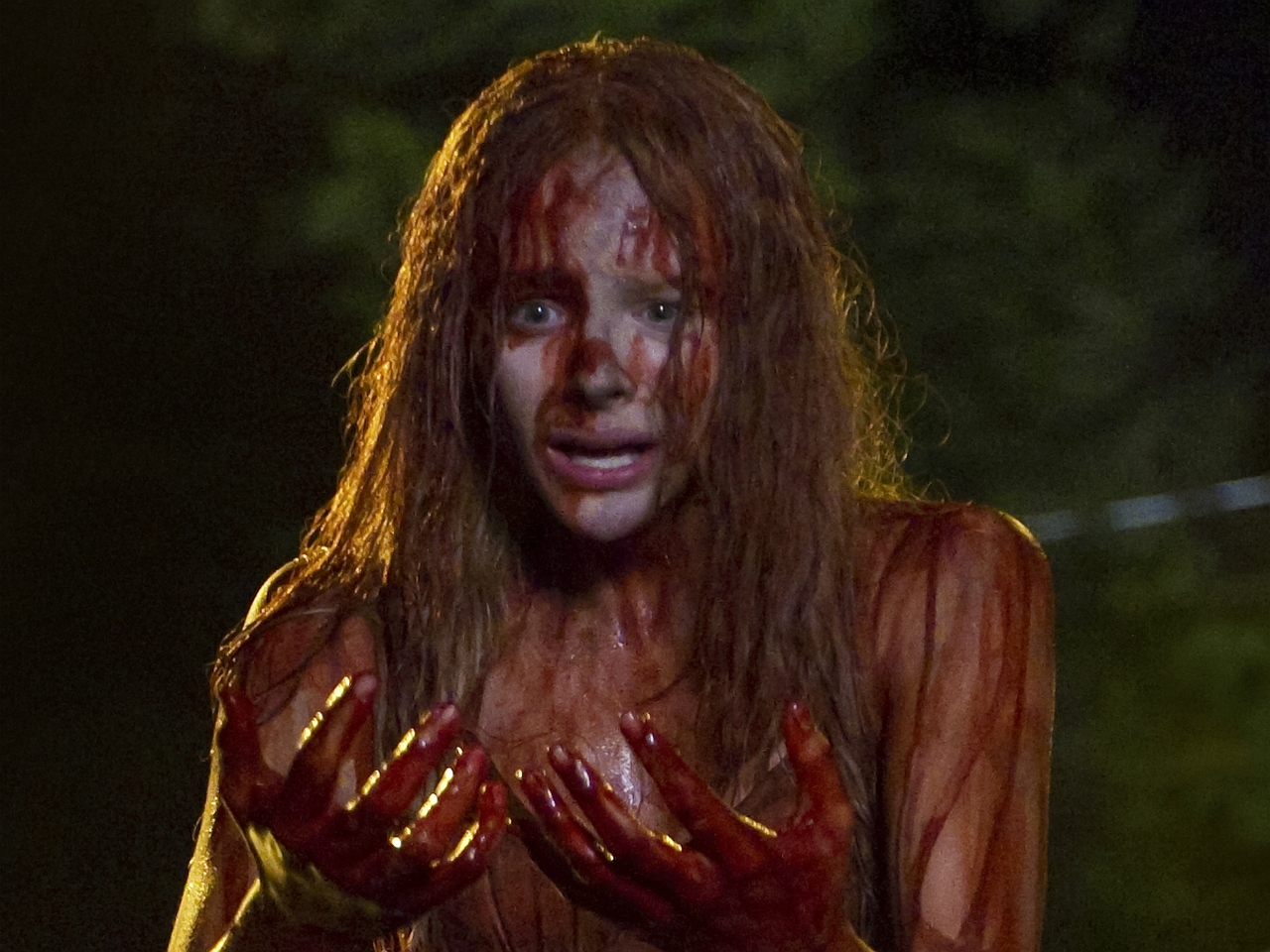
Chloe Grace Moretz takes on lead duties as the youngster whose first monthly flow triggers all manner of havoc, from the most unconscionable bullying to telekentic powers. Oh, and her mom tries to kill her. So, not the blessing those Health Ed books try to tell us it is.

Moretz has a big prom dress to fill, and though she has always been a reliable talent, her turn here is unconvincing. Sissy Spacek truly was that innocent, a girl so repressed by her religious mother that she had no conscious knowledge of appropriate social behavior. Moretz is a cute, shy girl the mean kids dislike. It’s not the same.

The always exquisite Julianne Moore actually has an even larger task cut out for her. The role of Margaret White is a juicy one. Even the TV version drew the great Patricia Clarkson to the project. And Moore is characteristically strong, clearly defining the role in a terrifying yet almost sympathetic way. But she’s no Piper Laurie.

Laurie brought such vitality and insanity to the role that the prom became almost secondary, and her chemistry with Spacek was eerily perfect.

The updated context casts a truly saddening shadow over the film, making a major thematic adjustment without even trying. Stephen King wrote a story about hysteria over the dawning of womanhood. But today, the story carries an even darker message. Carrie is a cautionary tale about sending your kids to high school.


Verdict-3-0-Stars