Tag Archives: Brendan Fraser

Best Supporting Actor

Rental Family

by George Wolf

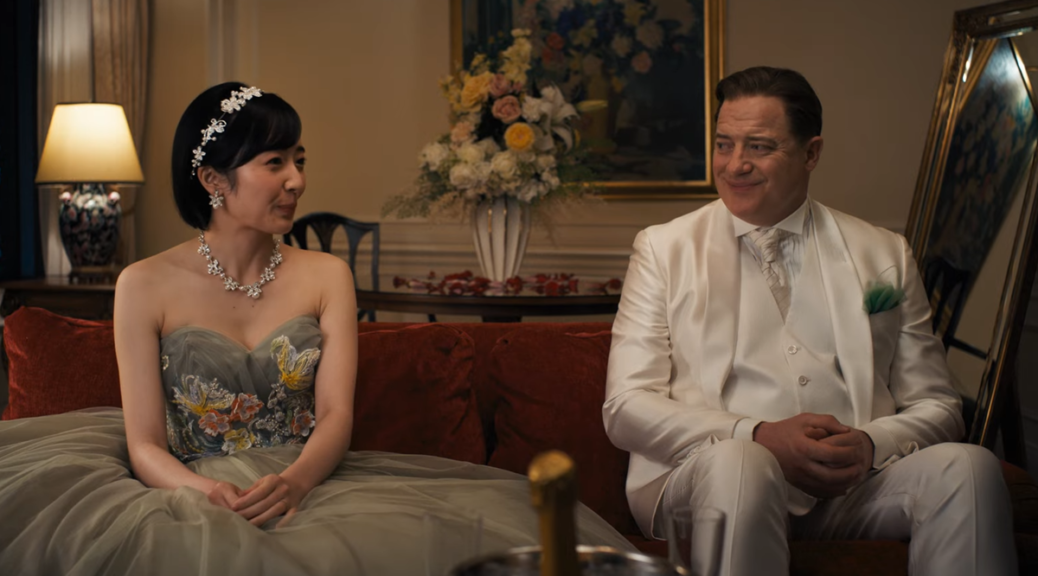
For the first few minutes of Rental Family, you’re not quite sure what it’s trying to be. Phillip, an American actor, is living and working in Japan, wearing funny suits in commercials to get by.

So, maybe fish-out-of-culture screwball comedy.

But then Phillip (Brendan Fraser) starts working at a company that “rents” whoever you need to make you feel better in a certain situation. The “Rental Family” firm needs a token white guy, and Phillip’s first assignment is playing a sad American at a funeral that results in a good laugh.

Still, maybe goofy comedy?

But at twenty minutes in, director and co-writer Hikari puts Phillip in an absolutely lovely human moment. As Phillip sees how good his work can make people feel, a possible warm drama of human connection comes into focus.

Hikari (Beef) and her writing partner Stephan Blahut base the film on real services for hire in Japan. To combat the stigma of mental health, the Japanese can “rent emotion” through actors playing roles in manufactured situations that make the clients seem more contented.

That is a sad necessity, for sure, and Fraser’s caring eyes and frequently furrowed brow speak loudly through various assignments. But as Phillip plays the father of a young girl trying to ace a school entrance exam, and then a reporter interviewing an aging actor who worries he’s been forgotten, the lines of fantasy and reality begin to blur.

Boundaries are crossed, secrets come to light and Phillip’s employer (the renowned Takehiro Hira) finds his entire business suddenly in jeopardy.

Hikari’s big heart is certainly in the right place here, but the film hits its highpoint with that early twenty minute moment. From there, the Oscar-winning Fraser is mainly held to one mopey note, and the emotional tone of the movie begins to feel a bit manipulative.

Mainly, Rental Family lands as a missed opportunity. There is potential here to spotlight a fascinating cultural commodity that parallels the manufactured reality of our social media age. What we get isn’t bad – in fact, it’s very nice – as long as you’re content with broad brushes and greeting card sentiments.

Kings, Queens and Pawns

Killers of the Flower Moon

by George Wolf

“Can you find the wolves in this picture?”

The question comes from a book on Osage Indian history that Ernest Burkhart is perusing, and it’s one that lingers throughout Martin Scorsese’s triumphant epic Killers of the Flower Moon.

After serving as a cook in WWI, Ernest (Leonardo DiCaprio) has come home to work for his uncle William “King” Hale (Robert De Niro) on an Oklahoma ranch. But while King is a wealthy powerbroker in the town of Fairfax, he laments that his “cattle money” is nothing next to the oil money of the Osage tribe, at that time the richest people per capita on the face of the Earth.

The Osage natives are worried, too, about the price of assimilation, the dangers that come with the comforts of wealth, and the white men eager to marry into their money.

King assigns Ernest a job driving for the reserved, pensive Mollie (Lily Gladstone). And when the couple marries, King calmly explains to Ernest how much closer the legal union puts them to the oil shares in Mollie’s family.

But Ernest has trouble “finding the wolves,” and as unsolved murders of the Osage people begin to mount, Ernest is drawn into a quagmire of lies and killings that eventually brings federal investigator Tom White (Jesse Plemons) and his team to Fairfax.

Scorsese and co-writer Eric Roth adapt David Grann’s nonfiction book with an engrossing mix of true crime fact-finding, slow burning thrills and devastating heartbreak. The characters are rich in culture and in shades of human grey, each one caught in an infamous crossfire of American envy, arrogance, bigotry and greed.

Expect multiple notices in the coming awards season.

Editing from three time Oscar-winner Thelma Schoonmaker is subtle and patient, every frame buoyed by a mesmerizing, evocative score that is sure to land the legendary Robbie Robertson posthumous nominations, right beside those of an acting ensemble that is don’t-forget-to-breathe tremendous.

De Niro makes King a scheming sociopath hiding in plain sight, with his kindest words saved for those he is most gaslighting. DiCaprio has never been better, as the simple Ernest’s journey from war hero to murder suspect is both a singular character study and a broad personification of confident ignorance.

Every member of the cast, from familiar faces such as Plemons, John Lithgow and Brendan Fraser to lesser known actors like Jason Isbell, Cara Jade Myers and William Belleau, brings limited roles to wonderfully realized fruition.

But it is Lily Gladstone who carries the very soul of this film. Mollie is a woman very aware of the daggers that are out for her people. She wants desperately to trust in her husband and their future, and the deeply held emotion that Gladstone (Certain Woman, First Cow) is able to communicate – often with her eyes alone – is a masterful thing to behold.

Scorsese and cinematographer Rodrigo Prieto (Barbie, The Irishman, Brokeback Mountain, Silence) find beauty in the expanse of the landscape, intimacy in moments of violence and betrayal, and a purposeful sense of history in the way numerous snapshots are held for an extra beat.

Still, not one moment of the film’s three hours and twenty-six minutes feels like filler. This is majestic, vital storytelling, from a legendary filmmaker who has not lost the drive to push himself. Beyond his clickbait comments about superhero franchises, here is proof that Scorsese still finds plenty on the big screen that inspires him.

He has given credit to Ari Aster for Flower Moon‘s committed pacing, while the film’s surprising finale feels directly influenced by Spike Lee’s success with connecting past and present via bold and challenging choices.

Like Lee, Scorsese is out to document American history while pointing out why so many look to bury it. The correct answer isn’t that there are no wolves in the picture, and Killers of the Flower Moon is a searing reminder that we can’t move forward together until we’re brave enough to confront where we’ve been.

Carry That Weight

The Whale

by George Wolf

By now you’ve probably heard plenty of accolades about Brendan Fraser’s “comeback” performance in Darren Aronofsky’s The Whale. It’s all true.

And that emotional standing O at Cannes? He deserved it.

It’s a stupendous performance, in a movie that’s always struggling to keep up with him.

Fraser, under some pretty impressive prosthetics and makeup, is Charlie, who pretends his laptop camera is broken so his online writing students won’t glimpse his obesity.

Charlie spends almost every moment of the day in his Idaho apartment, resisting face-to-face contact with anyone except his caring nurse Liz (Hong Chau, Oscar-worthy herself). Liz and Charlie share a connection to the traumatic event that sent Charlie down the path of eating himself to death, and Liz’s frustrated admonishments about Charlie’s habits seem to have little effect.

What does stir Charlie from his destructive routine are two surprise visits. One is from Thomas (Ty Simpkins), a missionary from New Life Ministries. The other is from Ellie (Sadie Sink from Stranger Things and Fear Street), Charlie’s angry, spiteful and estranged teenage daughter.

Screenwriter Samuel D. Hunter adapts his own play, and while Aronofsky offsets the chamber piece roots with sufficient cinematic vision, not all of Hunter’s themes make an equally successful transition.

The Moby Dick metaphor is frequent and obvious, but woven as it is through the lens of a composition teacher, settles in as an organic and relatable device. Similarly, Hunter’s points about the often judgmental and unforgiving nature of religious groups aren’t exactly profound, but their character-driven delivery is welcome.

But the heavily dramatic relationship between Charlie and Ellie – and later, Ellie’s mother (Samantha Morton) – suffers from the stage-to-screen edit. Emotions often escalate from two to ten in an instant, straining authenticity and pushing the manipulative wave that threatens to consume the film.

It doesn’t help that Aronofsky’s camera flirts with fetishizing Charlie’s shame, though Fraser’s tenderness is always the film’s saving grace. His every expression is etched with a soul-deep pain that’s finally being pierced by a last hope for redemption. Far from the maudlin exercise this character could have been, Fraser’s is an endlessly compassionate performance that will not let you give up on Charlie, or the film.

And you may very well see the resolution coming by the second act, but regardless, don’t forget to have the tissues handy for the third. Every time The Whale needs saving, fear not, Fraser will keep it afloat.

