Tag Archives: A24

Super Eight

Eighth Grade

by Hope Madden

You can’t be brave without being scared.

That is an insightful comment, but when it’s delivered earnestly by a lonely, introverted 13-year-old determined to come out of her shell in the meanest of all worlds—middle school—it is a gut punch.

Who would have thought that the most truthful, painful, lovely, unflinching and adorable tween dramedy in eons would have sprung from the mind of 28-year-old comic Bo Burnham? Or that the first-time feature director could so compassionately and honestly depict the inner life of a cripplingly shy adolescent girl?

But there you have it.

Elsie Fisher’s flawless performance doesn’t hurt.

Fisher (Despicable Me‘s Agnes, “It’s so fluffy!”) is Kayla, and we are with her, immersed in her world, for the last week of the eighth grade. God help us.

In Fisher, Burnham has certainly found the ideal vehicle for his story, but his own skill in putting the pieces together is equally impressive. Burnham’s as keen to the strangulating social anxieties of middle school as he is to the shape-shifting effects of technology.

This is the least self-conscious and most accurate portrayal of the generational impact of social media yet presented, and not just as part of the narrative. He uses social media as a storytelling device, whether the way the screen lights up the isolated face of a lonely teen, or the way the sound of the same girl’s YouTube videos narrate the very advice she wishes she were hearing from somebody.

It’s equal parts heartbreaking and sweet, and it miraculously never hits a false note.

He depicts both the normal that we all must tragically know, of being wildly out of your element even in your own skin, and the new normal that feels beyond bizarre. If your greatest ineptitude is human contact, how much harder to hone that skill when your only practice is in a virtual world?

Mercifully, Eighth Grade is not a cautionary tale about the dehumanizing dangers of an online world. It simply accepts that this is the world in which Kayla lives, depicting it as authentically and insightfully as he does a random lunch with the cool kids at the mall, or an unbearably awkward situation with a boy in a car.

Still, the best scene in the film—one that’s as uplifting as it is genuine—casts aside the glow of the phone for starlight and bonfire as Kayla and her dad, beautifully brought to life by Josh Hamilton, share a moment that will just fucking kill you.

Seriously, Burnham was never a 13-year-old girl nor has he ever been father to one. How the hell did he get all of this so insanely right?

I don’t know, man, but good for him. Good for all of us.

All in the Family

Hereditary

by Hope Madden and George Wolf

Grief and guilt color every somber, shadowy frame of writer/director Ari Aster’s unbelievably assured feature film debut, Hereditary.

The Graham family is maybe less grief-stricken over the loss of Grandma than you might expect. Daughter Annie (Toni Collette) delivers a eulogy that admits her mother was difficult, secretive. Her oldest son Peter (Alex Wolff) seems nonplussed by it all. He’s probably stoned, though.

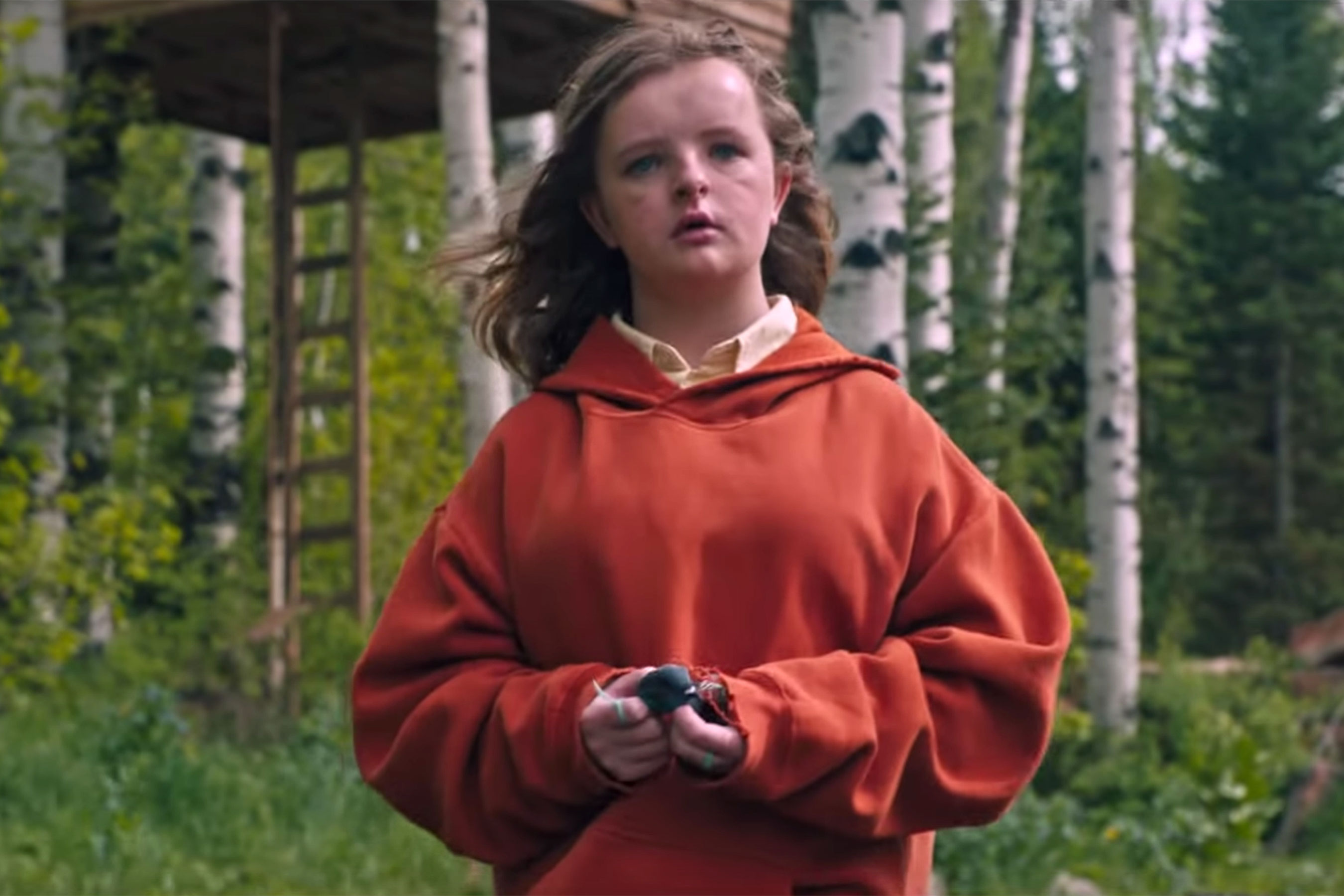
Supportive but exhausted husband Steve (Gabriel Byrne) is almost relieved, but the loss does bother the Graham’s socially isolated younger daughter, Charlie (Millie Shapiro, in one of the more chilling performances this year).

With just a handful of mannerisms, one melodic clucking noise, and a few seemingly throwaway lines, Aster and his magnificent cast quickly establish what will become nuanced, layered human characters, all of them scarred and battered by family.

The eulogy caps a striking film opening, where serpentine camera movement intertwines the Graham family with the intricate miniatures Annie creates inside their grand, secluded house. What we see suggests a scaled-down world of its own, lifelike but lifeless.

Art and life imitate each other to macabre degrees while family members strain to behave in the manner that feels human, seems connected, or might be normal. What is said and what stays hidden, what’s festering in the attic and in the unspoken tensions within the family, it’s all part of a horrific atmosphere meticulously crafted to unnerve you.

If horror fare such as The VVitch or It Comes at Night is not your bag, then you probably don’t care for the slow, detailed burn that A24 studio regularly serves. For those that do, hooray! Here’s another “adult” horror film, one that invests more in character development than in jump scares (though there are a few, including one so jarring it awakens the potential of the device).

Aster takes advantage of a remarkably committed cast to explore family dysfunction of the most insidious type. Whether his supernatural twisting and turning amount to metaphor or fact hardly matters with performances this unnerving and visual storytelling this hypnotic.

Applause to cinematographer Pawel Pogorzelski for turning this intricately designed home into a foreboding character all its own. Like Rosemary’s Baby, The Shining, The Haunting, The Others and any number of brilliant genre hauntings, Hereditary uses its surroundings to create a space where the most mundane moments take on a diabolical chill.

The family dynamic at work here is gut-punch authentic. Collette anchors the film with a performance full of grief, insecurity, bitterness and terror. It’s another in a string of award-worthy turns, and the support she gets from the ensemble, including a game Ann Dowd, elevates the tension in every intricately detailed frame.

You will have been quietly unnerved, startled from your seat, and then unsettled by the time the supernatural elements overtake the story. The peppering of hardline genre tropes in act 3 may feel like a cop out, but Aster’s interplay with the differing family members is too careful for such an easy summation.

The web of mental states, understandable suspicions and direct bloodlines layer the brutally effective fable, and Aster wields these weapons with stealthy precision. His work here is so smartly embedded that Hereditary continually tempts potential non-believers to dismiss where it leads as something you’ve seen before.

Don’t. You haven’t.

Dream Baby Dream

Woodshock

by Hope Madden

Do you know the Suicide song Dream Baby Dream?

For some, it’s a profound and moving meditation. For others, it is the longest, most unendurably boring song on earth. It figures prominently in one scene in the film Woodshock, becoming maybe the strongest (perhaps unintentionally as well as intentionally) metaphor in the picture.

The film, written and directed by Kate and Laura Mulleavy—better known as fashion icons Rodarte than as filmmakers—follows one woman as she descends from melancholy to full-blown madness.

Theresa (Kirsten Dunst, doing much with very little) works part-time at a legal pot dispenser somewhere in California’s logging country. Marijuana is legal; assisted suicide is not, but many of the shop’s clients are suffering greatly—including Theresa’s terminally ill mother.

The film opens on Theresa dripping some kind of liquid into the contents of a joint, then holding her mother as she passes painlessly from this life.

Painless hardly describes the future Theresa has found.

Hers is a slow—very slow—downward spiral. Woodshock is a character study. Unfortunately, Theresa’s conflict and chaos happen internally, so we spend an enormous amount of time watching her do basically nothing. At the one hour 29 minute mark, she does something. That’s a long wait.

The Mulleavys attempt to offer glimpses into Theresa’s psyche with dreamlike imagery. Their lawless style is equal parts mesmerizing and frustrating. For the power they infuse in their visual presentation they deserve praise. They need to stop ignoring story, though.

Terrence Malick films can sometimes become a confoundingly beautiful amalgam of free-form imagery, episodes disguised as story providing the whisper of a plot. The reason Woodshock doesn’t hold together as well is that the few plot points provided are each of profound importance to character development. Rather than a meditation, the film becomes a highlights reel padded with hallucinatory imagery.

The sisters’ work is formally confident, and rightfully so, but their investment in story is too weak to hold attention. Woodshock offers style to spare, but it’s too shy with substance.