Wolves at the Door

Four Daughters

by George Wolf

The Oscar-nominated documentary Four Daughters tells the story of Olfa Hamrouni and her four girls. The two youngest, Eya and Tassir, still live at home and speak for themselves. The eldest, Rahma and Ghoframe, are played by actors (Nour Karoui, Ichrak Matar) as the real sisters “were devoured by the wolf.”

Yes, it is a metaphor, one that Tunisian writer/director Kaouther Ben Hania explores with a deeply sympathetic mix of doc and drama.

Most of the time, Olfa will tell her own story while veteran actress Hind Sabri stands by, ready to step in and play the role when the emotion is too much for Olfa to bear.

Mother and daughters laugh, cry and bicker as we hear of their life in the patriarchal society of Tunisia. Olfa moves between gregarious and reserved, as capable of flashing a strong defiant streak as she is of handing down oppressive customs because “that’s just the way it is.”

And as Ben Hania slowly moves toward the source of the family’s heartbreak, the film’s many moving parts don’t always engage in perfect sync. The subtle aspects of Ben Hania’s reenactments – such as having actor Majd Mastoura play all the male parts, or the surreal interplay between real sister and stand in – pay dividends. But moments when actor and subject go off script to debate the familial choices can begin to blur unfortunate lines.

The staggering 2012 doc The Act of Killing used similar tactics, but the arc of barbaric murderers recreating their genocidal crimes mined insight from intimacy. Here, the staged production of pain spurs questions about when intimacy becomes exploitation.

Ben Hania wisely travels a more conventional road in the film’s third act. The reason for the elder sisters leaving home becomes clear, and Four Daughters leaves its unique mark.. A compelling, touching story of memory and generational trauma, it’s a heartbreaking roadmap to radicalization marked with a family’s despair.

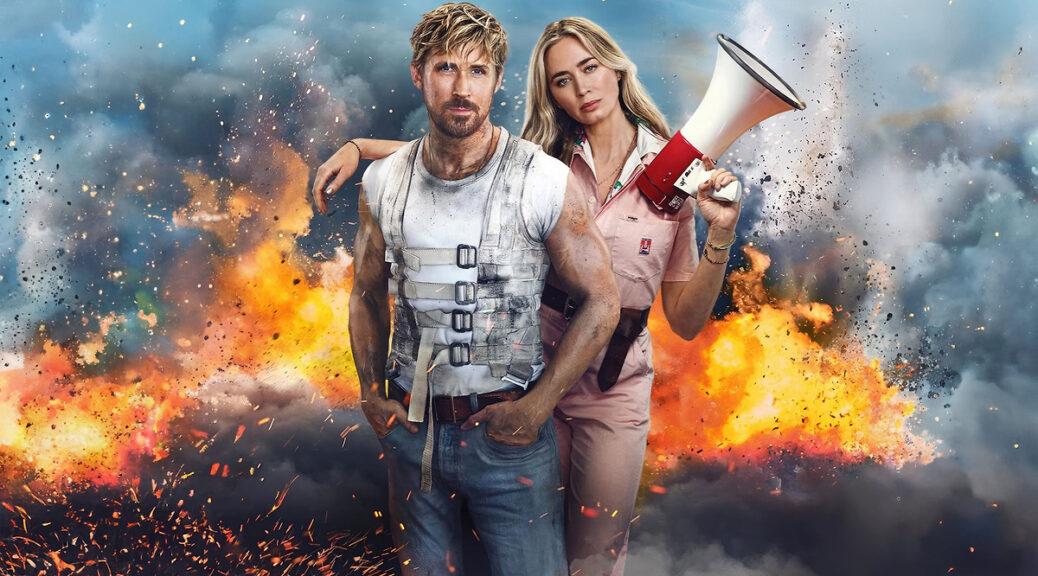
Fearless Oscar Picks 2024

by Hope Madden and George Wolf

This year’s group of nominees is stacked. Category after category, you find multiple films, filmmakers and performers all worthy of some hardware. But who will win?

Best picture

  • “American Fiction”
  • “Anatomy of a Fall”
  • “Barbie”
  • “The Holdovers”
  • “Killers of the Flower Moon”
  • “Maestro”
  • “Oppenheimer”
  • “Past Lives”
  • “Poor Things”
  • “The Zone of Interest”

Should win: “Poor Things” Will win: “Oppenheimer”

Best actor

  • Bradley Cooper, “Maestro”
  • Colman Domingo, “Rustin”
  • Paul Giamatti, “The Holdovers”
  • Cillian Murphy, “Oppenheimer”
  • Jeffrey Wright, “American Fiction”

Should win: Cillian Murphy Will win: Murphy (Hope) Paul Giamatti (George)

Best actress

  • Annette Bening, “Nyad”
  • Lily Gladstone, “Killers of the Flower Moon”
  • Sandra Hüller, “Anatomy of a Fall”
  • Carey Mulligan, “Maestro”
  • Emma Stone, “Poor Things”

Should win: Stone or Gladstone Will win: Gladstone

Best supporting actor

  • Sterling K. Brown, “American Fiction”
  • Robert De Niro, “Killers of the Flower Moon”
  • Robert Downey Jr., “Oppenheimer”
  • Ryan Gosling, “Barbie”
  • Mark Ruffalo, “Poor Things”

Should win: Ruffalo Will win: Downey Jr.

Best supporting actress

  • Emily Blunt, “Oppenheimer”
  • Danielle Brooks, “The Color Purple”
  • America Ferrera, “Barbie”
  • Jodie Foster, “Nyad”
  • Da’Vine Joy Randolph, “The Holdovers”

Should win/Will win: Randolph

Best director

  • Jonathan Glazer, “The Zone of Interest”
  • Yorgos Lanthimos, “Poor Things”
  • Christopher Nolan, “Oppenheimer”
  • Martin Scorsese, “Killers of the Flower Moon”
  • Justine Triet, “Anatomy of a Fall”

Should win: Nolan or Lanthimos Will win: Nolan

International feature film

  • “Io Capitano,” Italy
  • “Perfect Days,” Japan
  • “Society of the Snow,” Spain
  • “The Teachers’ Lounge,” Germany
  • “The Zone of Interest,” United Kingdom

Should win/Will win: “The Zone of Interest”

Animated feature film

  • “The Boy and the Heron”
  • “Elemental”
  • “Nimona”
  • “Robot Dreams”
  • “Spider-Man: Across the Spider-Verse”

Should win: “The Boy and the Heron” (Hope) “Spider-Man” (George) Will win: The Boy and the Heron” (Hope) “Spider-Man” (George)

Adapted screenplay

  • “American Fiction”
  • “Barbie”
  • “Oppenheimer”
  • “Poor Things”
  • “The Zone of Interest”

Should win: “Poor Things” Will win: “American Fiction” (Hope) “Oppenheimer” (George)

Original screenplay

  • “Anatomy of a Fall”
  • “The Holdovers”
  • “Maestro”
  • “May December”
  • “Past Lives”

Should win: “Anatomy of a Fall” Will win: “The Holdovers” (Hope) “Anatomy of a Fall’ (George)

Cinematography

  • “El Conde”
  • “Killers of the Flower Moon”
  • “Maestro”
  • “Oppenheimer”
  • “Poor Things”

Should win/Will win: “Poor Things”

Animated short film

  • “Letter to a Pig”
  • “Ninety-Five Senses”
  • “Our Uniform”
  • “Pachyderme”
  • “War Is Over! Inspired by the Music of John & Yoko”

Should win: “Ninety-Five Senses” Will win: “War Is Over”

Live action short film

  • “The After”
  • “Invincible”
  • “Knight of Fortune”
  • “Red, White and Blue”
  • “The Wonderful Story of Henry Sugar”

Should win/Will win: “Henry Sugar

Documentary short film

  • “The ABCs of Book Banning”
  • “The Barber of Little Rock”
  • “Island in Between”
  • “The Last Repair Shop”
  • “Nǎi Nai & Wài Pó”

Should win/Will win: “The Last Repair Shop”

The 96th Academy Awards, hosted by Jimmy Kimmel, will air on ABC on Sunday, March 10, live from the Dolby Theatre at Ovation Hollywood.

Trip of a Lifetime

Io Capitano

by George Wolf

The destination may be Italy, but the Oscar-nominated Io Capitano unfolds like a classic Greek fable. Director and co-writer Matteo Garrone crafts a stirring and often gut-wrenching modern Homeric tale, with a young African refugee enduring multiple hardships while refusing to surrender his character or humanity.

16 year-old Seydou (Seydou Sarr) and his cousin Moussa (Moustapha Fall) have been planning for months to leave their home in Senegal for the hope of a better life in Europe. The locals warn against the dangerous trip, and Seydou’s mother (Ndeye Khady Sy) forbids it, but the boys take the stash of money they’ve been saving and head out in secret.

The journey will not be kind. From Niger to Libya to the unforgiving Sahara (presented with breathtaking scope) and beyond, the boys will face shakedowns, bribes, arrest and torture, while subtle twists of fate conspire with glimpses of human kindness to keep them moving forward.

Sarr is absolutely terrific in a highly emotional and physical role, allowing Garrone (Dogman. Gomorrah) to strategically build empathy for the young man and his mission. With brutality all around him, Seydou must ultimately defend his humanity with stirring defiance, cementing his standing as a true and just wanderer.

But though Seydou’s odyssey may have a classic structure, the subtext here is never in doubt. Io Capitano succeeds on both fronts, bringing stark intimacy to the global refugee crisis, along with realization that stories can often speak so much more clearly than statistics.

The Doctor Is Real In

Dr. Cheon and the Lost Talisman

by Hope Madden

Modern horror is littered with fake ghosthunter tales, films about scammers who come face to face with the evil they’re certain doesn’t exist. Kim Seong-sik’s Dr. Cheon and the Lost Talisman begins down a similar path.

Dr. Cheon (Gang Dong-won) leads his assistant/technician In-bae (Lee Dong-hwi) into the garden of a wealthy family whose bitchy teenage daughter they presume is possessed. She is, of course, just teenaged. Dr. Cheon convinces the family that it’s the house, he exorcises the house, tells the family what they want to hear, and all’s well that ends well.

But the truth is, Dr. Cheon is looking for more than the next gullible family to scam.

He finds it when Esom (Yoo-gyeong) dumps a bag of cash on his desk and asks him to follow her to her village, where her sister is possessed. Of course, though, this time the possession is real.

Don’t expect the same old routine of con artists being outed, learning a valuable lesson before bleeding out. Dr. Cheon is ready for this supernatural nemesis.

There’s a frenetic charm to the film’s main action sequence, where the demon leaps from one villager to the next as it chases Doc and Esom through town. Electric blue FX have a delightfully cheesy, throwback feel that balances the handful of gruesome moments.

Though never laugh out loud funny, levity throughout the film keeps it from ever crossing over truly to horror. Gang’s haunted straight man benefits nicely from Lee as a comedic sidekick, and veteran actor Huh Joon-ho menaces laudably as the evil mace, Beom-cheon.

Kim never fully lands on a tone. What begins as a lightweight horror show develops a kind of Saturday morning TV vibe before turning into an action adventure. Think Korean Dr. Jones meets Scooby Doo, or something along those lines. There’s a weird charm to it that might particularly delight those who like their scary movies not too scary.

Fright Club: Skeletons in the Closet, 2024 Oscar Nominees

It’s the most wonderful time of the year! We get to celebrate the terrible decisions some of this year’s Oscar nominees have made in their careers. Why? Because we sincerely love them—the movies and their stars. Join us as we comb through this year’s Oscar nominees’ bad horror past.

5. In Dreams (1999): Annette Bening  and Robert Downey Jr.

It’s a twofer! Nominees for Best Actress and Best Supporting Actor, Annette Bening and Robert Downey Jr. joined director Neil Jordan (In the Company of Wolves, Interview with a Vampire, Byzantium) for this gender fluid serial killer/fairy tale mash up that just doesn’t work.

With Aidan Quinn, Stephen Rea, Margo Martindale (in a brief, thankless orderly role), it’s a convoluted mess of a movie that tosses together tropes from about six different styles of horror without ever trying to make sense of any of them.

This was Bening’s only real foray into horror, while Downey Jr. starred in Zodiac (great) and Gothica (poor).

4. Godsend (2004): Robert De Niro

Do not be surprised that De Niro starred in a lackluster horror flick in the early 2000s. He starred in several, not to mention the handful of bad actioners, bad thrillers, and bad comedies he peppers into his otherwise impressive filmography.

In this case, De Niro plays a geneticist with an ulterior motive, preying on the grief of a couple (Rebecca Romijn, Greg Kinnear) whose only child (Cameron Bright) has been killed. De Niro brings him back, but when has that ever been a good idea in a horror movie? Derivative and embarrassing, considering the cast.

Robert De Niro has starred in some great horror (Cape Fear, Angel Heart) and some bad horror (Hide and Seek, Frankenstein).

3. Case 39 (2009): Bradley Cooper

Like George Clooney, Bradley Cooper can write, direct, star, earn Oscar nominations, and be counted on to shine bright in a bunch of bad early career horror. In this case, he co-stars with now two-time Oscar winner Renee Zellweger.

It’s a blatant, lifeless The Ring ripoff with bad FX, bad acting and lame plotting. Cooper plays Doug (he’ll be your Doug). It’s a thankless role of boyfriend/buddy/bee sting sufferer.

We’ve talked about other Cooper horror before, but here’s his whole lineup: My Little Eye (pretty bad), Midnight Meat Train (not very good), and 10 Cloverfield Lane (voice acting, a really good movie).

2. The Wolfman (2010): Emily Blunt

We had such hopes for this one when it came out. That cast! Benicio Del Toro, Anthony Hopkins, Hugo Weaving, and 2024 Oscar nominee Emily Blunt.

Good God, was it awful. If you can look past the idea that Hopkins and Del Toro could be father and son, look past the insipid plot, look past Hopkins’s hamminess or del Toro’s disinterest, you cannot look past the heinous FX. But Blunt handles herself really, really well.

This was not the first, nor would it be the last horror film for Blunt: A Quiet Place (very good) A Quiet Place 2 (good) and Wind Chill (pretty good).

1. Frankenstein and Me (1996): Ryan Gosling

This one’s hard to track down, but worth the effort if you enjoy very badly made family-oriented “horror.” It’s a Disney TV movie starring Burt Reynolds (I swear to God). Burt’s married to a woman 1/3 his age (played by Myriam Cyr, who—God love her—is the worst actor on earth). The two have two young sons, who dream of bringing the dead to life.

Oscar winner Louise Fletcher takes abuse in a role that’s wildly beneath her, but there is one bright spot. This is Ryan Gosling’s first film, and he’s a spunky charmer, elevating every scene he’s in.

It wouldn’t be his last horror film, having also starred in Stay (mediocre, but co-starring 2024 Oscar nominee Sterling K. Brown) and Murder by Numbers (mediocre).

The Worm Will Turn

Dune: Part Two

by Hope Madden and George Wolf

Never trust the white guy.

Is that the theme of Denis Villeneuve’s second installment of the Frank Herbert sci-fi epic? A colonizer twists religion to convince a huge population to act in their own worst interests? Sounds more like modern times, but maybe the blandly named Paul (Timothée Chalamet) really is The One.

Dune: Part Two is as breathtaking a vision as Villeneuve’s 2021 Part One. And it’s a better film, benefitting immeasurably from the freedom of exposition that weighed down Part One. The sequel rides intensity and action from its opening segment.

Having taken refuge with his mother (Rebecca Ferguson, still the most interesting performance in the film) among the Fremen, Paul tries to understand his visions while fighting alongside Chani (Zendaya), the woman he loves, to take back the spice-rich planet Arrakis from the evil and extremely pale Harkonnen.

Villeneuve’s world-building is again a wonder to behold. He immerses us in this world of sand and savagery, providing fully realized reminders of how much Herbert’s original vision has influenced iconic sci-fi tentpoles such as Mad Max and Star Wars.

And, in turn, this Dune isn’t shy about its own inspirations. From the conversion of Paul to the schemes behind the throne, from the cries of “false prophet!” to the bloodline surprises, Villeneuve and returning co-writer Jon Spaihts bob and weave the narrative through a fertile playground of Biblical and Shakespearean roots.

The ensemble is again large and mighty, sporting a litany of heavyweights (Javier Bardem, Florence Pugh, Josh Brolin, Charlotte Rampling, Christopher Walken, Léa Seydoux, Stellan Skarsgård, Austin Butler, Dave Bautista) who are all able to leave unique impressions amid the battle of screen time.

And that tells you how many characters are populating this adventure, because there is no shortage of screen time. But while Part Two‘s 2 hours and 45-minutes eclipse the first film, you’ll also find more meat on the bone. Yes, the second act does bog down a bit, but the finale sticks a damn fine landing. Overall, there’s just more earned tension, more thrills (get ready for the worms!) and more character arc to keep you invested in this fight.

Part Two also feels like the complete film that its predecessor did not, and it begins to pick the scab off that “white savior” issue, although we’ll need to get to Part Three to really do it justice. Even if there is not a third installment (and let’s be honest, there’s going to be), Dune: Part Two delivers a satisfying and complete adventure all its own.

Coen My Way?

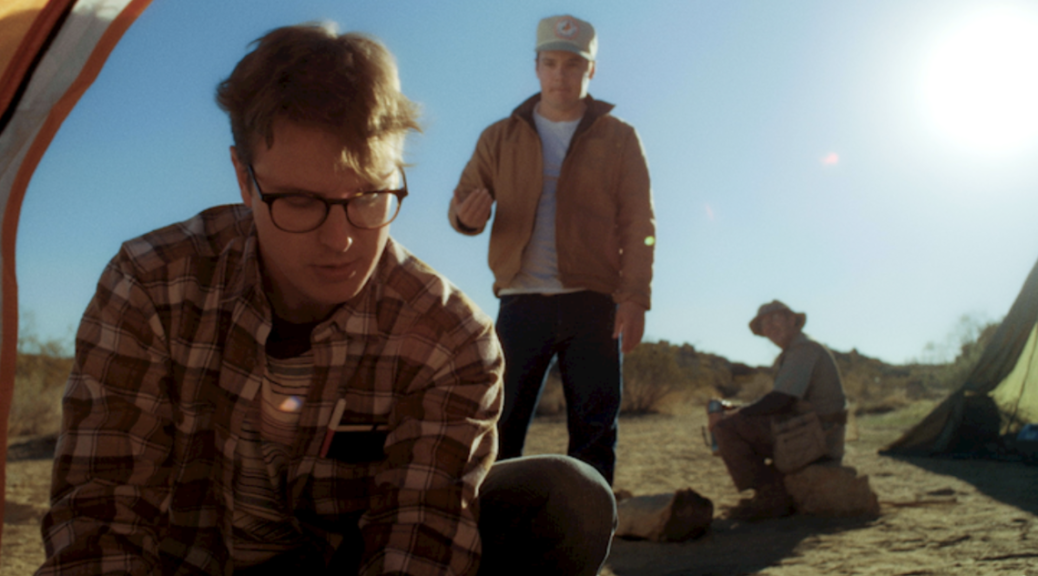
Drive-Away Dolls

by Hope Madden and George Wolf

Is the flattery still sincerest if you’re imitating yourself?

Because about 15 minutes into Drive-Away Dolls, the first installment of a lesbian B-movie trilogy from director/co-writer Ethan Coen and co-writer Tricia Cooke (Coen’s longtime producer/editor/wife), you can’t ignore how much this film reminds you of Coen Brothers movies.

And yes, better Coen Brothers movies.

Like The Big Lebowski, Burn After Reading, Barton Fink and A Serious Man, all of which get subtle and not-so-subtle nods in a twisting story of two young women and a mysterious, valuable briefcase.

Jamie (Margaret Qualley) and Marian (Geraldine Viswanathan) are queer best friends in 1999 Philadelphia. Marian is sexually conservative, and the free-spirited Jamie hopes to get her friend some action while they accept a drive-away job down to Tallahassee and hit every lesbian bar they can find.

What the girls don’t know is that the car they’ve been given has two very important items in the trunk, and it isn’t long before “The Chief” (Colman Domingo) and his two hapless henchman (Joey Slotnick, C.J. Wilson) are on their tail heading South.

The cast is indeed impressive (with appearances from Pedro Pascal, Bill Camp, Beanie Feldstein and Matt Damon), but while the film serves up a handful of LOL moments, the vast majority of the nuttiness lands with more desperation than inspiration.

It all feels so forced, except for Viswanathan, whose earnest delivery points out the artifice in Qualley’s. The Foghorn Leghorn-y of pre-millennium lesbians, Jamie’s every line draws attention to its own zaniness. It calls to mind The Ladykillers—and that’s never the Coen movie you want to make people remember.

Much of the ensemble works magic, though. Camp is particularly, dryly memorable. But this script, and the unsteady direction, suffers from high expectations. Drive-Away Dolls is fine. It’s fun enough. It’s nutty. But if Coen and Cooke weren’t awkwardly chasing their own family history, it would have been more satisfying.

Community Organizer

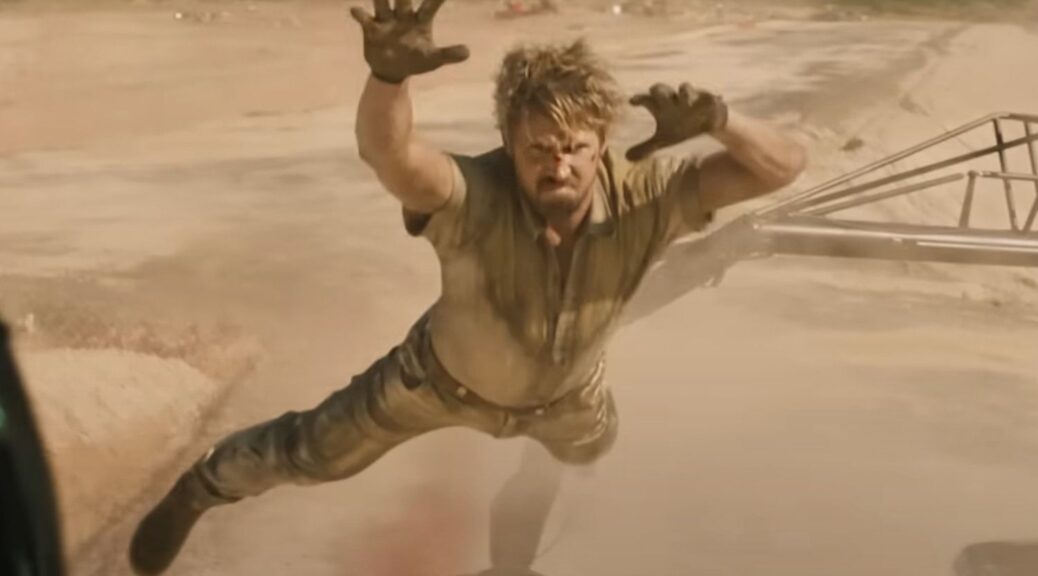
Ordinary Angels

by George Wolf

It’s understandable if Ordinary Angels seems familiar. Hilary Swank playing a tireless do-gooder in a based-on-true-events drama with a vaguely inspirational title is probably going to feel that way.

And while the film does rely on plenty of broad-brushing, it ultimately mines enough nuance to find some genuine feels, as well.

Swank plays Sharon Stevens, a hard-partying beauty salon owner in Kentucky who’s hoping one day to mend the relationship with her estranged son, Derek (Dempsey Byrk). While waiting at the grocery store checkout, a local newspaper story gives Sharon’s life new meaning.

Five year-old Michelle Schmitt (Emily Mitchell) has a rare disease and needs a liver transplant to survive. Her father Ed (Jack Reacher‘s Alan Ritchson), still hurting from his wife’s fatal battle with Wegener’s disease, is facing a mountain of medical debt while struggling to raise Michelle and her older sister Ashley (Skywalker Hughes) as a single parent.

After so much heartache, Ed admits to his mother Barbara (Nancy Travis) that he’s losing his faith. Could this hardscrabble hairdresser at their door be a Godsend? The few thousand dollars she raises from a salon fundraiser is a darn good start.

Two-time Oscar winner Swank is perfect for the role, even if the script from Kelly Fremon Craig (Are You There God? It’s Me, Margaret) and Meg Tilly (the veteran actress with her first feature writing credit) doesn’t provide many edges, at least early on. Sharon is all “hush my mouth” spunk, smiling through her accent as she imposes her will on multiple situations and begins to feel interchangeable with similar characters from The Blind Side to Swank’s own Conviction.

Ritchson is fine and shares sweet chemistry with the two adorable young girls, though Ed also lacks the depth to move the character beyond any number of faith-based dramas following a basic heart string-tugging playbook.

Ordinary Angels does find a unique voice in the third act, when Ed’s patience wears thin, and Sharon is finally forced to confront the life she’s really trying to save. Plus, director Jon Gunn (The Case for Christ, The Week) moves away from the formulaic to develop some respectable tension when the call for Michelle’s life-saving transplant comes during a monster snowstorm.

That really happened, and the true story here does provide an inspiring example of the good that humans are capable of. No doubt we need that right now, and Ordinary Angels manages just enough extraordinary moments to please more than the choir.

Glad I Spent It With You

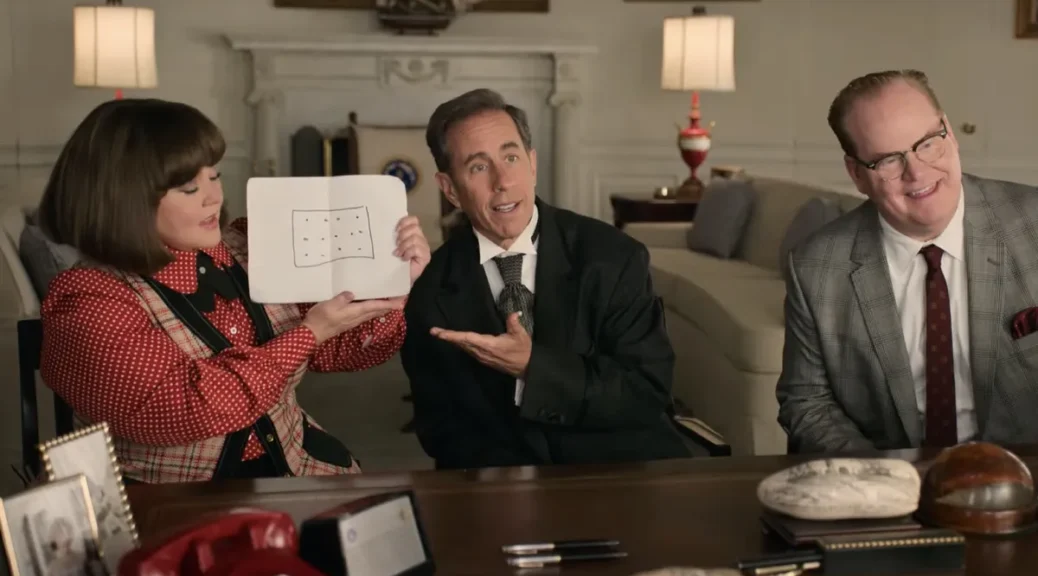
Perfect Days

by Hope Madden

Wim Wenders is having a year. Though his epic 3D documentary Anselm somehow regrettably missed out on a Best Documentary nomination from the Academy, his unhurried slice-of-life Perfect Days caught their attention.

Nominated for Best International Film, Wenders’s lovely drama tails Hirayama (Koji Yakusho, perfection) through about two weeks in his life. Hirayama doesn’t have a lot to say, but he misses nothing in his days driving from public restroom to public restroom with Tokyo Toilet written on the back of his pristine blue jumpsuit.

Tools in rubber-gloved hand, Hirayama is meticulous as he works. He has a routine that suits him—brings him joy, even—and Wenders cycles us through that routine day after day after day. At a full two hours, Perfect Days begs your indulgence with this montage of minutely changing events.

The cumulative effect is, at first, lulling. As days pass, some small change draws attention and we try to predict a plot—will this turn into a love story, will that create financial chaos, is a tragic backstory of abuse about to come to light?

Not the goal of this movie. The film actually began as a commissioned short film meant to celebrate Tokyo’s pristine public toilets. I swear to God. It blossomed from there into a lithe, meditative character study shouldered by an impeccable Yakusho.

Though there are moments in the film that feel orchestrated—today, this happens; today, this happens—but not one breath, smile or nod of Hirayama’s head betrays the fiction. His is a mainly solitary, nearly silent life that can be surmised as a middle-aged man’s intentional creation. Hirayama has left something behind, has stripped himself of something, and what remains is what he finds vital: work where you can see a result; floor to ceiling shelves of books; a tidy and enormous collection of cassette tapes; a room full of tiny plants taking root, thanks to his tender care.

You could fit Hirayama’s dialog on less than a single page, and there are times when his silence feels forced and almost comedic. But Yakusho’s brilliantly nuanced, heartbreakingly felt performance makes up for any flaws in the film. Wenders punctuates scenes with joyously on-the-nose song choices—minus the cassette hiss—and the final few singalong minutes showcase one actor’s transcendent work.

Hope Madden and George Wolf … get it?