Cruise Control

Mission: Impossible – Dead Reckoning Part 1

by Hope Madden

How do Christopher McQuarrie and Tom Cruise outdo Mission Impossible: Fallout? Because even the most impressive of the previous MI films couldn’t hold a candle to that one. I mean, the public restroom fisticuffs alone!

Mission Impossible: Dead Reckoning Part I has big shoes to fill and bridges to blow up and buildings to scale and masks to wear and trains to stop and whatnot. Does it succeed?

Of course, it does.

Ethan Hunt (Cruise) accepts a mission from his sketchy government contact (Henry Czerny). But Ethan and his team will do what they do best: go rogue. Because this key is too powerful for any one man, any one nation.

We know Ethan will do the right thing because he’s a beautiful soul. Come on, have you not been paying attention? But this villain – sentient AI “the Entity” – constantly calculates odds and probabilities. It knows Ethan’s weakness and will use it against him.

It’s a clever script by Bruce Geller, Erik Jendresen and McQuarrie. By weaponizing AI and falling back on the old rubber mask disguises, MI: DR1 mines contemporary anxiety with old school solutions.

But McQuarrie et al know what’s made the best of these films stand out. It’s not the plot – although there’s nothing at all wrong with this plot. It’s not really the villains (that’s Bond’s territory). The MI franchise lives and dies on two things: Ethan Hunt’s humanity and Tom Cruise’s willingness to risk his own life for thrilling stunts.

Expect both – aplenty! – in Episode 7.

Incredibly fun and impressive car chases follow some nifty rooftop running before turning to a magnificent series of train-related set pieces. Plus, of course, that motorcycle/mountain thing they tease in the trailer. Lunacy!

The core team – Cruise plus Simon Pegg, Ving Rhames and Rebecca Ferguson – continue to share entertaining camaraderie. Franchise newcomers Esai Morales, Hayley Atwell and Pom Klementeiff bring varying degrees and styles of badassedness. But, let’s be honest, all eyes are on Cruise.

He sells it. There is something old timey about a runaway train, and yet, in Cruise and McQuarrie’s hands, it’s never looked more fun or more thrilling. It’s a long film ­– just a hair under 3 hours – and it tells only half the story. Part 2 is due out in 2024. Still, Cruise and company manage to exceed expectations yet again.

Sinking Feeling

Quicksand

by Hope Madden

Back in 2023, Chris Kentis crafted one of the most nerve-wracking explorations in tension ever filmed. Open Water dropped you in the middle of the ocean with a married couple and, eventually, as day turns to night and their scuba boat never comes back for them, a lot of sharks.

Few survival tales have stripped away so much and still left you so frazzled. Andres Beltran follows the minimalist tourism of doom path with his Colombian hiking misadventure, Quicksand.

Although Sofia (Carolina Gaitan) and Nick (Allan Hawco) are separated and heading toward divorce, they accept friend Marcos’s invitation to speak at his medical convention. During some down time, they go for a hike, run into trouble, and flee for their lives in the wrong direction – into a part of the rainforest known for quicksand.

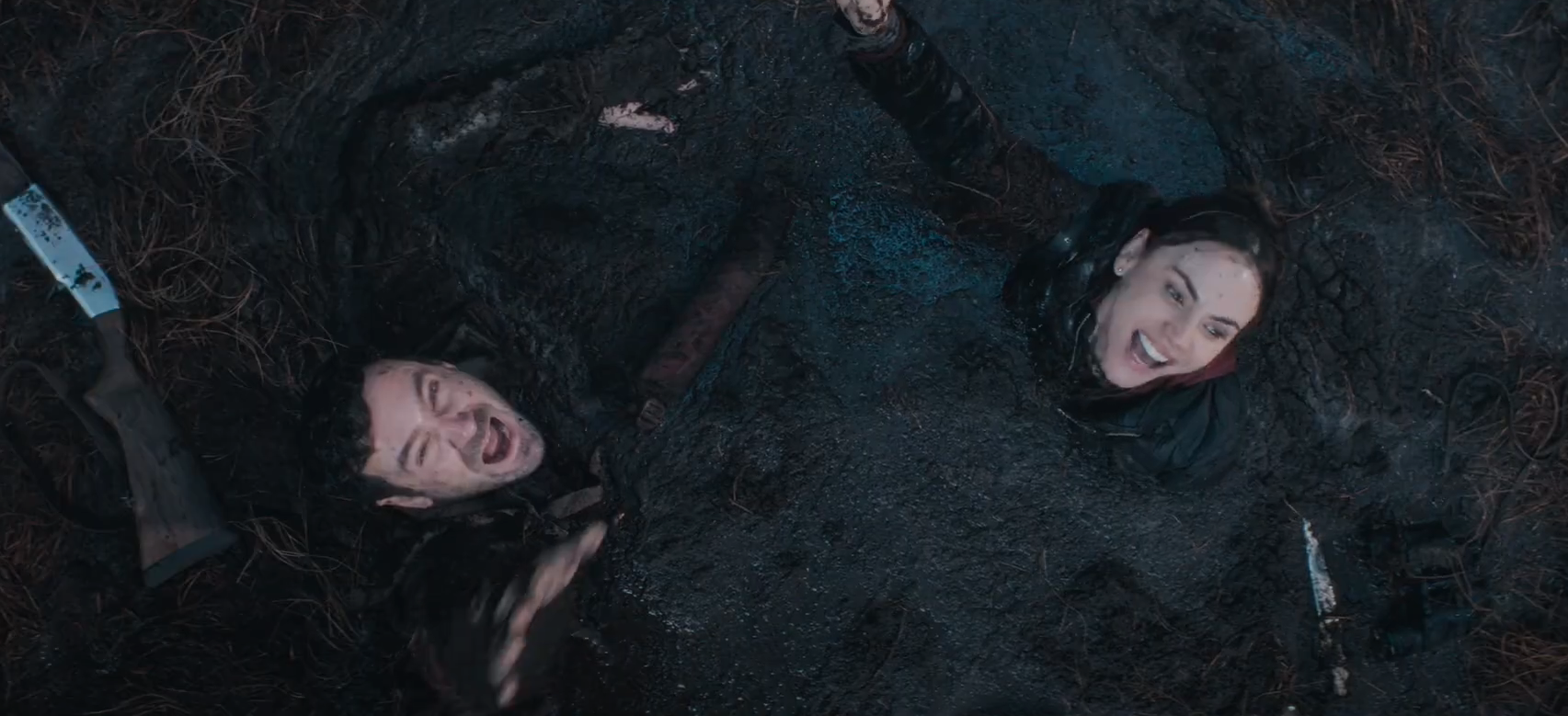
Here is where we spend most of the film: stuck chest deep in Colombian mud with an unhappy married couple. No one will realize they’re missing for at least a day, and even then, they’re miles away from where anyone might look for them.

The quicksand isn’t their only problem, naturally. Trapped as they are, they’re vulnerable to predators – fire ants, snakes – but they’ll still have time to hash out their own issues.

A film this limited, done well, can keep you in the moment, your head on a swivel, your mind working along with the characters’ to find a solution. Adam Green’s 2010 skiing horror Frozen succeeded, as, to a degree, did the 2010 Ryan Reynolds date with claustrophobia, Buried.

Given the extremely limited cast, action and locations, a film like this lives and dies on performances since there’s almost nothing else to look at. Hawco delivers layered, vulnerable work that surprises.

Gaitan is less convincing, partly because the performance is superficial and partly because Sofia’s internal journey feels inauthentic and manipulative.

Beltran’s direction, though competent, lacks inspiration. He never manages to mine tension, and his actors rarely feel truly stuck. Uncomfortable, sure. Dirty and wet, definitely. Trapped and panicked, nope.

The fact that the film’s blandly obvious, wildly outdated message is all we get from our efforts doesn’t do Quicksand any favors, either.

Our Lady

The Miracle Club

by Hope Madden

Wasting an exceptional if oddly miscast ensemble, Thaddeus O’Sullivan’s The Miracle Club has something important on its mind. It just can’t quite articulate it.

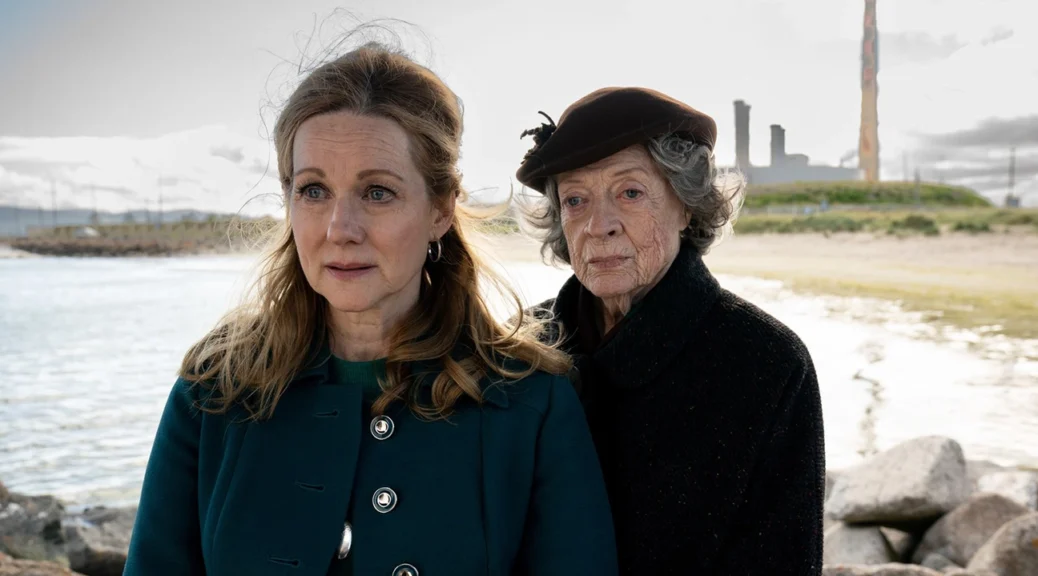
Two Americans and a Brit lead the cast as scrappy Irish folk. Chrissie (Laura Linney) is the prodigal daughter returned for her mother’s funeral. Eileen (Kathy Bates) is her childhood friend who cannot believe Chrissie had the gall to return after what she did. The deceased’s best friend Lily (Maggie Smith) is disappointed the girl didn’t come sooner to comfort her mother during her time of need.

Chrissie’s timing is actually amazing. The whole parish is taking part in a talent show in honor of her mother. The winners get a trip to Lourdes to ask for a miracle. One contrivance follows another and next thing you know, Chrissie, Eileen and Lily are all en route to the holy city in France, begrudgingly together.

The Miracle Club is frustratingly evasive when it comes to Chrissie’s backstory. We get a sense but no real clarity, but it seemed to have been something quite dire. And yet, all is forgiven without much a do.

What O’Sullivan – working from a script by Joshua D. Maurer, Timothy Prager and Jimmy Smallhorne – tries to bring to the surface is an image of systemic oppression relieved only when women support each other.

There is one moment – a climactic confession – where the film’s themes resonate, thanks mostly to Linney’s quietly desperate performance. Dolly (Agnes O’Casey) is hoping that, with the help of the Blessed Virgin, her son will finally speak. But she has a secret, and she believes she’s to blame for whatever ails little Daniel (Eric D. Smith, adorable).

In this moment, O’Sullivan’s film seems to find its miracle, as four women recognize the burden their faith and the patriarchy have put on them. But we must rely on the weighty stares from one talented actor to the next because the film has no intention of pinpointing its deeper concerns.

Worse still, O’Sullivan’s film is so entirely forgiving of both the church and the patriarchy that these themes feel as artificial as the leads’ accents.

O’Sullivan’s tone is forever uplifting, sometimes comically so, but the underlying peril these women have faced and forced is anything but light. He and his writers (men, all) honor these put-upon women who manage. God bless them for managing. God forbid they revolt.

Extraordinary Gentlemen

The League

by George Wolf

As James Earl Jones so eloquently told us in Field of Dreams., you can’t tell the story of America without baseball. And in The League, acclaimed documentarian Sam Pollard builds a gracefully powerful reminder about how important the Negro Leagues were to both game and country.

Pollard (Mr. Soul!, MLK/FBI, Oscar nominee for 4 Little Girls) weaves together the interviews, archival footage and re-enactments with the care of a master craftsman. He builds a timeline that informs and inspires, introducing us to professional players – such as Moses Fleetwood Walker – who came before Jackie Robinson but were left behind once the Supreme Court endorsed “separate but equal” in 1896.

And when the Black community “only had themselves to rely on,” we see how a new path to success was forged, thanks to the visionaries such as Rube Foster and a litany of players who got the attention of white sports writers with their athletic, fast-paced style of play.

Of course, all of this is a baseball fan’s dream, but Pollard (with Executive Producer Ahmir “Questlove” Thompson) also achieves compelling resonance through socioeconomic lessons. The film illustrates how symbiotic relationships developed between the Negro Leagues and the social, political and geographical movements of the day, creating a fascinating push and pull that continued through the integration of Major League Baseball.

And speaking of integration, the story doesn’t end once Robinson and Larry Doby debuted in the National and American Leagues, respectively. In fact, the film is ready with some lesser known receipts from a less-than-admirable side of Branch Rickey’s decision to add Robinson to the Brooklyn Dodgers.

Certainly, the story of the Negro Leagues is worthy of a multi-part mini series, but The League lands as both a satisfying overview and an enticing invitation to dig deeper. There is a wonderful sense of joy here. It’s a feeling born from a community that loved the game, players that lived to make it their own, and a movement that never backed down from the challenge of “finding other ways to succeed.”

Screening Room: Insidious: The Red Door, Joy Ride, Biosphere, The Lesson, WHAM!, Run Rabbit Run & more…

Recalled to Life

The Cow Who Sang a Song Into the Future

by Matt Weiner

A family haunted by the unexplained resurrection of their dead mother from a nearby river sounds like a good setup to a horror movie. But it works even better as a sparse, lushly filmed parable about environmental destruction and humanity’s relationship to the world that sustains us.

Chilean director Francisca Alegria’s feature film The Cow Who Sang a Song Into the Future sounds a clarion call to repair the destruction humans are doing to the world before it’s too late. It’s a message delivered urgently and unsubtly, but with moments of great beauty that make the warnings that much more stark.

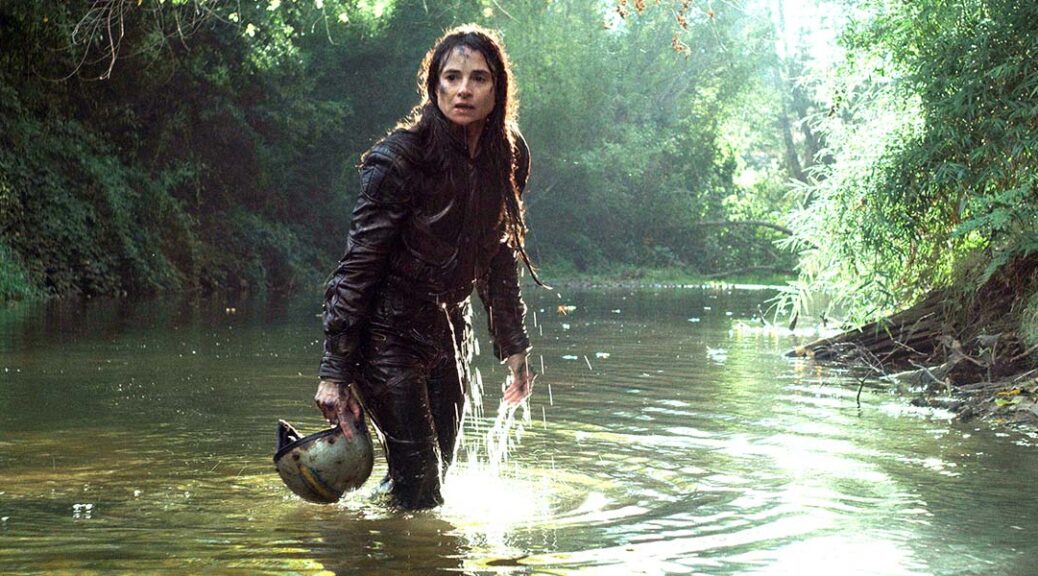
When Magdalena (Mía Maestro) returns to life and walks from the polluted Cruces River to her family dairy farm, she shocks her now-aged husband Pablo (Benjamin Soto) so much that he ends up in the hospital. Magdalena’s extended family returns to the farm, and soon everyone has to confront the long-dead specter of Magdalena as they reckon with the holes her absence left on their lives.

And while the eco parable stays repetitively on message, the heart of the film is a more intimate examination of the inseparable connection between the environment and ourselves. The sense of loss that Magdalena left behind across generations of her family—and the trauma that continues to reverberate for her daughter Cecilia (Leonor Varela) as she carries this forward to her own children—mirrors the broader fight for environmental justice that we owe to people who come after us.

Grounding the film’s flights into magical realism is a riveting silent performance from Maestro as Magdalena. Maestro channels grief, wonder and even moments of sublime joy into the resurrected Magdalena.

The family’s initial response to seeing their reanimated matriarch ranges from love and excitement to the (perfectly understandable) horror, a note that Alegria brings out to great effect. In a different movie, Magdalena’s eerie wet footsteps through the house and across town would dog Cecilia and her father relentlessly.

It’s a confrontation that seems equally likely to end in catharsis or carnage. Alegria ratchets up the tension, as well as the environmental devastation, until the metaphorical dam breaks for Cecilia.

For a film whose songs into the future traffic in death and “the end” being here, the movie also holds out hope for an ending that has yet to be written. The film is agnostic on whether civilization writ large has earned our reprieve. But if a more connected world starts with just one family—then that’s a start.

There’s No Going Home

Joy Ride

by Hope Madden

Adele Lim’s Joy Ride puts the R in raunchy comedy, but beneath a by-the-numbers R-rated roadtrip is a smart, irreverent, confident tale about owning your identity.

The film opens on Day 1 of the friendship between Audrey & Lolo in the funniest comeuppance scene since the 1993 Thanksgiving pageant at Wednesday Addams’s summer camp. The two are fast friends, even though Audrey (Ashley Park) is ambitious, applied, and constantly proving herself while Lolo (Sherry Cola) makes sex positive art instead of working in her parents’ Chinese restaurant.

But Audrey is about to make partner and move to LA, while Lolo is still living in Audrey’s garage, getting high, making art and enjoying dick.

It’s a phrase you should definitely get used to.

Though Lolo is not the film’s centerpiece, the way the character upends stereotypes about women generally and about Asian women specifically is part of the film’s success. Lim and co-writers Cherry Chevapravatdumrong and Teresa Hsiao use the beats of a familiar story to undermine its relatively misogynistic history. Joy Ride is more than just smart, racially savvy, sexually open and foul mouthed.

It’s funny.

Park is an excellent vehicle for both the core idea of claiming your identity and the necessary schmaltz at the heart of any raunchy comedy. But she is not carrying the comedic burden. Leave that to Cola and Audrey’s other two travel companions, Deadeye (Sabrina Wu, hilarious) and Kat (Stephanie Hsu, hello glorious!).

The commentary on microaggressions, aggressive aggression, all manner of racism, and glass ceilings feels honest, sometimes brave, often borderline (and joyously) lewd.

Don’t be confused. The plot itself is dumb as hell. It’s a roadtrip (well, it’s more of a globe trot) as the four pals travel through China to support Audrey as she lands the big client that will mean a big promotion. Hijinks do what they do best, they ensue.

Not every wild situation lands. Each emotional climax feels destined, obvious. But somehow, even well-worn tropes feel revolutionary when claimed by a filmmaking team (director, all writers, all leads) of nothing but Asian women.

Two Men and a Fishy

Biosphere

by George Wolf

As the pandemic raged a few years back, all of us had to adapt. For filmmakers, that meant getting creative to remain creative: small casts, limited settings and remote locations.

One of the better films to meet these challenges was Language Lessons, a two-hander co-written by Mark Duplass and Natalie Morales that also served as one of Morales’s first projects as a feature director.

Biosphere follows a similar blueprint, but with a much higher concept that ultimately hampers its chance at real poignancy.

This time out, Duplass co-writes with first-time feature director Mel Eslyn, and also co-stars as Billy, one of the two men left on Earth. The other survivor is Billy’s old friend Ray (Sterling K. Brown), and the pair spends the days inside a self-sustaining biosphere of Ray’s design.

The two actors share a wonderful and warm rapport, and through their conversations we learn that Billy was President and Ray his lead advisor when the unthinkable went down.

Was Billy to blame? Well, Ray has superior intellect and Billy’s middle initial might as well be “dubya,” so maybe. But that was then and this is now, and now “Diane,” the last female fish in their pond is dead, leaving “Sam” and “Woody” behind.

Ray knows that could mean the end of the “self-sustaining” part of their setup, so the conversations start to get a lot heavier.

To say any more would be saying too much, but the “once upon a time…” message that opens the film readies us for the attempted parable on hope and human evolution.

And this is an extremely talky parable. That might be hard to avoid in a two-character, one-room setting, but the hour and forty-five minute run time becomes excessive despite the mixing of wry humor with Duplass and Brown’s commitment to the exercise.

The bigger problem is that once the film goes where it goes, it feels like the end of a great short film that never was. The main point then becomes the pitch, and not so much about where it ends up. Give Duplass and Eslyn credit for the ambition, and Eslyn some props for making the treatment more cinema than sit-com, but the end is satisfying only if the mean was to be a conversation-starter.

And Biosphere should indeed start some, just not about the big issues it has in mind. Those end up getting caught in a narrative corner that’s covered in too much paint.

Here Endeth

The Lesson

by Hope Madden

There is something elegantly old school about the slow burn literary mystery afoot in Alice Troughton’s feature directorial debut, The Lesson. Its overt, unyielding structure suggests a familiar, even predictable thriller.

However zealously screenwriter Alex MacKeith subscribes to the traditional three act story, theme stated on page 5 and all that, Troughton and a superb cast still manage to mesmerize you. You’re given every piece of evidence you will need, and yet you’ll wonder ceaselessly where it will all lead.

Troughton’s direction evokes a tense thriller, even though the story itself never feels as if danger’s around the corner. Still, the camera angles and shot choices – gorgeous though they are – leave you on edge. With her creeping camera and gorgeous location Troughton blurs the line between intellectual drama and mystery thriller.

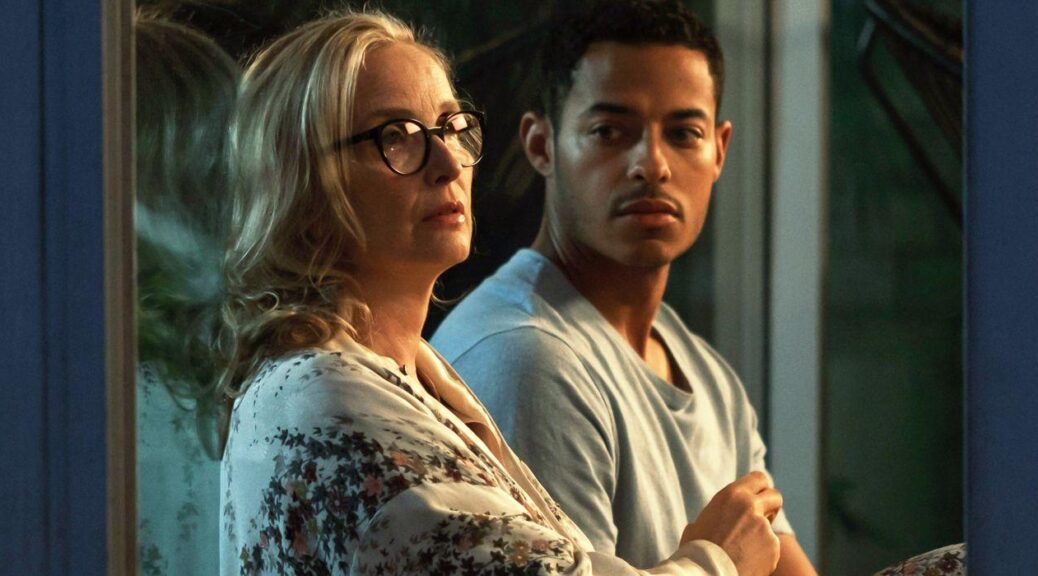
Her stellar cast helps. Richard E. Grant plays renowned writer J.M. Sinclair, whose son Bertie (Stephen McMillan) is in the market for a tutor to help prepare him for Oxford’s entrance exams. Aspiring writer and massive Sinclair fan Liam (Daryl McCormack, Good Luck to You, Leo Grande) gets the job.

Julie Delpy also stars as family matriarch Hélène, whose aloof demeanor strikes the perfect chord against Grant’s vibrance. It would be wrong to say Grant chews scenery, but you certainly can’t look away from him. A charming narcissist, viciously insecure and competitive, his Sinclair is a big presence, which allows the balance of characters to quietly observe, connive even.

McCormack, who was so impressive in the two-person revelation of Leo Grande, delivers another introspective and surprising performance. At times Liam seems to mirror Sinclair’s insecurity and artist’s fragility, but this is not that story.

The conclusion feels a little tidy, but the intricate ballet of character study and mystery that precedes it is so tight you’ll forgive the minor misstep.

Don’t Take Sex Advice from These Guys

The Crusades

by Christie Robb

Adolescent boys flex, fight, and run feral in Leo Milano’s high school comedy, The Crusades.

In a world devoid of parents, three friends—Leo (Rudy Pankow, Netflix’s Outer Banks), Sean (Khalil Everage, Netflix’s Cobra Kai), and Jack (Ryan Ashton, School for Boys) – are eager to establish themselves in the social hierarchy at their all-boys Catholic high school before the institution merges with the school from the inner city. The city boys are rumored to be bigger, stronger, and faster.

As the merger grows closer and with a school social mixer with the local all-girls school on the horizon, the main three boys are determined to have one last epic weekend together before the social landscape changes forever.

There are a lot of familiar tropes in this one—administrators with personal vendettas against students, kids trying to lose their virginity the night of the big dance, teachers with dubious moral authority, bloodthirsty bullies, Jackass-style pranks, kids fleeing through backyards…

That being said, the slapstick stupidity is sometimes pretty amusing, particularly Pankow’s increasingly broad wince and recoil from perceived attack. Which is good, because the movie is super violent. The main three are throwing punches, getting whacked in the nuts, or trying to stem their bleeding for the majority of the film. And when they aren’t, they are exchanging quips and dispensing dubious sex advice. (“Dong bags” are apparently reversible!)

Although there are girls and women in the cast, like Sean’s Girlfriend (Indiana Massara), Hot Teacher (Anna Maiche), and Girl Run Over by a Bike (Ashley Nicole Williams), they aren’t given much to do or any real character development. But then it’s not like any of the boys get character arcs either, despite the fact that the main three are fictionalized versions of co-writers Milano, Shaun Early, and Jack Hussar. (who also collaborate on the TV series School for Boys, which features many of the same characters from The Crusades.)

The flick is a lot of heteronormative, violent, masculine shenanigans with not much else to offer besides decent fight choreography and some quippy one-liners.

https://www.youtube.com/watch?v=kDIr_cCZS08

Hope Madden and George Wolf … get it?