Category Archives: Uncategorized

The Texas Chainsaw Leftovers Have Eyes

What the Waters Left Behind: Scars

by Daniel Baldwin

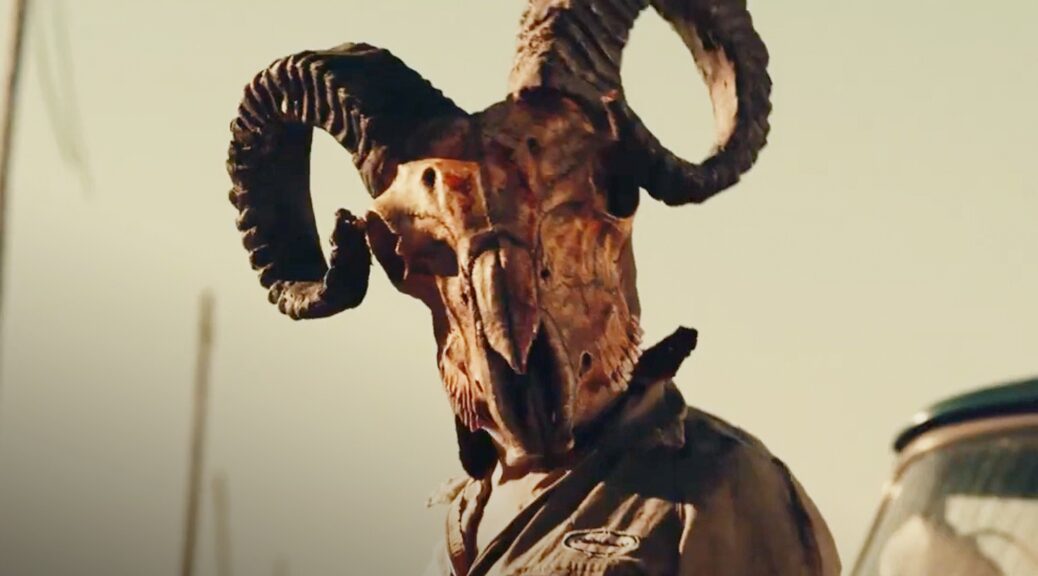
In 1974, master of horror Tobe Hooper unleashed The Texas Chain Saw Massacre upon the world, giving it one of the most influential films in the annals of cinema history. It wasn’t the first rural terror flick centered around folks poking their heads where they shouldn’t, but it set into place a permanent subgenre mold that much of what has come since has been cast from. This includes the Nicolas & Luciano Onetti’s 2017 slash and torture film, What the Waters Left Behind.

Five years later, Nicolas Onetti returns to the world of that film with a sequel, Scars. The first film followed a small documentary crew as they ventured into a remote, abandoned town in Argentina called Epecuen. This is a real town that was destroyed in a flash flood during 1985 and remained under water for decades, before the flood finally receded and left ruins in its wake. Both films were shot on location in Epecuen, with the resulting production value being their most striking aspect.

Scars trades in a film crew for a metal band, with our doomed musicians merely passing through their area as they finish their bar gig tour. Once they find themselves in Epecuen, they are quickly set upon by the same cannibal family that dispatched the documentarians in the previous entry. A couple cast members carry over on the villain front, with some fresh faces mixed in as well.

The Onettis’ initial claim to fame came in the form of a trio of neo-giallo films (Deep SleepFrancesca, and Abrakadabra) that have delighted many fans of that subgenre. Unfortunately, their grasp on rural slashers isn’t as strong. The good news is that if you were a fan of the first film, you’re likely to find a lot to enjoy within Scars, as it is a step up in almost every way. The bad news is that it’s effectively the exact same movie over again, so if you weren’t buying what the first was selling, you’re unlikely to want to partake in seconds.

Their stalking setpieces, torture sequences, and excessive rape scenes repeat over and over with little variation or visual ingenuity, leaving us with an 85-minute film that still feels like it is a solid 15 minutes too long. Scars is for the curious only. All others should stick with the original Texas Chain Saw Massacre or either version of The Hills Have Eyes.

Here Endeth

The Lesson

by Hope Madden

There is something elegantly old school about the slow burn literary mystery afoot in Alice Troughton’s feature directorial debut, The Lesson. Its overt, unyielding structure suggests a familiar, even predictable thriller.

However zealously screenwriter Alex MacKeith subscribes to the traditional three act story, theme stated on page 5 and all that, Troughton and a superb cast still manage to mesmerize you. You’re given every piece of evidence you will need, and yet you’ll wonder ceaselessly where it will all lead.

Troughton’s direction evokes a tense thriller, even though the story itself never feels as if danger’s around the corner. Still, the camera angles and shot choices – gorgeous though they are – leave you on edge. With her creeping camera and gorgeous location Troughton blurs the line between intellectual drama and mystery thriller.

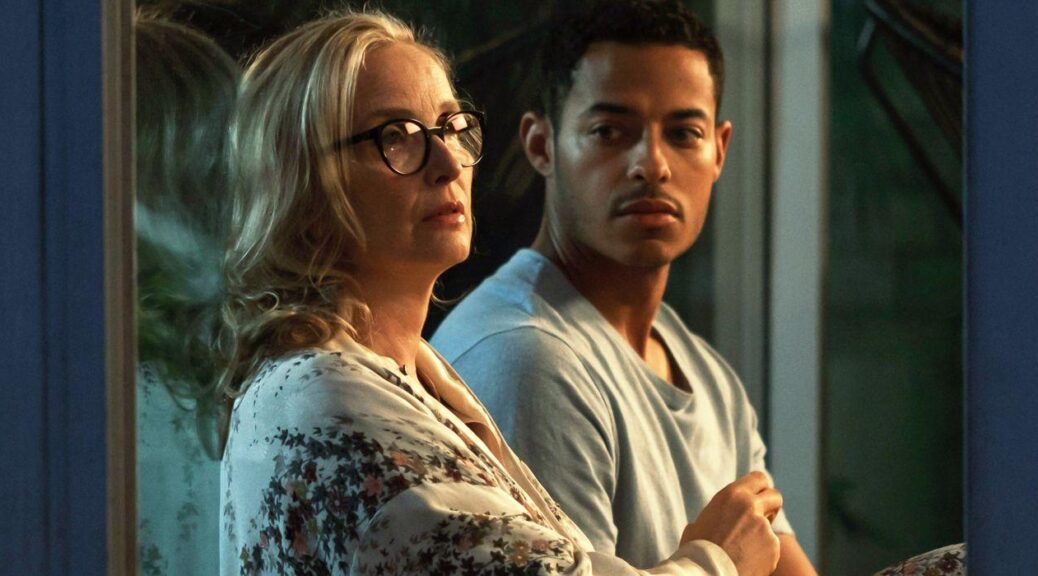
Her stellar cast helps. Richard E. Grant plays renowned writer J.M. Sinclair, whose son Bertie (Stephen McMillan) is in the market for a tutor to help prepare him for Oxford’s entrance exams. Aspiring writer and massive Sinclair fan Liam (Daryl McCormack, Good Luck to You, Leo Grande) gets the job.

Julie Delpy also stars as family matriarch Hélène, whose aloof demeanor strikes the perfect chord against Grant’s vibrance. It would be wrong to say Grant chews scenery, but you certainly can’t look away from him. A charming narcissist, viciously insecure and competitive, his Sinclair is a big presence, which allows the balance of characters to quietly observe, connive even.

McCormack, who was so impressive in the two-person revelation of Leo Grande, delivers another introspective and surprising performance. At times Liam seems to mirror Sinclair’s insecurity and artist’s fragility, but this is not that story.

The conclusion feels a little tidy, but the intricate ballet of character study and mystery that precedes it is so tight you’ll forgive the minor misstep.

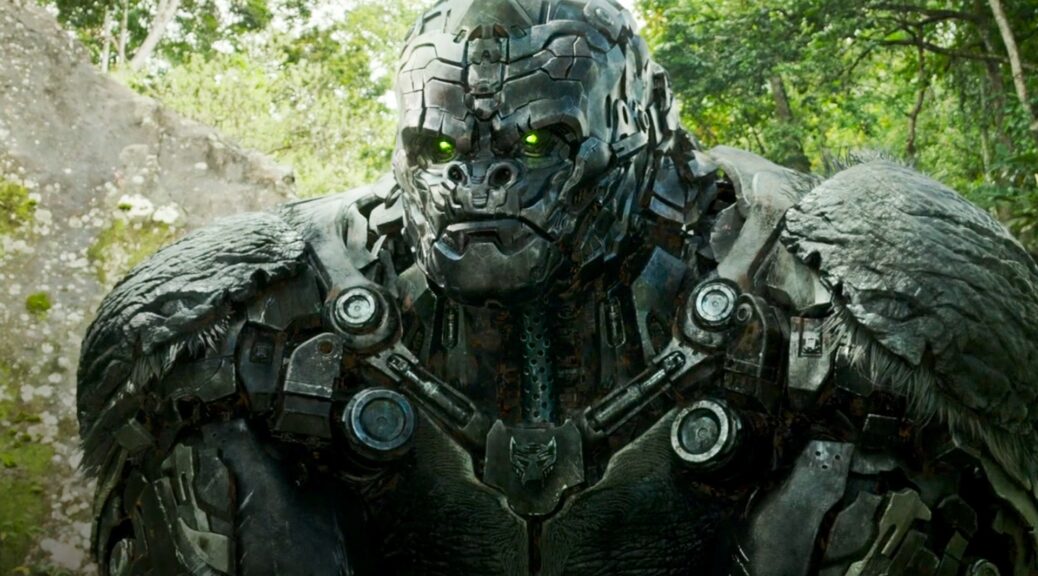
Screening Room: Transformers: Rise of the Beasts, Flamin’ Hot, The Angry Black Girl and Her Monster, Daliland & More

Growing Pains

Falcon Lake

by Hope Madden

Co-writer/director Charlotte Le Bon crafts a melancholy poem to that fleeting moment of the last real summer of your childhood with her moody coming-of-age tale Falcon Lake.

Thirteen (almost 14) year-old Bastien (Joseh Engel) and his family go to visit friends on a lake for a couple of weeks over the summer. Bastien and his little brother will room with Chloe (Sara Montpetit), two years older, gorgeous, a little weird, a little bored. As Bastien tags along, Chloe is the one we see playing tug of war with adulthood.

The summer orbits these two kids, navigating the vanishing moments of childhood, blinking into the blinding future. Le Bon captures these moments perfectly, aided immeasurably by two truly wonderful performances.

Montpetit unveils something vulnerable beneath Chloe’s capricious behavior. But it’s Engel who mesmerizes. His smile, genuine as it can be, is uplifting and heartbreaking in equal measure. He punctuates a hauntingly quiet performance with bursts of joy, silliness and tenderness that make Bastien achingly lovable. But more than that, he’s authentic. As lovely and lyrical as Falcon Lake can be, rather than crafting a romantic nostalgia about innocence lost, Le Bon delivers a slice of life.

Cinematographer Kristof Brandl’s camera evokes the mood, lonesome silhouettes, isolating crowds, awkward intimacy. Le Bon exhibits a delicate if controlled touch to her tale of young love. Few topics are more oft tread in cinema, on stage, in print or in song. But Falcon Lake, though its honesty gives it the feel of familiarity, never seems tired or worn.

The Devil You Know

The Thief Collector

by Rachel Willis

There’s an old adage that you can never really know someone. In director Allison Otto’s documentary, The Thief Collector, she puts this at the forefront with a modest couple, Jerry and Rita Alter, from middle-of-nowhere New Mexico, who happened to be art thieves.

Or at least, that’s how it seems.

After an estate sale, three men, Rick, Dave, and Buck discover an unattractive painting placed behind a bedroom door. It isn’t until a local artist recognizes the painting that they look into it further. One Google search later, the men discover the painting in their possession is Willem de Kooning’s Woman-Ochre, stolen from the University of Arizona Museum of Art in 1985.

So, how did Jerry and Rita, two teachers, come to have this painting in their possession?

The Thief Collector wants to answer this question.

There is a lot of reliance on Jerry’s short stories to paint a picture of two people who were “thrill seekers” (also conveniently one of Jerry’s story titles). There is documented evidence that the couple lived a fascinating and exhilarating life – one full of travel and adventure in parts of the world many will never see.

However, any writer of fiction would be appalled to think after their death, their stories would be taken as fact – and as evidence of crimes. While this could be the case for Jerry, it’s all speculation.

There is more compelling evidence to implicate the Alters in the crime, but there is a lot of filler in the documentary. Readings from Jerry’s short stories serve as narration for scripted scenes – with Glenn Howerton as “Jerry” and Sarah Minnich as “Rita”. While these scenes are an over-the-top kind of enjoyable, they’re not evidence of wrongdoing, no matter how much the filmmakers might wish them to be.

By focusing on Jerry’s stories, there is a lot of reaching rather than revelation.

Where the documentary succeeds is in its blend of interviews, in footage of the Alters’ many trips, and the vast collection of art in their home. The reenactments don’t quite fit, but they’re amusing.

Of course, the film would have been better served if it tightened its focus to what is known about the theft and the Alters. The interviews with friends and family give a good back and forth on the film’s theme – that the people you’ve known many years, maybe even your whole life, may have a dark side. It’s definitely something to ponder.

It’s Not Just Vampires You Gotta Be Worried About

R.M.N.

by Christie Robb

In Cristian Mungiu’s R.M.N, Transylvania is a tense place. The landscape is bleak. The light is weak and casts blue shadows over the snow-covered ground. The people are lean and tense. But it’s not vampires that have them concerned.

It’s the European Union.

Many of the locals are working at exploitative jobs abroad while the businesses at home are struggling to find workers who are willing to labor for minimum wage. The EU will provide assistance, but only for certain projects. Parks can get funding, but forget money to update the sewer system. And they are willing to help local businesses who hire workers from countries out East, but only if the businesses can fill out the right forms.

When the local bakery hires three Sri Lankan immigrants after weeks of unanswered advertising for local workers, the town’s quiet desperation flares into xenophobia. Ethnic tensions going back generations erupt back to the surface. 

Mungiu’s film allows the drama to unfold slowly. There is a wide cast of characters whose agendas and relationships overlap and clash in interesting ways. The most arresting scene, by far, is a long one, done in one shot,  of a community meeting to discuss whether the town will vote to kick out the Sri Lankans. It’s ugly and full of recognizable hypocrisy.

Melodrama is somehow, miraculously, avoided despite topics including selective mutism caused by childhood trauma, tumors, suicide, ethnic cleansing, racism, the legacies of the Cold War, and toxic masculinity. But this comes at the risk of it being almost too cold and underwritten. 

The two main characters are Mattias (Marin Grigore) and Csilla (Judith State). He’s a menacing former meat packer who has come back to town after assaulting his boss in Germany and is on a mission to toughen up his young son. She’s in management at the bakery, a classical musician, and a mother figure to the Sri Lankans. That the two have some sort of romantic relationship is a source of confusion that writer/director Mungiu doesn’t seem particularly interested in explaining.

The ending, similarly, isn’t especially enlightening. But, I suppose, dealing with the complex impacts of an emerging global economy on a struggling rural town, a straightforward ending might have been an odd choice, too.

Darling Story

Peter Pan & Wendy

by Hope Madden

There’s reason to cheer for David Lowery’s latest effort for Disney, Peter Pan & Wendy. First of all, there’s Lowery’s vision.

In the hands of the Green Knight director, Neverland has never looked so gorgeous. He finds ways to exploit the wonder, beauty and danger of this adventureland in a way that fits his lilting retelling.

For the script, Lowery reteams with longtime producer Toby Halbrooks, who co-wrote the director’s previous Disney outing, Pete’s Dragon. Both of Lowery’s films for the Mouse only draw attention to the fact that the Ghost Story, Ain’t Them Bodies Saints and The Old Man and the Gun filmmaker possesses no sense of irony, cynicism or fatalism. He seems weirdly perfect for family films.    

And, like Jon Favreau’s wonderful The Jungle Book, Lowery draws inspiration not only from the original text, but also from Disney’s classic animated version. Snippets of songs from the 1953 musical are woven throughout, enough to give parents and grandparents some nostalgic feels.

But do we need or want another Peter Pan story? Beasts of the Southern Wild director Benh Zeitlin couldn’t find an audience for his 2020 bayou adaptation, Wendy. No one went to see Joe Wright’s star studded, Hugh Jackman led 2015 musical, Pan. Maybe a more traditional telling is in order? One that weighs the humanity as heavily as the whimsy?

Jude Law’s Hook offers surprising pathos. Never the campy pirate you may have come to expect, Hook is resigned to evil, his own pain a tender nerve just below the surface. It’s a dastardly but tender performance that gives the film a broken heart.

At his side, Jim Gaffigan’s Smee – pretty ideal casting, although the character is underused. Ever Anderson offers a substantial Wendy Darling, and the Lost Boys are not necessarily boys but they are mischievously charming. The problem is Peter.

Alexander Molony, thought cute as can be, is surprisingly lifeless in the lead. His highs don’t feel highs nor his lows low. His performance is neither cartoonish nor realistic.

The character itself gets a bit lost in the adaptation, which holds focus on Wendy’s arc far more than Peter’s story, and Lowery doesn’t seem entirely sure where Peter fits into all this. It’s one of the more ingenious elements of J.M. Barrie’s novel – Peter Pan is not the hero or the villain, he’s more the iconic fool whose lack of arc helps those around him find their own. But Lowery loses his footing when he focuses on Peter, and though his adventure is truly beautiful, it feels a little unfocused and possibly unnecessary.

This Property Is Condemning You to Death

The Tank

by Daniel Baldwin

Picture this: a loved one has passed away and you inherit a piece of property from them that they’ve never mentioned. You’ve been handed a house along the coast that comes with its own private beach. We’re talking beautiful, untouched land. An absolute dream come true, with no catch in sight.

Well, except for that weird water tank that’s hidden underground on the property. A tank that may or may not contain an ancient beast that loves to run amok when unleashed. That right, you didn’t just inherit your dream home. You inherited a horror movie as well. Congratulations!

Scott Walker’s New Zealand creature feature The Tank knows its tropes and revels in them constantly. If you’re rolling up to this coastal oasis of terror looking for heaps of originality, you’re going to swim away disappointed. However, if you’re the type that loves a good meat & potatoes monster movie, then you will find quite a bit to enjoy here.

There are two true stars of this bestial B-movie endeavor, with the first being the practical monster effects work on display from WETA Workshop. Their efforts here are just as good as you’d expect coming from the imaginative minds that brought forth the cinematic beasties on display in The Lord of the Rings trilogy, 30 Days of NightDistrict 9, and the cult classic Black Sheep. Richard Taylor and his team are in fine form, serving up a cool monster and delivering delicious creature carnage.

The other star is actress Lucianne Buchanan. While the other performances in the film are fine, Buchanan stands tall above the rest, gifting us with a new horror heroine to root for in family matriarch, Jules. Between her turn in this and her leading role on the recent hit Netflix action series The Night Agent, Buchanan is one to keep your eye on.

The Tank does have its issues. The pacing in the first two acts can be sluggish at times, the color palette can get a bit monotonous, and the family drama subplots don’t really amount to much. Of course, that’s not what we’re here for. The Tank promises you some lean, mean, and low budget monster escapism. For the most part, it delivers on that promise, so if this type of movie is up your alley, give it a look.

Solo Act

Chrissy Judy

by Christie Robb

Judy (Todd Flaherty) and his partner Chrissy (Wyatt Fenner) are co-stars of an underwhelming New York drag act. Then, Chrissy up and quits and moves to the hinterlands of Philadelphia to make a go of it with his on-again-off-again long-distance boyfriend Shawn, leaving behind the remains of a humdrum double act.

Judy, still ambitious, but now 30 and feeling out of step with the young, struggles to choreograph the next act in their life.

Judy is obsessed with nostalgia and the vintage glamor of old Hollywood, so it’s fitting that the film itself is beautifully shot in black and white and scored in a mix of old standards and jazz. The dialogue often harkens back to the fast-talking banter of old screwball comedies, updated with modern slang, a lot more cursing, and the occasional references to douching.

Written, directed, edited, produced by AND starting Flaherty, there’s a real emotional depth to this one. Flaherty and Fenner manage to convey the complex layers of a long-term and somewhat complicated friendship.

Avoiding the heteronormative tropes of typical romantic movies, this one feels like part rom-com, part coming-of age while offering a novel take on a love story.

Big Fish

Blueblack

by Rachel Willis

An encounter with a wild blue grouper sends 8-year-old Abby on a lifelong mission to understand, and save, the ocean ecosystem in writer/director Robert Connolly’s feature, Blueback.

We follow Abby through three stages of her life. The first – and shortest – at age 8 is precociously played by Ariel Donoghue. Teenage Abby, played by Isla Fogg, is who we spend the most time with as she reconciles her love of the ocean with her mom, Dora’s (Radha Mitchell), overt activism. A contemporary framing story follows the adult Abby (Mia Wasikowska) as a marine biologist who returns home after Dora (the older version portrayed by Elizabeth Alexander) suffers a stroke.

On paper, this seems like a lot to contend with, but Connolly handles each stage well, ping-ponging primarily from adult Abby and teenage Abby with a skillful touch. There’s never any confusion as to where we are in time, as both Fogg and Wasikowska cement us with the character (as do Mitchell and Alexander with Dora). Both depictions are so strong as to convince us that we’re watching the same woman across time.

The movie’s biggest problem is overstuffing the scenes of teenage Abby’s life, leaving too little time for both the framing story, and the fish that gives the film its name. Though Eric Bana is a fine actor, his character Macka feels extraneous. There are other characters with whom our time is better spent.

Because we spend so little time with the grouper, there’s never the sense that we’re connecting with an animal in the way other films showcase the human-animal bond. It’s possible it’s simply hard to make a girl and her fish land the same way as a boy and his dog, though I imagine those who saw My Octopus Teacher might beg to differ.

Despite the film’s tendency to take on a little too much regarding its worldbuilding, it’s still an effective exploration of family and community, and how we relate to the natural world. There are those who seek to exploit it for everything it’s worth, while others wish to preserve it for future generations.

There’s a sense that for each piece of the world we lose, more than we can ever imagine is lost along with it. Abby and Dora hope to preserve that which connects us to something bigger than ourselves. The theme is always one worth repeating, and Blueback adds a unique perspective to the mix.