Category Archives: New In Theaters

Reviews of what’s out now

Lipstick Promises

Viva

by George Wolf

It’s fitting that Viva carries a subplot with ties to the boxing ring. The film is assembled with the familiar themes from any number of underdog sports movies, and overflowing with the heart needed to avoid drowning in cliche.

Much of that heart comes from the touching performance of Hector Medina as Jesus, a young man who works doing hair and makeup for a troupe of drag performers in Havana. Though he’s merely part of the crew, Jesus naturally dreams of the spotlight, finally getting his chance onstage as “Viva” when there’s a rare opening in the cast.

Viva’s first performance is met with a punch in the face from a man at the bar. That man is Jesus’s long lost father Angel (Jorge Perugorria – also terrific), a former boxer who’s only too happy to start crashing at Jesus’s place and dictating his life. These conflicts set by screenwriter Mark O’Halloran are obvious and formulaic, yet Viva sells them with charm and authenticity.

Director Paddy Breathnach (Blow Dry) grounds the film with gritty, crumbling Havana backdrops. He finds resonance in desolate moments that ultimately bring new depth to the escape Jesus finds onstage with Viva and her unique selection of torch songs.

There’s never any doubt if Angel will come to accept his son’s lifestyle or if Viva will shine in the spotlight, but you gain a rooting interest anyway.

Early on, Jesus’s mentor at the club tells him any performance has to be more than just lip syncing, it has to “mean something.” Viva‘s tune is far from new, but the film does find a beautiful meaning within it.

Verdict-3-5-Stars


High Society

High-Rise

by Hope Madden

Set inside a skyscraper in a gloriously retro London, Ben Wheatley’s adaptation of J.G. Ballard’s High-Rise is a dystopia full of misanthropic humor.

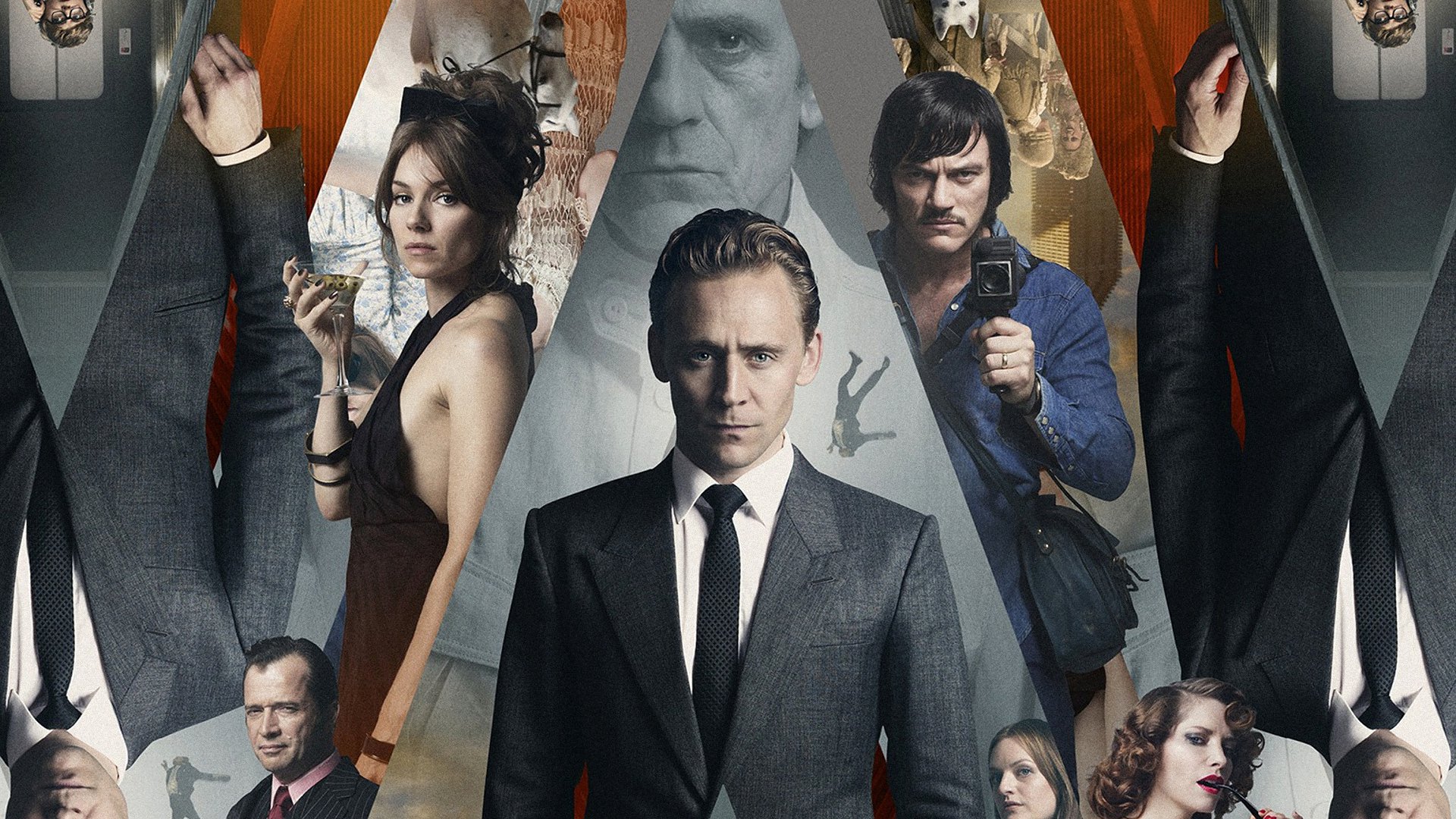
Laing (Tom Hiddleston) narrates his own story of life inside the “grand social experiment” – a high rise where the higher the floor, the higher the tenant’s social status. Laing lives keenly alone, somewhere in the middle floors. Socialite Charlotte (a fantastic Sienna Miller) lives one floor above; put upon wife and philandering husband Helen and Wilder (Elizabeth Moss and Luke Evans, respectively) live near the bottom. And at the tippy top, The Architect (Jeremy Irons, magnificent as always).

The film treads some of the same ground as Fritz Lang’s Metropolis, only Ballard’s feelings were less respectful of the lowly. The author’s interest was always in peeling that last layer that separates civility from savagery in every member of every class. No one is blameless, no one is incorruptible. It can make his material difficult because no character is entirely sympathetic, which is certainly the case in High-Rise.

Our protagonist holds himself at a distance from all tenants, seeing himself as that singular soul that can fit almost anonymously within every strata, when, in fact, he fits nowhere. And as chaos descends and carnality and carnage, it’s very hard to decide whether anyone is worth rooting for.

The film brings to mind David Cronenberg’s gem, Shivers. The Canadian auteur’s first film saw a high end high rise taken down from within by a parasite that turned its victims into voracious pleasure seekers. Always the Ballard enthusiast (Cronenberg adapted the author’s Crash into a chilly NC-17 adaptation in 1996), the filmmaker’s 1975 flick eerily predicted the British cult novelist’s plot of the same year.

High-Rise’s performances range from slyly understated (Hiddleston, Moss) to powerful (Miller, Evans) to alarmingly hammy (James Purefoy), but each contributes entertainingly to this particular brand of dystopia.

Ballard’s prose is tough to bring to life on the big screen. While Cronenberg’s 1996 adaptation breathed the author’s chilly, disgusted detachment, Wheatley’s version mines Ballard’s humor in a film that is wildly alive but terrifically flawed.

The class war has not waned since Ballard set its microcosm inside his London skyscraper. Its flame burns as bright and toxic today as it ever has, but somehow Wheatley’s film lacks that heat. It’s a fascinating mess without the punch of relevance.

Still, the wicked humor and wild chaos will certainly keep your attention.

Verdict-3-5-Stars

Once Upon a Time…

Tale of Tales

by Hope Madden

The concept of the fairy tale has been sterilized over the centuries, evolving mainly into capitalistic cautionary tales with overt morals meant to guide our youth toward a socially accepted line of thinking. But that’s not what they were always about. Fairy tales began as oral entertainment benefitting adults, their lurid magic often aimed at critiquing the powerful and finding absurd amusement in the helplessness of the majority.

Director Matteo Garrone returns to these early principles with his moody, atmospheric film based on the work of 16th Century Neapolitan poet Giambattista Basil. The yarns he spins are about narcissistic royals, unwise subjects, dark magic, and human brutality.

His braid of stories possesses a particularly dark and dreamy nature: Salma Hayak wants to have a baby; Vincent Cassel wants to bed a mysterious woman; Toby Jones wants to spend some alone-time with a giant flea.

OK!

Cinematographer Peter Suschitzky, David Cronenberg’s regular collaborator, brings that elegant chill to certain frames, rarely but effectively punctuated with scenes boasting an especially flamboyant and lush look. The imagery meshes with another brilliant Alexandre Desplat score, aurally and visually supporting Garrone’s absurdist rethinking of the classic fairy tale structure.

Garrone’s cast is uniformly solid. Hayek embraces the haughty nature of her queen, but she allows just enough sympathy to creep into the characterization to create the necessary heartache as her story climaxes. John C. Reilly’s touching tenderness in a small role as a supportive spouse and king is especially wonderful.

Christian and Jonah Lees beguile as magical siblings, Franco Pistoni cuts a wondrously dark image as the film’s necromancer, and Cassel is characteristically excellent.

The real surprises in the film lie in Jones’s tale, though, which begins as something especially weird, then unravels into the darkest and most savage of the stories.

Certain moments lumber along, making the film feel longer than it is. Tale of Tales also comes up mildly lacking when compared to Garrone’s blisteringly brilliant Gomorrah. But the filmmaker deserves credit for bringing a delightful bit of madness, in character and filmmaking, back to the fairy tale.

Verdict-3-5-Stars

https://www.youtube.com/watch?v=J9ETi804w-E

Stark and the Captain Make it Happen

Captain America: Civil War

by Hope Madden


Cap (Chris Evans) and his besties battle their own in a fight to save the Avengers. In-fighting is rarely this entertaining.

Who would have guessed that the best stand-alone Avengers series would be Captain America’s? He lacks the edge of Iron Man or the SciFi sex appeal of Thor. Still – whether it’s because the series remains true to the nature of the character, or because Christopher Marcus and Stephen McFeely know how to pen a compelling superhero flick – Steve Rogers shoulders the most reliable Avengers franchise.

Civil War even manages to succeed where most superhero sequels fail by squeezing in a fully ridiculous number of characters without over-burdening the narrative. Minimizing the number and presence of villains helps, because, while there is a baddie in Civil War, the majority of combat comes courtesy of Hero V Hero.

The film begs comparison to the much maligned DC superhero standoff Batman V Superman for obvious reasons. Our heroes are mad at each other; collateral damage and the need for oversight are to blame; mommy issues run deep. Certainly, Civil War handles the material better, but part of that is because of the film’s affection for established characters.

McFeely and Marcus’s humorous screenplay allows the natural chemistry among the players to shine brighter than their individual star power.

Directors Anthony and Joe Russo – following up their success with the Winter Soldier – lens many of the action sequences with great movement and punch, but the climactic battle between the biggies should feel bigger. The camera captures individual pairings to make the most of character expression, one-liners, and fun, but the brothers behind the camera never step back far enough to give us a look at at the larger-than-life battle taking place.

Are there other flaws? Sure. I mean, you and I know that it’s pointless to disbelieve or distrust Captain America. Of course he’s right – he’s the conscience of the Marvel universe. So why doesn’t Tony Stark (Robert Downey, Jr.) know it? Also, Scarlet Witch (Elizabeth Olsen) and Vision (Paul Bettany) never find a groove as characters, but the new Black Panther (Chadwick Boseman) and a wildly enjoyable Spider-Man (Tom Holland) more than make up for that. Plus, Ant Man (Paul Rudd) is a hoot, regardless of the fact that he clearly has no idea why he’s fighting against other good guys.

Civil War stands out as certainly the biggest of the stand alones, and among the best because of what it has in common with the better films in the Marvel universe: the conflict is deeply human, told humorously, and best enjoyed if you don’t overthink it.

Verdict-3-5-Stars

New Jack Kitty

Keanu

by George Wolf

If you’re a bit skeptical at the news of two more sketch comedy stars taking their act to the big screen, who can blame you? The track record is hardly stellar, but one bad ass kitten is here to put a paw print in the win column.

Okay, the impossibly cute feline isn’t the only thing driving Keanu. There’s also sharp writing, fluid action sequences, strong characters, winning performances, and… what else you want? Look at that kitty!

After five solid years on Comedy Central’s Key & Peele, Keanu is the feature team up for Keegan-Michael Key and Jordan Peele, who display a keen self-awareness about how to pivot from short sketches to ninety minutes of solid laughs.

Peele, who also co-wrote the script, plays Rell, who’s sulking alone in his apartment after a sudden breakup. By the time his best friend Clarence (Key) arrives to console him, Rell’s frown has been turned upside down by the arrival of a stray cat. Rell names him Keanu, becoming an obsessively doting pet owner until…..Keanu is gone.

Turns out this kitten has more than claws, it has a history with drug dealing gangs, and Keanu has fallen into the clutches of the 17th Street Blips.

“Where are they?”

“17th Street!”

With that, Clarence and Rell go from arguing about who took more beatings in high school to infiltrating the Blips as bonafide gang bangers Shark Tank and Techtonic, aka the “Allentown Boys” who carry a rep as mysterious and legendary as Kaiser Soze’s.

Ridiculous situations ensue, driven by the leads’ multiple shifts from minivan-drivin’ suburbanites to pipe-hittin’ gangstas and back again. Key, in particular, delivers some riotous moments, including a classic sequence where Shark Tank must defend all that George Michael on his iPod.

One or two dry spells aside, director Peter Atencio keeps the inspired bits strung together with a surprisingly engaging narrative, tossing in some clever odes to The Matrix, Kill Bill, The Shining and more, plus a nod to K&P’s TV past with a well-placed”Liam Neesons!”

The best of Key and Peele’s work on Comedy Central was as smart as it was funny. Keanu is proof they haven’t gone soft by going Hollywood.

Verdict-3-5-Stars


Farewell Tour

Green Room

by George Wolf

The 2013 revenge thriller Blue Ruin heralded writer/director Jeremy Saulnier as a filmmaker bursting with the instincts and craftsmanship necessary to give familiar tropes new bite. In Green Room his color scheme is horror, and the finished work is equally suitable for framing.

Young punk band the Ain’t Rights is in desperate need of a paying gig, even if it is at a rough private club for the “boots and braces” crowd (i.e. white power skinheads). Bass guitarist Pat (Anton Yelchin) eschews social media promotion for the “time and aggression” of live shows, and when he accidentally witnesses a murder in the club’s makeshift green room, Pat and his band find plenty of both.

Along with concertgoer Amber (a terrific Imogen Poots), they’re held at gunpoint while the club manager (Macon Blair from Blue Ruin) fetches the mysterious Darcy (Patrick Stewart, gloriously grim) to sort things out. Though Darcy is full of calm reassurances, it quickly becomes clear the captives will have to fight for their lives.

As he did with Blue Ruin, Saulnier plunges unprepared characters into a world of casual savagery, finding out just what they have to offer in a nasty backwoods standoff.  It’s a path worn by Straw Dogs, Deliverance, and plenty more, but Saulnier again shows a knack for establishing his own thoughtful thumbprint. What Green Room lacks in depth, it makes up in commitment to genre.

He drapes the film in waves of thick, palpable tension, then punctures them with shocking bursts of gore and brutality. Things get plenty dark for the young punkers, and for us, as Saulnier often keeps light sources to a minimum, giving the frequent bloodletting an artful black-and-white quality which contrasts nicely with the symbolic red of certain shoelaces.

And yet, Saulnier manages to let some mischievous humor seep out, mainly by playing on generational stereotypes. Poots, barely recognizable under an extreme haircut and trucker outfit, has the most fun, never letting bloody murder alter Amber’s commitment to bored condescension. Love it.

Only a flirtation with contrivance keeps Green Room from classic status. It’s lean, mean, loud and grisly, and a ton of bloody fun.

Verdict-4-0-Stars


Fangs for the Memories

The Family Fang

by Hope Madden

Don’t you love Jason Bateman? And if not, why not?

His enviable comic timing guarantees his own success in any film, no matter how weak or how strong the material, but films like The Gift and State of Play clarify his underappreciated ability with dramatic roles.

Bateman’s directorial debut in 2013, Bad Words, showcased his capability at the helm, as well – muscles he flexes once more in his darkly comic take on novelist Kevin Wilson’s tale of eccentric, artistic familial dysfunction, The Family Fang.

Bateman plays Baxter Fang. Baxter and his sister Annie (Nicole Kidman) – or Child A and Child B, as their folks call them – were raised by a duo of performance artists. The present-day Mr. and Mrs. Fang are gamely played by Christopher Walken and Maryann Plunkett, with Kathryn Hahn and Jason Butler Harner filling in for flashbacks.

The adult siblings are struggling artists all their own – she a semi-working actor, he an author two years behind schedule on his third novel. It would appear that being the object and subject of their parents’ art throughout childhood has had an adverse effect on the pair as adults.

If you’re worried that you cannot sit through another indie film about the sins of the parents visited on their self-indulgent and/or damaged offspring, fear not.

Adapting Wilson’s text for the screen, David Lindsay-Abaire prunes and pares to offer a wise but tender rendering of the family pathos. But credit Bateman for ably maneuvering tonal shifts with a beautifully understated approach that keeps the film from ever veering into quirkiness or maudlin bitterness.

His cast (himself included) certainly never let him down. Both Plunkett and Hahn offer heartbreaking nuance as they animate the conflicted loyalty of mother/wife/artist Camille Fang. They join a full slate of admirable supporting performances.

Meanwhile Kidman and Bateman create a sweetly believable set of siblings, giving the relationship a lived in and hard won familiarity that feels both refreshing and familiar.

Big surprise, Christopher Walken is the shiniest gem in this treasure chest. At turns jocular and hostile, his narcissistic artist/father is delivered with both authenticity and panache.

A murder mystery of sorts, The Family Fang surprises and engrosses without ever feeling like the sleight of hand that made the Fangs famous.

Occasionally heartbreaking, often curious, cleverly structured and thoughtfully executed, this impressive sophomore directorial effort from Bateman keeps you guessing – at how things will work out for the Fangs, and at what may be next for this impressive filmmaker.

Verdict-3-5-Stars

It’s The Thought That Counts

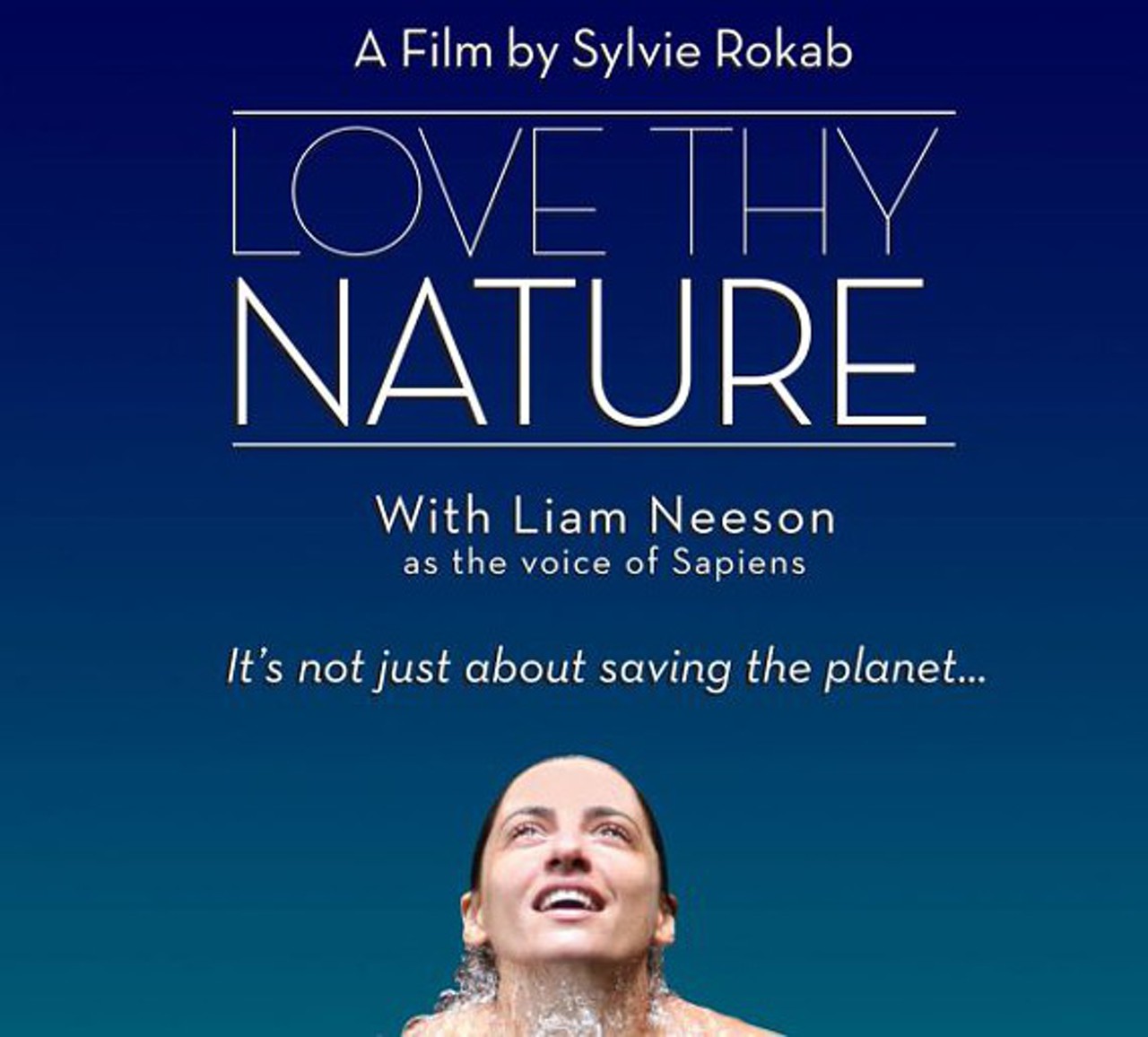
Love Thy Nature

by Cat McAlpine

The best way to convince people that caring for the planet is badass is to have a badass tell them so. This is what I was hoping to get from Liam Neeson’s narration of Love Thy Nature. This is not what I got.

Neeson’s involvement is featured heavily in the documentary’s promotions, but his real role is much smaller than that of “narrator.” Neeson voices “sapiens, homo sapiens” – essentially speaking for the human race. The choice to involve the human race as a whole and to engage it, quite literally, in a dialogue is interesting but ultimately not effective. Neeson’s script is heavy handed, ending musing thoughts with sudden reversals like “Or is it?” or “Could I be wrong?”

The film itself proceeds like any shown in a high school science classroom. Picturesque landscape shots cover the basics; rocks, beach, underwater, trees, the savannah. These shots are accompanied by a litany of new age talking heads, cartoonish and often unnecessary animations, and an excessive amount of footage featuring people gazing into the distance.

What’s most perplexing is that the talking heads never seem to say much of merit. The film has good heart, urging that we reconnect with the planet, but when it comes to facts or statistics, an entire cast of scientific professionals has little to offer. One talking head claims that “slathering ourselves with sunblock or covering up actually increases the risk of skin cancer.” There’s no follow up.

Love Thy Nature is segmented by profound quotes about man and nature, displayed on the screen in white lettering on the same hazy forest backdrop each time. The quotes seem to have little purpose other than to be inspirational.

While the film eventually suggests that we can use technology to further our relationship with nature, a bizarre cut early on seems to suggest that children playing video games leads to forest fires.

Eventually, director Sylvie Rokab settles on the idea of biomimicry, an engineering field that focuses on using designs that are naturally occurring. It seems like this is what Love Thy Nature has been building toward, the ultimate reconnection of man and nature. The segment lasts about a minute or two, with few hard facts, and then is over.

Rokab is obviously dedicated to this cause, also co-writing the script and story and leading the Kickstarter that funded the project. It is a noble cause. Sapiens, Homo Sapiens, will find it hard to deny a cry to take better care of both our planet and ourselves. But this Earth Day is better served by skipping the film and going outside.

Verdict-2-0-Stars

https://www.youtube.com/watch?v=TVNFkOBswEI

Elvis has Entered the Building

Elvis & Nixon

by Hope Madden

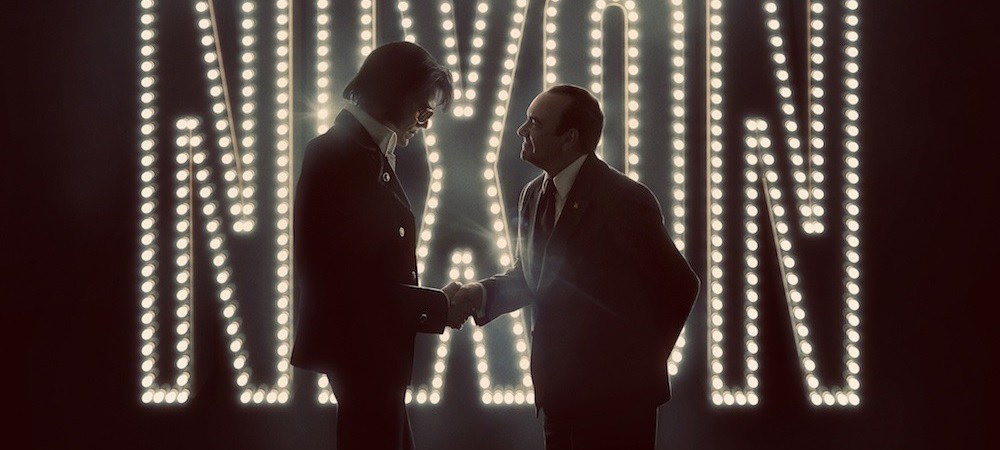
On December 21, 1970, Elvis Presley made an unexpected visit to the security checkpoint outside the White House, hoping security would deliver his hand written letter to President Nixon.

He really, really wanted a badge.

It’s a profoundly absurd story – the drug addled King of Rock and Roll hoping to meet Nixon and become a Federal Agent at Large, going undercover to infiltrate different groups (like Beatles fans) who were “bringing down the country.”

Director Liza Johnson (Hateship Loveship) celebrates the absurdity by taking the driest approach to telling the story.

First of all, Michael Shannon plays Elvis. Now, Shannon is undeniably talented – he’s among the most reliable and impressive actors working today, capable of comedy, drama, and everything in between. But the tall, hard, grim looking actor is not a top-of-mind prospect when casting for Elvis.

Likewise, Kevin Spacey makes for an unusual choice as Nixon. These are two of the world’s most imitated, most recognizable presences. Kudos to Johnson for kicking the wicked comedy off before the opening credits even role with casting choices that seem like a clever joke.

Both actors are fun to watch, especially as they play off each other and off Nixon aides Elgin and Dwight Chapin, ably handled by Colin Hanks and Evan Peters, respectively.

Shannon, in particular, gives a nuanced and dialed-down performances as the King, both comical and sad.

Alex Pettyfer’s character, Elvis’s longtime friend (and film executive producer) Jerry Schilling, is meant to flesh out Elvis’s loneliness and offer a regular man’s point of view inside this relentlessly weird story.

To be fair, Pettyfer is better in Elvis & Nixon than he has ever been. Keep in mind, the actor has sucked out loud in every film up to now, so that is not necessarily high praise. But he does keep the film tenderly grounded.

The screenplay remains somewhat superficial, though. It leaves the film feeling like an overly long, if abundantly amusing, sketch. The fact that this all actually happened is genuinely amazing, which begs the question, why does the film settle for wryly amusing?


Verdict-3-0-Stars

Do You Want to Build a Sequel?

The Huntsman: Winter’s War

by George Wolf

A magical young princess leaves her sister’s side amid some heavy emotional trauma, taking her cold heart to a frozen environment and staking her claim as the Ice Queen. This one, though, has no interest in building a snowman.

Winter’s War is both prequel and sequel to Snow White and the Huntsman, the competent fantasy drama from 2012. You might wonder about the need for another film in this franchise, but it’s hard to argue with the cast.

Chris Hemsworth is back as Eric the Hunstman, along with Jessica Chastain as his beloved Sara and Charlize Theron’s evil Queen Ravenna. Theron was easily the best thing about the first film, and adding the great Emily Blunt as Ravenna’s chilly sister Freya seems like a pretty safe play.

Yeah, um, about that…

Blunt’s unbeaten streak of onscreen chemistry with every living human ends here, as she and Theron can’t get their considerable talents to gel. Instead, Blunt’s “love is evil” act and Theron’s power-mad malevolence wander into a curiously campy section of the castle.

How can you put two actors of this caliber side by side, and end up with scenes this dull?

Director Cedric Nicolas-Troyen is a visual effects veteran making his feature debut, and he seems much more confident presenting Eric and Sara’s woodland journey to recover the magical mirror, mirror no longer on the wall.

The film’s first act is nearly insufferable, ploddingly paced and weighted by exposition shared via the buttery (if uncredited) voice of Liam Neeson.

Things pick up midway as the adventure proper begins, but Nicolas-Troyden and cast stumble again as their tale comes to a close. Though it often looks fantastic, Winter’s War is uneven at best, with a mishmash of ideas that barely hold together, and cannot capture attention.

Worse still, it is an unforgivable waste of three of the most talented women working in film today.

If you harbor a mad desire to see the film, you may want to let it go.

Verdict-2-0-Stars