All posts by maddwolf

Some Dude with a Mop

The Toxic Avenger

by Hope Madden

My friend has photographed Lloyd Kaufman’s testicles. That means that in a game of Six Degrees of Lloyd Kaufman’s Testicles, I would win.

In other news, a bunch of talented, funny humans have rebooted Kaufman’s iconic 1984 Troma classic, The Toxic Avenger. There are few films I have more impatiently anticipated than this, plagued as it was by a two-year delay in distribution. But now you can see writer/director Macon Blair’s reboot in all its goopy, corrosive, violent, hilarious glory.

Though the story’s changed, much remains the same (including Easter eggs a plenty!).

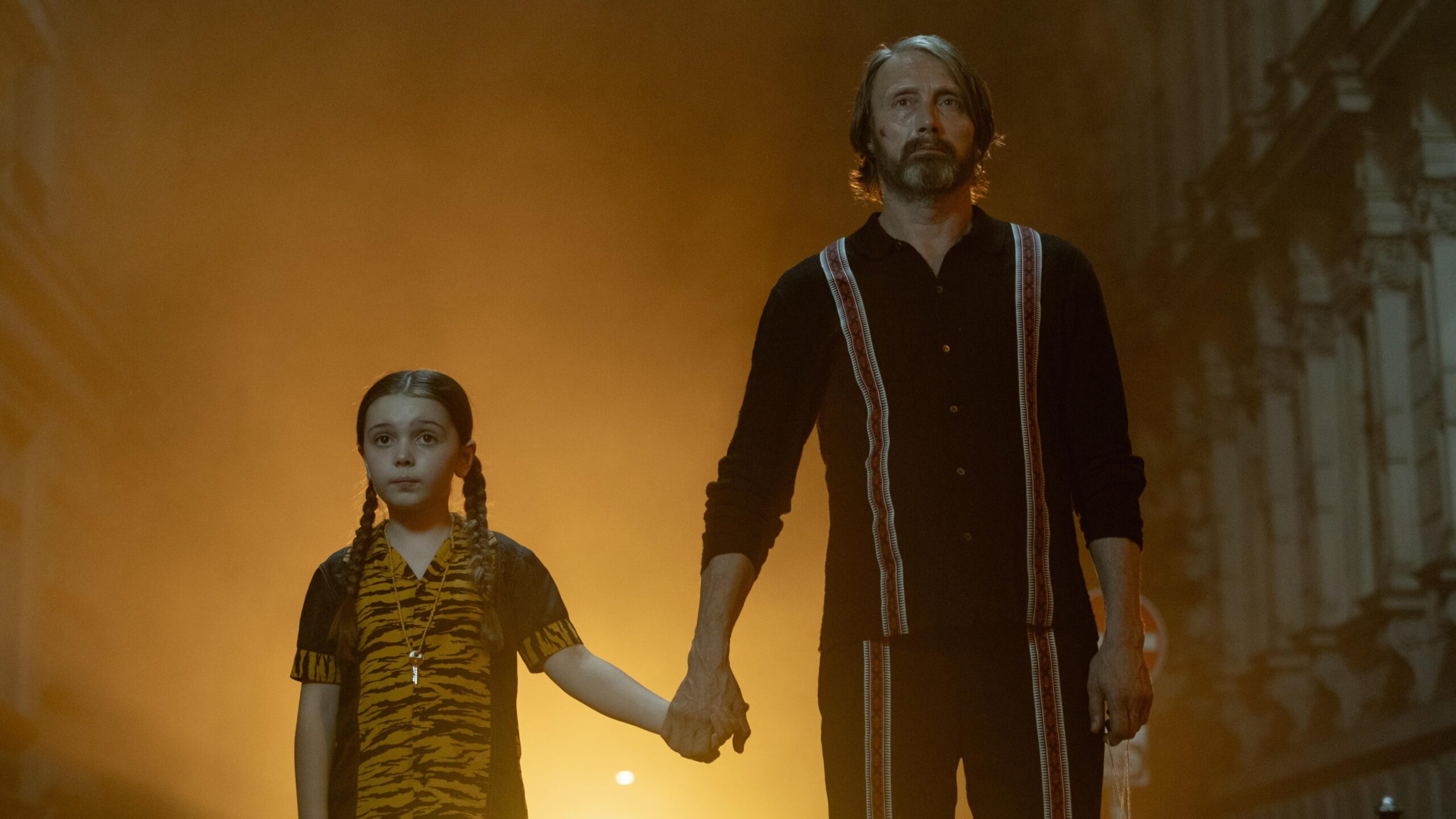
Winston (Peter Dinklage), single stepfather to Wade (Jacob Tremblay) and janitor at a factory that makes wellness and beauty supplements, finds that he’s dying and his platinum insurance doesn’t cover the treatment that could save his life. Attempting to steal the money to cover the treatment, he saves a whistleblower (Taylour Paige) from a group of horror core hip hop parkour assassins but winds up in a pool of toxic sludge.

Let’s pause for a second to marvel at this cast. Dinklage is one of the most talented actors working today, and as Winston he is effortlessly heartbreaking and tender. He’s also really funny, and this is not necessarily the kind of humor every serious actor can pull off.

Paige, who has impressed in Zola and Ma Rainey’s Black Bottom, among other film, also seems built for Blair’s particular brand of Troma comedy. And Tremblay, beloved since his excruciatingly perfect turn in Room as a small boy, gives the film its angsty heartbeat.

Plus, Kevin Bacon as the narcissistic weasel owner of the wellness and beauty empire killing the planet. He hates to be called Bozo (IYKYK).

Blair made his directorial debut with 2017’s underseen treasure, I Don’t Feel at Home in This World Anymore, though he’s better known as the lynchpin performer in many of Jeremy Saulnier’s films (Blue Ruin, Green Room, Murder Party). He and Kaufman both deliver laughs in small roles, but he impresses most as the mind behind the mayhem.

His vision for this film couldn’t be more spot-on. Joyous, silly, juvenile, insanely violent, hateful of the bully, in love with the underdog—Blair’s Toxic Avenger retains the best of Troma, rejects the worst, and crafts something delirious and wonderful.

Role Reversal

Honey Don’t!

by Hope Madden

An entertaining if slight thriller of the old school, hard-boiled detective sort, Honey Don’t! is director Ethan Coen’s follow up to 2024’s Drive-Away Dolls. The second in a lesbian B-movie trilogy, the film sees Margaret Qualley as Honey O’Donahue, a modern day (if landline and analogue) private detective in sun drenched Bakersfield, CA.

Sometime before opening credits roll, Honey got a call from one Mia Novotny (Kara Peterson), the corpse in the overturned car down a dusty canyon road. So obviously, Honey’s not actually working that case. Still, Mia had called saying she was in danger, and business is kind of slow, so what could it hurt if Honey digs in a little bit?

What she finds is an incredibly corrupt minister (Chris Evans), a missing niece (Talia Ryder), a sexy cop (Aubre Plaza), a sexier French woman on a Vespa (Lera Abova), more bodies and more leads. But no real case to solve.

Writing again with Tricia Cooke, Coen has fun recasting a lot of the romantic, tough guy mythology of the private dick and Qualley carries herself and that mythology well. And while each supporting turn is, on its own, convincing and solid, few of the characters feel like they exist in the same film.

At turns punch drunk, zany, dark, gritty, absurd, and lighthearted, Honey Don’t! causes tone change whiplash.

The cinematic sleight of hand required of any whodunnit worth its salt works on the level that it’s a surprise, but again it delivers a tonal shift that brings the film to a screeching halt.

Suddenly the slapstick comedy, delivered with panache and color and elevating the pace of much of the movie, feels not just out of place but ill conceived. The fact that the more comedic the film the more violent the imagery also feels wildly at odds with the seriousness of the final act.

Qualley has no trouble click-clacking her heels no matter the scene or tone, and both Evans and Charlie Day, as a cop with a crush on Honey, are perfect in a breezy if violent comedy about oblivious men in a world where they are unnecessary. And certain scenes feel like the polished gem of any Coen Brothers film. But Honey Don’t! can’t string enough of these together to create anything lasting.

High in the Middle

Eenie Meanie

by Hope Madden

Remember how great Cleveland looked in Superman? Writer/director Shawn Simmons takes us back to The Land, as well as to Toledo, for his thriller set among Ohio’s low rent criminal underbelly, Eenie Meanie.

It’s not exactly as tourism friendly as Superman.

Samara Weaving is Edie, and when we meet her, she’s really struggling to make something of her life. A day job as a bank clerk, night classes, maxed out credit cards, bleary nights studying. And then her one mistake—she stops by to share some news with her ex, John (Karl Glusman, The Bikeriders, Watcher).

But John’s gotten himself into some trouble. And try as she might to leave him and his trouble behind, the semi-fatherly crime lord she used to work for (Andy Garcia, delightful) will kill John unless Edie saves him. And to do that, she falls back on some old skills as a getaway driver in a big score.

Simmons has crafted a fun, twisty, funny thriller full of sharp turns. Weaving effortlessly carries the film as the tenderhearted badass who knows better. Glusman is infuriatingly excellent as that epic dumbass you want to smack but can’t help but hug. And maybe also smack.

Solid support from Garcia, Steve Zahn, Mike O’Malley, and Randall Park fills every scene with laughs, pathos, violence, and fun. But it’s the sly way Simmons braids together tales of co-dependence, trauma, loyalty, and resilience that gives Eenie Meanie unexpected heft.

Weaving has proven her genre moxie again and again (Ready or Not, Mayhem, The Babysitter, Guns Akimbo, Azrael), so it comes as no surprise that she brings the goods as the lead in an action comedy thriller. What’s impressive is the honesty and the genuine emotional conflict she expresses within this relationship.

She and Glusman revel in the dysfunction, played for exasperated laughs in the early going. But as Simmons tale develops, unveiling more of their relationship and backstory, that same chemistry takes on a relevance and power that allows Eenie Meanie to deliver a climax more powerful than you might expect.

Suspicious Minds

Eden

by George Wolf

Eden tells a fascinating story. And it tells that story in a star-studded, well-crafted way that’s rarely dull, even when the weight of its melodrama gets heavy enough to be nearly undone by the film’s parting shot.

Director Ron Howard joins co-writer Noah Pink to recount a historical tale “inspired by the accounts of those who survived” as a parable of greed, power, suspicion and annoying neighbors.

“Democracy, Fascism, war. Repeat.” So yeah, still plenty timely.

In the years just after WW1, Dr. Friedrich Ritter (Jude Law) and his partner, Dore Strauch (Vanessa Kirby), left civilization for a hardscrabble existence on the Galapagos Island of Floreana. Convinced that mankind was finished, Ritter became determined to write a new philosophy that would save humanity from itself, and in pain…find salvation.

His writings were picked up by the occasional passing ship, eventually attracting quite a following among others looking for a new life. And that, of course, led to the very thing Ritter didn’t want on his island: more people.

Heinz Wittmer (Daniel Brühl), and his wife Margaret (Sydney Sweeney) arrive first, inspired by Ritter’s vision and hoping for a better climate for their son Harry’s (Jonathan Wittel) tuberculosis.

The Wittmers – especially Margaret – prove tougher than Ritter imagines, but the Baroness Eloise Bosquet de Wagner Wehrhorn (Ana de Armas, scene-stealing and never better) is a larger-than-life problem no one expected.

The Baroness arrives on Floreana with servants/lovers and a grand plan to build an ulta-exclusive hotel for the wealthiest of tourists. De Armas digs in, crafting her as a shameless narcissist, so ruthless and sociopathic that she’d be cartoonishly absurd if not for the gaslighting cult of personality we wake up to every day.

The entire cast shines. And like her or don’t, Sweeney continues to impress with another film that challenges her range and physicality (Margaret must fight off wild dogs and give birth alone…damn!) while eschewing any shades of empty pinup girl glamour.

The running time pushes well past 90 minutes, but Howard keeps things humming right along. The dangerous motives, shifting alliances and double crosses create an over the top, sometimes darkly funny concoction that pulls us in, fascinated by who will emerge the victor in this battle for the unhappy high ground.

And when the inevitable historical update arrives with the credits, we see footage of the actual people who fought this fight…and they’re laughing, smiling, waving! Like the surprising Maria Callas footage in last year’s Maria, you wonder where these happy people have been hiding the last two hours.

Bet they could have shed more light on what life was really like on the island of lost smiles.

But would they have been as much primal, pulpy fun?

Bagheads

We’re Not Safe Here

by Hope Madden

The nightmarish images and unsettling sound design of writer/director Solomon Gray’s We’re Not Safe Here more than make up for its narrative stumbles.

A lot of films open on a scene of horror to be contextualized later in the movie. Likewise, Solomon sets the stage early with a swift, troubling little gem of a horror show. But interestingly, the tale he builds around it taps into a terror more subconscious and dreamlike than what you might expect.

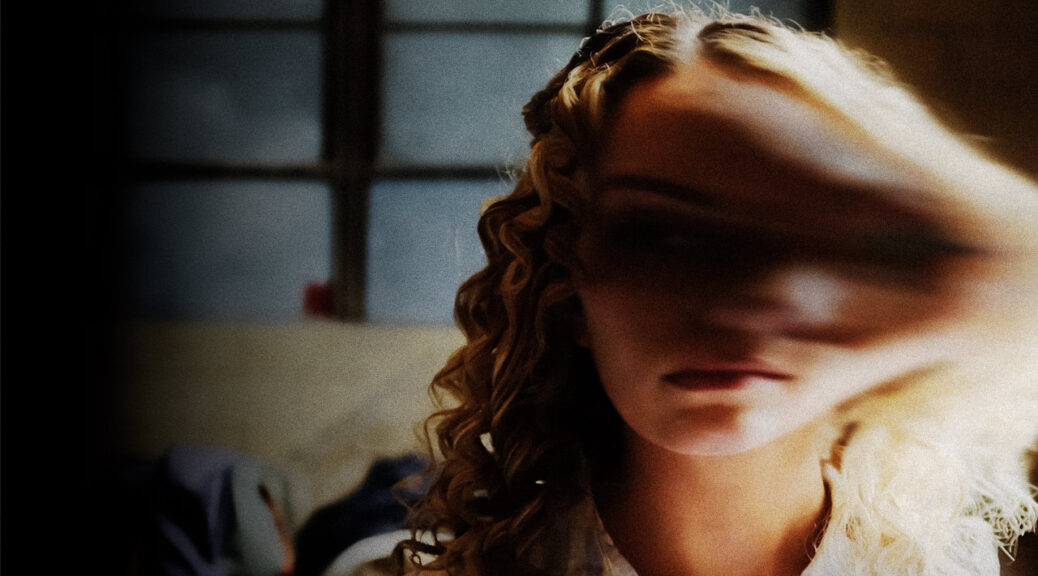
Sharmita Bhattacharya is Neeta, a schoolteacher by day/artist by night who’s been unable to get started on her latest painting. Frustrated at the easel one night, she’s surprised by a visit from Rachel (Hayley McFarland), another teacher who’s been missing. Frantic and increasingly panicked, Rachel spills a story that began in her childhood. Something she thought she’d lost has found her again.

Aside from some very intimidating figures wearing bloody pillowcases over their heads (creepy!), We’re Not Safe Here is primarily a two-person show. McFarland is masterful, her paranoid madness tipped with a teacher’s command of the room. She’s mesmerizing.

Bhattacharya struggles a bit. Neeta is also troubled, and the performance feels stiff and unsure until the character gives into her demons. But there are moments between the two of them that are deeply upsetting. I mean that in a good way.

Gray’s use of setting—Neeta’s home, every wall cluttered with her sketches and paintings, every surface littered with books—creates a busy, fascinating space rich with potentially spookiness. A meandering camera and effective sound design capitalizes on what the set design has crafted: a lovingly lived-in space turned suddenly suspicious. The filmmaker evokes a kind of paranoia that feeds the perfect atmosphere for his film.

There’s a looseness to the script that often serves the film’s maniacal undercurrent. What’s delusion? What’s really happening? And is it contagious?

Gray refuses to fit all the pieces together, a choice that mostly pays off. The act structure and finale are rigid enough to give the tale a feel of completion. While a lingering vagueness in the backstory is frustrating, it also allows the imagination to veer into its own halls of madness.

Don’t Speak

Relay

by Hope Madden

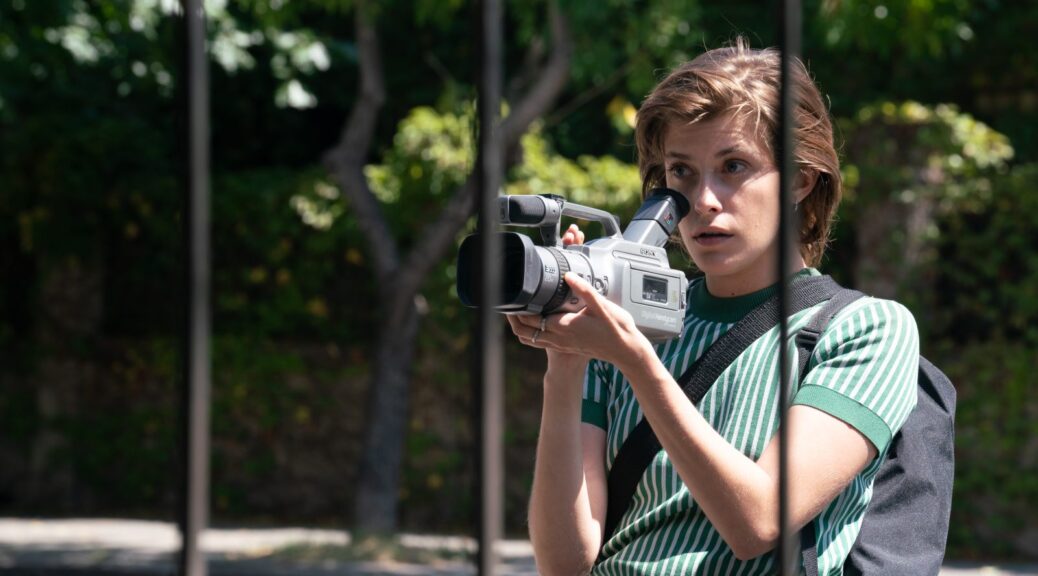
It’s been nearly a decade since director David Mackenzie’s brilliant neo-Western Hell or High Water delivered a moseying goodbye to a long-gone, romantic notion of manhood. After a successful run of TV series and miniseries, Mackenzie’s back to the big screen with the twisty thriller, Relay.

Riz Ahmed stars, though he does not speak for at least twenty minutes and we don’t learn his character’s name until the final act, as a professional middleman. Whistleblowers who turn coward under the pressure of big, ugly corporate malfeasance and cover ups rely on him to broker deals. Evildoers get back all the evidence and, for a fee, they leave their former employee alone forever. Riz keeps a copy, just to be sure everybody sticks to the deal.

What’s most important is that nobody—not the client, not the company—ever knows who Riz is. Is this middleman a man? Is it a woman? Is it a group of interchangeable people? In a clever conceit, the middleman uses a relay service intended to help the Deaf and hearing-impaired conduct phone calls, which keeps all connection to client and company separate, untraceable, and unrecorded.

That’s a good setup, and Mackenzie—working from a lean script by Justin Piasecki—takes care to show us what we need to know, regardless of his very quiet leading man.

Ahmed is characteristically excellent, easily carrying the film in silence until Act 2. His performance is nimble, clever enough to trust that he’s one step ahead, vulnerable enough to believe he has a weakness. That’s Lily James, the would-be whistleblower who just wants her life back.

Though the two rarely share the screen, they do share a lonesome chemistry that elevates moments of contrivance in an otherwise taut piece of double crossing, out maneuvering, and personal growth.

A game supporting cast including Sam Worthington, Willa Fitzgerald, Jared Abrahahamson, and Matthew Maher keeps the surprises, tension, and humanity blooming. But it’s Ahmed whose wounded performance captures your sometimes breathless attention for the full 112 minutes.

Fright Club: Weapons

Thought we’d veer slightly off course to take a deeper dive into Zach Cregger’s latest horror hit, Weapons. Poet and horror fan Scott Woods joins us!

Weapons

by Hope Madden

I’m not saying that Barbarian was anything less than a creepy, disturbing good time. Writer/director Zach Cregger’s 2022 bizarre, brutal minefield of surprises announced him as a master of misdirection, unsettling humor, and horror of the nastiest sort.

I’m just saying Weapons takes a lot of what worked in that film and sharpens it to a spooky edge. No throw-away laughs, no grotesque b-movie shenanigans, just an elaborate mystery slowly revealing itself, ratcheting tension, and leading to a bloody satisfying climax.

Unspooling as an epilogue followed by character-specific chapters, the film builds around a single event, developing dread as it delivers character studies of a town of hapless, fractured, flawed individuals in over their heads.

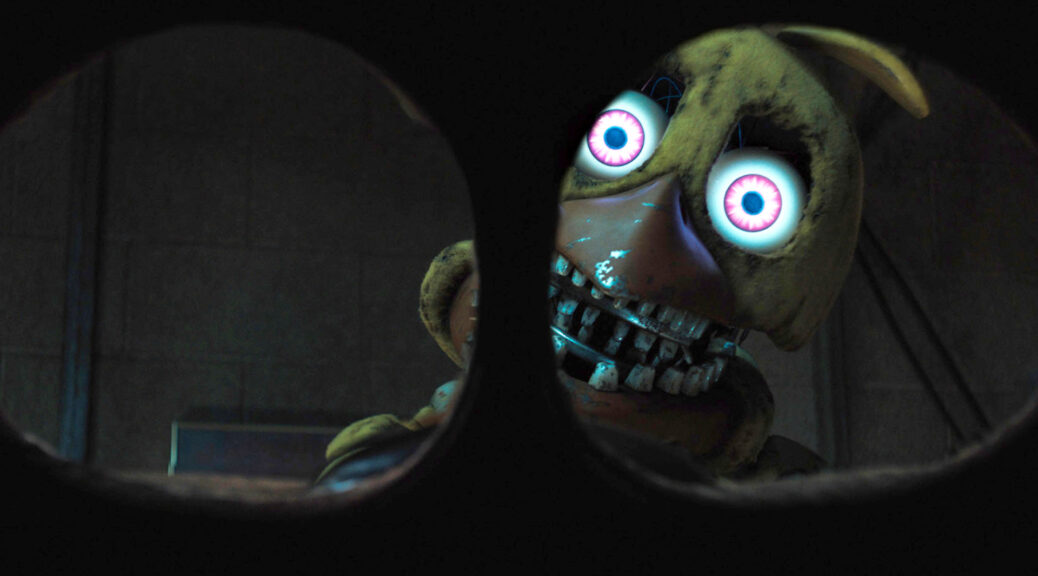
Julia Garner anchors the tale as a 3rd grade teacher who arrives to class one fateful morning with only one student in the room. Aside from little Alex (Cary Christopher, heartbreaking), none of Mrs. Gandy’s class made it to school today because every single one of them left their beds at 2:17 that morning to vanish into the night.

Since she’s what the kids have in common, the town suspects that she is to blame. This is especially true of young Matthew’s dad, Archer (Josh Brolin), who also gets a chapter.

As it did in Barbarian, this character-by-character approach allows for new information to bleed into what the audience knows, rather than what the characters know. But as each new tale opens our eyes to the mystery, it also lets this solid cast work with Cregger’s game writing to do some remarkable character work. Brolin’s angry, grieving confusion rings painfully true. And Garner seems to relish the opportunity to explore Mrs. Gandy’s unlikeable side.

Benedict Wong contributes the sweetest, and therefore most unfortunate, performance, but it’s the way Cregger lets each actor breathe and settle into idiosyncrasies and failings that keeps you invested. It’s the dark humor that’s most unsettling.

This is smartly crafted, beautifully acted horror. Those who worry Cregger’s left nasty genre work behind for something more elevated need not fear. As crafty as this film is, there’s not a lot of metaphor or social consciousness afoot. Weapons is just here to work your nerves, make you gasp, and shed some blood. It does it pretty well.

Viva la Revolution

Sudan, Remember Us

by Rachel Willis

“Each time one revolutionary falls a thousand others stand up!”

Sudan has appeared in the news off-and-on for years. The region has been plagued by coups, civil war, terrorism, genocide, and oppression of anyone who dared resist the regimes in power.

It’s poignant for Hind Meddeb to name her documentary Sudan, Remember Us, as she forces our attention once again to a region plagued by war and uncertainty.

A bit of history may be helpful for those unfamiliar with situation in Sudan. The coup that overthrew the 30-year rule of President Omar al-Bashir in 2019 was meant to lead to democratic, civilian rule. But the military council set up to act as a transitionary government has not released its hold on the citizens of the Sudan. The film assumes a certain knowledge, but even without any historical knowledge, it’s clear what the people want and who they resist.

For several young activists and artists living in Khartoum, the fight for democracy is a daily battle. Meddeb drops us into the realities of a sit-in, a form of civil disobedience. She lets several men and women speak to why they demand change. They discuss the best ways to protest, to keep fighting when those in power want to break them.

The footage of the sit-in is juxtaposed with a military crackdown, accompanied by scenes of chaos. Gunshots, explosions, and beatings are caught on camera phones, many wielded by the perpetrators of the violence. It’s a disturbing reaction to the peaceful nature of the sit-in.

The scenes of viciousness help underscore the words of the protestors who speak to the importance of continuing to oppose the military government. They recite poetry, sing songs, march, and find as many ways as they can to register their disapproval with the situation as it stands.

The ways in which Meddeb allows these young men and women to open up, sometimes addressing her directly, creates an intimacy between the audience and the participants. The film does as much as it can to make us feel like we’re witnessing history as it unfolds, even as the result remains uncertain.

It’s a powerful testament to the importance of film (and art in general) in the making of history.