On this week’s Screening Room podcast, Hope & George review 28 Years Later: The Bone Temple, The Rip, No Other Choice, Dead Man’s Wire, The Choral, Night Patrol, Maldoror, Resurrection and Obex! PLUS! News & Notes from Daniel Baldwin, ada The Schlocketeer!
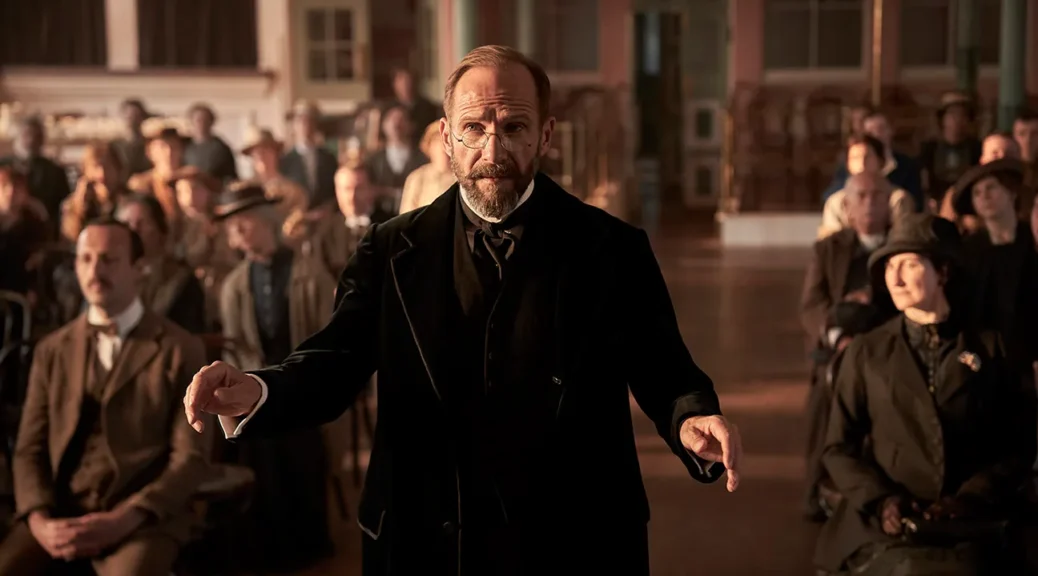
In case you need a reminder about the versatility of Ralph Fiennes, here it is. In the same week we find him trying to outsmart a psychotic gang leader while working to cure a rage virus in 28 Years Later: The Bone Temple, he’s also looking to assemble a suitable group of singers in the midst of WW1 for The Choral.
The man has range, and he’s wonderful as Dr. Henry Guthrie, who has returned to Yorkshire in 1919 after a career in Germany. Those ties draw suspicious catcalls of “Fritz!’ from the locals, but with many of the best male voices leaving for the army, the choral committee feels he’s the best choice to move the group forward as chorus master.
The blunt and uncompromising Dr. Guthrie isn’t exactly thrilled at the prospect, which is evident right from the auditions. Fiennes gives him some delightfully pained expressions when notes are mangled, but glorious looks of enlightenment when true talent hits his ears.
Director Nicholas Hytner and writer Alan Bennett set a pleasing enough hook, but end up getting bogged down in a marsh of routine subplots and surface-level messaging.
Hytner (The Madness Of King George, The History Boys) gives the wartime period details a sheen that seems too glossy for an effective contrast between the boys who’ll soon go to the front and those coming home. It begins to resemble a more musical riff on Dead Poets Society, but the boys’ wartime bravado and impatience for sexual experience just distract from the more engaging conflict with Dr. Guthrie.
Due to the young age of his best male voice, Dr. Guthrie has to make some story changes to the Choral’s performance piece, “The Dream of Gerontius” by Edward Elgar – without telling Elgar himself.
And then guess who shows up.
If the themes of wartime loss and sacrifice cut deeper, the performance tension would play an understandable supporting role. But little outside of Fiennes’s orbit holds your attention, and The Choral settles into its place as a perfectly generic period drama.