Tag Archives: Rachel Willis

Talk to Me

The Ants & the Grasshopper

by Rachel Willis

For Anita Chitaya, climate change is devastating. Along with her community, she does what she can to minimize its impacts in Bwabwa, Malawi. However, she knows that for real change to happen, she needs to go to America – and convince those who don’t believe.

Directors Raj Patel and Zak Piper give her that opportunity and film the journey for their documentary, The Ants & the Grasshopper.

The first 20-minutes of the film shows us Anita’s world. Not only does she farm her one acre of land with her husband, Winston, she erases old notions of gender roles. She encourages men to cook and help their wives with necessary chores. Her program is successful, though there is one notable hold out who refuses to do “woman’s work.”

Upon the success of her endeavors in her hometown, she believes she can convince people in America about the reality of climate change if only she could talk to them.

The film picks up steam when Anita, along with her friend Esther, arrives in the United States. Her journey begins in the Midwest, speaking with farmers about the impacts of their practices on Bwabwa.

Though everyone who meets Anita is civil, it’s clear some don’t believe her plight at home is due to climate change. Jordan works on his family’s farm; though he says he will do what he can to help, he blatantly states he doesn’t think it’s an issue. This shocks his parents. That members of the same family have conflicting beliefs speaks to the heart of the problem in America.

It’s humbling and a little shaming to watch Anita travel across America. As she takes in the excess, she points out that we take what we have for granted. Her companion, Esther, points out that it’s not about making anyone feel guilty – “too much time is wasted on guilt.” But when Anita and her community struggle to find water for cooking and cleaning, what we take for granted is damning.

However, there is hope to be found. After Anita returns home, we find the same man who refused to do woman’s work now teaching other men how to cook. Skeptic Jordan wishes he could apologize to his Malawi friends for laughing when “maybe I should have cried.” People can change. Though the sentiment is that it’s never too late to change, the faster we wake up, the better for everyone.

Tell Me Dear

Are You Lonesome Tonight?

by Rachel Willis

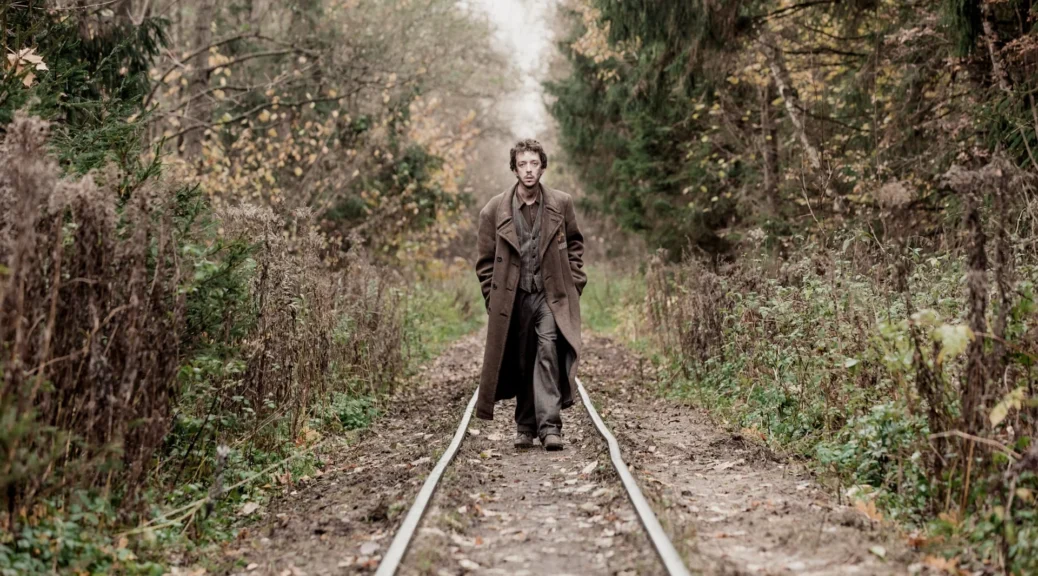
A distracted driver makes a series of bad decisions one dark evening, setting the tone for director Shipei Wen’s first feature, Are You Lonesome Tonight (Re dai wang shi).

This is a film you expect to go a certain way, so when it veers off in a different direction, it’s an intriguing but not necessarily satisfying choice. The film follows a predictable pattern even though it might not be the pattern you were initially anticipating.

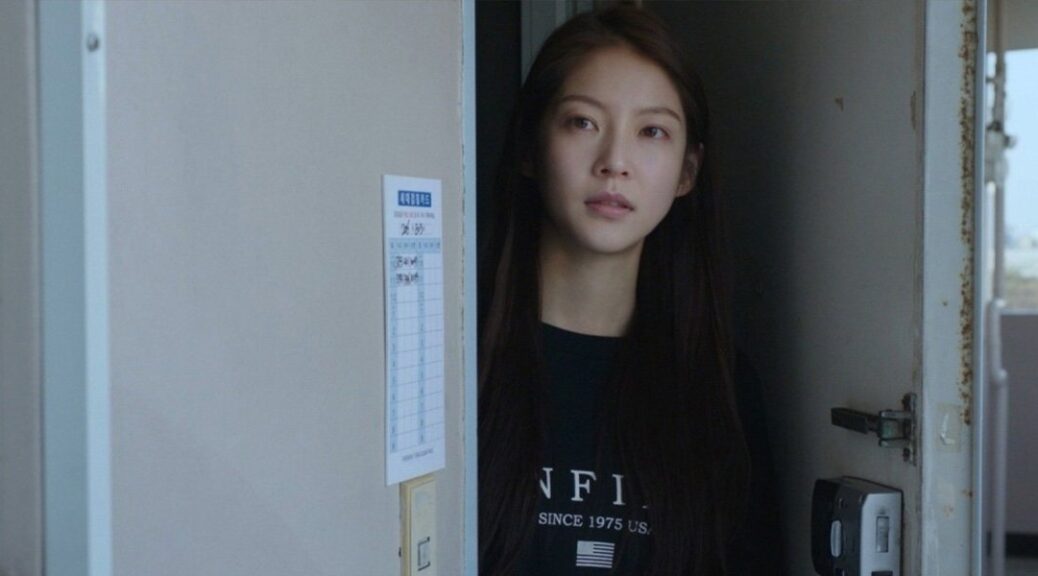
The movie’s two leads, Xueming (Eddie Peng) and Ma (Sylvia Chang), are what’s most appealing. Though Xueming is a bit too similar to characters we’ve seen many times before, Ma is more complicated. Because Ma has lost both a husband and a son, you might expect her to put Xueming into the role of son – and in some ways, she does, but emotionally, she keeps him at arm’s length.

We don’t spend as much time with Ma as you might want. Instead, we follow Xueming as he makes questionable decision after questionable decision. His motivations are murky, but this works to underscore the darkness of both the film and human nature. He deals with guilt and uncertainty in increasingly violent ways, making the sensitivity he shows Ma especially touching. Though she may be using him to fill certain needs, there’s no doubt there’s something that connects these two.

There’s a lack of linear cohesion to the film that is surprisingly irrelevant to the whole. That we move around in time doesn’t increase tension or even really cause confusion. It simply is, and it’s a curious choice. A scene or two is repeated. One particular scene is shown from multiple perspectives, but the choice to work it into the film in two different spots is unnecessary. It would have worked as well – perhaps better – if we saw both perspectives at the same time.

There isn’t much going on in this film. The ethical dilemmas are overlooked in favor of a paint by numbers mystery. However, as a slice of Xueming and Ma’s lives, it’s worth watching to see how they react to the events unfolding around them.

As a character drama, it’s intriguing. As a languidly paced mystery, Are You Lonesome Tonight is a little underwhelming.

Senior Pictures

Therapy Dogs

by Rachel Willis

Writer/director Ethan Eng (along with co-writer Justin Morrice) crafts a slice-of-life look at adolescence with his debut feature, Therapy Dogs. Eng and Morrice also play fictionalized versions of themselves, two friends seeking to document the truth about high school as they embark on their senior year.   

Your enjoyment of Therapy Dogs will likely rest entirely on whether or not you find the antics of adolescent boys annoying. There are the things that seem typical: drinking and parties and pot. Then, perhaps, the not so typical: exploring abandoned buildings and making dumb decisions like jumping off a railroad bridge into the water (which may or may not be deep enough for such a drop).

One thing the film highlights is that boys in 2019 are very much like the boys with whom I went to school in the mid- to late-1990s. And as the 90s have come back around in fashion, if not for the presence of cell phones, I might have thought I was watching something from my own adolescence.

The film runs the gauntlet of found footage style adventuring but at times appears more adept. The naturalism will occasionally give way to something more subtle. These are the moments when it’s unclear who’s behind the camera. Is this still part of the boys’ senior film, or does it represent the presence of an omniscient narrator? Regardless, it works to help hold together the disjointed segments.

The success of the film lies in its accuracy around the portrayal of teenagers, particularly boys, as they ponder the future and wonder what lies ahead. Though the film jumps around and never seems to settle on a plot, you come to realize that there is a commentary on growing up and how baffling it is that so many boys survive such bad choices.

Teenage boys are essentially teenage boys. Though teenagers today have different pressures than those of past generations, they still make stupid decisions, crack each other up with bad jokes, tell “epic” stories, fight, and eventually – if they survive their poor decision making – grow up. Eng captures it all in a way that feels as familiar as it does unique.

There are some filmmaking choices that are just as likely to be off-putting as they are to be engaging, but there’s no denying that the movie’s realism is what makes it relevant. This is an ageless tale of youthful exuberance that brings its own distinct perspective.

Big Fish

Blueblack

by Rachel Willis

An encounter with a wild blue grouper sends 8-year-old Abby on a lifelong mission to understand, and save, the ocean ecosystem in writer/director Robert Connolly’s feature, Blueback.

We follow Abby through three stages of her life. The first – and shortest – at age 8 is precociously played by Ariel Donoghue. Teenage Abby, played by Isla Fogg, is who we spend the most time with as she reconciles her love of the ocean with her mom, Dora’s (Radha Mitchell), overt activism. A contemporary framing story follows the adult Abby (Mia Wasikowska) as a marine biologist who returns home after Dora (the older version portrayed by Elizabeth Alexander) suffers a stroke.

On paper, this seems like a lot to contend with, but Connolly handles each stage well, ping-ponging primarily from adult Abby and teenage Abby with a skillful touch. There’s never any confusion as to where we are in time, as both Fogg and Wasikowska cement us with the character (as do Mitchell and Alexander with Dora). Both depictions are so strong as to convince us that we’re watching the same woman across time.

The movie’s biggest problem is overstuffing the scenes of teenage Abby’s life, leaving too little time for both the framing story, and the fish that gives the film its name. Though Eric Bana is a fine actor, his character Macka feels extraneous. There are other characters with whom our time is better spent.

Because we spend so little time with the grouper, there’s never the sense that we’re connecting with an animal in the way other films showcase the human-animal bond. It’s possible it’s simply hard to make a girl and her fish land the same way as a boy and his dog, though I imagine those who saw My Octopus Teacher might beg to differ.

Despite the film’s tendency to take on a little too much regarding its worldbuilding, it’s still an effective exploration of family and community, and how we relate to the natural world. There are those who seek to exploit it for everything it’s worth, while others wish to preserve it for future generations.

There’s a sense that for each piece of the world we lose, more than we can ever imagine is lost along with it. Abby and Dora hope to preserve that which connects us to something bigger than ourselves. The theme is always one worth repeating, and Blueback adds a unique perspective to the mix.

In the Trenches

The First Fallen

by Rachel Willis

Writer/director Rodrigo de Oliveira shapes a not-so-subtle soldier metaphor for the first victims of the AIDS crisis in his film, The First Fallen.

The film follows biologist Suzano (Johnny Massaro), and his band of friends and family as he navigates the frontlines of a war waged within his body.

The first half of the film is less engaging than the more personal second half. Though we meet several characters over the course of the first hour or so, no one really has much depth – that comes later. Suzano has been away in Paris but has returned to his sister Muriel (Clara Choveaux) and her son Muriel (Alex Bonin) to reconnect. His friend Rose (a transcendent Renata Carvalho) has not only been turned away from the hospital where she seeks care, but they have misgendered her – the indignities of which lend the film its most powerful scene.  

Most of the first act is concentrated around boisterous NYE celebrations, ringing in the year 1983. Rose performs for the celebrants at a gay club; Maura and Muriel attend a party. Suzano spends his evening alone.

There is a downheartedness that follows both Suzano and Rose, but it isn’t until the end of the first half that we get confirmation of what causes their sorrow.  

A sarcoma on Suzano’s neck is our first hint that several of these characters have fallen victim to the devastating AIDS epidemic. De Oliveira doesn’t spend time catching up those who might not know the history of AIDS and its startling explosion onto the scene in the early 80s, particularly in the gay community. At the time of the film’s events, the medical world didn’t even know the cause of AIDS (HIV would be identified in May of 1983), let alone how to treat it.

Seeking to document how the disease ravages his body, Suzano isolates himself, along with Rose and another afflicted man, Humberto (Victor Camilo). This is where the film excels. We’re privy to an experience not many have witnessed, particularly at a time when fear of the unknown isolated those who suffered most. How Rose, Humberto, and Suzano deal with their illness is at times touching and other times heartbreaking. The film’s home video approach lends authenticity to the experience.

The soldier metaphor is apt. For the first victims of the AIDS epidemic, many became numbers, dehumanized to understand what plagued them. De Oliveria wants us to remember those who fell.

Nothing Left to Lose

Boy from Nowhere

by Rachel Willis

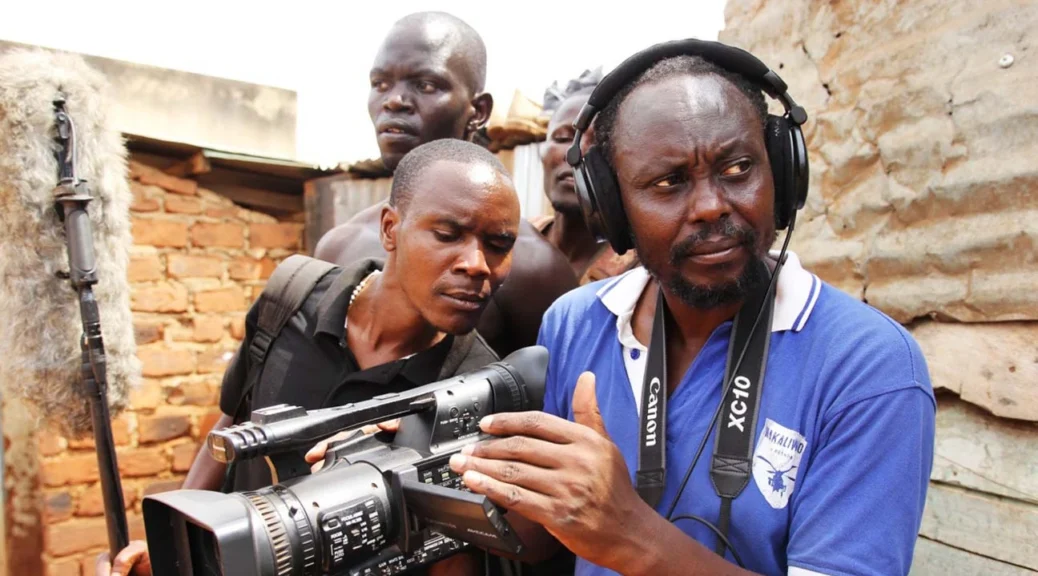
Writer/director S.J. Finlay brings to life the reality facing people living on the island of Mindanao (Philippines) with his feature film, Boy from Nowhere. His focus, in particular, is trained on a young boy named Gary (Gary Jumawan).

Tall and lanky, Gary’s age is never mentioned, but it is clear he is young – likely somewhere between 12 and 15.

Gary’s life revolves around playing basketball with area boys, as well as learning how to fish. He spends his time in the water, learning to observe the environment around him. Though it speaks of a peaceful existence for a young boy, Gary’s world is shattered by the brutality that is often the experience for people in Mindanao.

An island rich in resources, there are several factions vying for control. The island comprises several tribes, and the film’s brief introductory text states that many people have found their livelihoods and cultures threatened by both the government of the Philippines, as well as outside interests. To combat the upheaval to their way of life, rebel factions rely on child soldiers to bolster their numbers.

Finlay’s style is naturalistic. Casting several non-actors in the primary roles serves to underscore the film’s realism. Some are more natural on camera than others, but there is a documentarian feel as Finlay watches Gary navigate the world, often without the presence of adults.

The short run-time hinders the film. When Gary is faced with several choices, we’re not allowed to contemplate them with him, nor are we given much action to help us understand the choices he makes. Instead, Finlay relies heavily on exposition and dialogue to clarify what’s at stake. This choice negates the slice-of-life portrait the filmmaker is trying to paint.

The film best succeeds in its focus on the moral and ethical dilemmas facing the people of Mindanao. While using children to fight a war is unethical, Boy from Nowhere emphasizes the desperation facing people with nothing left to lose. When the entire culture is threatened, isn’t it the duty of the children to fight? Though Finlay’s opinion on this matter is never in doubt, he treats those who resort to such choices with sympathy.

Finlay juxtaposes the images of child soldiers against a breathtaking landscape. The cinematography highlights what people are fighting to protect. One can only hope this way of life might be saved.

Father Knows Best

Daughter

by Rachel Willis

Father. Mother. Son. Daughter.

It’s the quintessential nuclear family. In writer/director Corey Deshon’s feature debut, the nuclear family develops into a taut examination of manipulation and control.

Trying to fill a family void, Father (Casper Van Dien) holds a young woman captive in the garage. He informs her that she (Vivien Ngô) will henceforth be known alternately as Daughter or Sister.

Revealing anything more would ruin the conflict that develops around Daughter’s anticipation of what might happen next. 

Van Dien unsettles as the patriarch of this family. His is one of the most disturbing portrayals in the film, as there’s an undercurrent of rage beneath the façade of loving dad. We know from the outset what he is capable of, but that doesn’t make watching any easier to bear.

And just what are Mother (Elyse Dinh) and Brother/Son (Ian Alexander) willing to do to preserve this facsimile of a “family?” When it comes to Daughter/Sister, each family member seems eager to manipulate others to suit their current needs.

As details are teased forth, there is clearly more to this family than what first appears. Father is the one in control, but how much of a hold does he have on this tenuous situation?

Setting the film almost entirely within the confines of the family home fosters a sense of isolation. Deshon creates constant confusion as to what exactly is going on outside. We’re given just enough information to keep us off-balance, a narrative decision that works brilliantly.

For the bulk of the film’s 95-minute runtime, the tension is unrelenting. Though one scene drags a bit, it’s brief so it doesn’t so much alleviate the tension as interrupt it.

For a first feature, this is a marvelously crafted work of psychological horror. Personally, I’m eager to see what Deshon does next.

Mama Mia

Baby Ruby

by Rachel Willis

Becoming a new mother is a joy. The sleepless nights, constant crying, bleeding heavily from your vagina for weeks, having a new human you’ve been entrusted to keep alive in your house.

Did I say joy? I meant horror show.

Writer/director Bess Wohl has turned new parenthood, particularly motherhood, into a tense, sometimes funny, horror movie with Baby Ruby.

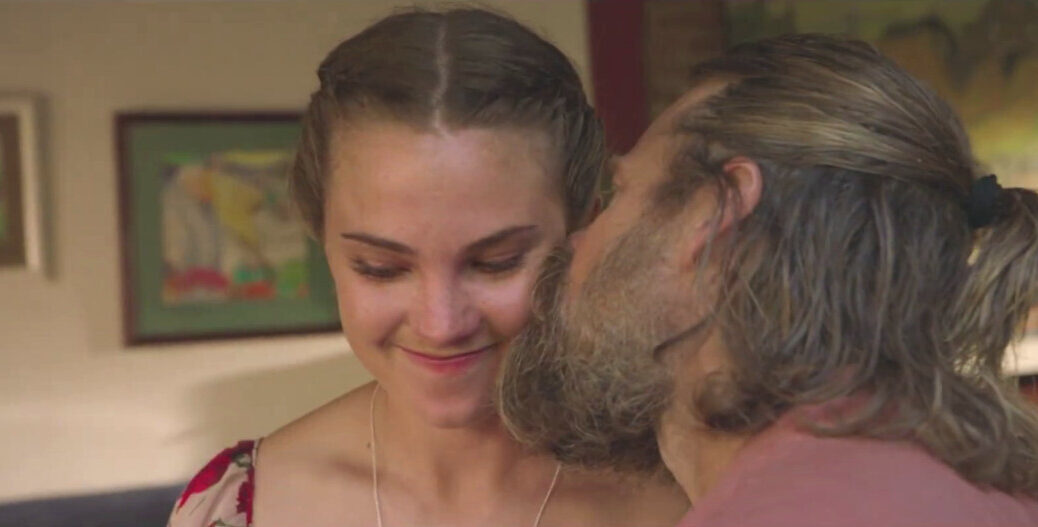
New parents Jo and Spencer (Noémie Merlant and Kit Harington) have a lot to be thankful for when they bring new daughter Ruby home. Jo is a very successful blogger who is eager to prove her mettle as a new mom.

However, problems start right away. It’s unclear, to both Jo and the audience, if certain horrific events are real or dreams. Jo begins losing time. Ruby never stops crying.

There’s a certain amount of confusion and plenty of red herrings peppered through the film. Though it seems obvious what plagues Jo, the filmmakers want you off-balance. Is husband, Spencer, supportive – or is that smile vaguely sinister? Is someone whispering to Ruby through the baby monitor? Is Ruby angry with Jo?

These are the things that rattle Jo’s confidence. On top of her struggles with Ruby, all the other new moms make it look easy. Jo is introduced to several new moms at a local café. They’re all perfectly coifed in summer dresses, and their babies must sleep long enough for them to do their makeup. In comparison, Jo feels even more like a failure.

There’s a certain subtle humor to the film, even as it works to rachet up the tension.

Because of the desire to keep the audience guessing, there are a few moments when it feels like Wohl is trying too hard to scare you. Some of the horror works well, some segments are too heavy-handed. There is a dog and a dog-related low blow.

No offense to the parents of the babies playing Ruby, but they’re perfectly cast as they’re both adorable and a little creepy. Part of you wants to reach out and pick her up, while the other part is a bit put off by that weird little face.

The film nails several aspects of what makes being a new parent feel like a nightmare. It’s not surprising that many parents look back at those early days with hindsight and laugh. Otherwise, we might all feel like we’ve lived through a horror movie.

Just the Three of Us

All Eyes Off Me

by Rachel Willis

Sex can be one of the most (if not the most) intimate experiences in human existence. However, there are things that interfere to reduce or eliminate the intimacy of sexual relations. This is examined in rich detail by writer/director Hadas Ben Aroya in the new film, All Eyes Off Me.

The film is told in three vignettes, and we start the film following Danny (Hadar Katz). She’s at a party searching for Max (Leib Levin). She’s pregnant and wants him to know. Events interfere with her goal, offering our first look at how an intimate experience can be monumental to one person and insignificant to another.

While the first vignette is the shortest, it opens the door to further exploration as we follow Max into the second. He’s starting a new relationship with Avishag (Elisheva Weil), a woman with whom he not only shares physical intimacy, but emotional intimacy as well, trusting her in a way he’s never trusted anyone. She tries to extend this trust during an intimate moment, delivering an uncomfortable scene full of intimacy but no trust.

This is an especially relatable instance that becomes poignant for a young couple wrapped up in love and lust. Where does one end and the other begin? It raises questions regarding those moments in which lust is confused with love and unveils the outcome when two people sharing these personal moments aren’t necessarily on the same page emotionally.

Avishag carries us into the third vignette. This is the one that brings a certain maturity to the nature of sexual relationships. Sexual attraction doesn’t always result in sex, but that doesn’t lessen the intimacy or the connection between two people.

While the film puts sex at the forefront of these connections, Aroya highlights that this isn’t the only form of intimacy. There’s trust and emotional connection. Physical attraction comes in many forms, often springing from an emotional exploration.

Weil is the most prominent performer in these vignettes; she’s a great focal point, as Avishag is our most relatable character. Aroya has crafted a fantastic, naturalistic film that will make you consider your own relationships. Films that keep you thinking are often the films that stay with you. This is one of those films.