Tag Archives: movies

What Price Vengeance

It Was Just an Accident

by George Wolf

Driving home one night with his wife and daughter, a man strikes and kills a stray dog that runs into the road. It is simply an accident, an innocent mishap.

But accidents and innocence are seldom part of Iranian filmmaker Jafar Panahi’s intricate parables, and 2025 Palme d’Or winner It Was Just an Accident quickly becomes the latest searing indictment of injustice and corruption in his homeland.

After hitting the dog, Eghbal (Ebrahim Azizi) takes his car in for service. At the shop, Vahid (Vahid Mobasseri) instantly thinks he recognizes Eghbal as the intelligence officer who brutalized Vahid and his fellow political prisoners years before.

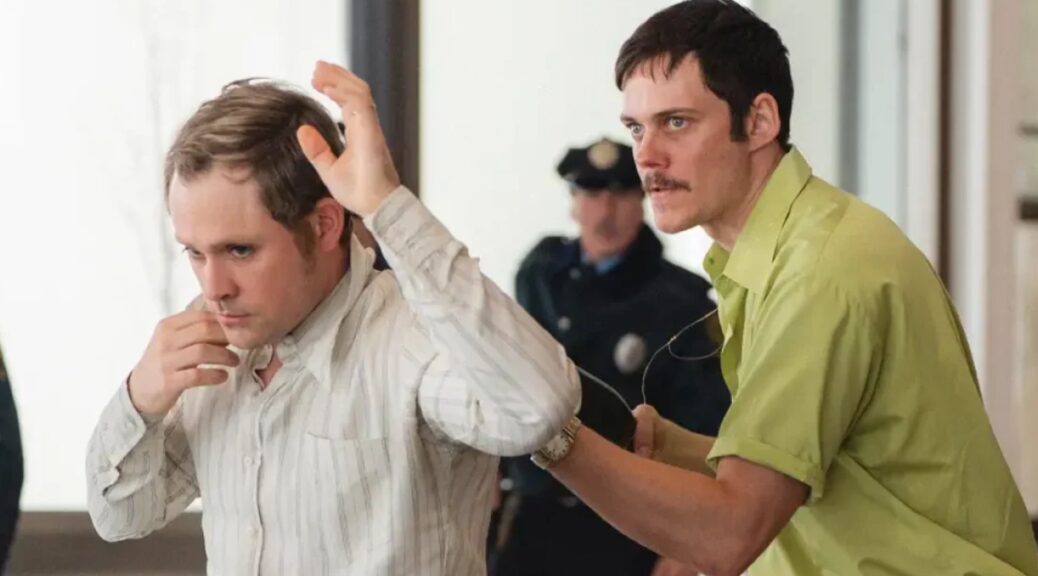
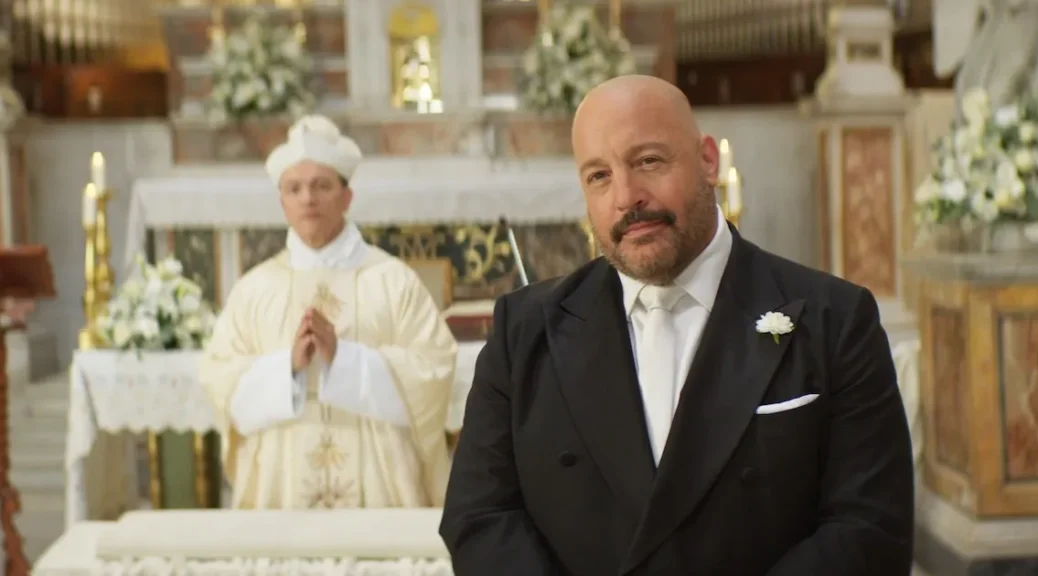
Vahid kidnaps Eghbal and is on the verge of killing him, when doubt creeps into his mind. Loading the unconscious Eghbal in the back of his van, Vahid heads out to find his fellow ex-inmates and some help in an airtight identification. The compatriots (including a bride, a groom, and a wedding photographer) react with a mixture and rage and uncertainty, and their travel over the course of one day allows Panahi to organically detail the abuse they once suffered and the casual corruption they still navigate daily.

This is the first film for Panahi (No Bears, Taxi, Closed Curtain) since Iran lifted his decade-long filmmaking and travel ban, and while he’s no longer filming himself in secret, Panahi’s storytelling still bursts with intimacy and courage.

The first rate ensemble makes the anger palpable, and Panahi masterfully weaves it into the mystery surrounding Eghbal’s guilt to create a thriller of simmering tension, comic sidebars and complex moralities.

If Eghbal is indeed their tormentor, is vengeance justified? And even if it is, would mercy actually bring them more peace?

True to form, Panahi closes with a shot that seems to close one chapter and open another, and the fade to black may require a few minutes to decompress.

But that’s the kind of effect Panahi’s films can have. It Was Just an Accident is more proof that he is one of the true modern-day masters, with a clear and distinctive voice that demands attention.

You Bet Your Life

Ballad of a Small Player

by George Wolf

Many fans of Lawrence Osborne’s 2014 book Ballad of a Small Player won’t be surprised to learn how long the film adaptation was stuck in development. The tale presents a tricky narrative tone, mixing metaphor, dark comedy and psychological mind games for a ride of desperate obsession.

Director Edward Berger and star Colin Farrell are all in for the Netflix version, but they leave the final table a little short of the jackpot.

Farrell is Lord Doyle, on the run in the Chinese region of Macau. Doyle needs to settle a $350,000 casino tab in three days or he’ll be arrested. But there are plenty of other glitzy casinos to visit, and Doyle works whatever angle he can to get credit at the baccarat tables, always promising that big score that never comes.

He seems to meet a kindred spirit in Dao Ming (Fala Chen), a casino manager who takes pity on Doyle’s lonesome loser nature. It is the Festival of the Hungry Ghosts in Macau, and Dao Ming may have some surprising burnt offerings in mind.

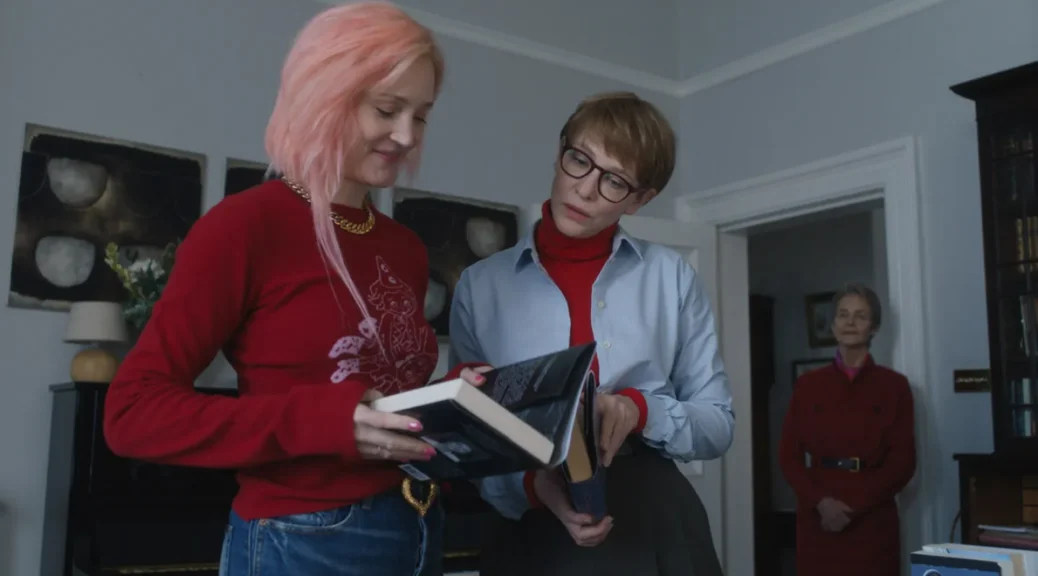
While the two begin to form a fragile bond, private investigator Cynthia Blithe (Tilda Swinton) is on Doyle’s tail, and may finally force him to confront the secret life he has been hiding.

Farrell brings sympathy to Doyle’s downward spiral in writer Rowan Joffe’s adaptation, making it easier to accept a third act that surprises no one. Swinton carves her usual glory out of limited screen time, and Chen gives Dao Ming the mysterious grace of possible salvation. Kudos as well to Deanie Ip as Grandma, an ultra-rich gambler who has no trouble sizing Doyle up in hilarious fashion.

Berger (All Quiet on the Western Front, Conclave) brings his own air of desperation, filling each frame with a forced showiness that wears out its welcome pretty quickly. There’s no doubt many set pieces are bursting with color and beauty, but the attempts to blur the real and surreal are so forced it begins to detract from the pleasure of watching these actors claw closer to that final reveal.

Ballad of a Small Player has no problem reminding you that the source is probably a great read. Watching it unfold – in select theaters, or on Netflix – is just too frustrating to rise above pretty good.

Nowhere Man

Springsteen: Deliver Me From Nowhere

by George Wolf

My sister-in-law Ellen still tells the story of when she bought Bruce Springsteen’s new album Nebraska in 1982. She was a college student, and was ready to rock out in her dorm room with the guy who was coming off the top ten singalong smash “Hungry Heart.”

What she got was a collection of stark, acoustic songs about murder, desperation and dead dogs. Not much to dance to.

Why would a rock star on the verge of global superstardom make such an unexpected move?

Writer/director Scott Cooper explores that question with Springsteen: Deliver Me From Nowhere, a heartfelt and emotional story of a man caught between the echoes of his past and the promise of his future.

Jeremy Allan White is sensational as Bruce. The look is right, and White’s playing and singing often get eerily close to the real thing. But even more than that, White captures the tortured soul of a rising phenom seemingly terrified of the success he knew was suddenly within his grasp.

Adapting Warren Zanes’s 2023 book, Cooper revisits some themes from his Oscar-winning Crazy Heart and makes the film a collection of small moments that capture a pivotal snapshot in the life of a living legend.

And none of it pushes too hard. Glimpses of a Flannery O’Connor book, the movies Badlands and Night of the Hunter, and the Suicide song “Frankie Teardrop” quietly tell us much about Bruce’s inspirations for the album. Black and white flashbacks to Bruce’s childhood with a troubled father (Stephen Graham) and a protective mother (Gaby Hoffmann) take a similarly understated approach, effectively layered as the lingering memories they were.

Bruce’s relationship with fictional girlfriend Faye (Odessa Young) begins as an awkward choice amid all this attention to detail, but the device ultimately gives us some insight into his fear of any happiness he felt was undeserved.

Lighter moments do come, almost always with the reactions to Bruce’s new direction. Manager Jon Landau (yet another terrific supporting turn from Jeremy Strong) gently tries to steer him toward the songs that would become Born in the U.S.A., while a record exec (David Krumholtz) throws up his hands in exasperation. And through it all, everyone (including Marc Maron as longtime engineer Chuck Plotkin) keeps wondering where the case is for Bruce’s cassette of homemade demos.

Bruce fans know well that those demos became the album, one now regarded as a seminal statement of untold influence. Those longtime followers will appreciate Cooper’s respectful approach that doesn’t feel the need to explain who people like Jon Landau are and where they fit in.

Because even for people who haven’t listened since 1982, Deliver Me From Nowhere presents a richly satisfying story of inspiration, artistic passion, and finding an inner peace that has long eluded you.

And yes, there’s a bit of “Born to Run” in here, too.

Mommy Fearest

The Hand That Rocks the Cradle

by George Wolf

Even at its most fun, 1992’s The Hand That Rocks the Cradle was a bit of a guilty pleasure. Hulu’s new update strips away the overdone pulp for a more focused, and more primally scary tale.

Caitlin (Mary Elizabeth Winstead) is an L.A. lawyer who diligently screens her children’s food for sugars and aims to get a new stop sign for her neighborhood. Working at a tenants rights group, Caitlin helps Polly (Maika Monroe) with a landlord problem, and when the two cross paths again at a local market, fate seems to have dealt a good hand.

Polly has experience as a nanny, and she comes with a glowing recommendation from her last employer. She looks like the perfect choice to help Caitlin and her husband Miguel (Raúl Castillo) with young Emma (Mileiah Vega) and baby Josie (Nora and Lola Contreras).

Caitlin chooses poorly.

Screenwriter Micah Bloomberg (Sanctuary) updates the original story with some important twists, and director Michelle Garza Cervera sets a pace that lets the gaslighting, secrets and lies simmer nicely before boiling over.

Cervera crafted an impressive maternal nightmare three years ago with her feature debut, Husera: The Bone Woman. Here, she trades the religious imagery for symbols of upwardly mobile success, while still toying with anyone eager to check boxes of good mother/bad mother.

Winstead and Monroe are both terrific, bringing their characters into a dance of identity with menacing dread. There is more to Caitlin than her liberal guilt, and as Polly twists the knife with increasing sociopathy, Cervera’s instincts for a modern horror thriller are again solid.

Is any remake truly “necessary?” Debatable. But even back in ’92, the original film seemed like one that wouldn’t age particularly well. The questionable decisions remain, and one or two story beats are foreshadowed too heavily, but by the time all secrets are revealed, this Cradle rocks with some newly relevant bloodletting.

The Camera Never Lies

Bodycam

Screens Thursday, Oct. 16 at 8pm

by George Wolf

Take the frenetic desperation of The Blair Witch Project‘s final minutes, move it to a more urban battleground and layer it with plenty of first-person shooter sequences, and you’re in the ballpark of Bodycam, director Brandon Christensen’s shaky cam shakedown of two cops and one very bad choice.

Officer Bryce (Sean Rogerson) and officer Jackson (Jamie M. Callica) respond to a domestic dispute, and we follow along thanks to their bodycams. The house is dark and plenty creepy, and things escalate to the point of a fatal shooting. The possible fallout spurs Bryce to panic.

He has too much to lose for this situation to go public and convinces Jackson to help him cover up what happened. But when a techie colleague tries to scrub the cam footage, she notices some strange graffiti on the wall, and realizes it’s already too late to keep the killing a secret.

At least from certain, very scary people.

Uh oh. Bryce and Jackson are in for a bad time.

Christensen (Night of the Reaper, Z, Superhost, The Puppetman), co-writing again with his brother Ryan, doesn’t waste any time getting down to nasty business. And once the 75-minute film hits the midway point, the bloody fun is amped up a notch or three as the two cops come to grips with the promise of retribution for their actions.

“Why couldn’t you have done the right thing?”

In today’s climate, that question from one cop to another carries some serious weight. And though the implications are clear, Christensen is more committed to the repercussions.

Bodycam dishes them out in frenzied, crowd-pleasing glory.

The Bloodsucker Proxy

LandLord

Screens Saturday, October 18 at 2pm

by George Wolf

Remember the simple genius of 30 Days of Night? Vampires were roaming Alaska, in a town with no sunlight for a month! We all wondered why we didn’t think of that.

LandLord is built on a similarly clever foundation. Vampires have to be invited in, right?

Not if they own the property.

Go on.

Writer/director Remington Smith could have steered that premise toward a basic bite-fest, and it might have been good fun. But here he has something more ambitious in mind, with a patient, understated approach that makes sure the wounds go a little bit deeper.

A Black Bounty Hunter (a terrific Adama Abramson) cuts quite a figure as she travels alone, on foot and dealing only in cash. The bills she throws at the manager of a rundown apartment complex get her some keys with no questions asked, and plenty of time to surveil a man who carries a valuable briefcase.

But a chance meeting with a bullied youngster named Alex (Cohen Cooper) slowly draws the Bounty Hunter away from her mark, and toward Alex’s outrageous claims about a white vampire stalking the housing community.

The apartment setting coupled with the teenage perspective calls to mind 2016’s excellent The Transfiguration, while the prevailing subtext of a disposable population echoes Jorge Michael Grau’s masterful We Are What We Are. Still, Smith is able to make sure his own voice his heard.

LandLord is a story of survival. Getting out alive is going to take wits, courage, and a good friend watching your back. You’ve just got to know who the bloodsuckers are.

And some of them might even be vampires.

Tale of Three Pretties

Kiss of the Spider Woman

by George Wolf

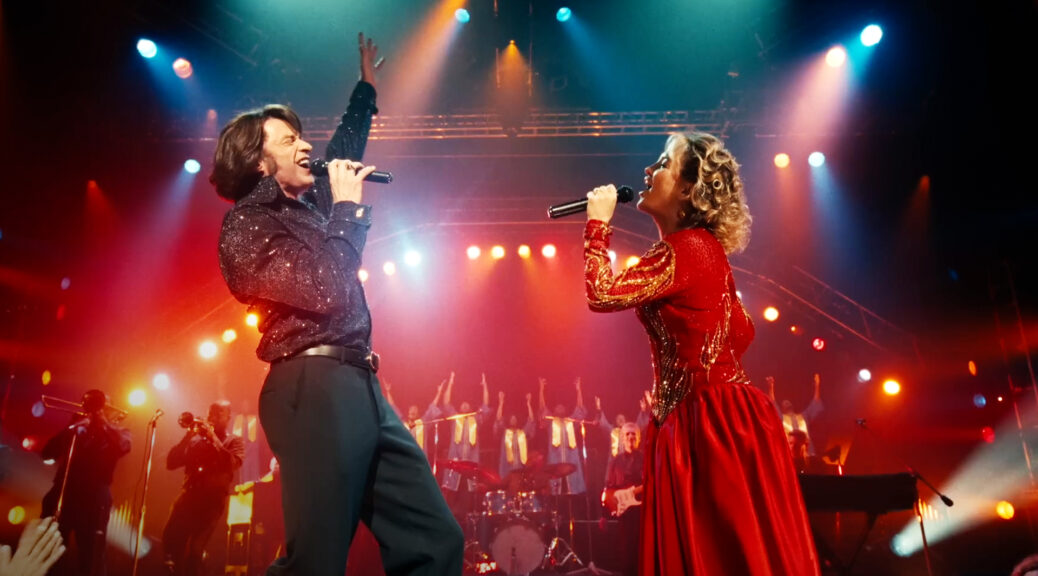
Trusting Bill Condon to bring the Kiss of the Spider Woman stage musical to the big screen is an understandable choice. With Dreamgirls, Chicago and even Beauty and the Beast, the man has shown he knows how to write and/or direct the necessary pop and pizazz.

He brings both again this time, just enough to offset what’s lacking on the political intrigue side of the ledger.

Based on the 1993 Tony Award-winning adaptation of Manuel Piug’s 1976 novel (which also spawned the 1985 film version), Condon’s Kiss keeps the core story intact. It’s set after Argentina’s coup d’état in the late 70s, when the military dictatorship began rounding up scores of political opponents.

One of these activists, Valentín (Diego Luna), is sharing a jail cell with Molina (Tonatiuh), a window dresser who has been convicted of “public indecency” with another man. To brighten their spirits, Molina begins regaling Valentín with the plot of one of his favorite movie musicals starring the glamorous Ingrid Luna (Jennifer Lopez).

All three actors impress in multiple roles, as Condon crafts the fantasy song-and-dance numbers with the staging, visual panache and aspect ratio to recall the golden age of Hollywood. Shifting often from lavish sequence to jail cell squalor, the film’s two plot lines begin to mirror each other, and some layers of love, loss, and sacrifice grow stronger than others.

The fantasy throwbacks, queer and Latin influences pull each other along nicely, but Condon never quite establishes the prison as a setting with real grit or tangible danger. Granted, it’s tricky to walk this line without recalling too much Man of La Mancha. But the lengths which Condon goes to differentiate the worlds visually only makes those slippery tone shifts more curious.

Is it entertaining? It is, even at just over two hours. JLo is award-worthy yet again, Luna is quietly heroic and Tonatiuh (Carry-On) delivers a smashing and star-making breakout turn. Give in to them all, and Kiss of the Spider Woman can get you lost in the fantasy.

Poison Pen

A Savage Art: The Life & Cartoons of Pat Oliphant

by George Wolf

“If Pat Oliphant couldn’t draw, he’d be an assassin.”

That quote gets your attention, even if you don’t know the name Pat Oliphant. Either way, you’ve probably seen some of his work, and A Savage Art: The Life & Cartoons of Pat Oliphant is a broadly effective intro to a legend of political cartooning.

Oliphant wielded a revolutionary artistic style and the kind of cynical mind that had him rebelling against the very committee that awarded him the Pulitzer Prize in 1967. Aided by his alter ego “Punk” the Penguin, Oliphant skewered the political landscape through five decades and ten U.S. Presidents.

In his feature debut, director Bill Banowsky keeps things pretty standard, rolling out a succession of Oliphant’s best cartoons, and chatting with family members and colleagues to provide some personal details that Oliphant himself seems averse to.

And though today’s political and social climate carries some issues that are very relevant to Oliphant’s legacy, Banowsky doesn’t dig in. We do get mentions of the increased threats to a free press, and to the rise of internet memes as a shallow imitation of cartoon commentary, but those seem to be conversations for another day.

Banowsky’s aim is to give a legend his due and maybe spur some interest in learning more. A Savage Art hits that target square.

Slippery

The Ice Tower

by George Wolf

Fifteen-year-old Jeanne doesn’t want to build a snowman. What she wants is an escape, but finds plenty more than she expected in The Ice Tower, Lucile Emina Hadzihalilovic’s dreamlike re-imaging of “The Snow Queen.”

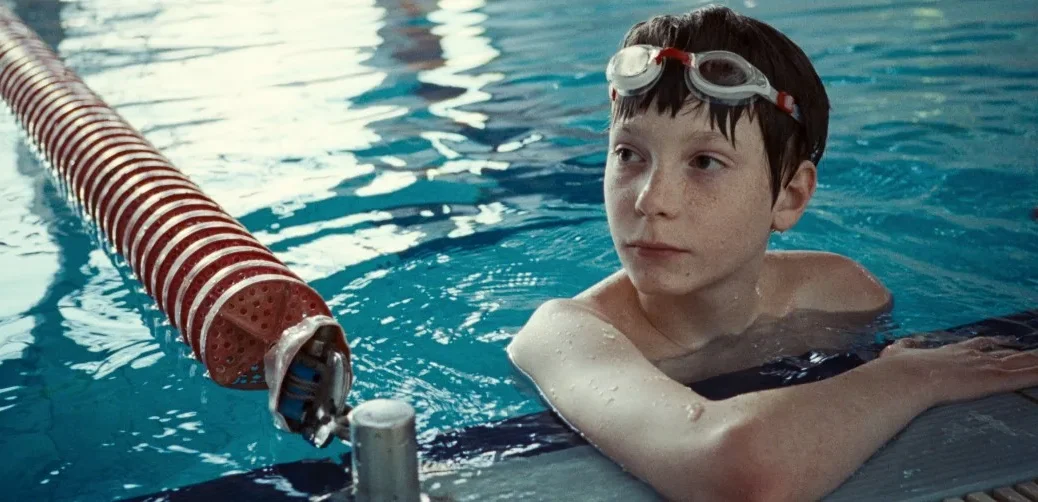
In 1970s France, Jeanne (a wonderful feature debut for Clara Pacini) is among the oldest children in a foster home, where she comforts the younger ones and silently longs for a better life. She finally leaves one evening, taking refuge in an empty warehouse to sleep.

But in the morning, Jeanne finds the warehouse is home to a movie crew, with director Dino (Gaspar Noé, Hadzihalilovic’s husband) filming a new adaptation of the Hans Christian Anderson classic. Mistaken for an extra, Jeanne becomes part of the production and is instantly captivated by the star of the show, Christina (Marion Cotillard).

The Oscar-winning Cotillard is, of course, perfect as the detached and demanding diva who begins to take an equally strong interest in the young Jeanne. But to what end? Hadzihalilovic explores that question with a cold, barren beauty. The aesthetic is tactile and intoxicating, a perfect playground to envelope the film in strange fascination.

The Ice Tower casts an undeniable spell. Despite lingering a bit too long in some dry spots, it crafts an enriching trip to the darker floors of a fairy tale.

No Wake Zone

Bone Lake

by George Wolf

Not long after we meet Sage and Diego, they’re talking about his idea for a novel, debating about what qualifies as “gratuitous” and lamenting that cancel culture has neutered artistic expression.

Okay, intriguing. And then you remember that one poster for Bone Lake features the strategically large “R” rating positioned right after the first word in the title.

Alrighty, then, we’re gonna push some limits with both blood and lust, are we? Have some devilish fun with hot button topics and take no prisoners?

No, we are not. We’re going to play it safe and predictable, borrow heavily from better projects and hope some late stage blood splatter stops the questions about why that poster doesn’t read BonePG-13 Lake.

Sage (Maddie Hasson) and Diego (Marco Pigossi) have booked an incredible lakeside mansion for the weekend. Diego’s even brought a ring along to pop the question, but there are two very big complications. Will (Alex Roe) and Cin (Andra Nechita) have also booked the mansion for the weekend! What are four good-lookings gonna do except share the space and really get to know each other?

The character development is rushed but adequate. Will and Cin are openly sexy free spirits, Diego is more buttoned-up and Sage seems to be settling for the comfy life while missing some walks on the wild side. But more than anything, Diego and Sage both seem like a couple of first class idiots.

Writer Joshua Friedlander and director Mercedes Bryce Morgan want to sprinkle some White Lotus sensibilities over a mashup of Funny Games and A Perfect Getaway. But the inspirations are painfully evident, the revelations overly telegraphed, the internal logic gets shaky and the frolicking more silly than sexy.

None of it goes anywhere worth caring about. The marketing angle, an attention-getting prologue and that early art debate make some promises that are never kept, and this trip to the lake is more bore than bone.