Tag Archives: Merritt Wever

Fight Like a Girl

Christy

by George Wolf

No matter what you think of Sydney Sweeney the celebrity glamour girl, you’ve got to give her props for not resting on her sexy laurels. I’m not saying her turn in the bikini-friendly Anyone But You didn’t show fine comic timing, but in five of her last seven films, Sweeney has chosen roles that downplayed her curves and provided the chance to challenge herself as an actress.

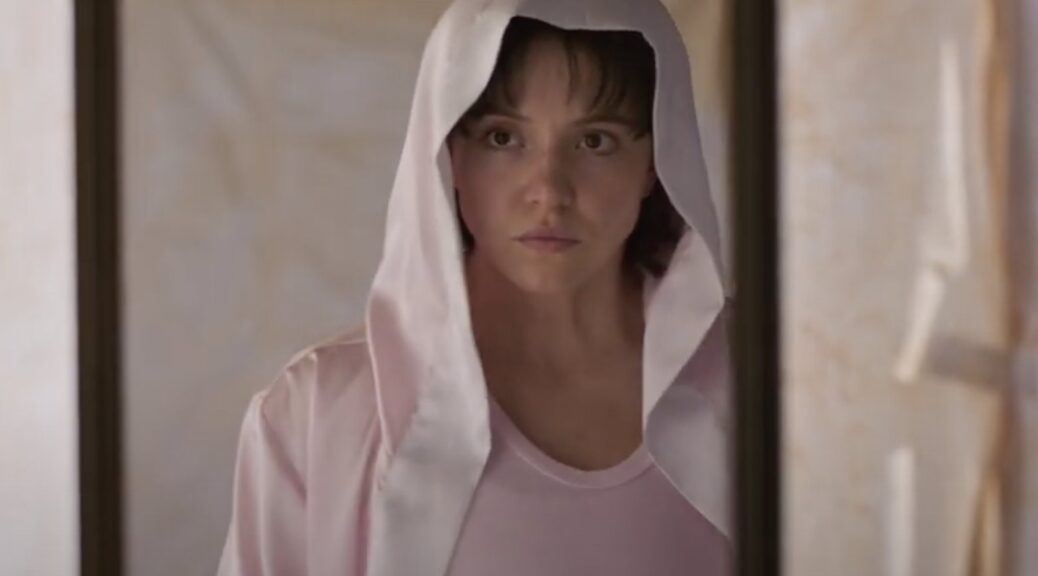
Okay, so Echo Valley, Eden, American, Immaculate and Reality didn’t make the box office buzz, but Christy continues Sweeney’s ambitious trend. And right on the cusp of awards season, she doesn’t waste the opportunity to impress, leading a stellar ensemble in giving some well-deserved flowers to a trailblazer in women’s sports.

In 1989, Christy Salters was a bored girl from West Virginian who played a very physical brand of basketball and bristled when her mother (Merritt Weaver) obsessed over the whispers about Christy’s relationship with girlfriend Rosie (Jess Gabor). After winning $300 in a local Toughman contest, Christy is introduced to boxing trainer/future husband Jim Martin (Ben Foster), who guides her, exploits her and violently abuses her on Christy’s path toward becoming Don King’s “Coal Miner’s Daughter,” the first woman to headline a PPV undercard.

Boxing films may carry the most inherent cliches of all sports stories and director/co-writer David Michôd can only steer Christy around them about half the time. As Christy’s fame and fortune grew, the level of abuse she suffered only intensified, to a level that will surprise many. And when Michôd (Animal Kingdom, The Rover) finds small moments to accentuate with a dramatic camera angle or well-timed edit, the performances from Sweeney and Martin find resonant depth.

We’re used to exemplary work from Foster, and here he makes Jim Martin a slippery, violent gas-lighter with just enough relatable edges to avoid caricature. Sweeney responds with committed grit, and Christy’s battles both in and out of the ring elicit sympathy, respect and admiration.

Even so, the biggest challenge to telling a story so personal is the temptation of throwing too many formulaic haymakers. When Christy can do that, it becomes a film worthy of Martin’s fight.

Winner by split decision.

Charlie’s Angels

Charlie Says

by Hope Madden

It’s been 50 years since Charles Manson and his family effectively terminated the 1960s. Filmmaker Mary Harron (American Psycho) joins Daniel Farrands and Quentin Tarantino in commemorating the anniversary.

Earlier this year, Farrands unleashed the grim and quickly forgotten The Haunting of Sharon Tate, while Tarantino’s next likely cultural phenomenon, Once Upon a Time in Hollywood,  promises to shine some of its spotlight on the Manson family crimes as well.

Harron’s film, Charlie Says, follows Leslie Van Houton (Hannah Murray), Susan Atkins (Marianne Rendon) and Patricia Krenwinkle (Sosie Bacon), three years after their incarceration, as they reflect on Manson’s promises and their own actions.

The aptly titled film is as concerned with the women’s brainwashing as it is the crimes themselves, although it unfortunately provides no real insight into either.

Harron spends about half the film in the California Women’s Correctional Facility, where the trio is taught by dedicated grad student Karlene Faith (Merritt Wever, portraying the author of the book that inspires the film).

The eerie chorus of “Charlie says…” greets nearly every question Wever lobs at her students, which generally spurs a flashback to time on the ranch with Charlie (Matt Smith).

Here we hit a snag, because Smith lacks the charisma, the hatred, the ugliness or the psychotic aura to pull of Manson. He is never terrifying, never seductive—never convincing.

In fact, most of the flock lacks the weather beaten conviction we recognize from police tapes. The period detail and tone lack degrees of authenticity as well.

Harron’s film opens strong, but it quickly loses its footing and never really finds it again. Working from Guinevere Turner’s screenplay, Harron brings up some interesting themes—particularly questioning the point of breaking through to these women, knowing that puncturing their fantasies only means their clear-eyed horror whether looking backward or forward.

But she doesn’t really land any punches. The film never feels particularly queasying, especially enlightening or even very memorable.

I guess we still have Tarantino. Or maybe it’s just time we all moved on and stopped obsessing over what Charlie had to say.