Tag Archives: Hope Madden

One Bad Book

The Babadook

by  Hope Madden

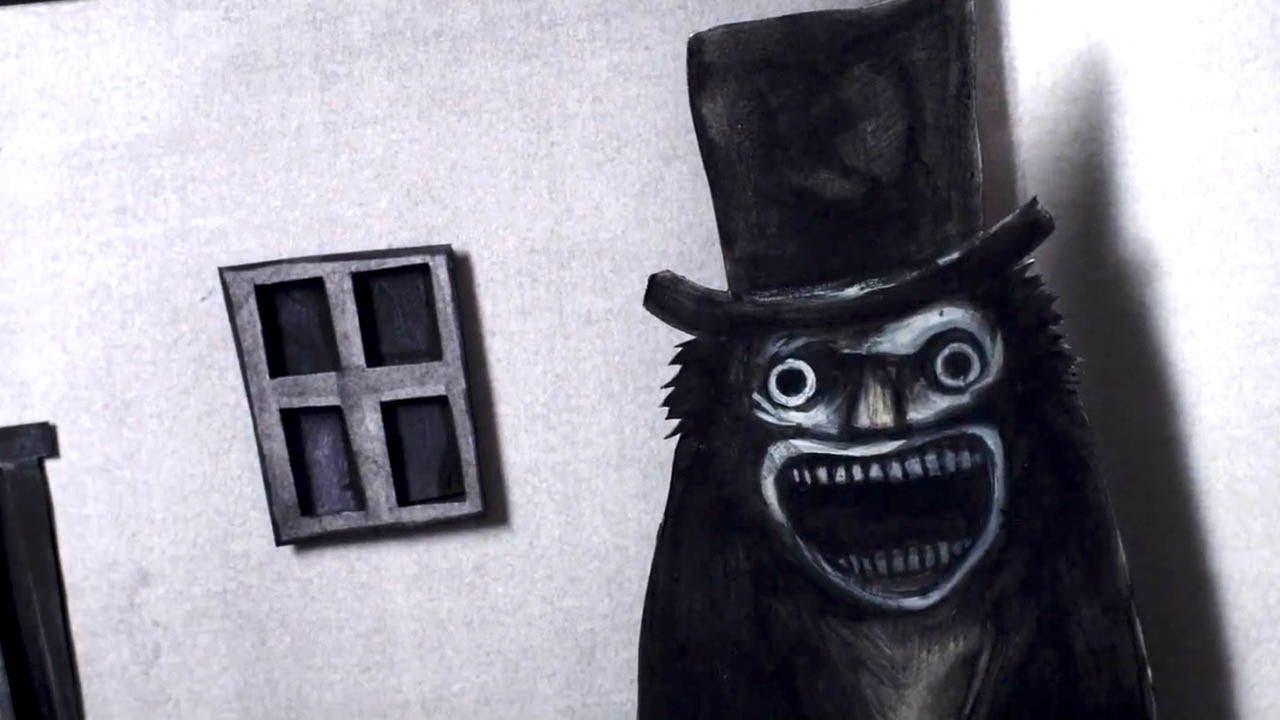
You’re exhausted – just bone-deep tired – and for the umpteenth night in a row your son refuses to sleep. He’s terrified, inconsolable. You check under the bed, you check in the closet, you read a book together – no luck. You let him choose the next book to read, and he hands you a pop-up you don’t recognize: The Babadook. Pretty soon, your son isn’t the only one afraid of what’s in the shadows.

It’s a simple premise, and writer/director Jennifer Kent spins her tale with straightforward efficiency. There is no need for cheap theatrics, camera tricks or convoluted backstories, because Kent is drilling down into something deeply, frighteningly human.

Like a fairy tale or nursery rhyme, simplicity and a child’s logic can be all you need for terror.

Kent’s film is expertly written and beautifully acted, boasting unnerving performances from not only a stellar lead in Essie Davis, but also the alarmingly spot-on young Noah Wiseman. Davis’s lovely, loving Amelia is so recognizably wearied by her only child’s erratic, sometimes violent behavior that you cannot help but pity her, and sometimes fear for her, and other times fear her.

Likewise, Wiseman delivers as a tender, confused, dear little boy you sometimes just want to throttle. Their naturalistic performances genuinely showcase the baggage that can exist between a parent and a child.

Radek Ladczuk’s vivid cinematography gives scenes a properly macabre sense, the exaggerated colors, sizes, angles and shadows evoking the living terror of a child’s imagination.

Much of what catapults The Babadook beyond similar “presence in my house” flicks is the allegorical nature of the story. There’s an almost subversive relevance to the familial tensions because of their naked honesty, and the fight with the shadowy monster as well as the film’s unusual resolution heighten tensions.

The film’s subtext sits so close to the surface that it threatens to burst through. Though that does at times weaken the fantasy, it gives the film a terrifying urgency. In the subtext there is a primal horror, a taboo rarely visited in film and certainly never examined with such sympathy. Indeed, the compassion in the film may be the element that makes it so very unsettling.

Eerily familiar yet peculiar and unique, The Babadook immediately ranks among the freshest and more memorable films the genre has to offer. It also marks a filmmaker to keep an eye on.

Verdict-4-0-Stars

Sarcrapagus

The Pyramid

by Hope Madden

The Pyramid could not have better timing. Had the film been released just a few weeks later it would missed its opportunity to rank among the very worst films of 2014.

To be fair, a really good creature feature is incredibly difficult to make, so you can hardly blame first time director Gregory Levasseur for not even trying. Instead he’s crafted a The Descent knock off that can’t rise above the caliber of a late night, made for cable TV movie.

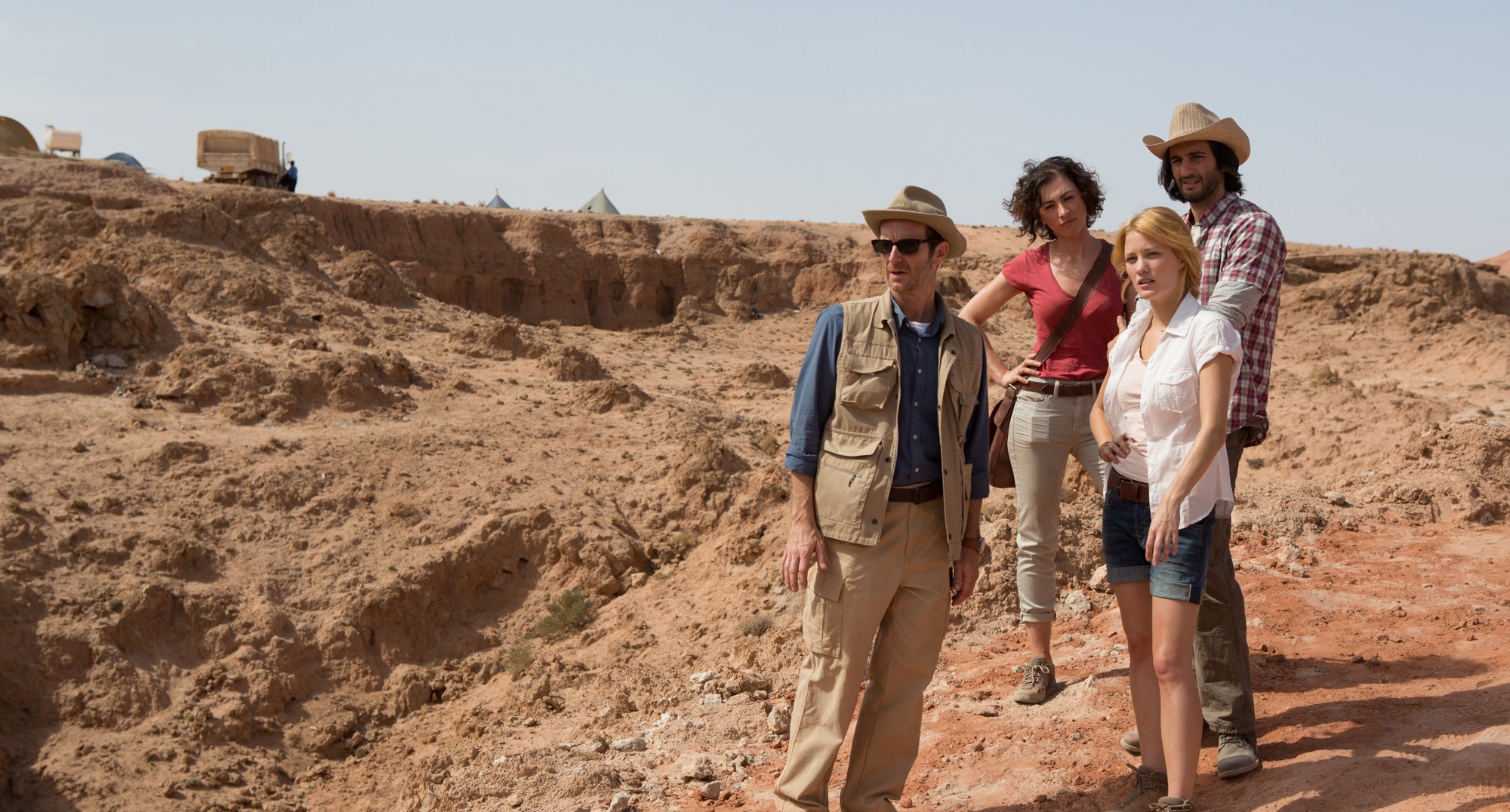
His Egyptian horror sees a father and daughter archeologist team and the documentarians who want to film their discovery – a mysterious pyramid sitting hundreds of feet below the desert sands.

The bickering parent and child are played by American Horror Story’s Denis O’Hare and bad actress Ashley Hinshaw, respectively (but not respectably). That Hinshaw plays an archeologist seems less ludicrous only if you remember that Denise Richards played nuclear physicist Dr. Christmas Jones in The World is Not Enough. But at least that was back when the Bond films embraced their campy awfulness. The Pyramid is just awful.

O’Hare serves an unseemly purpose in his American Horror Story roles, but he’s not a strong enough actor to elevate this dreck. Hinshaw’s worse, and Christa Nicola is community theater bad as the documentarian risking life and cameraman for that elusive Emmy.

The only castmate to acquit himself with any level of respectability is former Inbetweener James Buckley, who still struggles mightily with this script.

An aside: When you’re writing a screenplay and you’ve trapped all your characters with unnamed beasties in a labyrinthine catacomb hundreds of feet below the earth’s surface, you may want to limit your use of the lines “we have to get out of here” and “we need to find a way out of here” to fewer than 200 instances apiece. It sort of goes without saying.

Oh, yes, and the beasties – if you squint and pretend they are ill-conceived but earnest odes to Ray Harryhausen and not simply weak, uninspired, fake looking props … Basically, it’s just too much work to have to pretend they don’t suck. Like the movie itself. It’s best just to accept it.

Verdict-1-0-Star

Not So Happy Trails

The Homesman

by Hope Madden

In front of the camera, Tommy Lee Jones is a world-wearied, direct and laconic actor, but there’s a cowboy poetry about him. He’s no different behind the camera, as his second feature proves. The Homesman brims with the lonesome, brutal beauty of the frontier, but thanks to Jones’s capable storytelling, it offers more than that.

Jones plays George Briggs – if that is the real name of the claim jumping low life who finds himself at the end of a rope and the mercy of the upright Mary Bee Cuddy (Hilary Swank). A prosperous but “uncommonly single” lady on the frontier, Ms. Cuddy has volunteered her services for a particular journey and will oblige Mr. Briggs to accompany her or remain in his predicament.

What unfolds is a wagon wheel Western of sorts, replete with stunning images of the prairie, beautifully framed by the director. Swank – who can be counted upon to create a vivid if one-dimensional character – can’t help but bring to mind the Mattie Ross role from True Grit. It appears Jones (and Swank) are intentional with this, as Hailee Steinfeld (of the Coen remake) has a late supporting role.

It suggests that Jones is retelling our sentimental Western favorites with a lonelier, harsher but hauntingly beautiful tone.

The journey meets expectations and then subverts them, filling the screen with surprises – some fun, some bitter, all a bit melancholy. And yet there’s a black but entertaining humor in many scenes. The swings in tone, on the whole, are capably handled by a director who mined somewhat similar styles in his underseen 2005 first feature as director, The Three Burials of Melquiades Estrada.

Peppered with fascinating if jarringly brief cameos, Jones’s film keeps your attention as it journeys slowly East, making a statement about the hard realities of frontier life as well as the more universal ache to be loved.

The territories of the American West have filled our imaginations for more than two hundred years and it can be tough to find a new approach. Jones succeeds in using that same dusty path across the frontier we find so familiar, and even populating the trip with characters we almost remember, yet somehow he tells a truly new and memorable tale.

Verdict-4-0-Stars

Rebel Rebel

The  Hunger Games: Mockingjay – Part 1

by Hope Madden

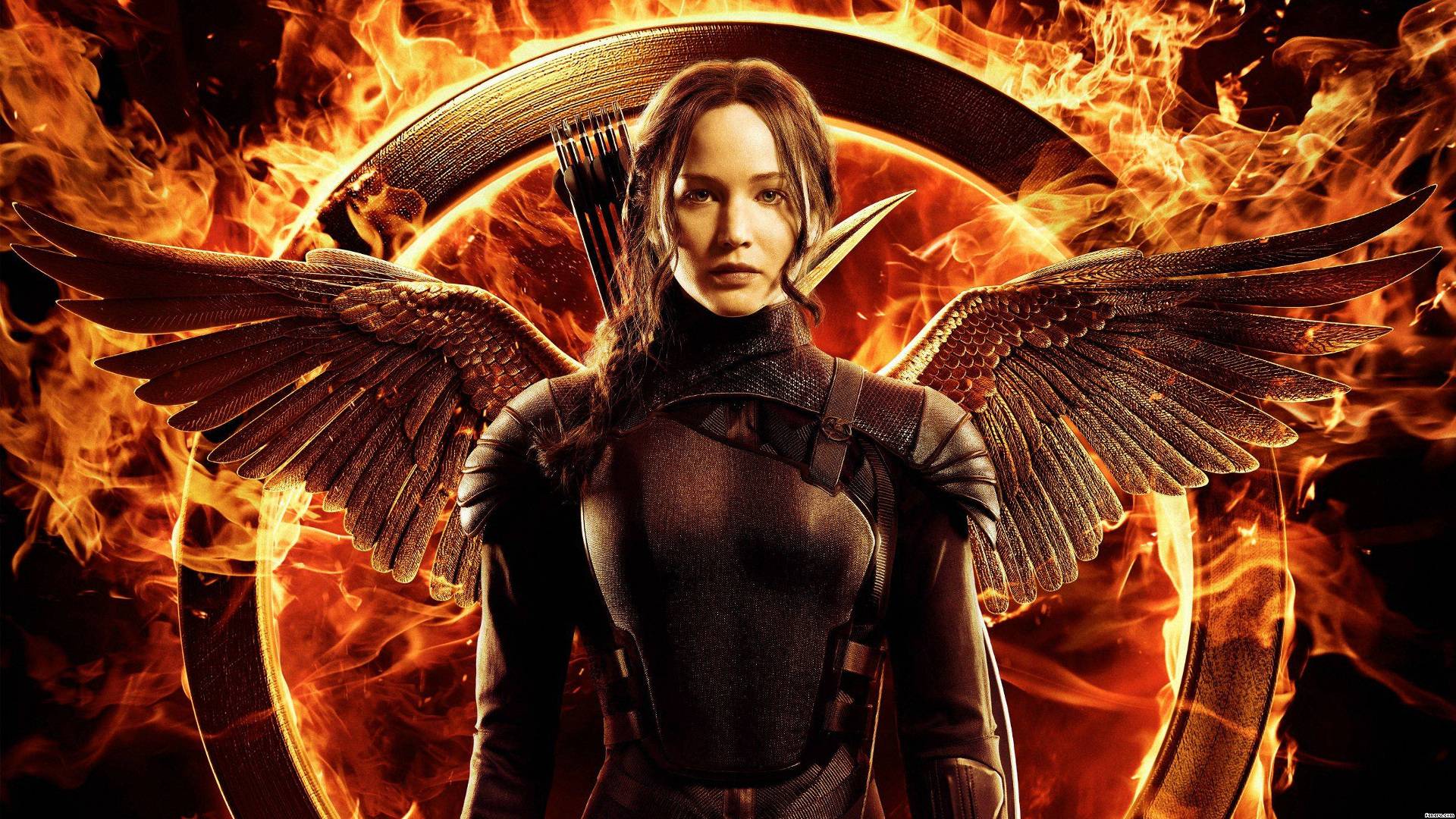
What makes the Hunger Games franchise so much stronger than the rest of the adolescent lit series out there? Perhaps more than anything – more than a compelling hero’s quest, more than the peril and drama, more than director Francis Lawrence’s eye for action and sense of pacing – it’s that each new film expands the profound talent in this pool of actors.

The great Julianne Moore joins ranks that include 2-time Oscar nominee Woody Harrelson, consummate bad guy Donald Sutherland, genius character actors Jeffrey Wright, Jena Malone, Elizabeth Banks and Stanley Tucci, and the greatest actor of his generation, Philip Seymour Hoffman. And who can forget the lead – a performer with an Oscar and two additional nominations under her belt at the ripe old age of 24? Let’s be honest, these humans could elevate any script that fell into their collective grasp. They could make a decent film out of Fifty Shades of Grey, for God’s sake.

Lucky for us, instead they collaborate on the third of four episodes in the program, The Hunger Games: Mockingjay – Part 1.

Reluctant hero Katniss, having destroyed the games and been rescued by rebel forces, agrees to be the face of the rebellion in return for the rescue of her beloved friend Peeta (Josh Hutcherson).

Gone is the Battle Royale nightmare and excitement of the games themselves, replaced with the broiling drama of a budding revolution. Gone, too, are the writers that mined Suzanne Collins’s novel Catching Fire for its underlying political maneuverings. They are replaced by Collins herself, who adapts her novel, as well as Peter Craig (The Town) and Danny Strong (The Butler). Their treatment lacks much of the excitement of earlier installments, spending more time with the brooding, dramatic Katniss than with the arrow-wielding badass.

They don’t write down to their audience, though, touching upon the helplessness and compromise of political manipulations, finding similarities between the behavior of the rebellion and that of the dread Capitol.

Credit Lawrence (the director) for keeping a quick pace though saddled with more exposition and fewer action sequences, more heavy drama and less bloodshed. But honestly, the magic of the film is in Stanley Tucci’s disingenuous TV interviews, in Moore’s subtle evolution, in Hoffman’s every bemused chuckle, and in Jennifer Lawrence’s ability to transform into a skulking, unlikeable, single minded teen who happens to carry a revolution on her shoulders.

Verdict-3-5-Stars

Alphabetized Mayhem

ABCs of Death 2

by Hope Madden

Children’s stories can be so inventive! Tired of telling the old “a is for apple” tale? ABCs of Death 2 may be just the movie for you.

Actually, it started two years ago, when fans of the horror short were challenged to endure a marathon event – 26 shorts, each dedicated to one letter of the alphabet. ABCsof Death pulled together 26 up-and-coming horror directors (or directing teams), each with their own letter. Their product varied from inspired to horrifying to extreme to forgettable to lame with a lot of middling efforts in between.

If nothing else, the filmmakers truly seemed to be having fun, which explains why 26 new directors (or directing teams) wanted in. Brace yourself for the sequel: 26 new alphabetically inclined films about death.

This time around the quality of the efforts is a little better balanced. Only two films really stand out as weak, and even those boast professional workmanship. The films in the sequel feel less like a cinematic dare and more like a well thought out, if brief, horror film.

On the other hand, the original work felt more vital where the sequel feels safe. The sequel lacks some of the maverick WTF quality of the first, with far fewer extreme moments. There’s also far less toilet horror, so at least there’s that.

Highlights include Robert Morgan’s D – an animated nightmare that’s part Kafka, part Burroughs yet somehow uniquely bizarre.

Dennison Ramalho’s J offers a well made piece of social commentary, as does the film for the letter T by Jen and Sylvia Soska.

The highlight from last year’s effort belonged to Frenchman Xavier Gens, whose take on X was startling and exceptional. Once again, the letter X falls to the French, and once again, the French film is among the very strongest. Julien Maury and Alexandre Bustillo re-team with Beatrice Dalle – the muse at the center of their brilliant 2007 feature Inside – to unsettle and horrify.

You’re unlikely to be disappointed by any individual piece. The whole may be less memorable than its 2012 predecessor, but for genre fans, it’s always fascinating to glimpse work from new filmmakers and to see what established directors can do with three minutes and a letter.

Verdict-3-0-Stars

http://www.youtube.com/watch?v=rLbQOKxugjw

Miyazaki’s Final Film?

The Wind Rises

by Hope Madden

The Wind Rises – the Oscar nominated, animated, fantastical biopic of Japanese aeronautical engineer Jiro Horikoshi – may be genius filmmaker Hayao Miyazaki’s final film.

A body of work like his – Spirited Away, My Neighbor Totoro, Ponyo, Princess Mononoke and so many more – deserves a unique capstone, and The Wind Rises is certainly unique. This film is not only unlike anything else Miyazaki has crafted, but unlike anything else period.

Set in Japan in the early 1920s, the film offers a fictionalized account of a nearsighted boy who dreams – literally – of aircraft. In Jiro’s dreams, Italian aeronautical pioneer Gianni Caproni enlightens the boy to the elegant, creative possibilities of airplanes. Unable to become a pilot because of his eyesight, Jiro determines to design planes.

Like everything Miyazaki does, Wind is a visual glory. Whether crowded city streets, mountainside locales, or cloud-speckled heavens, the scenery in this film is breathtaking. Touching, intimate moments and catastrophic acts of God or of war, Miyazaki treats them with the same poetic brushstroke.

The subject matter here proves more adult than his previous efforts, though, and he limits the fantastical elements because of it. Though the dream sequences are a joy, don’t expect to find unusual creatures or outright feats of magic in this one.

Rather, Miyazaki attends to some of Japan’s most epic historic moments, contextualized behind the journey of one quiet, delicate young man’s voyage through life. The result is less giddily entertaining than what you might expect from the filmmaker, but no less captivating.

Maybe we can hope for just one more?

So That Happened…Meet the Chirpers!


By Hope Madden


I edit college textbooks for a living, with all the associated hoopla, madness and zaniness you might expect to go along with that job. Exactly that much zaniness. My wing of the building is routinely referred to by our sales reps as The Mausoleum.

Yes, we’re quiet, we’re boring, we’re nerdy. We’re also under attack, forever harassed by the encroachment of the sales force. When I first started working here, our sales group’s wing ended about ten feet to the left of my office door.

But they constantly hire more sales people, and so began the cubical creep.

First, new cubicles lined the short wall across from my office.

Then they mushroomed in what was once the free space just beyond that wall.

Now they sit butt-up against the editorial assistants’ cubes.

If you look out my door, sales cubes are to my left, directly across from me, and to my right. I am surrounded.

With the sales force comes a different vibe than the one you find in editorial. There are a lot of happy hours, a lot of games, decorations and confetti and sometimes costumes. But mainly, with those cubicles comes sales people.

Like that one pod of cubes very near my door, and the new neighbors who work there: a revolving set of eager, young, shiny, chatty women. Very chatty. Chirpy, even.

And try as I might to ignore their constant chirping, sometimes it seeps through.

Like yesterday:

Chirper #1: Selena Gomez and the Bieb are back together

Chirper #2: Nuh-uh

Chirper #1: How do you spell ‘combination’

Chirper #2: C-O-M-B

Chirper #1: Is it C-O-M-B-O?

Chirper #2: No.


Aaah, Chripers. The adventure begins.