Tag Archives: George Wolf

Fright Club: Super Fans in Horror Movies

We are horror movie superfans. Maybe you are too. So today, let’s celebrate our own. Would we eat the object of our affection just to keep them close? No – think of the cholesterol! But we can get behind some of these behaviors, we’re not going to lie.

5. The Fan (1982)

The first thing Eckhart Schmidt’s film has in its favor is that the audience is meant to empathize with the fan, Simone (Désirée Nosbusch). Generally, we see the fanatical from the celebrity’s point of view, but this makes more sense because every member of the audience is more likely to have lost their shit over a teen idol than they’ve been worshipped themselves.

And yet, Simone clearly has a screw loose. Schmidt’s approach to her obsession as seen through the eyes of worried parents, apologetic postmen and other adults is confused and compassionate. Teenage girls – who can understand them? The tone is ideal to set up the explosive heartbreak you know is coming, as well as a third act you couldn’t possibly see coming.

4. Perfect Blue (1997)

This psychosexual thriller might feel garden variety if it had been made into a live action film. A young woman trades in her innocent image to take on more suggestive roles as an actress, only to find her fans turning on her in violent ways. Or is it an internal conflict over the way men and the media need to sexualize her that’s fragmenting her own mind?

In director Satoshi Kon’s anime vision, those familiar thriller tropes take on an unseemly dreamy quality. The animation style suggests more about the way mass media consumes a sexualized idea of innocence than any live action film could muster, and the hallucinatory quality achieved in the film would never have played this well in any other style.

3. Play Misty for Me (1971)

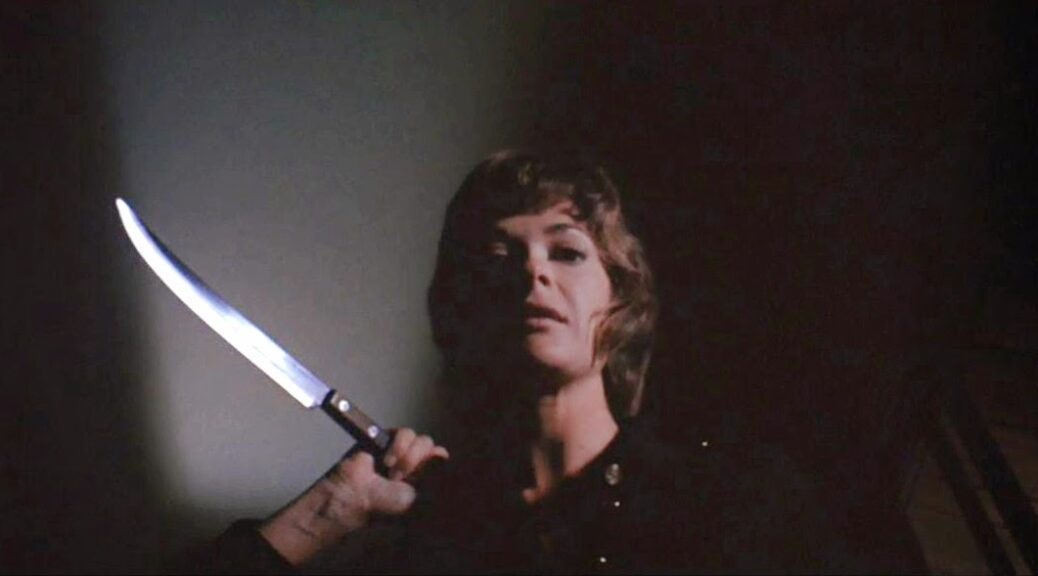
Clint Eastwood made his directorial debut with this cautionary tale. Free-wheeling bachelor and jazz radio DJ Dave Garver (Eastwood) picks up a fan (Julie Walter) in a local bar, but it turns out she’s an obsessive and dangerous nut job.

You can see this film all over later psycho girlfriend flicks, most notably Fatal Attraction, but it was groundbreaking at the time. To watch hard edged action hero Eastwood – in more of a quiet storm mode – visibly frightened by this woman was also a turning point. We’re told the shag haircut sported by Donna Mills also became quite the rage after the film debuted in ’71.

Eastwood capitalizes on something that all the rest of the films on this list pick up – that voice on the radio is actually a person who’s somewhat trapped. You can hear him, but you can’t necessarily help him. He’s both public and isolated. Eastwood’s slow boil direction and Walter’s eerie instability infuse the soft jazz sound with an undercurrent of danger that generates unease in every frame.

2. Chain Reactions (2024)

Not everyone believes Tobe Hooper’s The Texas Chain Saw Massacre is a masterpiece of American filmmaking. I find those people suspicious. Luckily, those are not the people filmmaker Alexandre O. Philippe (Memory: The Origins of Alien, 78/52) talks to for his latest documentary, Chain Reactions.

Philippe’s approach is that of a fan and an investigator. When Patton Oswalt compares Hooper scenes to those from silent horror classics, Philippe split screens the images for our consideration. When Karyn Kusama digs into the importance of the color red, Chain Reactions shows us. We feel the macabre comedy, the verité horror, the beauty and the grotesque.

What you can’t escape is the film’s influence and its craft. The set design should be studied. Hooper’s use of color, his preoccupation with the sun and the moon, the way he juxtaposes images of genuine beauty with the grimmest sights imaginable. Chain Reactions is an absolute treasure of a film for fans of The Texas Chain Saw Massacre.

1.Misery (1990)

Kathy Bates had been knocking around Hollywood for decades, but no one really knew who she was until she landed Misery. Her sadistic nurturer Annie Wilkes – rabid romance novel fan, part-time nurse, full-time wacko – ranks among the most memorable crazy ladies of modern cinema.

James Caan plays novelist Paul Sheldon, who kills off popular character Misery Chastain, then celebrates with a road trip that goes awry when he crashes his car, only to be saved by his brawniest and most fervent fan, Annie. Well, she’s more a fan of Misery Chastain’s than she is Paul Sheldon’s, and once she realizes what he’s done, she refuses to allow him out of her house until she brings Misery back to literary life.

Caan seethes, and you know there’s an ass-kicking somewhere deep in his mangled body just waiting to get out. But it’s Bates we remember. She nails the bumpkin who oscillates between humble fan, terrifying master, and put-upon martyr. Indeed, both physically and emotionally, she so thoroughly animates this nutjob that she secured an Oscar.

The Bloodsucker Proxy

LandLord

Screens Saturday, October 18 at 2pm

by George Wolf

Remember the simple genius of 30 Days of Night? Vampires were roaming Alaska, in a town with no sunlight for a month! We all wondered why we didn’t think of that.

LandLord is built on a similarly clever foundation. Vampires have to be invited in, right?

Not if they own the property.

Go on.

Writer/director Remington Smith could have steered that premise toward a basic bite-fest, and it might have been good fun. But here he has something more ambitious in mind, with a patient, understated approach that makes sure the wounds go a little bit deeper.

A Black Bounty Hunter (a terrific Adama Abramson) cuts quite a figure as she travels alone, on foot and dealing only in cash. The bills she throws at the manager of a rundown apartment complex get her some keys with no questions asked, and plenty of time to surveil a man who carries a valuable briefcase.

But a chance meeting with a bullied youngster named Alex (Cohen Cooper) slowly draws the Bounty Hunter away from her mark, and toward Alex’s outrageous claims about a white vampire stalking the housing community.

The apartment setting coupled with the teenage perspective calls to mind 2016’s excellent The Transfiguration, while the prevailing subtext of a disposable population echoes Jorge Michael Grau’s masterful We Are What We Are. Still, Smith is able to make sure his own voice his heard.

LandLord is a story of survival. Getting out alive is going to take wits, courage, and a good friend watching your back. You’ve just got to know who the bloodsuckers are.

And some of them might even be vampires.

Tale of Three Pretties

Kiss of the Spider Woman

by George Wolf

Trusting Bill Condon to bring the Kiss of the Spider Woman stage musical to the big screen is an understandable choice. With Dreamgirls, Chicago and even Beauty and the Beast, the man has shown he knows how to write and/or direct the necessary pop and pizazz.

He brings both again this time, just enough to offset what’s lacking on the political intrigue side of the ledger.

Based on the 1993 Tony Award-winning adaptation of Manuel Piug’s 1976 novel (which also spawned the 1985 film version), Condon’s Kiss keeps the core story intact. It’s set after Argentina’s coup d’état in the late 70s, when the military dictatorship began rounding up scores of political opponents.

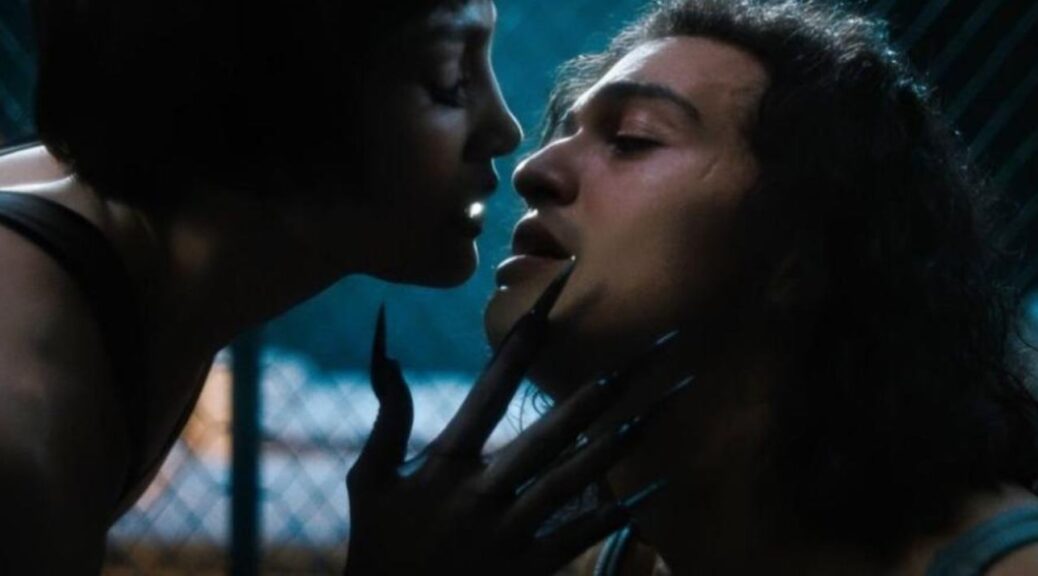
One of these activists, Valentín (Diego Luna), is sharing a jail cell with Molina (Tonatiuh), a window dresser who has been convicted of “public indecency” with another man. To brighten their spirits, Molina begins regaling Valentín with the plot of one of his favorite movie musicals starring the glamorous Ingrid Luna (Jennifer Lopez).

All three actors impress in multiple roles, as Condon crafts the fantasy song-and-dance numbers with the staging, visual panache and aspect ratio to recall the golden age of Hollywood. Shifting often from lavish sequence to jail cell squalor, the film’s two plot lines begin to mirror each other, and some layers of love, loss, and sacrifice grow stronger than others.

The fantasy throwbacks, queer and Latin influences pull each other along nicely, but Condon never quite establishes the prison as a setting with real grit or tangible danger. Granted, it’s tricky to walk this line without recalling too much Man of La Mancha. But the lengths which Condon goes to differentiate the worlds visually only makes those slippery tone shifts more curious.

Is it entertaining? It is, even at just over two hours. JLo is award-worthy yet again, Luna is quietly heroic and Tonatiuh (Carry-On) delivers a smashing and star-making breakout turn. Give in to them all, and Kiss of the Spider Woman can get you lost in the fantasy.

Poison Pen

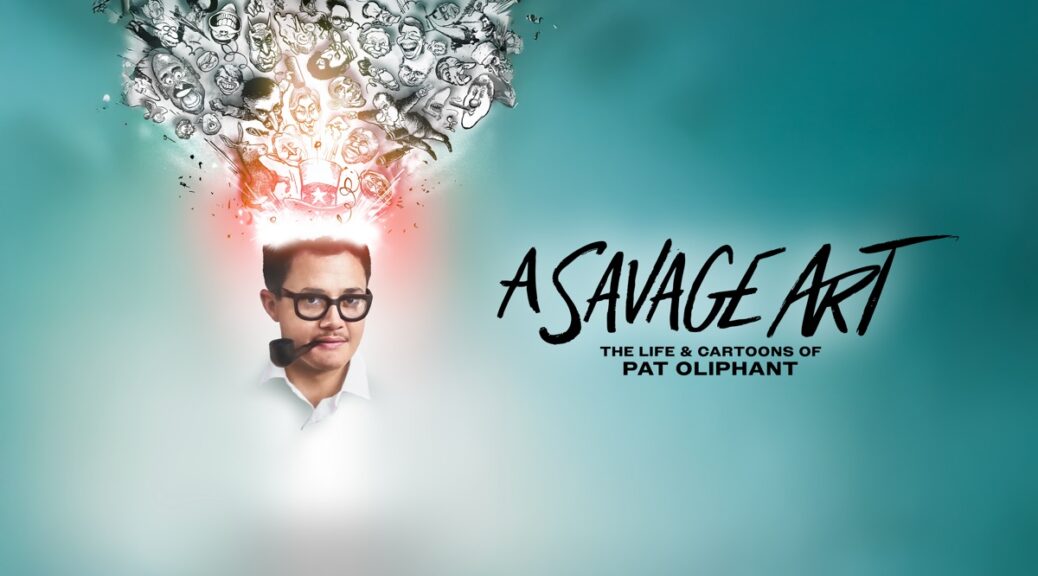
A Savage Art: The Life & Cartoons of Pat Oliphant

by George Wolf

“If Pat Oliphant couldn’t draw, he’d be an assassin.”

That quote gets your attention, even if you don’t know the name Pat Oliphant. Either way, you’ve probably seen some of his work, and A Savage Art: The Life & Cartoons of Pat Oliphant is a broadly effective intro to a legend of political cartooning.

Oliphant wielded a revolutionary artistic style and the kind of cynical mind that had him rebelling against the very committee that awarded him the Pulitzer Prize in 1967. Aided by his alter ego “Punk” the Penguin, Oliphant skewered the political landscape through five decades and ten U.S. Presidents.

In his feature debut, director Bill Banowsky keeps things pretty standard, rolling out a succession of Oliphant’s best cartoons, and chatting with family members and colleagues to provide some personal details that Oliphant himself seems averse to.

And though today’s political and social climate carries some issues that are very relevant to Oliphant’s legacy, Banowsky doesn’t dig in. We do get mentions of the increased threats to a free press, and to the rise of internet memes as a shallow imitation of cartoon commentary, but those seem to be conversations for another day.

Banowsky’s aim is to give a legend his due and maybe spur some interest in learning more. A Savage Art hits that target square.

Slippery

The Ice Tower

by George Wolf

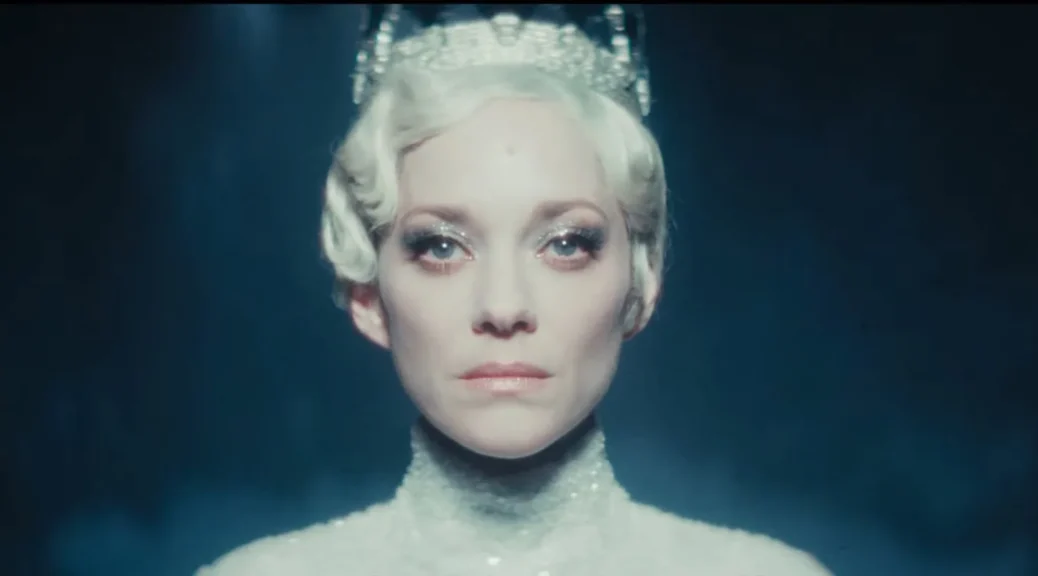
Fifteen-year-old Jeanne doesn’t want to build a snowman. What she wants is an escape, but finds plenty more than she expected in The Ice Tower, Lucile Emina Hadzihalilovic’s dreamlike re-imaging of “The Snow Queen.”

In 1970s France, Jeanne (a wonderful feature debut for Clara Pacini) is among the oldest children in a foster home, where she comforts the younger ones and silently longs for a better life. She finally leaves one evening, taking refuge in an empty warehouse to sleep.

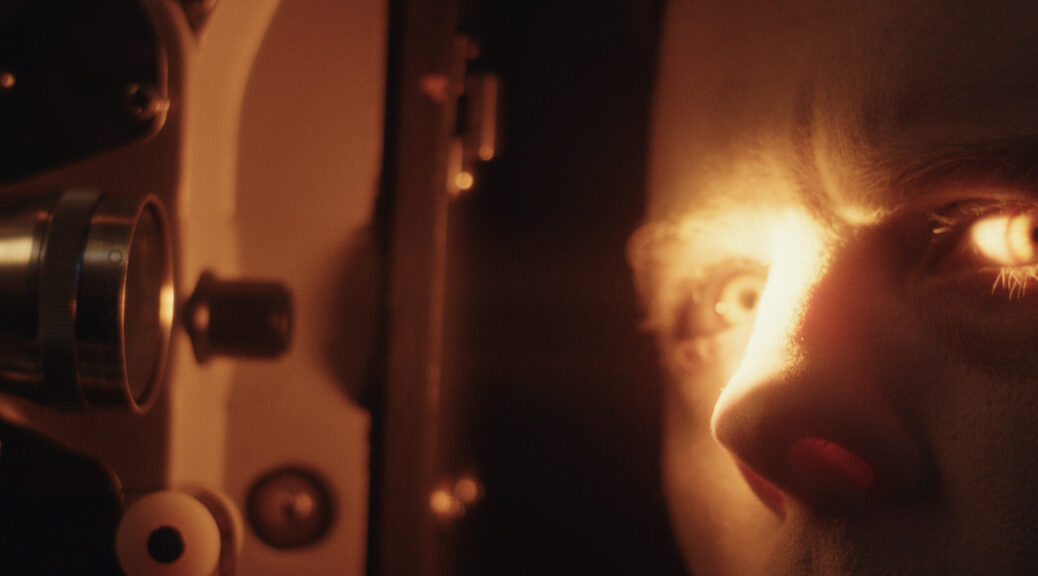
But in the morning, Jeanne finds the warehouse is home to a movie crew, with director Dino (Gaspar Noé, Hadzihalilovic’s husband) filming a new adaptation of the Hans Christian Anderson classic. Mistaken for an extra, Jeanne becomes part of the production and is instantly captivated by the star of the show, Christina (Marion Cotillard).

The Oscar-winning Cotillard is, of course, perfect as the detached and demanding diva who begins to take an equally strong interest in the young Jeanne. But to what end? Hadzihalilovic explores that question with a cold, barren beauty. The aesthetic is tactile and intoxicating, a perfect playground to envelope the film in strange fascination.

The Ice Tower casts an undeniable spell. Despite lingering a bit too long in some dry spots, it crafts an enriching trip to the darker floors of a fairy tale.

No Wake Zone

Bone Lake

by George Wolf

Not long after we meet Sage and Diego, they’re talking about his idea for a novel, debating about what qualifies as “gratuitous” and lamenting that cancel culture has neutered artistic expression.

Okay, intriguing. And then you remember that one poster for Bone Lake features the strategically large “R” rating positioned right after the first word in the title.

Alrighty, then, we’re gonna push some limits with both blood and lust, are we? Have some devilish fun with hot button topics and take no prisoners?

No, we are not. We’re going to play it safe and predictable, borrow heavily from better projects and hope some late stage blood splatter stops the questions about why that poster doesn’t read BonePG-13 Lake.

Sage (Maddie Hasson) and Diego (Marco Pigossi) have booked an incredible lakeside mansion for the weekend. Diego’s even brought a ring along to pop the question, but there are two very big complications. Will (Alex Roe) and Cin (Andra Nechita) have also booked the mansion for the weekend! What are four good-lookings gonna do except share the space and really get to know each other?

The character development is rushed but adequate. Will and Cin are openly sexy free spirits, Diego is more buttoned-up and Sage seems to be settling for the comfy life while missing some walks on the wild side. But more than anything, Diego and Sage both seem like a couple of first class idiots.

Writer Joshua Friedlander and director Mercedes Bryce Morgan want to sprinkle some White Lotus sensibilities over a mashup of Funny Games and A Perfect Getaway. But the inspirations are painfully evident, the revelations overly telegraphed, the internal logic gets shaky and the frolicking more silly than sexy.

None of it goes anywhere worth caring about. The marketing angle, an attention-getting prologue and that early art debate make some promises that are never kept, and this trip to the lake is more bore than bone.

Everyday People

The Lost Bus

by George Wolf

Paul Greengrass loves him a true survival story. And with Captain Phillips, United 93, Bloody Sunday and more, he’s shown great instincts for bringing those stories to the screen. That craftsmanship is on display again in The Lost Bus, a harrowing retelling of a heroic rescue from Northern California’s catastrophic Camp Fire that killed 85 people and destroyed ninety percent of a city’s homes in 2018.

Adapting Lizzie Johnson’s book, Greengrass and co – writer Brad Ingelsby get us up to speed early and effectively. The town of Paradise has not had rain for over 200 days, and the threat of wind gusts up to 90 mph bring multiple wildfire warnings.

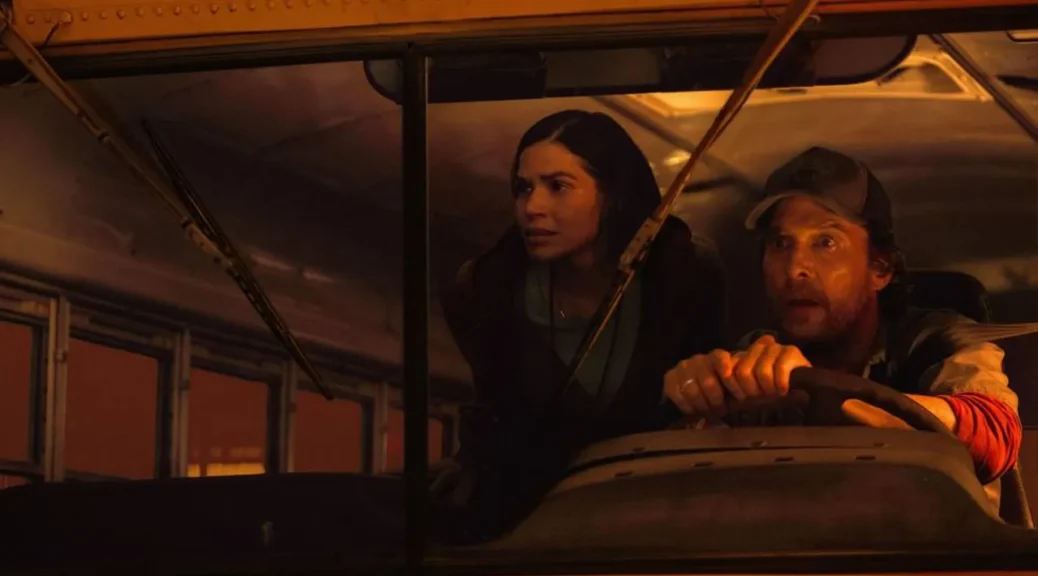
Kevin McKay (Matthew McConaughey) is begging for extra shifts as a school bus driver, trying to keep his life together amid an aging mother (McConaughey’s mother Kay), a rebellious son (McConaughey’s son Levi), a disappointed ex-wife (Kimberli Flores), an impatient boss (Ashlie Atkinson) and a dying dog.

He’s also struggling with guilt after his father’s death, and it’s only McConaughey’s skill with grounding the character that keeps Kevin from collapsing under the strain of an overly tortured and reluctant hero.

A faulty power line ignites a small fire that quickly grows to overwhelm firefighters, and as evacuation panic sets in, a call goes out to any bus drivers able to rescue a group of stranded schoolchildren. McKay answers, picking up teacher Mary Ludwig (America Ferrera) and her class of 22 kids. The radios are out and the bus is unreachable, adding even more anxiety to the frightened parents waiting at a shelter.

Ferrera also does wonders with a broadly drawn character. She and McConaughey create effective snapshots of everyday heroes pushed to the brink, the perfect anchor for Greengrass’s frenzied shaky-cam plunge into the fire. What the effects team accomplishes with the mix of embers, wind and flame is just spectacular, and though none of the bus’s perilous moments surpass the white knuckle nerve-shredding of Sorcerer, just the fact that Greengrass can bring Friedkin’s classic to mind is a high-five in itself.

McKay and Ludwig certainly deserve plenty of those. And the bluntly titled The Lost Bus gives them their due in grand, appropriately no-nonsense fashion. Unimaginable circumstances bring on an unparalleled fight for survival, and heroes emerge. Hold on tight for a gripping ride, especially if you can catch this Apple TV release on the big screen.