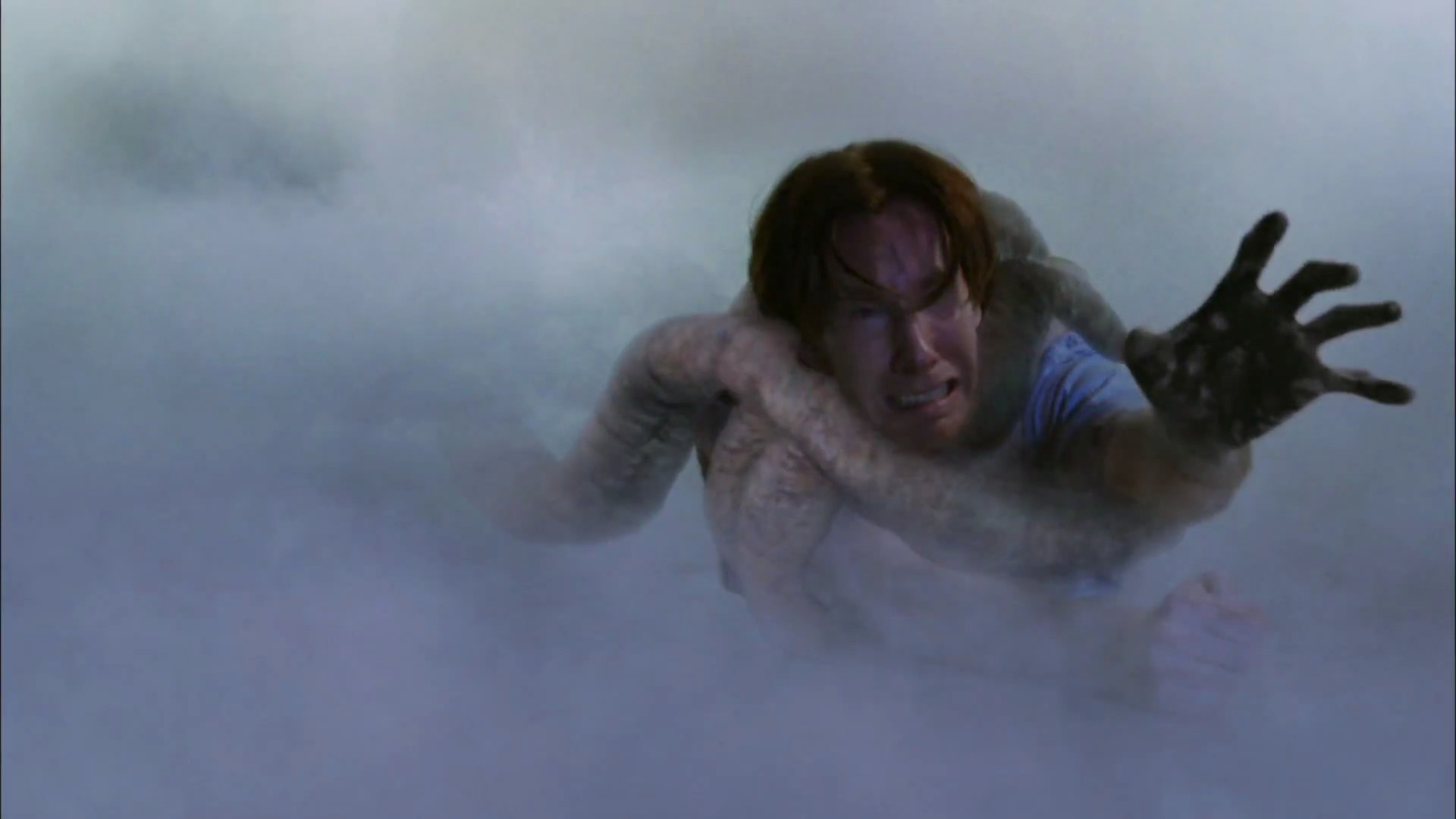
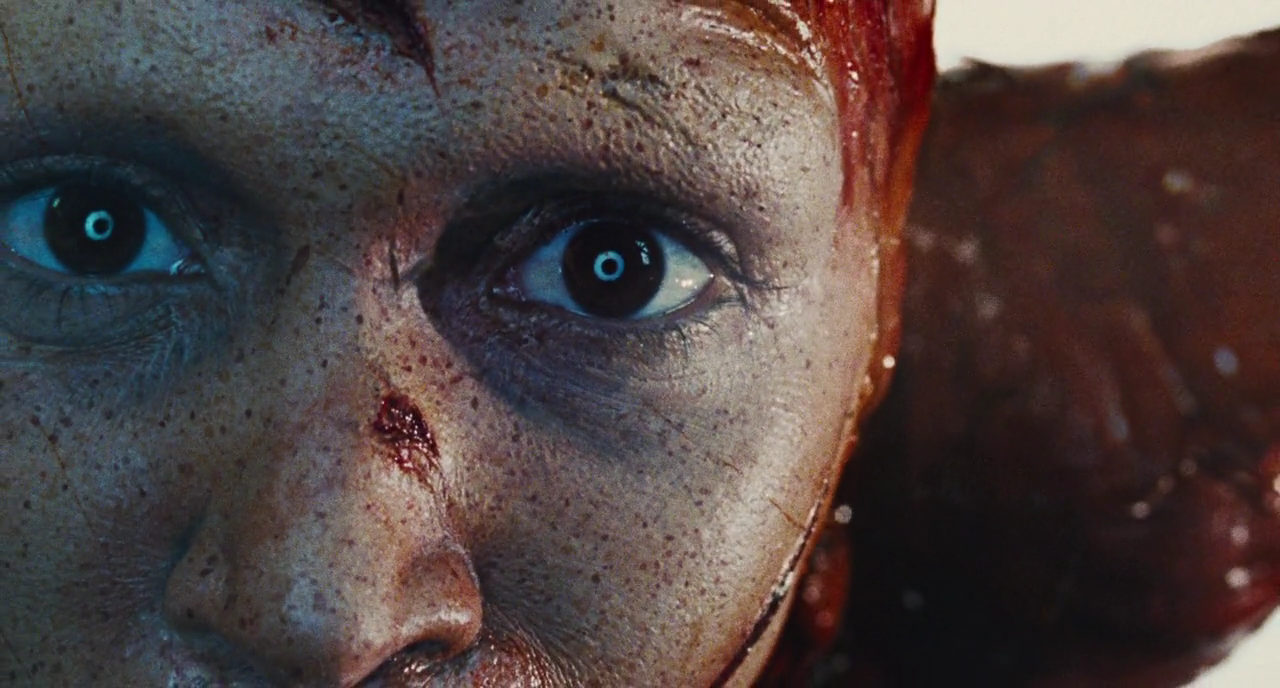
Never has the line “Thank you” had a weirder effect than in the genre bending adventure Kill List.
Hitman Jay (a volcanic Neil Maskell) is wary to take another job after the botched Kiev assignment, but his bank account is empty and his wife Shel (an also eruptive MyAnna Buring) has become vocally impatient about carrying the financial load. But this new gig proves to be seriously weird.
Without ever losing that gritty, indie sensibility, Ben Wheatley’s fascinating film begins a slide in Act 2 from crime drama toward macabre thriller. You spend the balance of the film’s brisk 95 minutes actively puzzling out clues, ambiguities and oddities. (The often impenetrable accents don’t exactly help with this sleuthing). The “What the hell is happening?” response to a film is rarely this satisfying.
As Kill List drifts toward its particular flavor of horror, Wheatley pulls deftly from some of the most memorable films of a similar taste. But because the less you know about this film the more fascinating it is, I won’t cover those here except to say: Nicely done!
Performances are disconcerting but well played. Michael Smiley, in particular, offers an outstanding supporting turn as the likeable mate. His longing, good nature, and conflicted religious leanings make not only for an intriguing gun-for-hire, but also an emotional anchor for the film.
For those looking for blood and guts and bullets, Kill List will only partially satisfy and may bewilder by the end. But audiences seeking a finely crafted, unusual horror film may find themselves saying thank you.
Listen weekly to MaddWolf’s horror podcast FRIGHT CLUB. Do it!
Some of the world’s best horror output comes from distant lands – like this gem from Spain.
Laura (Belén Rueda) and her husband reopen the orphanage where she grew up, with the goal of running a house for children with special needs – children like her adopted son Simón, who is HIV positive. But Simón’s new imaginary friends worry Laura, and when he disappears, it looks like she may be imagining things herself.
This may seem like a well worn tale at first glance: Is the distraught mother losing her mind, as those around her assume, or is something supernatural afoot? But it’s director Juan Antonio Bayona’s understated approach, along with Rueda’s measured performance and Óscar Faura’s superb cinematography, that buoy the film above the ordinary ghost story.
A scary movie can be elevated beyond measure by a masterful score and an artful camera. Because Bayona keeps the score and all ambient noise to a minimum, allowing the quiet to fill the scenes, he develops a truly haunting atmosphere. Faura captures the eerie beauty of the stately orphanage, but does it in a way that always suggests someone is watching. The effect is never heavy handed, but effortlessly eerie.
The Orphanage treads familiar ground, employing such iconic genre images as the lighthouse, scary dolls, scarecrows, a misshapen child – not to mention the many and varied things that go bump in the night – but it does so with an unusual integrity. Creepy images from early in the film are effectively replayed in the third act to punctuate the very real sense of dread Bayona creates throughout the film. While most of the horror is built with slow, spectral dread, there are a couple of outright shocks to keep the audience guessing.
One of the film’s great successes is its ability to take seriously both the logical, real world story line, and the supernatural one.
Screenwriter Sergio Sánchez doesn’t shortchange his characters or the audience by dismissing Laura’s anguished state of mind, or by neglecting the shadowy side of his tale. The Orphanage is reminiscent of producer Guillermo del Toro’s The Devil’s Backbone, as well asThe Others, and even of the classic The Innocents.
The Orphanage has more than the unsettling spectral images of children in common with these films; it boasts a sustaining, powerful female performance. Rueda carries the film with a restrained urgency – hysterical only when necessary, focused at all times, and absolutely committed to this character, who may or may not be seeing ghosts.
A good ghost story is hard to find. Apparently you have to look in Spain.
Listen weekly to MaddWolf’s horror podcast FRIGHT CLUB. Do it!
We greet an honest to god expert for this week’s podcast, as Dr. Neil McRobert (you may know him better as NakMak!) joins us to talk about Stephen King films. Neil’s doctoral thesis concerned itself in part with King’s writings, and yet, somehow Hope decided she was still the more appropriate choice to determine the rankings of King films. Listen in and let us know who does a better job with the list. The whole conversation goes on HERE.
5. Dolores Claiborne (1995)
Taylor Hackford helms this generational saga of women in a man’s world. Not truly a horror film, it follows the tale of stern Mainer Dolores (the magnificent –as-always Kathy Bates), who’s been accused of murdering her contemptible boss, Vera Donovan (an outstanding Judy Parfitt). Dolores’s estranged daughter (Jennifer Jason Leigh) returns to the Maine island of her birth to support her mom from being railroaded, as the entire town believes Dolores has already gotten away with murder once.
The film is an achievement in casting above all things. Bates is brilliant, and so is David Strathairn, playing against type as abusive white trash husband and father. Tony Gilroy’s screenplay is delicately faithful to King’s novel, a character-driven drama that boasts some excellent lines – most of them landing in Parfitt’s mouth. Luckily she’s up to the challenge and makes it look easier than it should to be a bitch.
4. Misery (1990)
Kathy Bates had been knocking around Hollywood for decades, but no one really knew who she was until she landed Misery. Her sadistic nurturer Annie Wilkes – rabid romance novel fan, part time nurse, full time wacko – ranks among the most memorable crazy ladies of modern cinema.
James Caan plays novelist Paul Sheldon, who kills off popular character Misery Chastain, then celebrates with a road trip that goes awry when he crashes his car, only to be saved by his brawniest and most fervent fan, Annie. Well, she’s more a fan of Misery Chastain’s than she is Paul Sheldon’s, and once she realizes what he’s done, she refuses to allow him out of her house until she brings Misery back to literary life.
Caan seethes, and you know there’s an ass kicking somewhere deep in his mangled body just waiting to get out. But it’s Bates we remember. She nails the bumpkin who oscillates between humble fan, terrifying master, and put-upon martyr. Indeed, both physically and emotionally, she so thoroughly animates this nutjob that she secured an Oscar.
3. The Mist (2007)
Frank Darabont really loves him some Stephen King, having adapted and directed the writer’s work almost exclusively for the duration of his career. While The Shawshank Redemption may be Darabont’s most fondly remembered effort, The Mist is an underappreciated creature feature.
David Drayton (Thomas Jane) and his young son head to town for some groceries. Meanwhile, a tear in the space/time continuum opens a doorway to alien monsters. So he, his boy, and a dozen or so other shoppers are all trapped inside this glass-fronted store just waiting for rescue or death.
Marcia Gay Harden is characteristically brilliant as the religious zealot who turns survival inside the store into something less likely than survival out with the monsters, but the whole cast offers surprisingly restrained but emotional turns.
The FX look good, too, but it’s the provocative ending that guarantees this one will sear itself into your memory.
2. Carrie (1976)
The seminal film about teen angst and high school carnage has to be Brian De Palma’s 1976 landmark adaptation of King’s first full length novel, the tale of an unpopular teenager who marks the arrival of her period by suddenly embracing her psychic powers.
Sissy Spacek is the perfect balance of freckle-faced vulnerability and awed vengeance. Her simpleton characterization would have been overdone were it not for Piper Laurie’s glorious evil zeal as her religious wacko mother. It’s easy to believe this particular mother could have successfully smothered a daughter into Carrie’s stupor.
One ugly trick involving a bucket of cow’s blood, and Carrie’s psycho switch is flipped. Spacek’s blood drenched Gloria Swanson on the stage conducting the carnage is perfectly over-the-top. And after all the mean kids get their comeuppance, Carrie returns home to the real horror show.
1. The Shining (1980)
It’s isolated, it’s haunted, you’re trapped, but somehow nothing feels derivative and you’re never able to predict what happens next. It’s Stanley Kubrick’s masterpiece rendition of Stephen King’s The Shining.
Though critics were mixed at the time of the film’s release, and both Kubrick and co-star Shelley Duvall were nominated for Razzies, much of the world’s negative response had to do with a needless affection for the source material, which Kubrick and co-scriptor Diane Johnson use as little more than an outline.
A study in atmospheric tension, Kubrick’s vision of the Torrance family collapse at the Overlook Hotel is both visually and aurally meticulous. It opens with that stunning helicopter shot, following Jack Torrence’s little yellow Beetle up the mountainside, the ominous score announcing a foreboding the film never shakes.
What image stays with you most? The two creepy little girls? The blood pouring out of the elevator? The impressive afro in the velvet painting above Scatman Crothers’s bed? That guy in the bear suit – what was going on there? Whatever the answer, thanks be to Kubrick’s deviant yet tidy imagination.
Next week we will look at the best Canada has to offer the genre.
The following week, we are thrilled to tackle our sophomore effort at live recording the Fright Club podcast! We will unspool The Orphanage (2007) at Gateway Film Center on November 11, counting down the best Spanish language horror at 7:30, just prior to the 8pm screening.
In the meantime, help us prep for upcoming podcasts. What filmmaker, actor or actress deserves an entire podcast? Let us know on Twitter @maddwolf, on facebook @maddwolfcolumbus, or leave us a comment here.
In the early Seventies, Robin Hardy created a film that fed on the period’s hippie- versus-straight hysteria. Uptight Brit constable Sgt. Howie (Edward Woodward) flies to the private island Summerisle, investigating charges of a missing child. His sleuthing leads him into a pagan world incompatible with his sternly Christian point of view.
The deftly crafted moral ambiguity of the picture keeps the audience off kilter. Surely we aren’t to root for these heathens, with their nudey business right out in the open? But how can we side with the self-righteous prig Howie?
Hardy and his cast have wicked fun with Anthony Shaffer’s sly screenplay, no one more so than the ever-glorious Christopher Lee. Oh, that saucy baritone! We love him in the role of Lord Summerisle, though it helps that he gets all the great lines. For instance, “Shocks are so much better absorbed with the knees bent,” he deadpans.
When Howie asks, “And what of the one true God?”
Summerisle responds, “Well, he’s dead. He had his chance and, in modern parlance, blew it.”
Blasphemy indeed! No wonder Howie’s so up in arms. Plus there’s that naked barmaid and her sexy come-hither dance.
Truth be told, Brit Eckland’s seductive dancing looks more like a temper tantrum mixed with a seizure, but on Summerisle you can let your freak flag fly.
Howie won’t be tempted by the barmaid, though. And as the tale meanders unpredictably forward, he might have wanted to rethink that.
The film is hardly a horror movie at all –more of a subversive comedy of sorts – until the final reel or so. Starting with the creepy animal masks (that would become pretty popular in the genre a few decades later), then the parade and the finale, things take quite a creepy turn.
It’s a different type of horror film, one with a cheery disposition and sense of wicked fun that puts you in an uncomfortable position. Brilliantly told, impeccably filmed and hard to forget, it’s worth digging up this season.
A Troma alum with writing credits ranging from Scooby-Do movies to the remake of Dawn of the Dead, Gunn possessed all the raw materials to pull it off. The film is equal parts silly and smart, grotesque and endearing, original and homage. More importantly, it’s just plain awesome.
Cutie pie Starla (Elizabeth Banks) is having some marital problems. Her husband Grant (the great horror actor Michael Rooker) is at the epicenter of an alien invasion. Smalltown sheriff Bill Pardy (Nathan Fillion) tries to set things straight, as a giant mucous ball, a balloonlike womb-woman, a squid monster, projectile vomit, zombies, and loads and loads of slugs keep the action really hopping.
Gunn lifts certain scenes – the best scenes – directly from both the Cronenberg and the lesser Creeps effort, but never steals. His film brims with affectionate nods, including the great early scene where white trash Margaret sits on her couch with her toddler watching Troma’s classic Toxic Avenger. Classy, mom!
Gunn would go on to helm the hilarious fun of Guardians of the Galaxy, and it’s this film that shows just how perfect a choice he was for that effort. Consistently funny, cleverly written, well paced, tense and scary and gross – Slither has it all. Watch it. Do it!
Listen weekly to MaddWolf’s horror podcast FRIGHT CLUB. Do it!
The prolific director Takashi Miike made more than 70 movies in his first 20 or so years in film. Among the best is Audition, a phenomenally creepy May/December romance gone very, very wrong.
Audition tells the story of a widower convinced by his TV producer friend to hold mock television auditions as a way of finding a suitable new mate. He is repaid for his deception.
The story itself follows a far more linear path than what’s commonly found in Japanese horror, but the usual preoccupations with hair, decorum, and bodily horror still abound. My favorite quote from the movie: “The police tried to recompose her body. Three extra fingers and an ear came up.”
That’s just solid detective work!
Nearly unwatchable and yet too compelling to turn away from, Audition is a remarkable piece of genre filmmaking. The slow moving picture builds anticipation, then dread, then full-on horror.
Midway through, Miike punctuates the film with one of the most effective startles in modern horror, and then picks up the pace, building grisly momentum toward a perversely uncomfortable climax.
By the time Audition hits its ghastly conclusion, Miike and his exquisitely terrifying antagonist (Eihi Shina) have wrung the audience dry. She will not be the ideal stepmother.
Keep an eye on the burlap sack.
Listen weekly to MaddWolf’s horror podcast FRIGHT CLUB. Do it!
Welcome to 1971, the year the Perron family took one step inside their new home and screamed with horror, “My God, this wallpaper is hideous!”
Seriously, it often surprises me that civilization made it through the Seventies. Must every surface and ream of fabric be patterned? Still, the Perrons found survival tougher than most.
The farmhouse’s previous residents may be dead, but they haven’t left, and they are testy! So the Perrons have no choice but to look up paranormal investigators Lorraine and Ed Warren – the real life couple linked to many famous American hauntings, including one in Amityville, NY. The Conjuring is allegedly based on one of the couple’s cases.
Yes, this is an old fashioned ghost story, built from the ground up to push buttons of childhood terror. But don’t expect a long, slow burn. Director James Wan expertly balances suspense with quick, satisfying bursts of visual terror.
Wan cut his teeth – and Cary Elwes’s bones – with 2004’s corporeal horror Saw. He’s since turned his attention to something more spectral, and his skill with supernatural cinema only strengthens with each film.
Ghost stories are hard to pull off, though, especially in the age of instant gratification. Few modern moviegoers have the patience for atmospheric dread, so filmmakers now turn to CGI to ramp up thrills. The results range from the visceral fun of The Woman in Black to the needless disappointment of Mama.
But Wan understands the power of a flesh and blood villain in a way that other directors don’t seem to. He proved this with the creepy fun of Insidious, and surpasses those scares with this effort.
A game cast helps. Joining five believably terrified girls in solid performances are Vera Farmiga, Patrick Wilson, and the surprisingly well-suited Ron Livingston as the helpless patriarch.
Claustrophobic when it needs to be and full of fun house moments, The Conjuring will scare you while you’re watching and stick with you after. At the very least, you’ll keep your feet tucked safely under the covers.
Listen weekly to MaddWolf’s horror podcast FRIGHT CLUB. Do it!
This is one you may need to prepare yourself for. Equal parts orphanage ghost story, suburban revenge fantasy, and medical experimentation horror flick, the whole of Martyrs is a brutal tale that is hard to watch, hard to turn away from, and worth the effort.
On the surface we follow Lucie’s (Mylene Jampanoi) descent into madness after escaping, as a child, from an abandoned warehouse where she’d been tortured by unknown hands.
Mining the heartbreaking loneliness of abandoned, damaged children, the film follows the profound relationship between Lucie and the only friend she will ever have, an undeterrably loving Anna (Morjana Alaoui).
Constantly subverting expectations, including those immediately felt for Anna’s love, writer/director Pascal Laugier makes a series of sharp turns, but he throws unforgettable images at you periodically, and your affection for the leads keeps you breathlessly engaged.
The third act offers the most abrupt change of course as well as tone, and the proceedings are tough to stomach, but well conceived and equally skillfully executed. It holds some gruesome imagery, and though the climax may not be pleasing, it certainly doesn’t disappoint.
Listen weekly to MaddWolf’s horror podcast FRIGHT CLUB. Do it!
Writer/director Ana Lily Amirpour has made the world’s first Iranian vampire movie, and though she borrows liberally and lovingly from a wide array of inspirations, the film she’s crafted is undeniably, peculiarly her own.
Amirpour is blessed with a cinematographer in Lyle Vincent capable of translating her theme of loneliness in a dead end town, as well as the cultural influences and Eighties pop references, into a seamless, hypnotic, mesmerizingly lovely vision. The film is simply, hauntingly gorgeous.
Set in Bad Town, a city depleted of life – tidy yet nearly vacant – Girl haunts the shadowy, lonesome fringes of civilization. The image is highly stylized, with a hip quirkiness and stationary camera framings that noticeably mine Jarmusch’s early work. Indeed, Amirpour seems an avid fan of American indies of the Eighties and Nineties, as well as the films of endlessly imitated French New Wave filmmakers and Sergio Leone – so that’s a mish mash. But Amirpour effortlessly balances the homages and inspirations, the cultural nuances alive in Girl giving every scene a uniqueness that makes the whole effort surprising.
Amirpour develops a deliberate pace that makes the film feel longer, slower than is probably necessary. The time is spent with singular individuals – a prostitute (a world-wearied and magnificent Mozhan Marno), a drug addicted father (Marshall Manesh), a street urchin (Milad Eghbali), a pimp (Dominic Rains), and a rich girl (Rome Shadanloo). Two people weave in among these players – the handsome Arash (Arash Marandi), and a lonesome vampire (Sheila Vand).
Though these are character types more than characters outright, Amirpour and her actors don’t abandon them. Each has breath and dimensionality, their fate a question that piques sympathy.
Vand’s Girl is the constant question mark, and that – along with the eerie, sometimes playful beauty of Vincent’s camerawork – is what makes the film unshakably memorable. I promise the image of a vampire on a skateboard will stay with you.
Listen weekly to MaddWolf’s horror podcast FRIGHT CLUB. Do it!
Not everyone considers The Texas Chainsaw Massacre a classic. Those people are wrong. Perhaps even stupid.
Tobe Hooper’s camera work, so home-movie like, worked with the “based on a true story” tag line like nothing before it, and the result seriously disturbed the folks of 1974. It has been ripped off and copied dozens of times since its release, but in the context of its time, it was so absolutely original it was terrifying.
Hooper sidestepped all the horror gimmicks audiences had grown accustomed to – a spooky score that let you know when to grow tense, shadowy interiors that predicted oncoming scares – and instead shot guerilla-style in broad daylight, outdoors, with no score at all. You just couldn’t predict what was coming.
Hooper also cast aside any concerns for dignity or fair play, a theme best personified by wheelchair-bound Franklin. Franklin is supremely unlikeable – whiney and selfish – ending horror’s long history of using personal vulnerability to make a character more sympathetic. Films such as Wait Until Dark, Whatever Happened to Baby Jane, and Rear Window (all excellent movies) ratcheted up tension through the sympathy they could generate toward the helpless character. These films’ anxiety and payoff both owe everything to watching the vulnerable protagonist in danger, and waiting for them to overcome the odds.
But Hooper is after an entirely different kind of tension. He dashes your expectations, making you uncomfortable, as if you have no idea what you could be in for. As if, in watching this film, you yourself are in more danger than you’d predicted.
But not more danger than Franklin is in, because Franklin is not in for a good time.
So, poor, unlikeable Franklin Hardesty, his pretty sister Sally, and a few other friends head out to Grampa Hardesty’s final resting place after hearing the news of some Texas cemeteries being grave-robbed. They just want to make sure Grampy’s still resting in peace – an adventure which eventually leads to most of them making a second trip to a cemetery. Well, what’s left of them.
Listen weekly to MaddWolf’s horror podcast FRIGHT CLUB. Do it!