Tag Archives: film

Crouching Tiger

Dheepan

by Cat McAlpine

When you recommend this film, do not lead with “French, subtitled.” Though an accurate description on both counts, the association of moody cigarette smoking would do little to represent the raw heart of Dheepan.

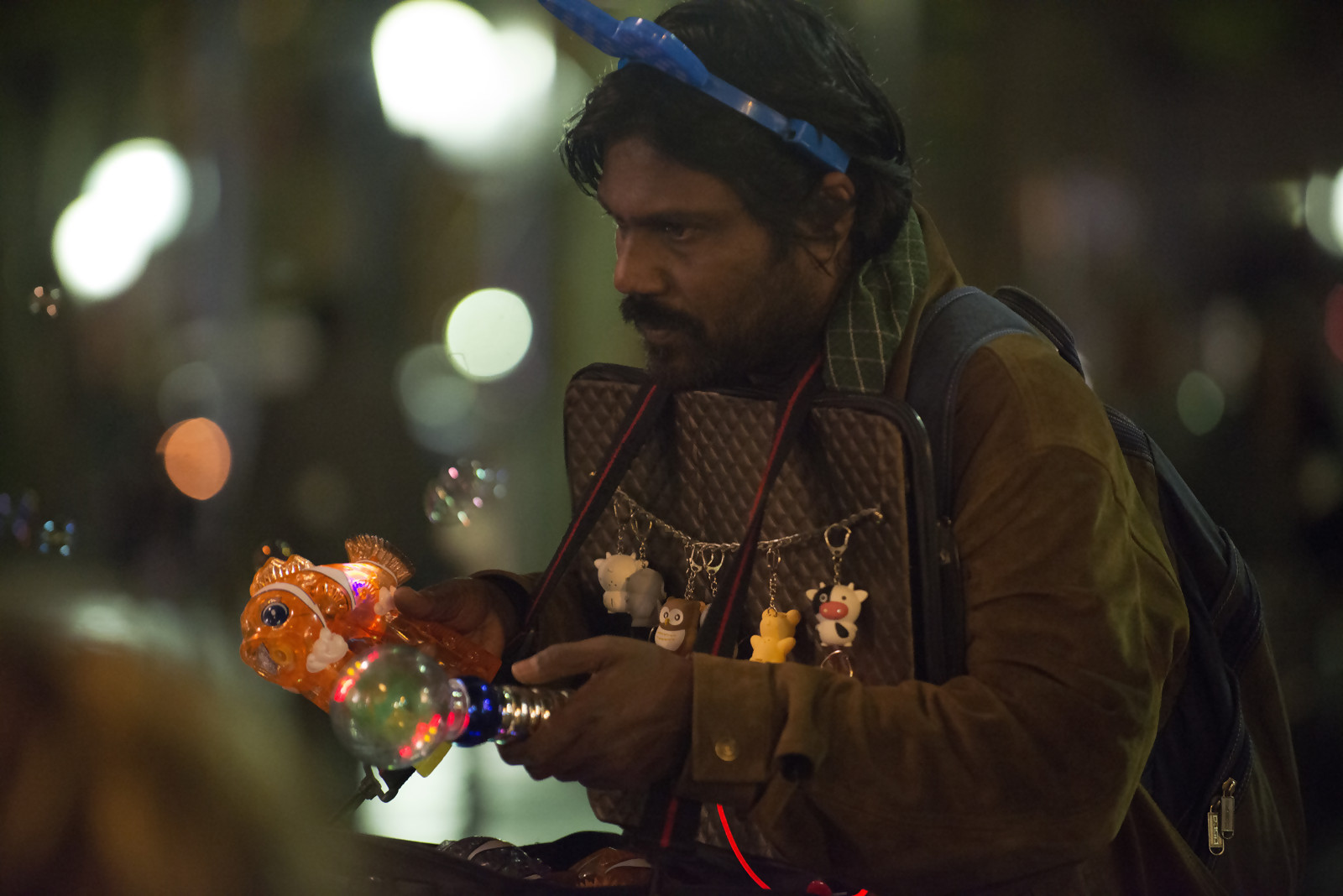
Dheepan is a Tamil freedom fighter (called Tigers) who flees as the war begins its bloody close. Having lost his own wife and daughters, he must travel with Yalini (26) and Illayaal (9), posing as family to secure asylum in France.

These three strangers become dependent on one another for the facade that protects them. Unfortunately, fleeing Sri Lanka makes only minor improvements in their livelihoods, and the makeshift family discovers that war comes in sizes great and small.

Writer/director Jacques Audiard (A Prophet) is hyper-aware of light, using both color and shape to carve out living, breathing moments. Dheepan battles his monsters in a red-lit basement room. An elephant sways slowly in the dappled light of the forest. Yalini leaves the door open while she showers, and the blue light from the bathroom flickers teasingly.

This is the vision that truly guides the narrative, finding those quiet moments in-between the gruesome truths of war, gangs, poverty, immigrants, and trying to love someone you do not know.

The camera work, too, defines these moments. The close-up seems to be a favorite of Audiard, but it is not misused in context. The camera betrays when Dheepan’s world feels small and when it feels large. The watcher often feels like they are peering into rooms where they were not invited.

Jesuthasan Antonythasan’s Dheepan is stoic, contemplative, and yearning. You can feel his need for anything simple and real. His violence is believable and earned. Kalieaswari Srinivasan as Yalini builds a curious fear of the world and people around her. She is rarely likable, but always enthralling. That’s the humanity in Audiard’s characters, they are more real because they are less likeable, but this can make Dheepan harder to watch.

The film could lose 20 or 30 minutes, or at least appropriate it to the more aggressive scenes. Beautiful and real though it is, there are long periods where not much happens. Its pinnacle violence is gruesome and triumphant, leaving you wanting more. But a lust for violence is precisely what Dheepan and his family have been running from.

Verdict-4-0-Stars

Baby Mama Drama

The Ones Below

by Cat McAlpine

Having a child is an amazing and joyous event. It is also terrifying. Alien knew it. That whole Season 8 arc of the XFiles knew it. We’ve even dedicated a Fright Club to Pregnancy Horror. But The Ones Below favors less bursting out of chests and more psychological slow burn.

Enter a small house containing two flats, one upstairs, and one downstairs. Upstairs is home to longtime residents Justin (Stephen Campbell Moore) and Kate (Clémence Poésy), who is pregnant with her first child after years of denying motherhood. New neighbors have moved in downstairs, and Kate finally catches a glimpse of equally pregnant Theresa (Laura Birn).

Theresa and husband Jon (David Morrissey) come upstairs for dinner one evening, and express how desperate they’ve been for a child over some very stilted small talk. Thus tears the rift between the two couples, which only grows after a tragic accident leaves everyone scurrying to dodge guilt and blame.

First time feature director David Farr chases a touch of timelessness in his arrangement and almost pulls it off. There’s a neither here nor there quality to the set and costuming. Milk is delivered daily in glass bottles on the doorstep, smart phones fill hands but pictures are taken with digital cameras, young couples work in open floor plan offices. The upstairs couple dresses as modern young professionals, comfortably. The downstairs pair is more pressed, more clean, and further off trend. A perfectly manicured garden gives off an eerie, Stepford feel.

The editing and design seem to struggle with Farr’s intention a bit. Cool tones downplay some of the raw emotional quality of the scenes, making more intimate moments feel a bit detached. This could be intentional, or I could be trying to cover up for the lack of chemistry between couples.

The most intriguing performance by far is Birn’s Theresa, who is fascinating to watch with equal measures of conniving and innocent. Poésy and Moore are both down-to-earth and relatable, but Poésy ultimately just doesn’t have much to work with. Moore, as the straight man character to everyone else’s crazy, gives a solid performance and becomes the beating heart of the film.

The dialogue mostly consists of bickering, which lends both realism and additional tension, but doesn’t seem to otherwise motivate the characters. There are vague references to strained relationships, which, while underdeveloped, provide breadcrumbs leading to both false and unbelievable-but-true conclusions.

The film ends, deliciously, with a few sharp twists. The thriller connoisseur will see these tricks coming, but the payoff to Farr’s mounting tensions is welcome either way. The Ones Below is a middling to good directorial debut for David Farr that promises, with a few more turns around the block, he will be serving up a style undeniably his.

Verdict-3-5-Stars

For Your Queue: Two 5-Star Options

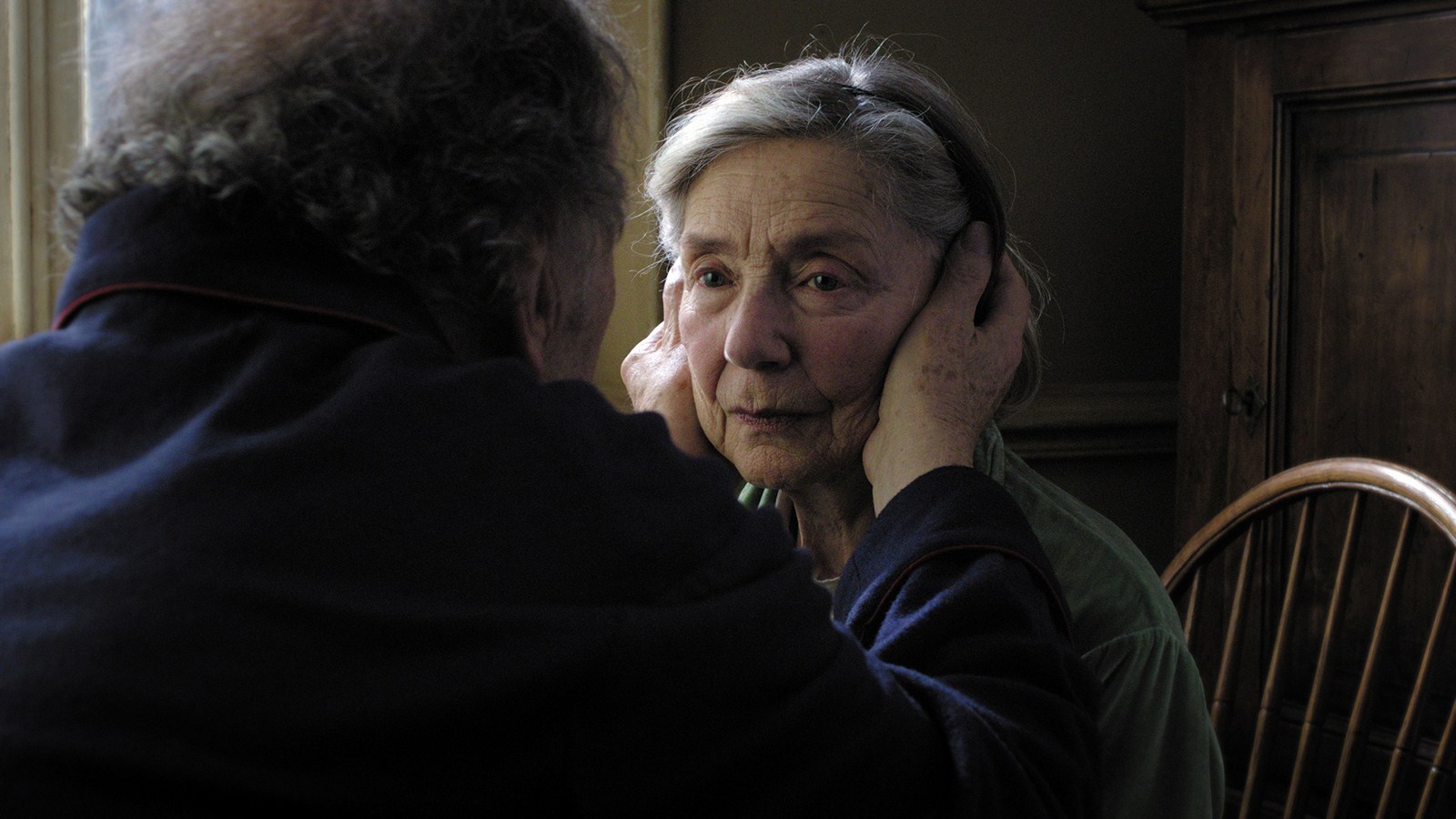
We have two five-star options for your queue this week from the brilliant Michael Haneke. The filmmaker won the Oscar for best foreign language film for his breathtaking 2012 effort Amour, available this week on DVD.

The master craftsman tackles the devastating consequences of a stroke in one lifelong relationship. He sidesteps easy emotion, avoids sentimentality, and embraces the individuality of one marriage – therefore unearthing something both universal and intimate. He’s aided immeasurably by flawless turns from both leads, Emmanuelle Riva (Oscar nominated) and Jean-Louis Trintignant.

The White Ribbon (Das weisse Band),  from 2009, is Haneke’s brilliant analysis of evil, full of exquisite beauty and a quiet power that will haunt you.

Set in a small village in Germany in the years just before World War I, the story centers on strange atrocities that begin to affect both person and property.  As the incidents mount and the mystery deepens, the local schoolteacher thinks he can identify the guilty.  He shares his theory with the village pastor, and lines are drawn when the pastor does not agree.

In previous films,  Haneke has mined cruelty both physical (Funny Games) and mental (Cache).  Here, he examines the depth and possible origins of both, and the result is harrowing.

Golden Glode winner and Oscar-nominated for Best Foreign Film, The White Ribbon is that rare work which is not just a film, but an experience. It effectively moves the conversation beyond the film’s setting, and into how the lessons apply to other periods in history and even to present day social, political, and religious movements.

Of Sea Monsters and Men

Pacific Rim

by Hope Madden

We’re on the edge of an apocalypse and Raleigh Becket (Charlie Hunnam) needs to let go of the past if he wants to save our future.

It was from the sensory-overload seats this week that I took in the IMAX 3D extravaganza that is Pacific Rim – the story of a boy, a robot, and a lot of clichés. Who’d have thought wretched excess could be so dull?

Director Guillermo del Toro tackles his biggest project to date, dropping $200 million on yet another monster movie. Whether a vampire, a mutating alien, a ghost, another vampire, a Hellboy or a labyrinth full of creatures, del Toro does have a preoccupation with monsters. (And Ron Perlman.)

This time the beasties are sort of sea creatures from another dimension in a film that amounts to Godzilla meets the Transformers. The generally capable, sometimes spectacular director doesn’t stop cribbing ideas there. You can find Aliens, Real Steel, maybe some Top Gun, even a little Being John Malkovich in there if you really try.

Indeed, there’s nary a single truly unique idea in the picture. Instead, del Toro relies on the abundance – glut, even – of cinematic clichés to free himself up to focus on more technical stuff, and technically speaking, the film’s pretty impressive. But not overly so.

Del Toro’s real passion seems always to have been in the creation of monsters – dude loves him some tentacles – but too few of these creatures are visually articulate enough to be really memorable or impressive. Without that, the visceral impact he’s after never fully materializes.

Sure, the concussive sound editing and even more abusive score take the experience up a sonic notch, but that’s not necessarily a good thing.

Combined with sloppy scripting and performance that are – well –  bad, the self indulgent Pacific Rim manages to be the least impressive blockbuster yet this summer. And it’s been a pretty weak summer.

Verdict-2-0-Stars