Tag Archives: entertainment

Shark Infested Waters

The Plague

by George Wolf

2025 was yet another year with an impressive list of great performances from young film actors. Ana Sophia Heger (She Rides Shotgun), Cary Christopher (Weapons), and Nina Ye (Left-Handed Girl) were among those seasoned beyond their years. Now, The Plague‘s Everett Blunck leads a terrific ensemble of youngsters to join this group of standout turns.

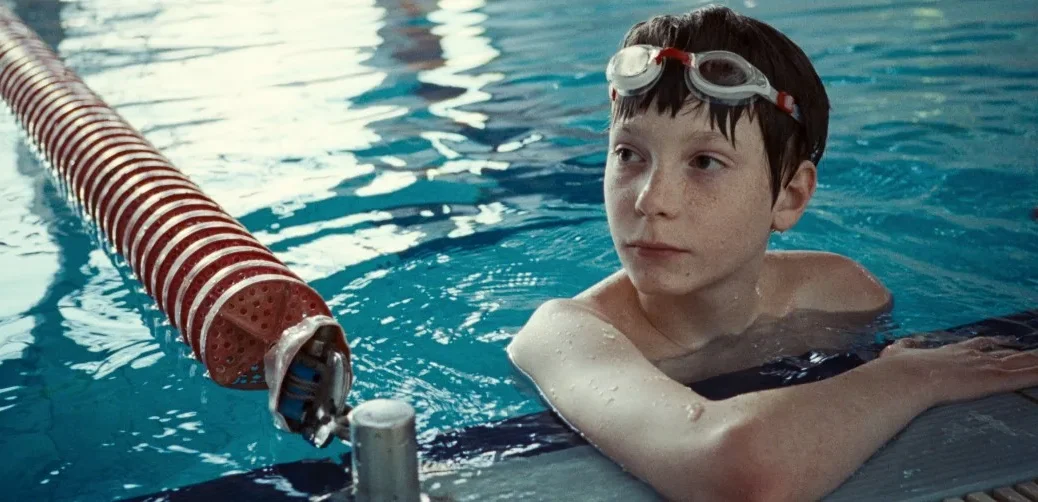
Blunck (last year’s Griffin in Summer) is 12 year-old Ben, one of the young athletes spending the summer at a boys’ water polo camp in New England. A bit shy and awkward, Ben still finds a way to be accepted at the cool kids’ table.

And led by the smug, sarcastic Jake (Kayo Martin, also stellar), those kids target Eli (Kenny Rasmussen, just wonderful) – the weird kid with the rash – for taunts and bullying. Dubbing Eli’s skin condition as a “plague” that’s contagious, the boys are not shy about the finger pointing and mocking laughter.

Ben goes along to get along. But when he dares to show Eli some sympathy, he crosses an unpopular line. Jake and the King Bees decide it is Ben who now has the plague and must be cast out.

Writer/director Charlie Polinger’s feature debut bursts with vision and craftsmanship. He wanders the confines of the swimming pool, locker room and the campus buildings with a probing, studious eye, unveiling some gorgeously shot sequences with a cold detachment that fuels the mood of alienation.

Polinger’s writing is also urgent enough to make this more than just a chlorinated Lord of the Flies. Joel Edgerton’s coach character is aware of some of what’s going on in camp, but he’s purposely kept on the fringes, as Polinger explores how the boys navigate their cruelty around the adults’ anti-bullying sit downs.

Working equally as a microcosm and a singular coming-of-age narrative, The Plague is fascinating, heartbreaking and often quite beautiful. It’s a major debut for a gifted filmmaker, and an emotional showcase for a talented group of young performers.

The Mouse That Roared

Marty Supreme

by George Wolf

It’s been six years now, have we recovered from the panic and palpitations brought on by Josh Safdie’s Uncut Gems?

Better towel off and grab hold of something, because Marty Supreme serves up another harried drama set at a breakneck pace.

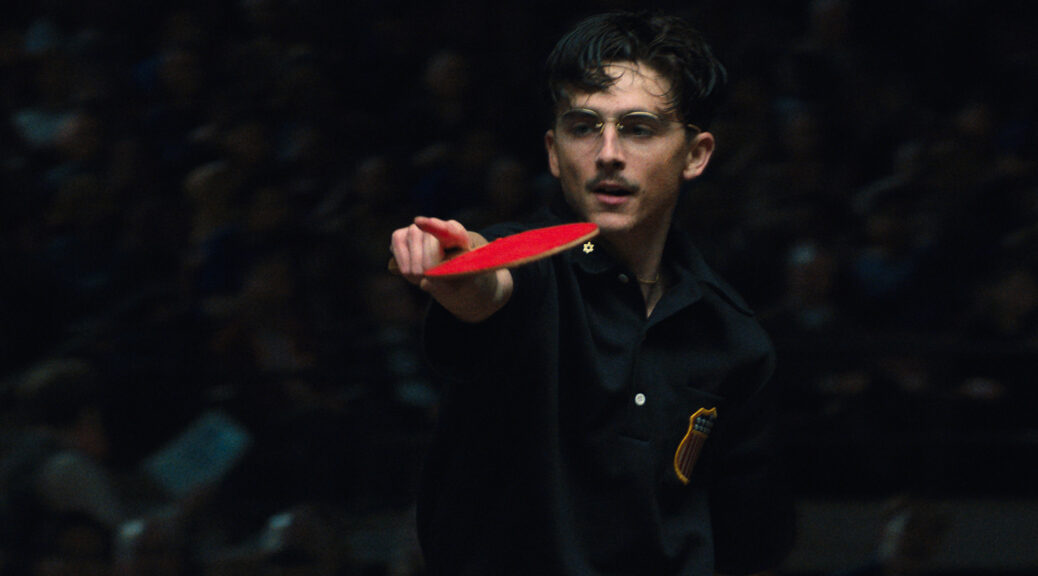
Served up, see what I did there? Marty “The Mouse” Mauser is a table tennis phenom looking to cement his name as the best in the world.

But when we first meet him, Marty (an absolutely electric Timothée Chalamet) is working in a shoe store in 1950s New York. He’s a born salesman, but makes it clear he’s only there to make enough money to finance his next trip to a big tournament. And in that opening few minutes, Safdie and Chalamet gives us a clear glimpse into the Marty Mauser worldview that will grab us by the throat for the next two and a half hours.

Everyone and everything is a means to an end. And Marty is relentless.

It could be an adoring young woman who’s already married (Odessa A’zion), a rich ink pen tycoon (Shark Tank‘s Kevin O’Leary in another bit of Safdie stunt casting) or his bored actress wife (a terrific Gwyneth Paltrow), or even a man out to find his lost dog. It doesn’t matter, Marty will size you up and instantly start working the angle he thinks is most likely to make you an asset.

The entire film, loosely based on Jewish-American table tennis champ Marty Reisman, is a fascinating character study and Chalamet is in mesmerizing, career-best form. Safdie (co-writing again with Ronald Bronstein) might as well just shoot Marty out of a cannon when he leaves that shoe store, and Chalamet makes you afraid to miss anything by looking away.

Like everything else here, the table tennis action is fast, furious and intense, and after an early loss to an unknown, Marty’s singular mission becomes avenging that upset and proving his greatness. But Marty Supreme could be about any type of American unafraid to dream big. It’s another intoxicating ride from Josh Safdie, with an award-worthy Chalamet digging soul deep into a man’s journey toward finding something he values more than himself.

Forever in Sequins

Song Sung Blue

by George Wolf

I admit it, I didn’t pay enough attention to the trailer and I really thought Song Sung Blue was a Neil Diamond biopic. And from what I did notice from the trailer, it looked like a pretty bad Neil Diamond biopic.

Wrong on all counts.

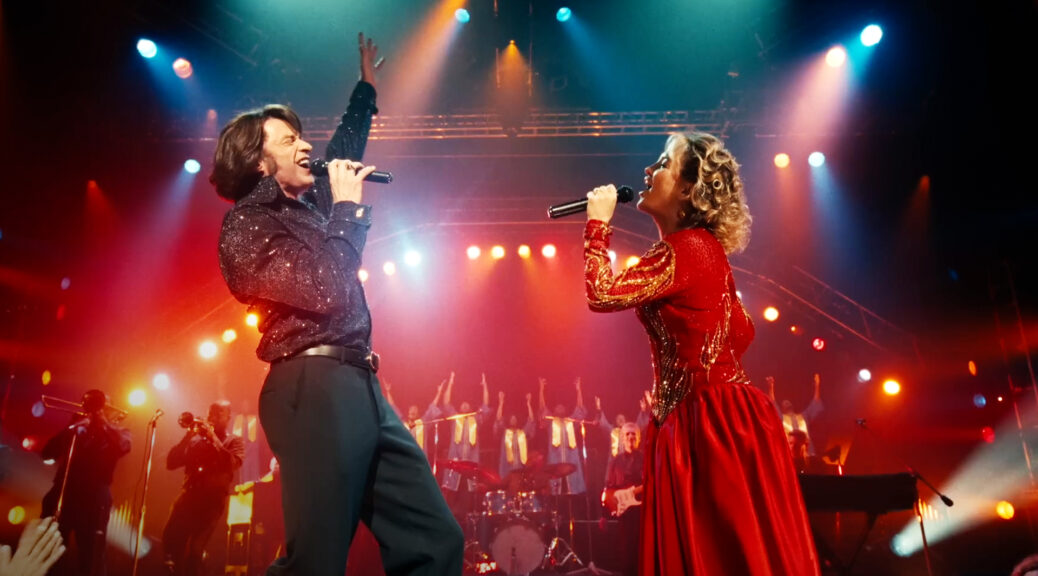
The latest from writer/director Craig Brewer leans on terrific performances from Hugh Jackman and Kate Hudson for an unabashed feel good salute to the dreamers who won’t be derailed from following their joy.

Jackman and Hudson are Mike and Claire Scardina, a Milwaukee couple who built up quite a following in the 80s and 90s as Lightning and Thunder, a Neil Diamond “tribute experience.” Starting out playing restaurants and small clubs, they worked their way up to bigger venues around the Midwest – even opening for Pearl Jam! – before a terrible accident put the future in doubt.

Brewer (Hustle and Flow, Black Snake Moan, Dolemite is My Name, Coming 2 America) adapts Greg Koh’s 2008 documentary with committed earnestness. There isn’t a cynical note to be found about the Scardinas, the nostalgia circuit they love or the ways any of these people measure success. The moments of joy, pain and perseverance are proudly displayed on all their sleeves, and the film is able to pull you in pretty quickly.

Expect plenty of Neil Diamond music, and a reminder that the man has a ton of hits. Yes, the rehearsal and performance set pieces are too perfectly polished, but even that fuels the vibe of dreams-coming-true that the Scardinas are living. And also yes, Jackman and Hudson do their own singing and both sound terrific, while the ensemble cast (including Jim Belushi, Fisher Stevens, Michael Imperioli and Ella Anderson) carves out some unique support characters.

The leads also make Mike and Claire two people that are easy to root for. Off stage, the two bring hardscrabble pasts and children of various ages to their new relationship. They come to believe they were truly meant for each other, and the blended family dynamic offers many relatable beats that run from tender to tragic.

And ironically, it’s those narrative successes that make the missteps in Act III more disappointing. Brewer ends up veering from true events pretty dramatically, adding twists of high melodrama that land as overly contrived.

They also feel unnecessary for a film so committed to the worth of these people and their journey. Song Sung Blue is unapologetic feel-good filmmaking. It plays the heartstrings, the greatest hits and even the cheesy gimmicks so earnestly that the whole show becomes pretty damn hard to resist, even if sequins aren’t exactly your thing.

Fire Woman

Avatar: Fire and Ash

by George Wolf

I saw someone post a question recently, asking when Avatar: Fire and Ash would hit streaming.

He might as well have been asking when he could plan to unload some time and money, because seeing this anywhere else but the big screen is a waste of both.

Right from the opening sequence, writer/director James Cameron pushes us one notch closer to a VR experience. The film’s sensory phaser is set to stun, even as Avatar installment number three suffers from the same narrative misfires that hampered the first two.

The timeline has moved ahead one year, with Jake (Sam Worthington) and Neytiri (Zoe Saldaña) settling in as members of the Metkayina clan. Neteyam’s death has left Neytiri grief-stricken and bitter, particularly toward Spider (Jack Champion), who is a constant reminder of the humans who killed her son.

The clone of Colonel Quaritch (Stephen Lang) is still out for revenge on Jake and his family, only this time he has some hot-tempered help.

Varang (Oona Chaplin) is the leader of the volcano-dwelling Mangkwan clan (aka the “Ash People”), a battle-tested warrior who not only gives Quaritch a valuable ally, she alone makes the film more interesting than The Way of Water.

Chaplin digs into Verang’s talents as a Black Magic Woman, and thanks to her, the film’s complete lack of humor is offset by layers of voodoo, dark arts and the conjuring of fire. Cool.

And again, the 3D IMAX whizbangery is pretty spectacular. The human and avatar worlds blend as seamlessly as the land-to-water transitions, with battle sequences that are more detailed and thrilling than ever.

But also again, Cameron and his writing team can’t hold themselves back from bland excess. Cameron borrows from his own films (The Abyss, especially), story beats are repeated and repeated again while dialog is often awkward and sometimes unintentionally funny – unless he was trying to recall Anchorman?

More than anything, Fire and Ash is out to just batter you with its sheer experience-ness. The running time bloats to an unnecessary three hours and fifteen minutes with unrelenting attempts at crescendo moments that rarely allow any time to breathe.

I mean, come on, if every day was like Christmas, then Christmas Day wouldn’t mean that much, would it? Fire and Ash brings over all the best new toys and throws them at you until you’re feeling both exhilarated and wondering what just happened.

Unless you wait until it streams. Then you’re just watching while your neighbor rides his sweet new bike past your house.

Anti Social

Influencers

by George Wolf

If you saw Influencer three years ago, no doubt you noticed that little smile from CW (Cassandra Naud) in the final shot. If, like me, you were hoping that meant she’d find a way to stir up more social media mischief, it’s a merry Christmas for both of us.

CW has quieted down a bit since we left her on that island, settling down enough with girlfriend Diane (Lisa Delamar) to let her guard down and actually pose for photos. But an encounter with a travel influencer (Georgina Campbell) lures CW back to her old ways, and it isn’t long before she has more bloody tracks to cover.

Again, writer/director Kurtis David Harder has good instincts for knowing what questions we’re asking as this world wide web gets more tangled, and for keeping the beats relevant to the changing landscape of social media.

The introduction of toxic bro blogger Jacob (Jonathan Whitesell) feels right on time, as does the re-introduction of Madison (Emily Tennant), who now has even more scores to settle with old frenemy CW.

Naud gives another terrific performance, as CW remains a smart, slippery and ever intriguing mystery girl. Dancing in and around more gorgeously framed locales, CW makes it fun to try and guess what she’ll do next. What’s even more fun? The fact that we’re not prepared for just how batshit things get in act three.

Harder’s observational nature about social media never feels like finger-wagging, and the continually rising stakes of mystery, mayhem and fun land Influencers as another lethal blast of engagement.

Smash those like and follow buttons!

Like It Was

Merrily We Roll Along

by George Wolf

Stephen Sondheim’s Merrily We Rolling Along may have taken a while to attain beloved musical status, but it’s certainly getting the flowers now.

Closing just 16 performances after its 1981 Broadway premiere, the show got various rewrites and new stagings over the years, a 2016 documentary on the original production, and finally a Tony award-winning revival in 2023.

And while fans wait for Richard Linklater’s adaptation, which is being filmed over the course of twenty years, director Maria Friedman delivers a film pro shot of a June 2024 performance at New York’s Hudson Theatre.

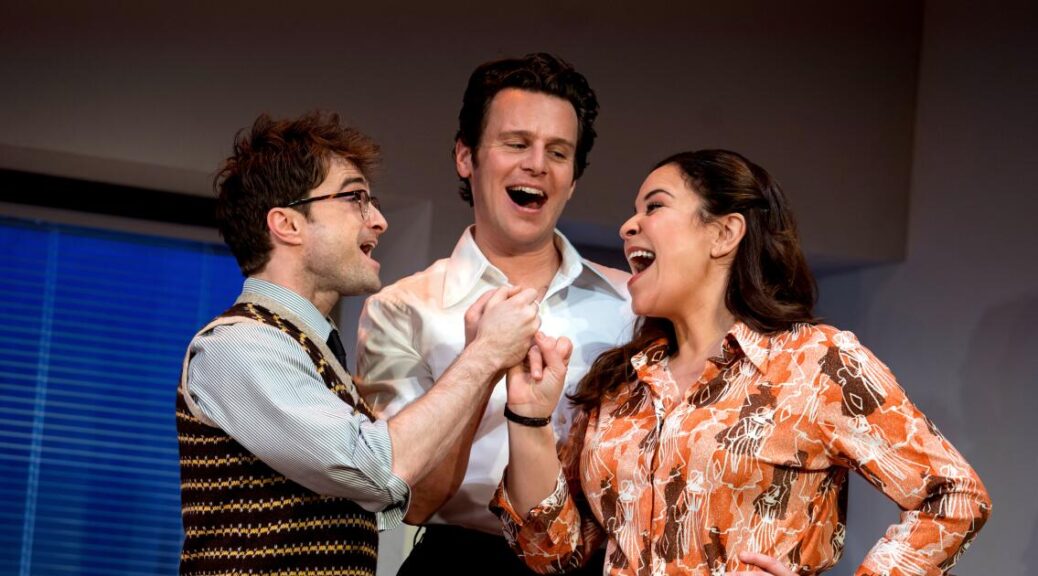
Tony winners Jonathan Groff and Daniel Radcliffe are songwriters Franklin Shepard and Charley Kringas. When we meet them in 1976, the friendship is strained over Frank’s decision to “go Hollywood” and produce movies. Writer Mary Flynn (Lindsay Mendez, 2018 Tony winner for Carousel) – their third musketeer – tries to make peace but is often drunkenly sarcastic about the cost of their quest for success.

Frank’s self absorption and philandering ways have taken their toll on his family and friends, and as Frank confronts the lowest point in his life, the show begins a series of “Transitions” that gradually roll back to the beginning of the three long friendships.

It’s easy to see why musical theatre fans love this show. It’s a salute to dreamers everywhere – Broadway dreamers especially – sporting several Sondheim tunes (“Opening Doors,” “Old Friends,” “Our Time”) that have become favorites.

The ensemble is fantastic, starting right at the top with the three leads. Of course, Groff (Hamilton‘s original King George) and Mendez are longtime musical theatre powerhouses, so it’s Radcliffe’s absolutely charming turn that will be the biggest surprise.

It is Merrily‘s direction that ends up hampering its effectiveness on screen, with a cramped approach that often yearns for room to breathe. Just earlier this year, Hamilton‘s film pro shot achieved a near perfect balance of intimacy and movement. Friedman leans too heavily on quick cuts and close ups, which tends to neuter the live feeling that is essential to the pro shot experience.

Still, this is one that musical fans should make time for, even if it can’t blend stage and screen quite as merrily as we’ve seen before. But for holding us over for the next couple decades? It’ll do.

Get a (After) Life

Eternity

by George Wolf

Early on, Eternity may feel like a Hallmark Channel movie that made it to the big leagues. But thanks to a great cast and some easygoing humor, the whiffs of schmaltzy contrivance at its core are gone before that first commercial would have kicked in.

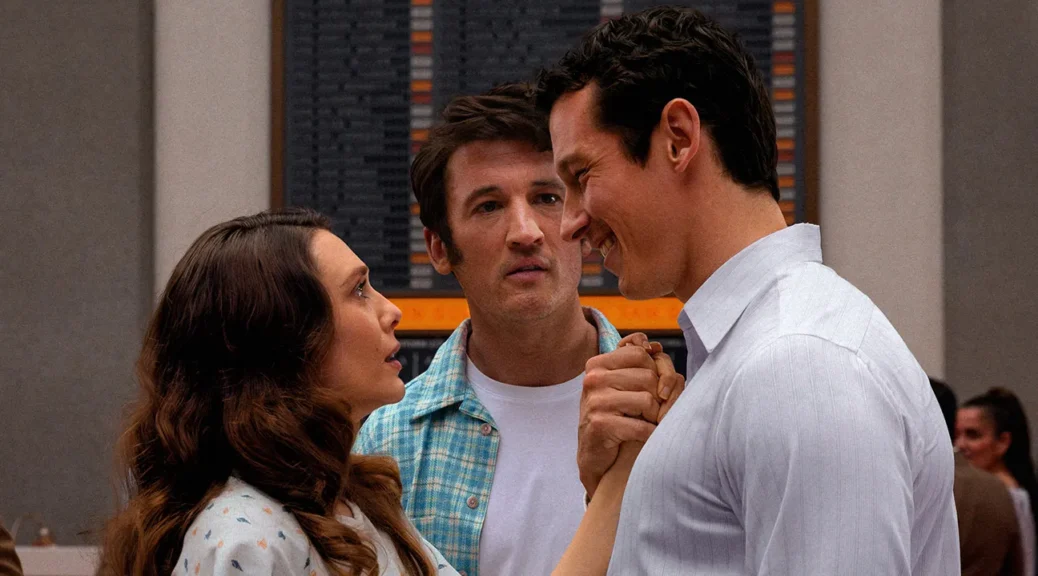
Elizabeth Olsen and Miles Teller play Joan and Larry. Married for 65 years, they drag their bickering selves to a family gender reveal party where Larry promptly chokes to death.

Once Larry accepts his fate, his helpful Afterlife Coordinator, Anna (Da’Vine Joy Randolph) gives him the scoop. Larry has one week to browse a very theme park-like showroom for all the eternity options available, and then make his choice.

But while he’s mulling, Larry meets Luke (Callum Tuner), who took a job as the showroom bartender rather than make an eternity choice at all.

Why would he do that? Because Luke is Joan’s first husband, who died in the Korean War and has been waiting 67 years for Joan to arrive.

And right on cue, the cancer that Joan and Larry had been hiding from their family sends Joan to her own Afterlife Coordinator, Ryan (John Early), who explains the obvious.

Joan’s Heavenly table only seats two, and she has one week to decide.

Director/co-writer David Freyne starts winning us over early with the Disneyfied weigh station. Various booths offer some well-played sight gags (“Choose Wine World!” “Man Free World Sold Out!”) while Anna and Ryan begin increasingly competitive campaigns for their clients’ futures.

It’s all good, high concept fun, but the three leads make the film a charmer that’s pretty hard to resist. Turner leans into Luke’s reputation as a perfect war hero too handsome even for Joan (I’m sorry, what? That’s Elizabeth Olsen!), while Teller is a perfect goofball trying to compete with Luke’s pristine memory.

And Olsen is the sweet, harried soul at the center, flush with the return of the young love fighting to drown out decades of memories.

In lesser hands, all three of these characters would become ridiculous posers, but the terrific ensemble and a deceptively smart script end up working wonders. Yes, you can probably guess how some of this plays out, but even that can’t spoil the film’s winning flight of fantasy.

Character-based with bits of nifty visual flair, Eternity delivers some warm fuzzies perfect for the season, even without any time spent in an afterlife Holiday World.

Maybe they don’t want to give Hallmark any ideas.

Bully Pulpit

Wake Up Dead Man: A Knives Out Mystery

by George Wolf

We may be early in awards season, but the slam dunk winner for Best Use of a Church Organ in an Ensemble Whodunnit has arrived.

Wake Up Dead Man: A Knives Out Mystery brings that LOL moment and many other deadly delights, as writer/director Rian Johnson again shows a wonderful grasp on giving the Agatha Christie blueprint his own wickedly fun stamp.

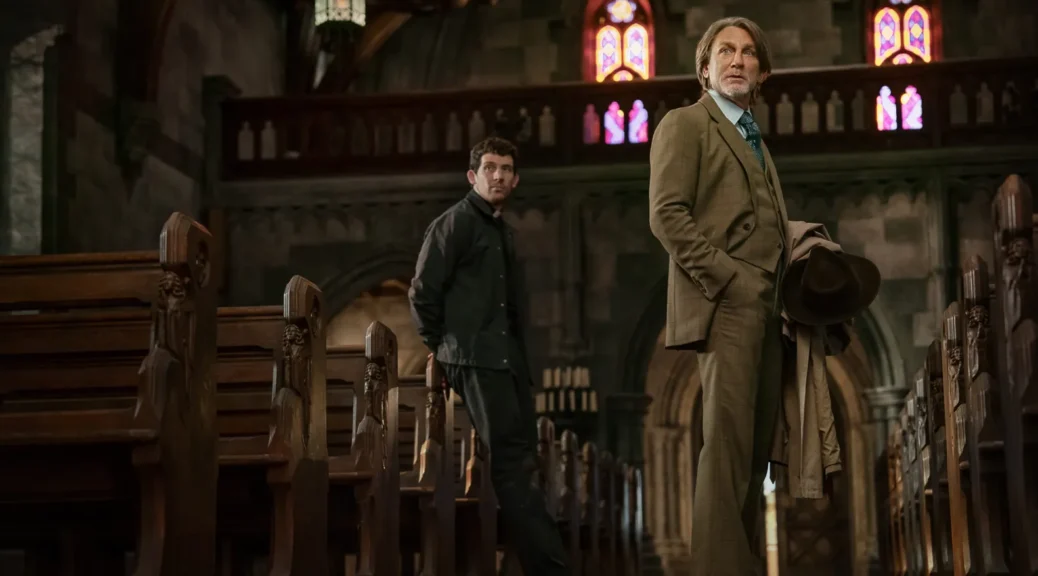
There’s been a murder at a small Catholic church in upstate New York. Just as young priest Jud Duplenticy (Josh O’Connor) is learning his way around Monsignor Jefferson Wick’s (Josh Brolin) iron-fisted control of his flock at Our Lady of Perpetual Fortitude, Wicks turns up with a literal knife in his back.

Jud has some violence in his checkered past – and he found the body – but the pews are filled with suspects. There’s lawyer Vera (Kerry Washington), her adopted son Cy (Daryl McCormack), writer Lee (Andrew Scott), Dr. Nat (Jeremy Renner), newcomer Simone (Cailee Spaeny), groundskeeper Samson (Thomas Haden Church) or maybe even devoted church secretary Martha (Glenn Close).

That much sleuthing is a bit overwhelming for Chief Scott (Mila Kunis) and her officers, so WGD (World’s Great Detective) Benoit Blanc (Daniel Craig) is on the case, albeit reluctantly.

In fact, Blanc is loath to even set foot inside a church, a feeling detailed in his breathtaking introductory speech, the opening salvo in Johnson’s assault on demagoguery and the quest for power via radicalization.

That assault is far from subtle, but man it’s a treat to get caught up in.

Brolin continues his stellar year with a masterclass of egotistic bullying, and O’Connor is the perfect counterpoint. Fresh-faced and mop-haired, Father Jud is committed to being a force for good in the world, and to honoring Christ’s mission to heal the world. That mission seems lost amid Wick and his parishioners, and each member of this sublime ensemble understands Johnson’s assignment to skewer such commonplace self-righteous hypocrisy.

Craig is letter-perfect once again, dialing back the giddy flamboyance that drove 2022’s Glass Onion with darker shades in line with the film’s tone. Blanc is troubled and stumped about more than just the facts of the case, and Craig continues to craft him as an endlessly fascinating figure.

Wake Up Dead Man is less of an outright comedy than the last mystery, though some solid laughs do land (like the church organ gag). And just like last time, it will not be hard to guess who Johnson has his knives out for. What you won’t guess is who done it, or how they done it.

But it sure is a kick to try.

Best Supporting Actor

Rental Family

by George Wolf

For the first few minutes of Rental Family, you’re not quite sure what it’s trying to be. Phillip, an American actor, is living and working in Japan, wearing funny suits in commercials to get by.

So, maybe fish-out-of-culture screwball comedy.

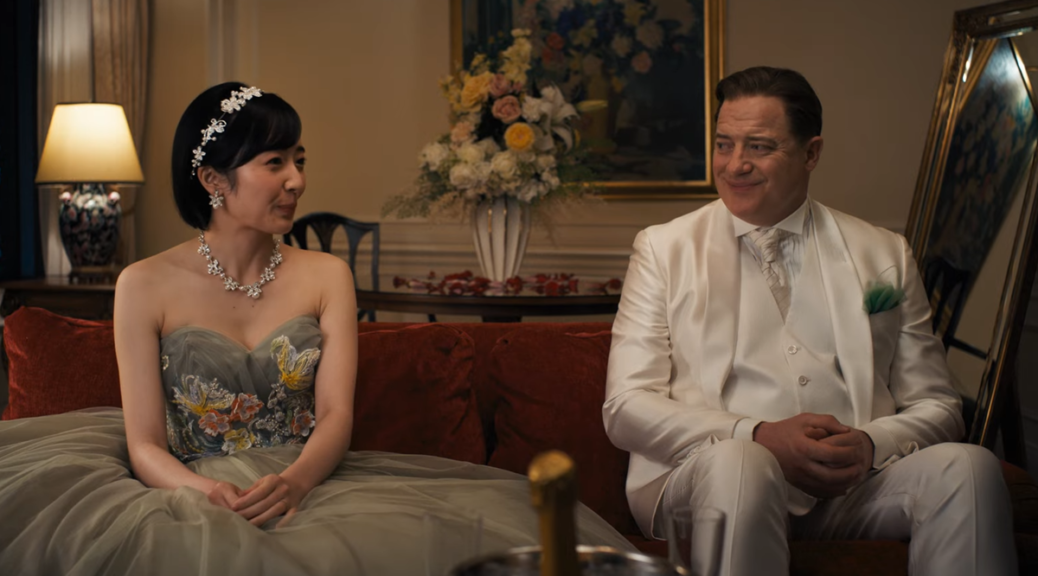
But then Phillip (Brendan Fraser) starts working at a company that “rents” whoever you need to make you feel better in a certain situation. The “Rental Family” firm needs a token white guy, and Phillip’s first assignment is playing a sad American at a funeral that results in a good laugh.

Still, maybe goofy comedy?

But at twenty minutes in, director and co-writer Hikari puts Phillip in an absolutely lovely human moment. As Phillip sees how good his work can make people feel, a possible warm drama of human connection comes into focus.

Hikari (Beef) and her writing partner Stephan Blahut base the film on real services for hire in Japan. To combat the stigma of mental health, the Japanese can “rent emotion” through actors playing roles in manufactured situations that make the clients seem more contented.

That is a sad necessity, for sure, and Fraser’s caring eyes and frequently furrowed brow speak loudly through various assignments. But as Phillip plays the father of a young girl trying to ace a school entrance exam, and then a reporter interviewing an aging actor who worries he’s been forgotten, the lines of fantasy and reality begin to blur.

Boundaries are crossed, secrets come to light and Phillip’s employer (the renowned Takehiro Hira) finds his entire business suddenly in jeopardy.

Hikari’s big heart is certainly in the right place here, but the film hits its highpoint with that early twenty minute moment. From there, the Oscar-winning Fraser is mainly held to one mopey note, and the emotional tone of the movie begins to feel a bit manipulative.

Mainly, Rental Family lands as a missed opportunity. There is potential here to spotlight a fascinating cultural commodity that parallels the manufactured reality of our social media age. What we get isn’t bad – in fact, it’s very nice – as long as you’re content with broad brushes and greeting card sentiments.

Pieces of Time

Jay Kelly

by George Wolf

Oh, jeez, here we go. Just in time for Awards Season, it’s another group of Hollywood elites making a big Netflix movie about how great movies are, and how great the people making movies are and how hard those people work.

Cue the eye-roll. Can the Oscar-baiting get any more shameless?

Hang on there, hot-taker. Why can’t veteran movie-makers write what they know? Like any other story, it comes down to how well you’re telling it, and how much we’re invested in what’s happening to the characters.

Turns out, it’s pretty easy to care about Jay Kelly, about the people in his orbit, and the commitment required to make cinema feel like “pieces of time.”

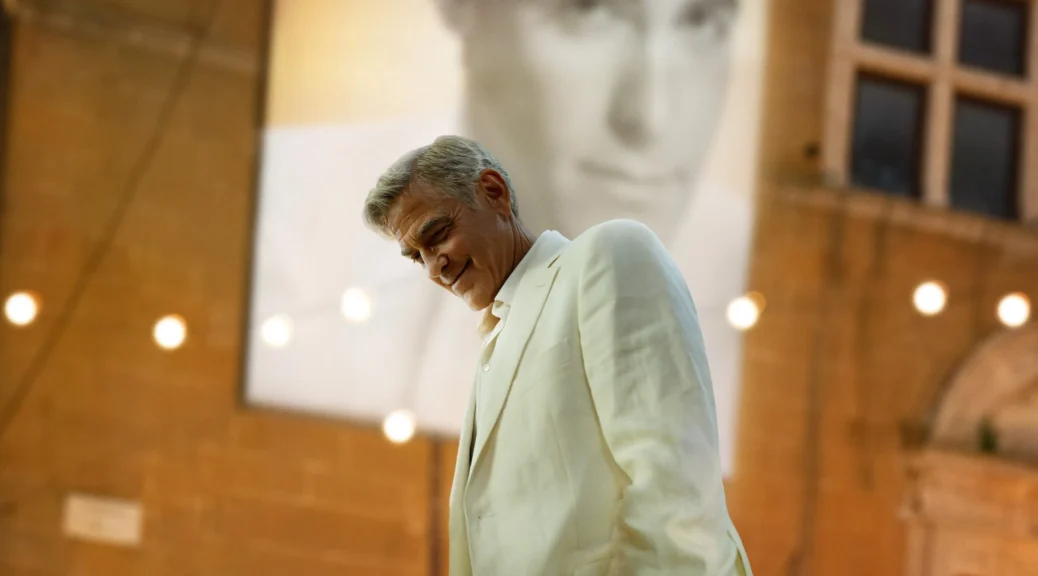
George Clooney wears the title role like his most broken-in leather jacket. Jay Kelly is a veteran movie star, enjoying the comforts of his status while slowly realizing what he has given up to get it.

And it’s not just Jay. From his loyal manager (Adam Sandler) to his publicist (Laura Dern), old roommate (Billy Crudup) to first mentor (Jim Broadbent) and beyond, their is no shortage of people holding a to-do list that starts with making Jay Kelly comfortable.

Director Noah Baumbach and co-writer Emily Mortimer (who also takes a small role in a large ensemble) seem very committed to writing what they know and live. The script does get talky, but never preachy, and we do see the daily anxieties and the juggled priorities, plus the fun of often watching someone else get the glory.

The film’s pool isn’t deep and its claws aren’t sharp but easygoing humor and poignancy reign. As Jay prepares for his career tribute in Tuscany (where else?), Baumbach’s breezy structure often feels like an adaptation from some unknown Sondheim musical. Characters hustle in and out of the periphery while Jay enters rooms that let him visit scenes from his life, reflecting on past choices and strained relationships with his two daughters (Riley Keough and Grace Edwards).

The cast is littered with talent (including Greta Gerwig, Patrick Wilson, Isla Fisher and Stacy Keach), and Sandler may finally earn that Oscar nod he was robbed of in 2019’s Uncut Gems. But in the end, you may as well just pronounce the title as “George Clooney.”

His modern-day Cary Grant persona is so effortless (just look at him charming that trainload of fans!), it’s nearly impossible to imagine the film working without him. And by the time Jay is seated for a very recognizable career tribute, the line where Clooney stops and Kelly starts becomes pretty damn thin.

Do you appreciate movies? You like Clooney? Say hello to Jay Kelly.