Tag Archives: animated films

Baa Baa Baller

GOAT

by George Wolf

I’m a Cleveland Cavaliers fan, so the name Steph Curry brings up one glorious memory, and plenty of forgettable ones.

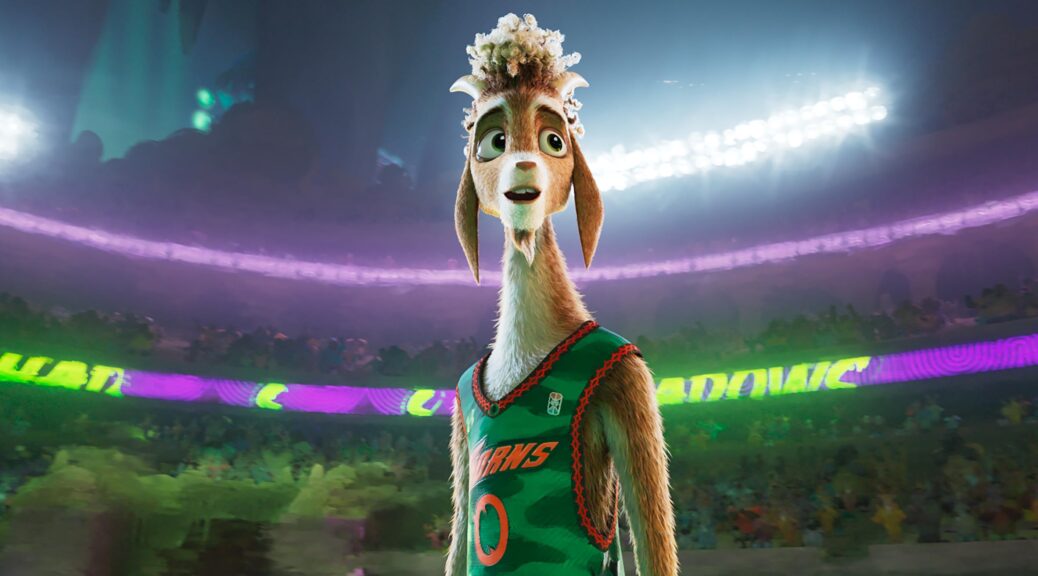
But yes, fine, he is the game’s G.O.A.T. shooter and he seems like a good guy. And now he brings a bit of his own legend to the big screen as producer and supporting voice talent in GOAT, the story of a little sharpshooter with big dreams.

Will Harris (Caleb McLaughlin from Stranger Things) is an undersized goat in Vineland who is a big fan of Roarball (“Regional Organized Animal Roarball”). It’s just like basketball, if basketball was played by gigantic animals on a shape shifting court.

Will loves ball, his hometown Vineland Thorns and their best player, Jett Fillmore (Gabrielle Union). But as great as Jett is, the Thorns have never won the Claw (championship) and are mired in another losing streak, much to the delight of arch rival Mane Attraction (Aaron Pierre), a trash-talking horse with an extensive grooming routine.

One day at the local playground, Mane is accepting court challenges from all comers, and Will steps up. He drains a few long range threes, the footage goes viral, and Thorns owner Flo (Jenifer Lewis) decides the little guy might be just what her team needs.

But how can Will prove himself if Jett and Coach Dennis (Patton Oswalt) won’t accept the league first “small” as part of the team and give him some playing time already?

Nick Kroll, David Harbour, Jennifer Hudson, and Nicola Coughlan join Curry as supporting voices, as first time directors Tyree Dillihay and Adam Rosette adapt the book “Funky Dunks” with a team of four writers and a narrative that finds some fun in the familiar.

Parents and grandparents will get one or two solid LOLs, plus some tried and true sports plotting seen in Major League, Semi-Pro, Bad News Bears and even the “dream big” mantra from last year’s Marty Supreme. It’s surface level, easily digestible stuff for the younger set, built with 3-D animation that’s more busy and colorful, less memorable.

GOAT‘s not exactly a championship contender, but it is a scrappy gamer, and should give young sports fans and pop culture first stringers some ninety odd minutes to hold their attention.

The Jupiter Project

Boys Go to Jupiter

by Matt Weiner

There’s not a lot that makes logical sense in the off-season and off-kilter beach town of Boys Go to Jupiter. But there’s a visceral and of-the-moment emotional reality that washes over the town’s inhabitants in the weirdly funny, sometimes haunting and genuinely moving world cooked up in animator Julian Glander’s feature film debut.

Math genius and high school dropout Billy 5000 (Jack Corbett) has been cobbling together whatever work he can find to save up enough money to get his own apartment. When he discovers a payment glitch in food delivery app Grubster, he takes on as many gig deliveries as he can handle in a mad dash to save up what he needs to cash out.

These deliveries take him all over his suburban town during the winter months, when tourists are gone and the local economy that powers everyone through the boom months can run on a simmer. That is, a mostly quiet town except for Dolphin Groves, the foreboding juice conglomerate run by the mysterious Dr. Dolphin (Janeane Garofalo).

A chance food drop-off to Dr. Dolphin’s daughter Rozebud (Miya Folick) suddenly equips Billy with the political language to articulate his social and economic ennui. (That Rozebud can hold her radical views while also being heir to the Dolphin Groves fortune is not lost on Billy, even though the difference in their relative safety nets is mostly ignored by the oblivious Rozebud.) This is also when Billy notices he has picked up a hitchhiker in his Grubster bag in the form of Donut, a… well, doughnut-shaped creature that has bonded with Billy as a father figure and protector.

Billy’s awakening is also where the film’s loose “day-in-the-life” snapshots cohere into a more pointed—and subversive—tale from Glander. The bubbly 3D animation belies the pitch-black observations and asides from the town’s residents. It never gets old hearing Glander’s sharp social critiques come from the mouths of his demented, underemployed Playmobil figures come to life.

And it’s not all treatises and lectures. Boys Go to Jupiter exists comfortably in a world where alien slugs reflect on how hard it is to be a single parent and major events become impromptu musical numbers with lyrics like “Spaghetti meal has captured my heart.” It’s weirdness as an act of resistance, and by the end of the film it only feels like a slightly heightened reality compared to our own hyper-capitalist nightmare. Have a grubby day, indeed.

https://www.youtube.com/watch?v=CGebWTi6APE

Despicable Descendent

Despicable Me 4

by Hope Madden

Despicable Me is a nice franchise—harmless and colorful, filled with engaging personalities. And perhaps what has made it as endearing as it has been for all these years and episodes is that Gru (Steve Carell) is actually, almost effortlessly, a good dad.

He’s had practice. For 14 years he’s been caring for the non-aging sisters Edith, Margo and Agnes, the orphans he took in so long ago to better pull off his greatest (to date) heist! Only to find out that he preferred fatherhood.

It helps—both in practicing paternal instincts and in entertaining movie theaters brimming with highly sugared tots—that he also cares for an army of oblong yellow goofballs.

So, 14 years, many capers, one wife and new son later, Despicable Me 4 finds Gru and his family hiding from his first arch-nemesis, high school bully Maxime (Will Ferrell), who swears vengeance from a class reunion slight with a plan to steal Gru’s infant son.

That is villainy.

Plus, there’s a counterattack operation involving superpowered minions. And there’s a wealthy neighbor family (Stephen Colbert and Chloe Fineman ably voice the upper-crusty parents) whose precocious teen Poppy (Joey King) hatches her own villainous schemes.

With all the crisscrossing, Easter egg bedecked, vibrant plot threads, it’s the one between Gru and Poppy that most satisfies as it reminds us again what a great girl dad Gru makes.

Kristin Wiig is underutilized (again) as Gru’s wife, Lucy and Sofia Vergara deserves more than what her character, Valentina, offers. Some of the secondary plot sequences feel like filler, but some bits of outright filler (a Dance Dance Revolution bit and everything with a vending machine) are highlights.

Ken Daurio’s been part of the DM writing team since the start, but Episode 4 marks the first collaboration with Mike White, whose previous work includes real highs (School of Rock, Beatriz at Dinner) and real lows (The Emoji Movie). Together the writers find a nice balance of nuttiness for characters—legacy and new—to continue to make this franchise a fun one.

Never Was a Cloudy Day

Robot Dreams

by Hope Madden

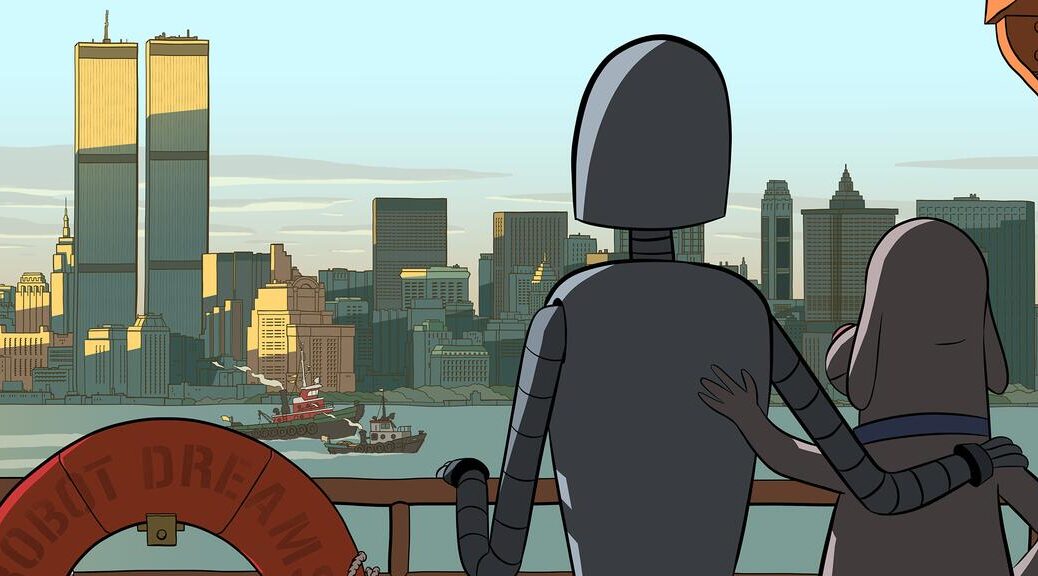
The dearest, most charming, heartbreaking delight to be found on screens this summer, Robot Dreams finally makes it to theaters. This 2023 Oscar nominee for best animated feature is an exploration of relationships, and though children will be entertained, you should go see it whether you have a family to bring along or not.

The less you know about the plot (based on Sara Varon’s graphic novel) the more filmmaker Pablo Berger can surprise you, and every frame of Robot Dreams holds a touching surprise. Set in New York City of the 1980s, the film travels with hopeful introvert Dog, who finds friendship with Robot. Thanks to a mechanical miscalculation, Berger takes the pals and you on an emotional and genuine look into what makes and breaks a relationship.

Berger wordlessly articulates what few films have managed: friendship, with all its joy and pain; and friends, with all their tenderness and failings. In many ways, it’s as much about love and couple-hood as friendship.

The animation and editing are so masterful, impish but emotionally honest, that you won’t miss the dialog. And the soundtrack is pure joy— Earth, Wind and Fire fans, delight.

Fun, visually rich moments on roller skate and sleds, bowling and trick-or-treating will engage children, but the emotional richness in this movie is aimed directly at adults. Berger’s film is endearingly forgiving—perhaps more than I am. You’ll be frustrated, elated, worried, wearied, and overjoyed because you feel so deeply for these characters. And the film takes on a wonderfully surreal quality as Robot dreams.

Slyly authentic in its examination of how we grow, sometimes apart, Robot Dreams honors the pain of losing the one you thought was your forever home, but it also celebrates the memories made with the one who got away.

It can be hard to make friends, and it can be just as hard to be a friend. In Pablo Berger’s skilled hands, lonesomeness takes on a magical quality and friendship becomes an evolving surprise.

Winging It

Migration

by Rachel Willis

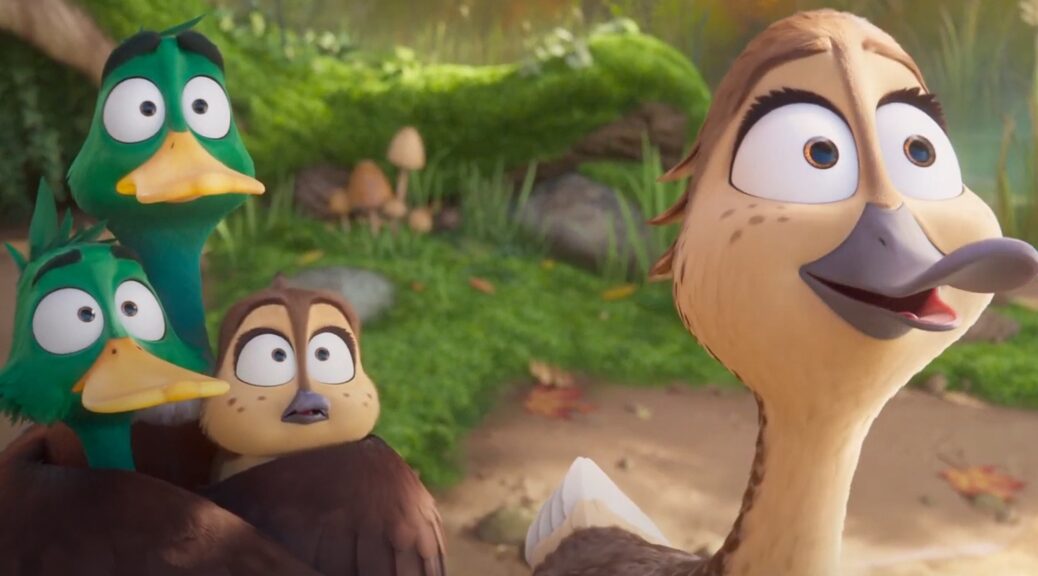
A family of mallard ducks decides to migrate to Jamaica, setting off a series of misadventures and kid-friendly comedy in the latest animated film from Illumination, Migration.

When exotic ducks land in same pond as our mallard family, son Dax (voiced by Caspar Jennings) becomes smitten with one of the flock, prompting his desire to head south for the winter. Mom Pam (Elizabeth Banks), is also intrigued by idea. Littlest duck, Gwen (Tresi Gazal), seems ready for anything, but Dad Mack (Kumail Nanjiani), it too fearful of the outside world to consider leaving their little pond.

The catalyst for adventure comes from Uncle Dan (Danny DeVito). He gives Mack the prod he needs for accepting Pam’s request to open his eyes to the world.

So little time is spent on Mack’s paranoia and fear that his change of heart doesn’t make much of an impact. Based on the title, we already know the family – with Uncle Dan along for the ride – is going to make the journey, so no surprise there. And you can expect hijinx along the way.

The humor–mainly predictable and heavy-handed–derives from the family’s reactions to the obstacles and characters they meet along the way. While this might entertain the youngest in the audience, it gets tedious for the rest of us.

Migration’s tender-hearted treatment of each member of our duck family is its selling point. Though Mack’s fears would keep him in his little window forever, Pam is willing to help him overcome his reticence and step out into the wider world. Uncle Dan’s sweet relationship with little Gwen makes him more than just comic relief.

The ancillary characters don’t all get the same heart. The imprisoned parrot Delroy (Keegan-MichaelKey) is a standout in a sea of mostly forgettable side players. His longing for his former home is palpable. On the opposite side of the spectrum is the film’s unnecessary villain. The grunting chef who cooks ducks and particularly dislikes Mack and Pam lacks the menace necessary to create a memorable bad guy.

Migration fits the bill for lighthearted fun. But its predictability and shallow characters limit its potential to become anyone’s newest holiday favorite.

The Seaweed is Greener on the Other Side

Deep Sea

by Matt Weiner

Stormy seas are among the less pressing problems for a troubled young girl trying to find her way in the world, according to Deep Sea, the new animated film from writer-director Tian Xiaopeng (Monkey King: Hero Is Back).

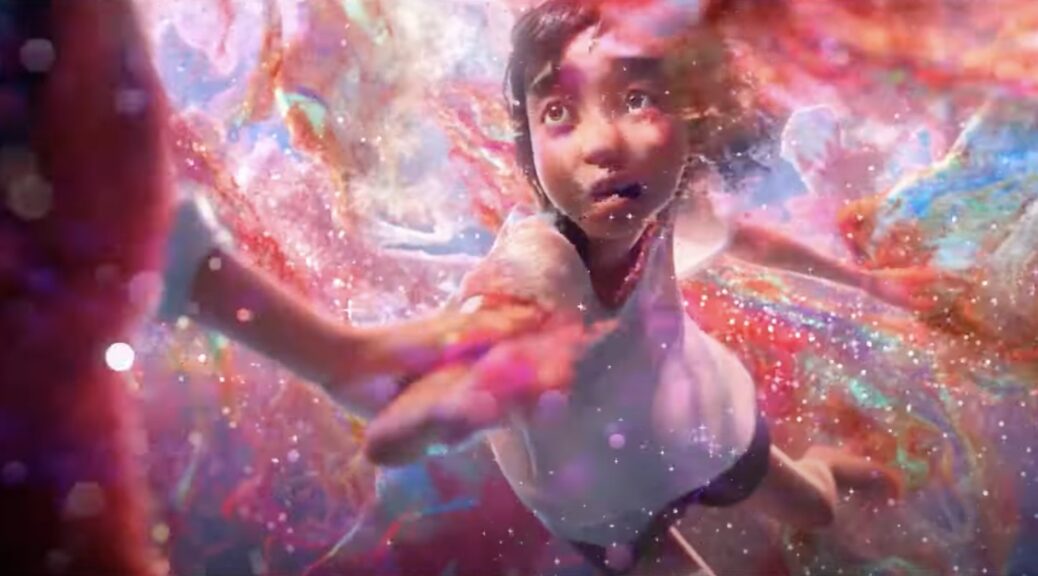
Quiet and withdrawn Shenxiu (Tingwen Wang) dreams of finding the mother that abandoned her as a child. Her father and stepmother take the family on a cruise over Shenxiu’s birthday, but it’s not much of a mental distraction when a late-night storm throws her overboard.

She manages to find her way to a fantasy version of the world, where the cruise ship has been replaced by a floating restaurant called the Deep Sea. Its proprietor and captain is Nanhe (Xin Su), a mischievous and somewhat unscrupulous man who is more interested in getting rich quick than serving as a good steward of both ship and restaurant.

While Nanhe tries to find the right recipe to keep his patrons happy, Shenxiu’s gloomy moods are tied mysteriously to the presence of a Red Phantom, a surging mass of tendrils that threatens to engulf Shenxiu and anything in her way.

While Deep Sea at times lacks the polish and subtle charm of a Studio Ghibli tale, the film succeeds at its own version of the unique blend of terror, wonder and melancholy that comes with growing up. It’s hard not to root for Shenxiu, and that’s helped along by the expressive animation of the intrepid sea creature crew of Nanhe’s floating restaurant.

The film also trusts adolescents to handle content that can at times border on true horror, with more drowning panic than you’re likely to see in the average Disney film. The identity of the metaphorical phantom that pursues Shenxiu throughout the film might be quickly apparent to older viewers, but the emotional climax is no less moving.

And for all the ocean setpieces—which are stunning—it’s often the small touches that cut the deepest. Like Shenxiu’s lone birthday message from her cell phone provider, rather than friends or family. Or the image of a small girl lost in a storm, crying out to her mother.

The sea might be a cruel mistress, but in Xiaopeng’s coming of age tale it’s nothing compared to the pain of embracing life and growing up in the face of hardship.

Tween Girls: The Musical

Leo

by Hope Madden

Adam Sandler and the whole TV Funhouse bunch get together for an animated kids’ film about a classroom pet who puts his many years of observing children to good use.

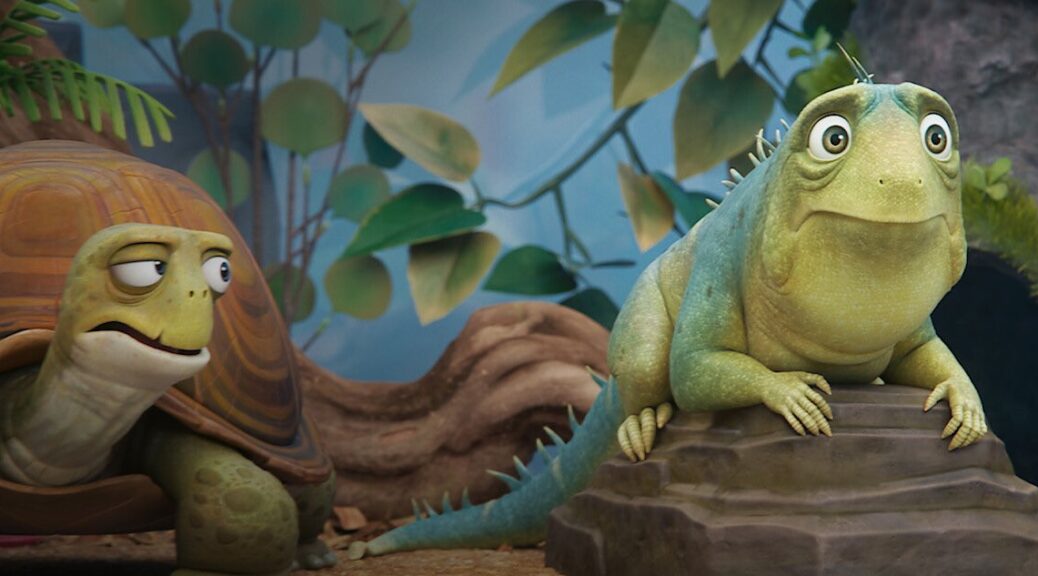
Leo (Sandler) the lizard, along with terrarium pal Squirtle (Bill Burr) the turtle, has lived in the same Florida 5th grade classroom for decades. At 74, and believing his life expectancy merits it, Leo plans to make a break for freedom. Instead, he becomes a kind of life coach to 10-year-olds.

Leo has a lot going for it. Sandler’s soft-hearted comedic presence feels perfectly at home in the classroom, while Burr’s patented “get off my lawn” crankiness offsets things nicely. The story, written by Sandler along with co-director Robert Smigel as well as Sandler’s frequent writing partner Paul Sado, touches on helicopter parenting and other anxieties authentic to modern youngsters.

The premise allows for lots of fun and funny moments as, by helping each kid better understand themselves, Leo comes to recognize his own purpose. There are also wildly random moments of comedy that feel in keeping with the filmmakers’ TV Funhouse origins while helping the film stay fresh.

The downside? Leo the film cannot seem to find its own purpose. It is essentially a musical, although in between songs you will forget that entirely. Nothing about the proceedings suggests the whimsy or theatricality of a musical, and though a couple of the songs are fun, every single number feels stitched in for no reason. Very few of the singers can sing and not one of the songs is memorable enough to merit its inclusion.

Worse still, Leo feels long. Trimming the songs wouldn’t hurt the story and it would seriously benefit the run time.

Sandler’s carved out a mainly mediocre presence in family entertainment, with three Hotel Transylvania films and Hubie Halloween. Earlier this year, he produced and co-starred in the absolute charmer You Are So Not Invited to My Bat Mitzvah, also for Netflix.

Leo doesn’t reach the heights of YASNITMBM, but it aims higher than the others and frequently endears.

Vitruvian Man

The Inventor

by Hope Madden

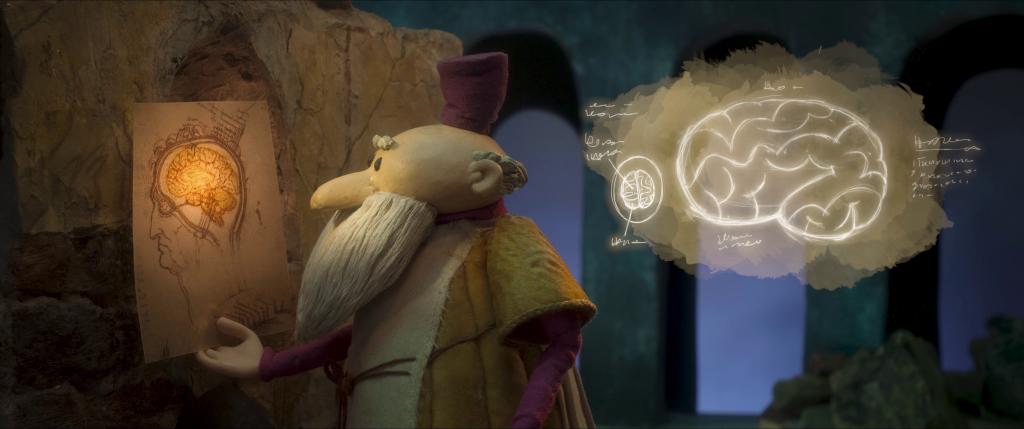
The Inventor, a beautifully animated lesson on the life and times of Leonardo da Vinci (voiced by Stephen Fry), offers a lot to digest, and I’m not sure who they think is eating.

Writer/co-director Jim Capobianco (directing here with Pierre-Luc Granjon) draws inspiration from his 2009 hand-drawn short, Leonardo. A delightful sketch about trying to fly, the film ran just 9 minutes and celebrated Da Vinci’s genius in the most charming way possible.

The feature looks into da Vinci’s curiosity about the existence of the human soul. This gets him into trouble with Pope Leo X (Matt Berry), so da Vinci moves from Rome to France, where he thinks he can follow his curiosity in peace.

He cannot.

Capobianco and Granjon land on a lovely mixture media. The tale is told primarily using a stop motion Claymation style that recalls the old Rankin/Bass Christmas specials of the Sixties and Seventies. (This is especially true of the pope, who’s the spitting image of Burgermeister Meisterburger.)

Scenes are often punctuated with the same hand-drawn sketch style used in Leonardo, and together the result is lovely. But that doesn’t help the storytelling as much as it should.

Even with a great cast – Daisy Ridley and Marion Cotillard co-star alongside Fry and Berry – Capobianco can’t maintain interest. He delivers so much information so superficially that it’s equally hard to keep up and care what happens.

The story takes too big a bite. Is our focus the soul? The perfect city? Weapons? Flying machines? Because each of those has its own background, implications, experiments and host of characters. Skimming over all of it gives us too much and too little at the same time.

It’s hard to determine the intended audience for The Inventor. The humor and political intrigue are a little sophisticated for children, and the history lesson is far too long and involves far too many characters to keep a child’s attention.

And though the animation is reason enough for an adult to give The Inventor a go, the simplistic storytelling and characterization will likely leave them cold.    

Crazy Political Thriller

Ernest and Celestine: A Trip to Gibberitia

by Christie Robb and Emmy Clifton

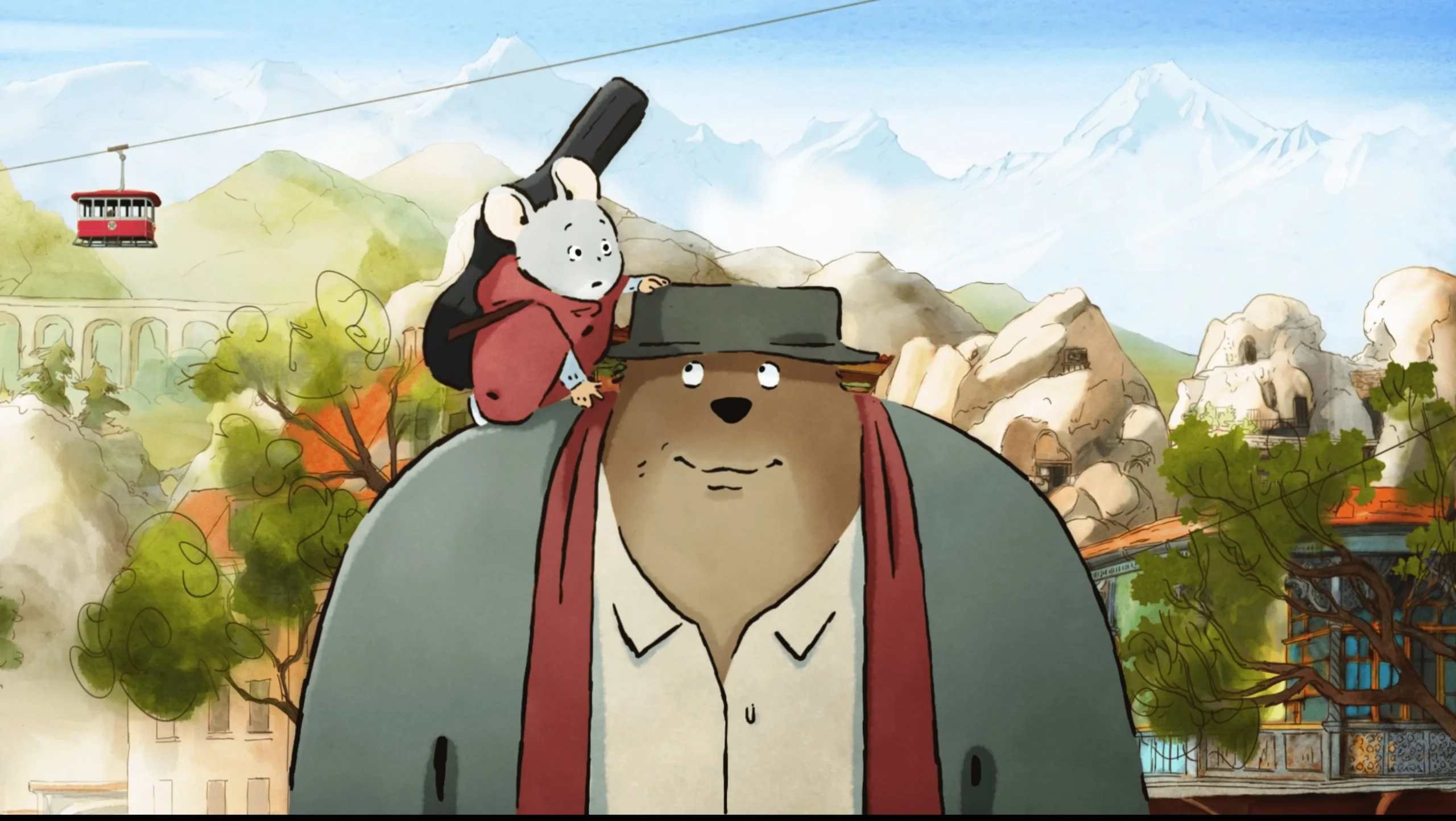
This follow-up to the Academy-Award nominated 2012 movie Ernest and Celestine and an animated television series, all based on works by writer/illustrator Gabrielle Vincent, has the beloved duo of bear and mouse on a quest.

They have returned to Ernest’s hometown of Gibberitia to have his violin (a stradabearius) repaired by its creator, only to find that his formerly enchanting land filled with bears playing music has become a repressive regime. A new law has banned music with more than one note. Children are forced to take on the careers of their parents regardless of their personal inclination. And a masked hero of the underground resistance periodically pops up to protest with impromptu saxophone solos.

I had the chance to watch the movie with my nine-year-old-daughter. Here’s our take.

Mom Says:

The animation is beautiful, like watching a moving watercolor. The quest to find joy and individual purpose in a society determined to force one into a predetermined course is important. However, the film seems a bit spare. The relationships between the characters could have used some more fleshing out. But, I am coming late to this franchise having missed the previous installments.

The conflict spoke to my daughter who paused the film periodically to voice her suggested solutions to Ernest and Celestine’s problems. Impressive that the production team managed to tackle the ideas of fascism and political overreach in a low-stakes, nonviolent, way that speaks to children. It’s quirky and charming with some great visual gags and a musical theme that will keep you humming long after you’ve walked away from the film.

Kid Says:

I loved everything about the movie, except that, if you look really closely, all the animals have human hands. I did not like that.

The cute art style reminded me of Studio Ghibli movies.

The Nose Plays

Guillermo Del Toro’s Pinocchio

by Hope Madden

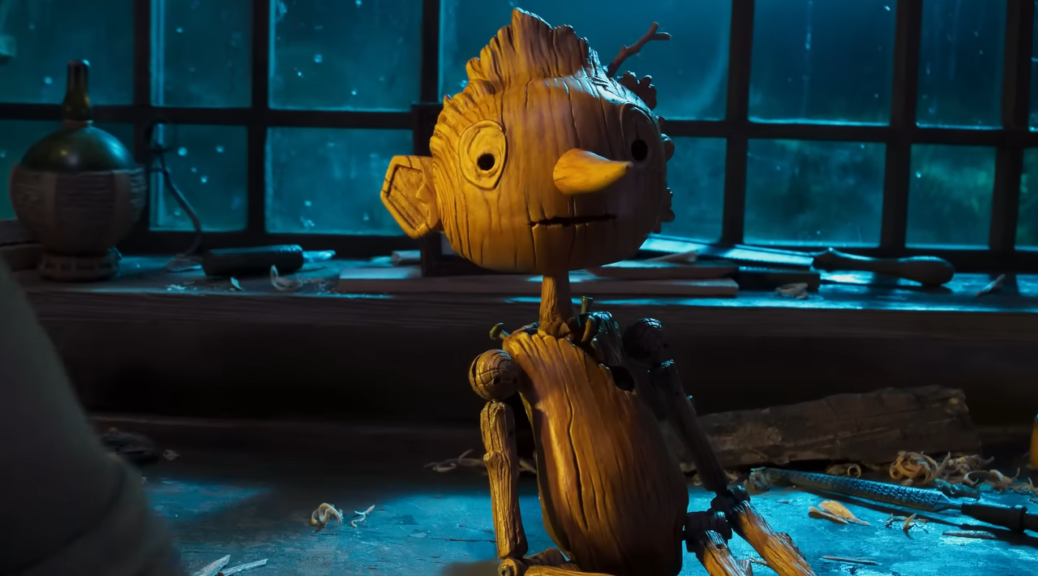
Is it any surprise that Guillermo del Toro’s visionary style, sentimental sensibilities, and macabre leanings suit animation so well? If there was any question, he dispels it with his gorgeous, emotional stop-motion wonder, Guillermo del Toro’s Pinocchio.

Co-directed with sculptor/animator Mark Gustafson, the film begins, as all good children’s tales must, with devastating loss and grief. If you thought the opening minutes of Up! were heartbreaking, gird your loins for this one.

The tragedy begins to abate, albeit clumsily and with much shouting, once Geppetto (David Bradley) hacks away at the tree recently occupied by one Sebastian J. Cricket, homeowner (Ewan McGregor, charming). Cricket’s home becomes Geppetto’s disobedient new puppet. You may think you know where it goes from here, but you do not.

Del Toro’s script, co-written with Patrick McHale and Matthew Robbins, establishes itself immediately as a very different story than Disney’s. The 1940 film – and, to a degree, the live-action remake Disney launched earlier this year – offers a cautionary tale about obedience. So does del Toro’s, although, in true GDT fashion, he’s warning against it.

Set between world wars in rural Italy, the film – as so many of del Toro’s do – examines the presence and pressures of authoritarianism, specifically Catholicism and fascism, on families and on the young.  

A magnificent cast including Cate Blanchett, Tilda Swinton, Tim Blake Nelson, Ron Perlman, Burn Gorman, Finn Wolfhard, John Turturro, Christoph Waltz, and Gregory Mann as Pinocchio brings charisma and dark humor to their roles. This matches the sometimes darkly funny images. Waltz, in particular, is garish, frightening fun as Count Volpe, puppet master.

The animation itself is breathtaking, and perfectly suited to the content, as if we’ve caught an artist in the act of giving his all to bring his creation to life. Everything about the film is so tenderly del Toro, whose work mingles wonder with melancholy, historical insight with childlike playfulness as no other’s does.