Tag Archives: animated films

Boy Meets World

Boy and the World

by Hope Madden

Often a joyous riot of colors and sounds, and just as often a somber and spare smattering of dehumanizing imagery, Boy and the World poignantly encapsulates the clashing emotions and evolving comprehension of the human spirit.

Ale Abreu’s Oscar nominee for Best Animated Film offers deceptively simple animation to pull you into complex ideas. Boy – the wee, titular character who is about to start quite an adventure – sees a wondrous, kaleidoscopic world saturated with confusing but fascinating sounds and images, colors and experiences.

But as thrilling and vibrant as these early moments are, Abreu’s vision is edged with cynicism. It’s an idea that takes hold sporadically, when industrialization depletes the chaotic energy from the screen, when scores of stooped stick figures lose their meager jobs, when urban blight changes the tone from primary colors to smoky browns and greys, and finally when animation gives over to live action footage of deforestation.

Though the filmmaker’s themes are always evident – occasionally less subtle than they might be – the heartbeat of the story is that of the imaginative, innocent Boy. It gives the whole film a touch of sadness, but balances the anger with an optimism and innocence that’s often beguiling.

A contagious score from Ruben Feffer and Gustavo Kurlat emboldens Abreu’s pictures, emphasizing the vibrancy of the individual’s spirit as well as the celebration of human connection.

Boy’s journey is a circuitous one, a coming of age and acceptance informed by struggle and nostalgia but brightened with bursts of color.

There is something terribly lonesome but simultaneously jubilant about Boy and the World. It’s a heady mix from a confident new filmmaker, and a welcome addition to an entirely laudable set of animated Oscar contenders.

Verdict-4-0-Stars

Walk the Dinosaur

The Good Dinosaur

by Hope Madden

Is there any name in filmmaking more reliable, any surer bet, than Pixar?

Maybe not.

The Good Dinosaur, as is always the way with a Pixar film, opens with a fascinating short. Longtime Pixar animator Sanjay Patel directs his first effort, and Sanjay’s Super Team defies expectations to tell a lovely, warm story of overcoming father/son barriers and, in doing so, opens larger doors for similar cross-cultural embracing.

The animation giants’ second feature in less than a year takes us back to a magical time when dinosaurs were farmers and cowboys. That meteor? It missed Earth, you see, so this is what might have happened had we evolved right alongside those majestic beasts.

Rather than relying on a star-laden vocal cast (although Jeffrey Wright, Frances McDormand, Steve Zahn, and the unmistakable Sam Elliot do lend their talents), the bulk of the film features – almost solely – the work of 14-year-old Raymond Ochoa.

Ochoa plays Arlo, the runt of the dino litter who needs to battle his own insecurities to find a way to make his mark. He does so with the help of a feral whelp of a human called Spot.

Though the story borrows heavily from The Lion King, first time director Peter Sohn combines hyper-realistic scenery with very cartoony characters in a way that’s surprising and lovely. Punctuated frequently with silly humor, the mostly serious tale does not shy away from darker edges and a real sense of peril, eventually delivering a genuinely emotional punch.

Sohn is even craftier without the aid of dialog, as many of the funniest and most touching moments are delivered in silence or with grunts.

After producing arguably the best film of 2015, Pixar has the cajones to release a second feature this year. I guess when you’re the undisputed king of cartoons, that kind of swagger makes sense. And while The Good Dinosaur is no Inside Out (or Up or Toy Story, for that matter), it’s a worthy entry in their impressive canon.

Liam Neeson, You Can Read Me Poetry Anytime

Kahlil Gibran’s The Prophet

by Christie Robb

Lebanese poet Kahlil Gibran’s 1923 classic volume The Prophet has been turned into a tranquil animated feature by writer/director Roger Allers (The Lion King) and producer Salma Hayek. Suggested viewing for those who require a respite from the routine and petty frustrations of life.

The movie frames Gibran’s poems with the story of a little girl, Almitra (Quvenzhane Wallis), mute since the death of her father. Her mother (Salma Hayek) works as a housekeeper for the imprisoned artist/poet Mustafa (Liam Neeson) and takes her to work one day.

It happens to be the day that Mustafa is released from his confinement and promised safe passage to a ship that will take him back to his homeland. But all is not what it seems. Almitra discovers that authorities have ulterior plans for Mustafa and his supposedly treasonous writing.

As Mustafa is marched from the house where he has been confined for seven years, his jailors (Alfred Molina and John Krasinski) allow him the occasional break to visit with the community he loves. Each communion becomes the occasion for a poem meditating on a theme: freedom, children, marriage, work, nature, love, compassion, the nature of good and evil, life and death.

Each of these meditations is illustrated by a different animator: Tomm Moore (The Secret of Kells), Nina Paley (Sita Sings the Blues), Bill Plympton (Guide Dog), and others. In their work you can see the echoes of Escher, Indian shadow puppetry, van Gogh, Klimt, Matisse, and Chagall.

Although the frame story of Mustafa and Almitra is a bit weak, the poems—featuring music from Glen Hansard (Once), Damien Rice, and Yo-Yo Ma; and the buttery, lilting voice of Neeson—make the majority of the film a serene delight for the eyes, ears, mind, and heart.

Verdict-4-0-Stars

Twofer ‘Toon Tuesday For Your Queue

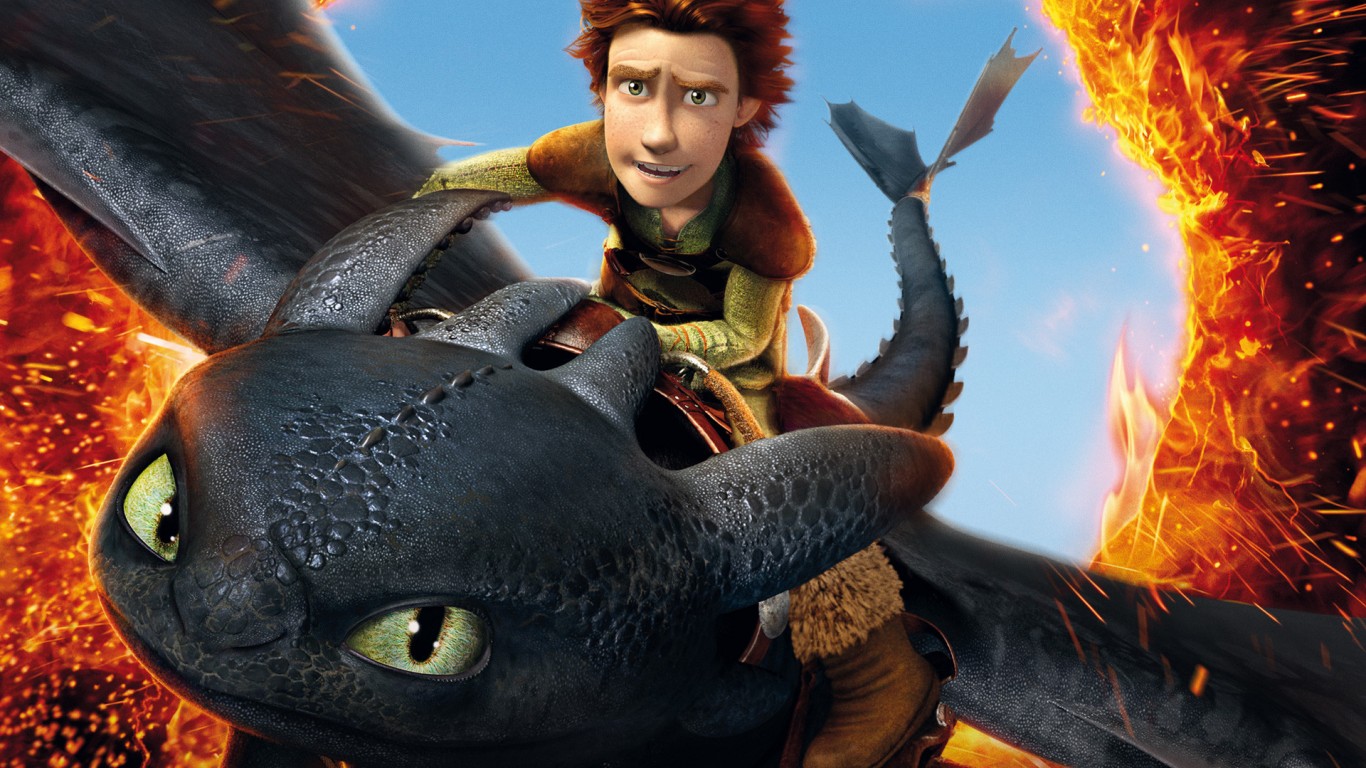
You can put that obscenely expensive, insanely large HD TV to good use this week, as How to Train Your Dragon 2 releases for home entertainment. As visually arresting as its predecessor, Dragon reunites viewers with Hiccup and his beloved flying dragon Toothless as they take on dragon-napping pirates led by Drago Bloodfish. That is how you name a villain! Breathtaking visuals and a story rooted in family and frienship make this sequel well worth looking into.

An obvious double bill is the gorgeous, moving and thorougly entertaining original How to Train Your Dragon, but we hate to be so obvious. Instead we’re recommending another film about a boy, his unusual best friend and their adventures: The Iron Giant (1999). Director Brad Bird’s first feature roots itself in 1950s Cold War hysteria but tells a story brimming with immediacy. It’s also one of the more deeply touching animated adventures you will ever find.