Category Archives: Fright Club

A celebration of horror movies with updates on our monthly Fright Club film series at the Gateway Film Center.

Fright Club: That’s Not Your Baby!

The idea of a changeling—a baby that’s not really yours, and who knows where your dear sweet little one really is?!—is so primal a fear that it’s existed in folktales for centuries. Ireland really picks this scab well in their horror movies, but they are not alone. It’s an idea that can’t help but unsettle. Here are our five favorite “that’s not your baby!” horror movies.

5. The Baby (1973)

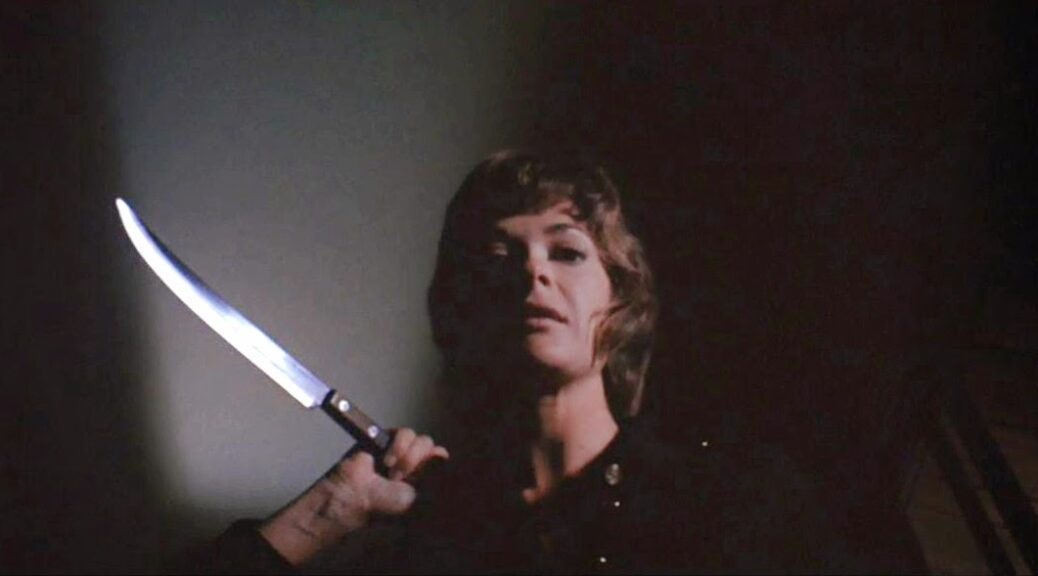
Lord above, here’s a weird one.

Director Ted Post (Hang ’em High, Magnum Force) gets a little unseemly with this story of welfare fraud, Greek tragedy, fear of emasculation, and more. Freud would have a time with The Baby!

Mrs. Wadsworth (Ruth Roman) does not want nosey new social services wench Ann Gentry (Anjanette Comer) sniffing around. Why does she and her two perfectly normal, not at all criminal, grown daughters have to prove that their fully grown son/brother still thinks he’s a baby? The grown man in the crib and onesie upstairs.

If that’s not upsetting enough, Ann Gentry’s not all she’s cracked up to be, either. What was the deal with the Seventies?

4. The Hallow (2015)

Visual showman Corin Hardy has a bit of trickery up his sleeve. His directorial debut The Hallow, for all its superficiality and its recycled horror tropes, offers a tightly wound bit of terror in the ancient Irish wood.

Adam (Joseph Mawle) and Clare Hitchens (Bojana Novakovic) move, infant Finn in tow, from London to the isolated woods of Ireland so Adam can study a tract of forest the government hopes to sell off to privatization. But the woods don’t take kindly to the encroachment and the interloper Hitchens will pay dearly.

Hardy has a real knack for visual storytelling. His inky forests are both suffocating and isolating, with a darkness that seeps into every space. He’s created an atmosphere of malevolence, but the film does not rely on atmosphere alone.

Though all the cliché elements are there – a young couple relocates to an isolated wood to be warned off by angry locals with tales of boogeymen – the curve balls Hardy throws will keep you unnerved and guessing.

3. Hole in the Ground (2019)

Sara (Seána Kerslake), along with her bib overalls and young son Chris (James Quinn Markey), are finding it a little tough to settle into their new home in a very rural town. Chris misses his dad. Sara is having some life-at-the-crossroads anxiety.

Then a creepy neighbor, a massive sink hole (looks a bit like the sarlacc pit) and Ireland’s incredibly creepy folk music get inside her head and things really fall apart.

Writer/director Lee Cronin’s subtext never threatens his story, but instead informs the dread and guilt that pervade every scene. You look at your child one day and don’t recognize him or her. It’s a natural internal tension and a scab horror movies like to pick. Kids go through phases, your anxiety is reflected in their behavior, and suddenly you don’t really like what you see. You miss the cuter, littler version. Or in this case, you fear that inside your beautiful, sweet son lurks the same abusive monster as his father.

2. Border (2018)

Sometimes knowing yourself means embracing the beast within. Sometimes it means making peace with the beast without. For Tina—well, let’s just say Tina’s got a lot going on right now.

Border director/co-writer Ali Abbasi has more in mind than your typical Ugly Duckling tale, though. He mines John Ajvide Lindqvist’s (Let the Right One In) short story of outsider love and Nordic folklore for ideas of radicalization, empowerment, gender fluidity and feminine rage.

It would hardly feel like a horror movie at all were it not for that whole, horrifying baby thing.

The result is a film quite unlike anything else, one offering layer upon provocative, messy layer and Abbasi feels no compulsion to tidy up. Instead, he leaves you with a lot to think through thanks to one unyieldingly original film.

1. Lamb (2021)

Among the many remarkable elements buoying the horror fable Lamb is filmmaker Valdimar Jóhannsson’s ability to tell a complete and riveting tale without a single word of exposition.

Not one. So, pay attention.

Rather than devoting dialog to explaining to us what it is we are seeing, Jóhannsson relies on impressive visual storytelling instincts, answering questions as they come up with a gravesite, a crib coming out of storage, a glance, a bleat.

His cast of three – well, four, I guess — sells the fairy tale. A childless couple working a sheep farm in Iceland find an unusual newborn lamb and take her in as their own child. As is always the way in old school fables, though, there is much magical happiness but a dire recompense soon to come.

Fright Club: Best Horror Movies, First Half of 2025

It is not that time!

It is! It most definitely is time to celebrate how great the first half of 2025 has been for horror. Indeed, easily the best film of the year so far (and a tough contender for the balance of the year) is a vampire movie! Here are our favorite horror films of the first half of 2025.

10. Dead Mail

Filmmakers Joe DeBoer and Kyle McConaghy’s thriller Dead Mail builds on a wildly unrealistic concept: smalltown post offices with super-secure back rooms where pains are taken and spies may be accessed to solve mysteries behind lost mail. And yet, their analog approach to this period piece gives it a true crime feel you never fully shake.

The bulk of the film is carried on John Fleck’s shoulders. As Trent, the seemingly harmless organ enthusiast who has a man trapped in his basement, Fleck’s delivers magnificent work. There’s a beautiful loneliness in his performance that makes the villainous Trent irredeemably sympathetic.

Filmmaker and cast investment pays off. Dead Mail is clever, intriguing and wholly satisfying little thriller.

9. Final Destination: Bloodlines

Final Destination: Bloodlines is the best since James Wong’s clever 2000 original, if not the best in the whole franchise. And the presence of genre beloved Tony Todd in his final role seals the emotional deal.

The Rube Goldberg of Death franchise boasts many clever, nasty kills and the sixth episode does not let us down. Smart, nutty and goretastic with some of the most impressive comic-beat editing of the year, the bloody mayhem in this film is giddy with its power.

Plus we all get to spend a few more minutes with Tony Todd.

8. Hood Witch

Co-writer/director Saïd Belktibia examines the muddy difference between a religion’s acceptable magic and harmful witchcraft. However similar the practice, the differentiator seems to be based primarily on whether a woman benefits.

Though Hood Witch is far more a drama/thriller than an outright horror film, it does follow a longstanding genre tradition of using witchcraft to point out religions’ hypocrisy and misogyny. But the filmmaker goes further, complicating characters by implicating capitalism as being equally dangerous—particularly to the desperate and easily manipulated—as religion.

Hood Witch is a tough watch, as misogyny and apathy play out in the film the same way they play out every miserable day, infecting each generation like a poison.

7. Companion

It’s not to say that writer/director Drew Hancock is saying anything new, exactly. Most of the ideas are borrowed, and even the look of Companion feels cribbed from more insightfully stylized films. But the way he puts these ideas and images into play and keeps them playing guarantees a mischievously, wickedly good time.

Lars and the Real Girl meets Revenge meets AI meets maybe twenty other movies, but damn if Hancock and this sharp ensemble doesn’t make it work. Turns out it’s kind of fun to be on the side of AI for a change.

6. Freaky Tales

Look, I’m not saying I didn’t expect someone to make a Sleepy-Floyd-as-a-ninja-assassin horror comedy. I am saying I didn’t expect it to be Boden and Fleck.

Eric “Sleepy” Floyd played thirteen years in the NBA, making the All Star team in 1987 as a member of the Golden State Warriors. Freaky Tales makes him the heroic centerpiece of a wild anthology that loves the late 80s, Oakland, and Nazis dying some horrible deaths.

Let’s party!

Buried under all this blood and camp, the film displays a genuine love of time, place and genre that you cannot ignore. These Freaky Tales are truly off the leash, usually in the best possible way.

5. Bring Her Back

Filmmakers Danny and Michael Philippou drew attention in 2022 for their wildly popular feature debut, Talk to Me. Before releasing the sequel, due out this August, the pair changes the game up with a different, but at least equally disturbing, look at grief.

It’s a slow burn, a movie that communicates dread brilliantly with its cinematography and pacing. But when Bring Her Back hits the gas, dude! Nastiness not for the squeamish! Especially if you have a thing about teeth, be warned. But the body horror always serves the narrative, deepening your sympathies even as it has you hiding your eyes.

Australia has a great habit of sending unsettling horror our way. The latest package from Down Under doesn’t disappoint.

4. The Monkey

Why is it that so many kids’ toys are creepy? Not that you should call The Monkey a toy. You should not, ever. Because this windup organ grinder monkey, with its red eyes and horrifyingly realistic teeth, is more of a furry, murder happy nightmare.

The film itself is a match made in horror heaven. Osgood Perkins (LonglegsGretel & HanselThe Blackcoat’s Daughter) adapts and directs the short story by Stephen King about sibling rivalry and the unpredictability of death.

Perkins surrounds deliberately low energy leads with bizarre, colorful characters—even more colorful when they catch fire, explode, are disemboweled, etcetera. The film is laced with wonderful bursts of Final Destination-like bloodletting, as the Monkey’s executions are carried out via Rube Goldberg chain reactions that quickly become fun to anticipate.

Yes, fun. And funny.

3. Invader

Lean, mean and affecting, Mickey Keating’s take on the home invasion film wastes no time. In a wordless—though not soundless—opening, the filmmaker introduces an unhinged presence.

Immediately Keating sets our eyes and ears against us. His soundtrack frequently blares death metal, a tactic that emphasizes a chaotic, menacing mood the film never shakes. Using primarily handheld cameras from the unnerving opening throughout the entire film, the filmmaker maintains an anarchic energy, a sense of the characters’ frenzy and the endless possibility of violence.

Joe Swanberg, with limited screentime and even more limited dialog, crafts a terrifying image of havoc. His presence is perversely menacing, an explosion of rage and horror. Invader delivers a spare, nasty, memorable piece of horror in just over an hour. It will stick with you a while longer. 

2. The Ugly Stepsister

Writer/director Emilie Blichfeldt infuses her feature debut with an impossible-to-ignore blast of sharp wit, subdued rage, and grotesque bodily horrors.

The Ugly Stepsister (Den stygge stesøsteren) is the latest new angle to a classic tale, but don’t expect it follow the trend of humanizing misunderstood villains. Blichfeldt makes sure there are plenty of bad guys and girls throughout this Norwegian Cinderella story, punctuated by grisly violence surprisingly close to what’s in the 17th Century French version of the fairy tale penned by Charles Perrault.

It is fierce, funny, gross and subversively defiant. But is one feature film enough to immediately put Blichfeldt on the watch list of cinema’s feminist hell raisers?

Yes. The shoe fits.

1. Sinners

Ryan Coogler reteams with longtime creative partner Michael B. Jordan to sing a song of a 1932 Mississippi juke joint. The Smoke Stack twins (Jordan) are back from Chicago, a truckload of ill-gotten liquor and a satchel full of cash along with them. They intend to open a club “for us, by us” and can hardly believe their eyes when three hillbillies come calling.

Jack O’Connell (an amazing actor in everything he’s done since Eden Lake) has a brogue and a banjo. He and his two friends would love to come on in, sing, dance, and spend some money, if only Smoke would invite them.

It’s scary. It’s sexy. The action slaps. It’s funny when it needs to be, sad just as often. It looks and sounds incredible. And there’s a cameo from Buddy F. Guy, in case you needed a little authenticity. When Ryan Coogler writes and directs a vampire movie, he gives you reason to believe there is yet new life for the old monster.

Fright Club: Horrific Families

The family that slays together stays together, isn’t that what they say? That was certainly a lot of the fun in Ready or Not, You’re Next, Frightmare and more. But what are the best examples of horrific families working together in horror movies? Brandon Thomas joins George with the full list!

5. The Hills Have Eyes (1977)

Wes Craven’s original Hills – cheaply made and poorly acted – is a surprisingly memorable, and even more surprisingly alarming flick. Craven’s early career is marked by a contempt for both characters and audience, and his first two horror films ignored taboos, mistreating everyone on screen and in the theater. In the style of Deliverance meets Mad MaxHills was an exercise in pushing the envelope, and it owes what lasting popularity it has to its shocking violence and Michael Berryman’s nightmarish mug.

The Hills Have Eyes is not for the squeamish. People are raped, burned alive, eaten alive, eaten dead, and generally ill-treated.

In fact, Craven’s greatest triumph is in creating tension via a plot device so unreasonably gruesome no audience would believe a film could go through with it. The freaks kidnap a baby with plans to eat her. But by systematically crushing taboo after taboo, the unthinkable becomes plausible, and the audience grows to fear that the baby will actually be eaten. It’s not the kind of accomplishment you’d want to share with your mom, but in terms of genre control, it is pretty good.

4. Frailty (2001)

Director Paxton stars as a widowed country dad awakened one night with an epiphany. He understands now that he and his sons have been called by God to kill demons.

Frailty manages to subvert every horror film expectation by playing right into them.

Brent Hanley’s sly screenplay evokes such nostalgic familiarity – down to a Dukes of Hazzard reference – and Paxton’s direction makes you feel entirely comfortable in these common surroundings. Then the two of them upend everything – repeatedly – until it’s as if they’ve challenged your expectations, biases, and your own childhood to boot.

Paxton crafts a morbidly compelling tale free from irony, sarcasm, or judgment and full of darkly sympathetic characters. It’s a surprisingly strong feature directorial debut from a guy who once played a giant talking turd.

3. Where the Devil Roams (2023)

There is macabre beauty in every frame of Where the Devil Roams, the latest offbeat horror from the Adams family. The film was co-directed and co-written by its three lead actors – Toby Poser, John Adams and Zelda Adams – who are also a family. ike their earlier efforts, Where the Devil Roams concerns itself with life on the fringes, rock music, and the family dynamic.

The ensemble convinces, particularly the sideshow performers, but the film’s most enduring charm is its vintage portrait look. It’s a gorgeous movie, the filmmakers creating the beautifully seedy atmosphere ideal to the era and setting.

Where the Devil Roams feels expansive and open, but like anything else in the sideshow, that’s all trickery. There’s more happening in this film than they let on, which is why the final act feels simultaneously “a ha!” and “WTF?!” You won’t see it coming, but in retrospect, it was there all along.

2. We Are What We Are (2010)

Give writer/director Jorge Michel Grau credit, he took a fresh approach to the cannibalism film. In a quiet opening sequence, a man dies in a mall. It happens that this is a family patriarch and his passing leaves the desperately poor family in shambles. While their particular quandary veers spectacularly from expectations, there is something primal and authentic about it.

It’s as if a simple relic from a hunter-gatherer population evolved separately but within the larger urban population, and now this little tribe is left without a leader. An internal power struggle begins to determine the member most suited to take over as the head of the household, and therefore, there is some conflict and competition – however reluctant – over who will handle the principal task of the patriarch: that of putting meat on the table.

The family dynamic is fascinating, every glance weighted and meaningful, every closed door significant. Grau draws eerie, powerful performances across the board, and forever veers in unexpected directions.

1. The Texas Chain Saw Massacre (1974)

It is around the dinner table that a guest gets to see the true family dynamics. Sally Hardesty’s getting a good look. Like a really close up, veiny eyed look.

The family meal is the scene that grounds Tobe Hooper’s 1974 masterpiece. Suddenly it’s a family with a lived-in vibe and a backstory. And another person’s face. And a metal basin and a nearly mummified old man.

We’ve met the brothersk. Edwin Neal’s already had his chance to nab the spotlight in the van, and of course Gunnar Hansen’s the star of the show. But at the table, the cook, Jim Siedow, gets to dig in and create an unforgettable character.


Fright Club: Punk Rock Horror

There is a chaotic energy, a violence to punk rock that makes it a perfect score to horror. Like horror, punk frightens. It upsets the status quo, that’s its whole purpose. It’s inspired a lot of filmmakers and a lot of movies: Uncle Peckerhead, Class of 1984, Driller Killer and more. But here are our own personal favorite punk rock horror movies.

5 Repo Man (1984)

Is it horror? Maybe, maybe not. Is it punk?

You’re goddamn right!

Here’s who you’ll hear in Repo Man: Iggy Pop, Suicidal Tendencies, Flack Flag, Fear, The Plugz, Circle Jerks – probably more that I’ve forgotten. Three punks wander the streets doing crimes. And the whole movie is basically a love letter to people who repossess cars. It’s anarchy!

Writer/director Alex Cox brought a decidedly anarchic vibe to the project, which served him well in later films Sid & Nancy (masterpiece!) and Straight to HellI. The guy’s got his bona fides.

Plus Harry Dean Stanton. And a lot of people explode, leaving behind only their bloody shoes, so that’s horror, right?

4 Freaky Tales (2024)

Eric “Sleepy” Floyd played thirteen years in the NBA, making the All Star team in 1987 as a member of the Golden State Warriors. Freaky Tales makes him the heroic centerpiece of a wild anthology that loves the late 80s, Oakland, and Nazis dying some horrible deaths.

Let’s party!

Ryan Fleck may be an Oakland native, but his films with partner Anna Boden haven’t primed us for this campy, Grindhouse detour. Freaky Tales feels like a return to a low budget indie mindset, where ambitious and energetic newcomers want to showcase their favorite movies, music, and neighborhoods while they splatter blood and blow shit up.

3 Return of the Living Dead

Do you want to party? Because guess what time it is!

Dan O’Bannon, writer behind Alien and Total Recall, co-wrote and directed the film that introduced into the genre the abiding zombie trait of brain eating, and is the first film in which zombies groan “braaaaiiiinnnnssss.”

Plus, the great Linnea Quigley Leg Warmer Dance Scene, a fun 80s punk rock soundtrack, Clu Gulagar and a lot of campy fun – all of this combined to create one of the more memorable and weirdly important zombie comedies.

2 The Ranger (2018)

The ordered, quiet, vintage world of Smokey the Bear meets the chaos and volume of punk rock in Jenn Wexler’s feature debut, The Ranger.

Chloë Levine and her buddies/band are hiding out from the law. She takes them to the wooded cabin where she spent her childhood, which may not have been as idyllic as she’s letting on.

Jeremy Holm is a stitch as the zealous park ranger here to ensure rules are followed and punks clean up their act. The culture clash is a ton of fun, as is the 80s slasher vibe. This movie’s a blast.

1 Green Room (2015)

Young punk band the Ain’t Rights is in desperate need of a paying gig, even if it is at a rough private club for the “boots and braces” crowd (i.e. white power skinheads). Bass guitarist Pat (Anton Yelchin) eschews social media promotion for the “time and aggression” of live shows, and when he accidentally witnesses a murder in the club’s makeshift green room, Pat and his band find plenty of both.

As he did with Blue Ruin, Saulnier plunges unprepared characters into a world of casual savagery, finding out just what they have to offer in a nasty backwoods standoff.  It’s a path worn by Straw Dogs, Deliverance, and plenty more, but Saulnier again shows a knack for establishing his own thoughtful thumbprint. 

Fright Club: Best Canadian Horror

We love Canada! As that nation’s proud neighbors to the south, we were thrilled to welcome Joey from horrorfacts.com to Fright Club to parse out the 5 best Canadian horror films. What makes it Canadian? It has to be directed by a Canadian, shot in Canada and, to the degree it’s possible to tell, set in Canada.

5. Red Rooms (2023)

True crime culture. Serial killer groupies. The Dark Web. Does all of it seem too grim, too of-the-moment, too cliché to make for a deeply affecting thriller these days? Au contraire, mon frère. Québécois Pascal Plante makes nimble use of these elements to craft a nailbiter of a serial killer thriller with his latest effort, Red Rooms.

Plante expertly braids vulnerability and psychopathy, flesh and glass, humanity and the cyber universe for a weirdly compelling peek at how easily one could slide from one world to the other.

His real magic trick—one that remarkably few filmmakers have pulled off—is generating edge-of-your-seat anxiety primarily with keyboard clicks, computer screens and wait times. But the tension Plante builds—thanks to Juliette Gariépy’s precise acting—is excruciating. They keep you disoriented, fascinated, a little repulsed and utterly breathless.

4. Pontypool (2008)

Canadian director Bruce McDonald’s shock jock horror film is best appreciated as a metaphor on journalistic responsibility and the damage that words can do. Radio air personality and general pot-stirrer Grant Mazzy (Stephen McHattie) finds himself kicked out of yet another large market and licking his wounds in the small time – Pontypool, Ontario, to be exact. But he’s about to find himself at the epicenter of a national emergency.

McDonald uses sound design and the cramped, claustrophobic space of the radio studio to wondrous effect as Mazzy and his producers broadcast through some kind of zombie epidemic, with Mazzy goosing on the mayhem in the name of good radio. As he listens to callers describe the action, and then be eaten up within it, the veteran McHattie compels attention while McDonald tweaks tensions.

Shut up or die is the tagline for the film. Fitting, as it turns out that what’s poisoning the throng, turning them into mindless, violent zombies, are the very words spewing at them. It’s a clever premise effectively executed, and while McDonald owes debts all around to previous efforts, his vision is unique enough to stand out and relevant enough to leave an impression.

3. Possessor (2020)

Brandon Cronenberg’s created a gorgeous techno world, its lulling disorientation punctuated by some of the most visceral horror to make it to the screen this year. There is something admirably confident about showing your influences this brazenly.

Credit Cronenberg, too, for the forethought to cast the two leads as females (Jennifer Jason Leigh playing the remarkable Andrea Riseborough’s boss). The theme of the film, if driven by males, would have been passe and obvious. With females, though, it’s not only more relevant and vital, but more of a gut punch when the time comes to cash the check.

Possessor is a meditation on identity, sometimes very obviously so, but the underlying message takes that concept and stabs you in your still-beating heart with it.

2. Ginger Snaps (2000)

Sisters Ginger and Bridget, outcasts in the wasteland of Canadian suburbia, cling to each other, and reject/loathe high school (a feeling that high school in general returns).

On the evening of Ginger’s first period, she’s bitten by a werewolf. Writer Karen Walton cares not for subtlety: the curse, get it? It turns out, lycanthropy makes for a pretty vivid metaphor for puberty. This turn of events proves especially provocative and appropriate for a film that upends many mainstay female cliches.

Walton’s wickedly humorous script stays in your face with the metaphors, successfully building an entire film on clever turns of phrase, puns and analogies, stirring up the kind of hysteria that surrounds puberty, sex, reputations, body hair and one’s own helplessness to these very elements. It’s as insightful a high school horror film as you’ll find, peppered equally with dark humor and gore.

1. Videodrome (1983)

Videodrome was the last truly Canadian film in David Conenberg’s arsenal, and it showed an evolution in his preoccupations with body horror, media, and technology as well as his progress as a filmmaker.

James Woods plays sleazy TV programmer Max Renn, who pirates a program he believes is being taped in Malaysia – a snuff show, where people are slowly tortured to death in front of viewers’ eyes. But it turns out to be more than he’d bargained for. Corporate greed, zealot conspiracy, medical manipulation all come together in this hallucinatory insanity that could only make sense with Cronenberg at the wheel.

Deborah Harry co-stars, and Woods shoulders his abundant screen time quite well. What? James Woods plays a sleaze ball? Get out! Still, he does a great job with it. But the real star is Cronenberg, who explores his own personal obsessions, dragging us willingly down the rabbit hole with him. Long live the new flesh!

Fright Club: Female Rage in Horror Movies

Some of the greatest films in horror do not dwell on women in terror, but women in the throes of righteous fury. Ginger Snaps, Revenge, Alucarda, Possession, Teeth, Jennifer’s Body, The Love Witch, She Will, A Wounded Fawn, Immaculate, Ms. 45, The Craft, The Angry Black Girl and Her Monster, The Substance, American Mary—it’s a long list, each film on it more than worthy of attention.

Alas, we had to boil it down to 5. Here, recorded live with a fantastic audience at Gateway Film Center in Columbus, OH, are our picks for the 5 films that best channel female rage.

5. Watcher (2022)

If you’re a fan at all of genre films, chances are good Watcher will look plenty familiar. But in her feature debut, writer/director Chloe Okuno wields that familiarity with a cunning that leaves you feeling unnerved in urgent and important ways.

None of the beats are new, and as events escalate, others are pretty clearly telegraphed. But it’s the way Okuno (who helmed the impressive “Storm Drain” segment from V/H/S /94) slowly twists the gaslighting knife that makes the film’s hair-raising chills resonate.

Even as Julia pleads to be believed, the mounting indignities create a subtle yet unmistakable nod to a culture that expects women to ignore their better judgment for the sake of being polite.

4. Carrie (1976)

The seminal film about teen angst and high school carnage has to be Brian De Palma’s 1976 landmark adaptation of Stephen King’s first full length novel, the tale of an unpopular teenager who marks the arrival of her period by suddenly embracing her psychic powers.

Sissy Spacek is the perfect balance of freckle-faced vulnerability and awed vengeance. Her simpleton characterization would have been overdone were it not for Piper Laurie’s glorious evil zeal as her religious wacko mother. It’s easy to believe this particular mother could have successfully smothered a daughter into Carrie’s stupor.

One ugly trick at the prom involving a bucket of cow’s blood, and Carrie’s psycho switch is flipped. Spacek’s blood drenched Gloria Swanson on the stage conducting the carnage is perfectly over-the-top. And after all the mean kids get their comeuppance, Carrie returns home to the real horror show.

3. The Other Lamb (2019)

The first step toward freedom is telling your own story.

Writer C.S. McMullen and director Malgorzata Szumowska tell this one really well. Between McMullen’s outrage and the macabre lyricism of Szumowska’s camera, The Other Lamb offers a dark, angry and satisfying coming-of-age tale.

The Other Lamb does not simply suggest you question authority. It demands that you do far more than that, and do it for your own good.

2. The Nightingale

A mother’s grief is something many filmmakers see as the pinnacle in pain, the one emotion almost unimaginable in scope and depth and anguish. That’s why brilliant filmmaker Jennifer Kent begins here, using this one moment of ultimate agony to punctuate an almost unwatchable scene of brutality, to tell a tale not of this mother and her grief, but of a nation—a world—crippled by the brutality and grief of a ruling white male culture.

What happens to Clare (Aisling Franciosi) at the hands of Leftenant Hawkins (Sam Claflin), the British officer to whom she is in service, is as brutal and horrifying as anything you’re likely to see onscreen. It’s the catalyst for a revenge picture, but The Nightingale is far more than just that.

Kent’s fury fuels her film, but does not overtake it. She never stoops to sentimentality or sloppy caricature. She doesn’t need to. Her clear-eyed take on this especially ugly slice of history finds more power in authenticity than in drama.

1. Audition

The prolific director Takashi Miike made more than 70 movies in his first 20 or so years in film. Among the best is Audition, a phenomenally creepy May/December romance gone very, very wrong.

Audition tells the story of a widower convinced by his TV producer friend to hold mock television auditions as a way of finding a suitable new mate. He is repaid for his deception.

Nearly unwatchable and yet too compelling to turn away from, Audition is a remarkable piece of genre filmmaking. The slow moving picture builds anticipation, then dread, then full-on horror.

By the time Audition hits its ghastly conclusion, Miike and his exquisitely terrifying antagonist (Eihi Shina) have wrung the audience dry. She will not be the ideal stepmother.

Fright Club: Best Appalachian Horror

How many great horror films are set in Appalachia? So many that we had to leave these off the top 5 list: Wrong Turn, Evil Dead, Jugface, The Mothman Prophesies, The Descent, even Silence of the Lambs!

Because what were we looking for? Something that really dug into the landscape, the people of the area. Films that couldn’t have been set anywhere else. It was a tough cull, but we think we landed on the best.

5. Tucker and Dale v Evil (2010) (West Virginia)

Horror cinema’s most common and terrifying villain may not be the vampire or even the zombie, but the hillbilly. The generous, giddy Tucker and Dale vs. Evil lampoons that dread with good natured humor and a couple of rubes you can root for.

In the tradition of Shaun of the DeadT&DVE lovingly sends up a familiar subgenre with insightful, self-referential humor, upending expectations by taking the point of view of the presumably villainous hicks. And it happens to be hilarious.

Two backwoods buddies (an endearing Tyler Labine and Alan Tudyk) head to their mountain cabin for a weekend of fishing. En route they meet some college kids on their own camping adventure. A comedy of errors, misunderstandings and subsequent, escalating violence follows as the kids misinterpret every move Tucker and Dale make.

T&DVE offers enough spirit and charm to overcome any weakness. Inspired performances and sharp writing make it certainly the most fun participant in the You Got a Purty Mouth class of film.

2. The Blair Witch Project (1999) (Maryland)

A master class in minimalism, Blair Witch scared the hell out of a lot of people back in the day. This is the kind of forest adventure that I assume happens all the time: you go in, but no matter how you try to get out – follow a stream, use a map, follow the stars – you just keep crossing the same goddamn log.

One of several truly genius ideas behind Blair Witch is that filmmakers Daniel Myrick and Eduardo Sanchez made the audience believe that the film they were watching was nothing more than the unearthed footage left behind by three disappeared young people. Between that and the wise use of online marketing (then in its infancy) buoyed this minimalistic, naturalistic home movie about three bickering buddies who venture into the Maryland woods to document the urban legend of The Blair Witch. Twig dolls, late night noises, jumpy cameras, unknown actors and not much else blended into an honestly frightening flick that played upon primal fears.

3. Devil to Pay (2019) (Georgia)

The tale is anchored with a quietly ferocious turn by Danielle Deadwyler (who also produces) as Lemon, a hardscrabble farmer trying to keep things up and wondering where her husband has been these past days.

One of the most tightly written thrillers in recent memory, The Devil to Pay peoples those hills with true characters, not a forgettable villain or cliched rube among them. The sense of danger is palpable and Deadwyler’s commitment to communicating Lemon’s low-key tenacity is a thing of beauty.

Hell, the whole film is beautiful, Sherman Johnson’s camera catching not just the forbidding nature of Appalachia, but also its lush glory.

2. The Night fo the Hunter (1955) (West Virginia)

Robert F. Mitchum. This may be the coolest guy there ever was, with an air of nonchalance about him that made him magnetic onscreen. His world-wizened baritone and moseying way gave him the appearance of a man who knew everything, could do anything, but couldn’t care less. And perhaps his greatest role in definitely his best film is as serial killer/preacher Harry Powell in the classic Night of the Hunter.

The iconic film noir sees Mitchum as a con man who cashed in on lonely widows’ fortunes before knocking them off. He’s set his sights on Willa Harper (Shelley Winters), whose bank robber husband had been a cell mate before his execution.

What unravels is a gorgeously filmed, tremendously tense story of Depression-era Appalachian terror as Powell seduces the widow and her entire town, but not her stubborn son. Many of the performances have that stilted, pre-Method tinge to them, but both Winters and Mitchum bring something more authentic and unseemly to their roles. The conflict in styles actually enhances an off-kilter feel director Charles Laughton emphasizes with over-the-top shadows and staging. It gives the whole film a nightmarish quality that, along with Mitchum’s unforgettable performance, makes Night of the Hunter among the best films of its era.

1. Deliverance (1972) (Georgia)

Nine notes on a banjo have never sounded so creepy.

Deliverance follows four buddies staving off mid-life crises with a canoeing adventure in southern Georgia, where a man’s not afraid to admire another man’s mouth.

They stop off, as travelers must, at a service station. No one warns them, no one delivers ominous news, but come on, no one had to. One look at the locals spending their days at that gas station should have been enough to convince them to turn back.

James Dickey streamlined his own novel to its atmospheric best, and director John Boorman plays on urbanite fears like few have done since. Dickey and Boorman mean to tell you that progress has created a soft bellied breed of man unable to survive without the comforts of a modern age.

Fright Club: Nasty Videos

Aaah, the old “video nasties” — movies banned from view to protect us from the untold damage they would do, their ruinous images. The idea that watching something could be our end is a fantastic source for horror. Horror filmmakers have taken that idea and run wild with it. Watching could make you mad. Making one could make you mad. Hell, just listening could do irreversible damage!

Thanks to Greg Hansberry of The Empty Coffin podcast for filling in for George this week! Today we celebrate the nasty videos that have propelled some of our favorite flicks.

6. Red Rooms (2024)

True crime culture. Serial killer groupies. The Dark Web. Does all of it seem too grim, too of-the-moment, too cliché to make for a deeply affecting thriller these days? Au contraire, mon frère. Québécois Pascal Plante makes nimble use of these elements to craft a nailbiter of a serial killer thriller with his latest effort, Red Rooms.

Plante expertly braids vulnerability and psychopathy, flesh and glass, humanity and the cyber universe for a weirdly compelling peek at how easily one could slide from one world to the other.

His real magic trick—one that remarkably few filmmakers have pulled off—is generating edge-of-your-seat anxiety primarily with keyboard clicks, computer screens and wait times. But the tension Plante builds—thanks to Juliette Gariépy’s precise acting—is excruciating. They keep you disoriented, fascinated, a little repulsed and utterly breathless.

5. Berberian Sound Studio (2012)

Madman Peter Strickland (In Fabric) made an entire film about sound, and it gets so much right. Not just about sound—about the era, the equipment, giallo sensibilities and moviemaking.

Strickland, working with a sound department of 34, creates a psychological experience through sound almost exclusively. The amazing Toby Jones plays Gilderoy, flown in specifically to helm the sound in a horror movie.

“This isn’t a horror movie. This is a Santini movie!”

Gilderoy’s arc is profound, and sound is our only window into what is changing him. We don’t see what he sees, only his reaction to it and the sound of it that makes his psychological breakdown believable.

4. The Ring (2002)

Gore Verbinski’s film achieves one of those rare feats, ranking among the scarce Hollywood remakes that surpasses the foreign-born original, Japan’s unique paranormal nightmare Ringu. Verbinski’s film is visually arresting, quietly atmospheric and creepy as hell.

This is basically the story of bad mom/worse journalist Rachel (Naomi Watts) investigating the urban legend of a videotape that kills viewers exactly seven days after viewing.

The tape itself is the key. Had it held images less surreal, less Buñuel, the whole film would have collapsed. But the tape was freaky. And so were the blue-green grimaces on the dead! And that horse thing on the ferry!

And Samara.

From cherubic image of plump-cheeked innocence to a mess of ghastly flesh and disjointed bones climbing out of the well and into your life, the character is brilliantly created.

3. Censor (2021)

Writer/director Prano Bailey-Bond crafts such a stylish, unsettling film with her ode to Britain’s “Video Nasty” era and the theme that censoring something ugly can somehow make it disappear.

Naimh Algar astonishes as Enid, a film censor whose childhood trauma and guilt resurface when a producer (Michael Smiley) invites her to watch a movie. A mystery—and Enid’s fragile sanity—unravel as Bailey-Bond develops a murky, fantastical and wildly horrific atmosphere that leaves you guessing and disturbed.

2. Videodrome (1983)

Videodrome was the last true horror and truly Canadian film in David Conenberg’s arsenal, and it shows an evolution in his preoccupations with body horror, media, and technology as well as his progress as a filmmaker.

James Woods plays sleazy TV programmer Max Renn, who pirates a program he believes is being taped in Malaysia – a snuff show, where people are slowly tortured to death in front of viewers’ eyes. But it turns out to be more than he’d bargained for. Corporate greed, zealot conspiracy, medical manipulation all come together in this hallucinatory insanity that could only make sense with Cronenberg at the wheel.

Deborah Harry co-stars, and Woods shoulders his abundant screen time quite well. What? James Woods plays a sleaze ball? Get out! Still, he does a great job with it. But the real star is Cronenberg, who explores his own personal obsessions, dragging us willingly down the rabbit hole with him. Long live the new flesh!

1. Peeping Tom (1960)

Director Michael Powell’s film broke a lot of ground and nearly ended his film career. People tend to react badly to horror movies that unnerve them, which is really odd given that this is the entire point of the genre. Peeping Tom pissed everybody off, maybe because—like Michael Haneke’s films Funny Games—Peeping Tom implicates you in the horror.

Mark (Karlheinz Bohm) had a difficult childhood, developing a bit of a voyeuristic hobby to help him cope. He starts off with prostitutes, filming them, capturing their terror as he kills them. He’s a voyeur, but who can throw stones? Didn’t every one of us who’s ever watched this film— or any other horror movie, for that matter—sign up to do exactly what Mark was doing?

Bohm’s great success is in making Mark unsettlingly sympathetic. Powell’s is in using the audience’s instincts against us. Bohm makes us feel bad for the villain, Powell makes us relate to the villain. No wonder people were pissed.

Fright Club: Skeletons in the Closet, 2025

It’s the most wonderful time of the year! Maybe our favorite podcast of the year, the annual celebration of all the terrible horror movies that the new crop of Oscar nominees might just want you to forget they ever made. But will we? Never!

Happy to see so much horror appreciated this year: The Substance, Nosferatu, Alien: Romulus. But that’s for another podcast. Today, let’s pry open some closets and see what’s festering in there.

5. Sebastian Stan: The Apparition (2012)

Yawntastic! Ben (Stan) participates in a college experiment with Patrick (Tom Felton), who believes that if you believe hard enough in a spirit even if you know it doesn’t exist, it suddenly will exist.

And if that’s not dumb enough, it will also reappear suddenly many years later. And also hunt you down even if you’re far away, haven’t believed in it again, or I don’t know? And it turns into mold? Because it’s affected by energy? Or something? And it doesn’t like camping? Or it does?

Here’s what I know for sure. It’s boring as hell.

4. Guy Pearce: The Seventh Day (2021)

You know what every Guy Pearce fan should see? You should see Ravenous. It’s so good! Scary, tense, weird in the best way. You know what you probably shouldn’t see? The Seventh Day.

First of all, Justin P. Lange’s follow up to his underseen gem The Dark with an exorcism movie. Yawn. Then he goes on to waste real talent—Keith David and Stephen Lang. Pearce plays a legendary, no-frills, even controversial and brackish exorcist who’s taken on a trainee. But all is not what it seems and none of it’s very interesting. There’s a kind of intriguing premise hidden underneath all the boring whatnot, but it does seem like Pearce is trying to elevate the material.

3. Adrien Brody: Giallo (2009)

Dario Argento made some incredible films. Giallo is not one of them. It fits squarely into the uninspired, visually bland, poorly plotted output we saw from him post-Opera.

Adrien Brody, in duel roles, didn’t seem to care for the film, either. He used the pseudonym Byron Deidra, but you’ll know it’s him. Both times. There was a time when Argento’s films were so stylish, so visually arresting and gloriously weird that no one cared how silly the plot was. But rob a film of that panache and the borrowed, bland, dumb plotting is hard to miss.

Brody’s no stranger to horror, and while none of these are masterpieces, all but Giallo is decent: Wrecked, Predators, Splice, The Jacket, The Summer of Sam. We’re obligated to mention The Village, too, although we’re not fans.

2. Isabella Rossellini: Infected (2008)

What on earth was the tortured ingenue in the masterpiece Blue Velvet doing in Adam Weissman’s 2008 made-for-TV contagion/alien invasion flick? She’s great, actually, and her big-reveal scene is no doubt the reason she took the role. It’s inadvertently hilarious.

Judd Nelson co-stars. He may have been actively in a coma. But it’s worth it just to see Rossellini’s big scene. It’s on YouTube and dailymotion—wouldn’t want you to pay for it!

https://www.imdb.com/video/vi2612003353/?ref_=ext_shr_lnk

1. Demi Moore: Parasite (1982)

Friend of the show Charles Band directed this treasure of low rent cinema. Demi Moore stars ad spunky, lemon loving Pat in a post apocalyptic desert town. “Sickies” run wild, often topless. Work camp escapees are even worse. Still, somehow Pat trusts the stranger (Robert Glaudini), a doctor who used to create parasites for the government and is now infected with one. She’s just helpful like that.

Moore does not embarrass herself, and that’s tough given the terrible writing and stiff scene partner. Best part is the creature, which we believe inspired the look of the beast in Killer Condom. High praise!

Fright Club: Frightful Homecomings

They say you can’t go home again. Horror filmmakers are more apt to say that you shouldn’t. For our latest episode, we look at some of horror cinema’s most memorable homecomings.

5. Coming Home in the Dark (2021)

Making his feature debut with the road trip horror Coming Home in the Dark, James Ashcroft is carving out a very different style of Kiwi horror than the splatter comedy you may be expecting.

A family is enjoying some time alone in the countryside when approached by two armed drifters. A car passes without incident. Mandrake (Danielle Gillies, chilling) say, “Looking back on today’s events, I think this will be the moment you realized you should have done something.”

Riveting, tricky storytelling to the last shot keeps you on your toes.

4. Salem’s Lot (1979)

Novelist Ben Mears decides to focus his next book on that creepy old Marsten House from his hometown of Jerusalem’s Lot, Maine. At around the same time he arrives, townspeople start dying and disappearing. It could only be Ben, or the antique store owner Richard Straker, who bought the old Marsten hours in the first place.

Tobe Hooper’s miniseries version of the Stephen King novel is still the best retelling. So many individual images stand out: the kid at the window, the Count Orlock (original) style vampire, the always saucy James Mason.

3. Possum (2018)

Sean Harris is endlessly sympathetic in this tale of childhood trauma. Philip (Harris) has returned to his burned out, desolate childhood home after some unexplained professional humiliation. His profession? Puppeteer. The puppet itself seems to be a part of the overall problem.

I don’t know why the single creepiest puppet in history—a man-sized marionnette with a human face and spider’s body—could cause any trouble. Kids can be so delicate.

Writer/director Matthew Holness spins a smalltown mystery around the sad story of a grown man who is confused about what’s real and what isn’t. The melancholy story and Harris’s exceptional turn make Possum a tough one to forget.

2. The Orphanage (2007)
Laura (Belén Rueda) and her husband reopen the orphanage where she grew up, with the goal of running a house for children with special needs – children like her adopted son Simón, who is HIV positive. But Simón’s new imaginary friends worry Laura, and when he disappears it looks like she may be imagining things herself.

A scary movie can be elevated beyond measure by a masterful score and an artful camera. Because director Antonio Bayona keeps the score and all ambient noise to a minimum, allowing the quiet to fill the scenes, he develops a truly haunting atmosphere. His camera captures the eerie beauty of the stately orphanage, but does it in a way that always suggests someone is watching. The effect is never heavy handed, but effortlessly eerie.

One of the film’s great successes is its ability to take seriously both the logical, real world story line, and the supernatural one. Rueda carries the film with a restrained urgency – hysterical only when necessary, focused at all times, and absolutely committed to this character, who may or may not be seeing ghosts.

https://www.youtube.com/watch?v=J7FD6tR6zOc

1. Halloween (1978)

The night he came home.

No film is more responsible for the explosion of teen slashers than John Carpenter’s babysitter butchering classic.

From the creepy opening piano notes to the disappearing body ending, this low budget surprise changed everything. Carpenter develops anxiety like nobody else, and plants it right in a wholesome Midwestern neighborhood. You don’t have to go camping or take a road trip or do anything at all – the boogeyman is right there at home.

Michael Myers – that hulking, unstoppable, blank menace – is scary. Pair that with the down-to-earth charm of lead Jamie Lee Curtis, who brought a little class and talent to the genre, and add the bellowing melodrama of horror veteran Donald Pleasance, and you’ve hit all the important notes. Just add John Carpenter’s spare score to ratchet up the anxiety. Perfect.

We also want to thank Derek Stewart for sharing his short film Possum with us! If you didn’t get to join us for Fright Club Live, give yourself the gift of his amazing animated short: