On this week’s Screening Room Podcast, Hope & George review Faces of Death, You Me and Tuscany, Exit 8, Beast, Hunting Matthew Nichols, ChaO, Hamlet, Outcome, and Newborn!
On this week’s Screening Room Podcast, Hope & George review Faces of Death, You Me and Tuscany, Exit 8, Beast, Hunting Matthew Nichols, ChaO, Hamlet, Outcome, and Newborn!
by Matt Weiner
If you’re boycotting a certain mustachioed plumber this weekend because he went to space instead of the underwater levels, you’re in luck. You can have your own lushly drawn animated movie where an everyman hero goes on an adventure with a princess.
ChaO takes place in a futuristic version of Shanghai where humans and mermaids coexist, but it’s an uneasy peace. Engineer Stephan (Ōji Suzuka) has a plan to create a safe alternative to the screw propeller on ships, which would save ocean life from harm and even death.
Higher-ups at his shipping company are skeptical until mermaid royalty Princess ChaO (Anna Yamada) appears out of the blue to insist that she and Stephan get married. Nobody is more surprised by this than Stephan, despite ChaO’s mysterious assurances that Stephan swore to her they would be married some day.
While Stephan has doubts about the whirlwind romance, the pair are buoyed along by executives at the shipping company—who see a chance to mend relations with the mermaid king—and the nosy public, titillated by the intricacies and logistics of a human-mermaid relationship.
These broad strokes of a story from writer Hanasaki Kino don’t get much more detailed than that. It’s a literal “fish out of water” tale that throws in the odd car chase and robot fight to pad out the runtime. These elements don’t add anything to the underlying mystery of Stephan’s genuinely moving backstory, but the detours are also brief.
Thankfully when ChaO sticks to the budding romance between Stephan and the princess, the film gets back its sea legs. And the real draw is the gorgeous animation from director Yasuhiro Aoki and Studio 4ºC.
This is Aoki’s first feature film, but his decades of experience in the animation industry turn this slight tale into a distinctive visual feast. Every scene is stuffed with witty details and stunning backdrops. There’s a fluidity to the characters as well, both human and merman, that gives everyone a natural expression and constant motion that complements the thorny human-aquatic relations. For all the film’s erratic plotting and odd digressions—including an HR nightmare of an office subplot, parents beware—the animation is so singular and captivating that it makes up for everything else.

by Rachel Willis
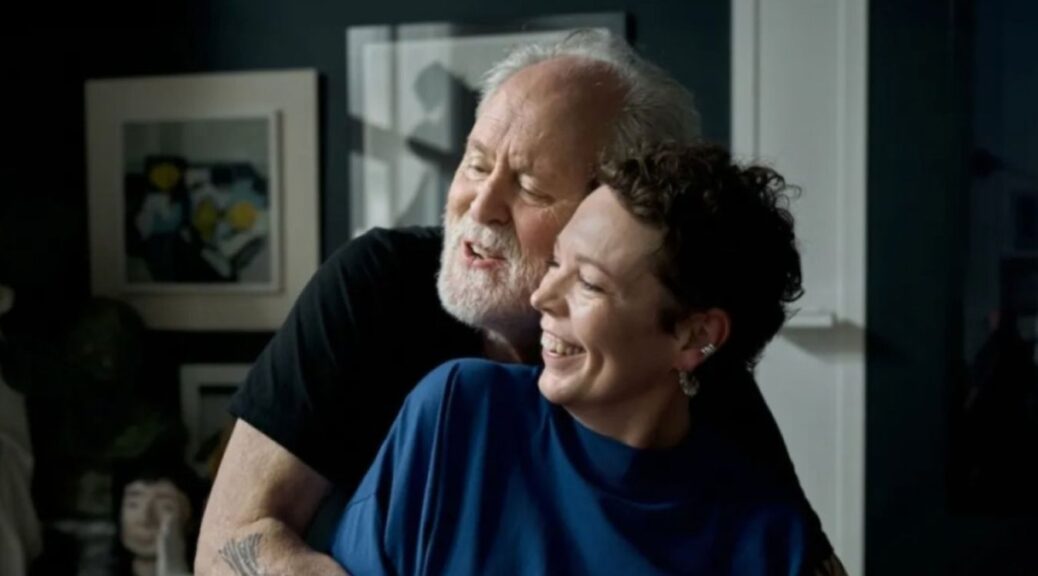
Director Sohpie Hyde’s film, Jimpa, opens with a narrative that lays the groundwork for a family drama about what acceptance truly means.
Jimpa (John Lithgow) is an older gay man who left his family in Adelaide, Australia to move to Amsterdam during the height of the AIDS epidemic. There’s a recap of this history from two perspectives, Jimpa’s daughter, Hannah (Olivia Colman), and his nonbinary grandchild, Frances (Aud Mason-Hyde).
The film centers around Hannah and Frances spending time with Jimpa, as Hannah looks to make a film about her parents and their conflict-free partnership when Jimpa came out as gay.
Colman and Hyde make it clear that Hannah is afraid of conflict, so much so, she rushes to mitigate everyone’s words. Her explanations for others may sound good, but in her urgency to avoid conflict, she steals their agency. And yet, there are times when Hannah fails to step in when it could most help her teenager.
Jimpa is disrespectful of Frances’s choice to identify themselves as non-binary. He introduces them as his “grandthing” and mocks their “sudden” lack of gender. Though grandthing is said with a certain amount of affection, it’s painful to watch because Frances looks up to their grandfather as a hero.
There’s also a collision of age. The older gay men have trouble understanding the younger generation’s motivations and language, fail to recognize the struggles of feeling like an outsider when things are (in their minds) so much better now.
Jimpa feels more like a lesson in gender and sexual politics than a cohesive narrative film. This can be done gracefully, but Hyde’s approach is too heavy handed.
Jimpa‘s second half takes an unexpected path that serves the film well. Hannah confronts and addresses her true feelings, allowing Coleman and Mason-Hyde to shine. Hyde finally gives Mason-Hyde the opportunity to be more than their gender identity.
Though the film’s opening act is defined by a kind of clunkiness, Jimpa’s final moments are handled with enough tenderness to make up for a lot of that.
by Hope Madden
Horror video game movies are having a moment. And the simpler the video game, the more unsettling the film adaptation.
Though the unendurable Return to Silent Hill might have sapped your will to live, both Iron Lung and The Mortuary Assistant honored their games’ uncomplicated storyline and reliance on viewer attention to generate dread and entertainment.
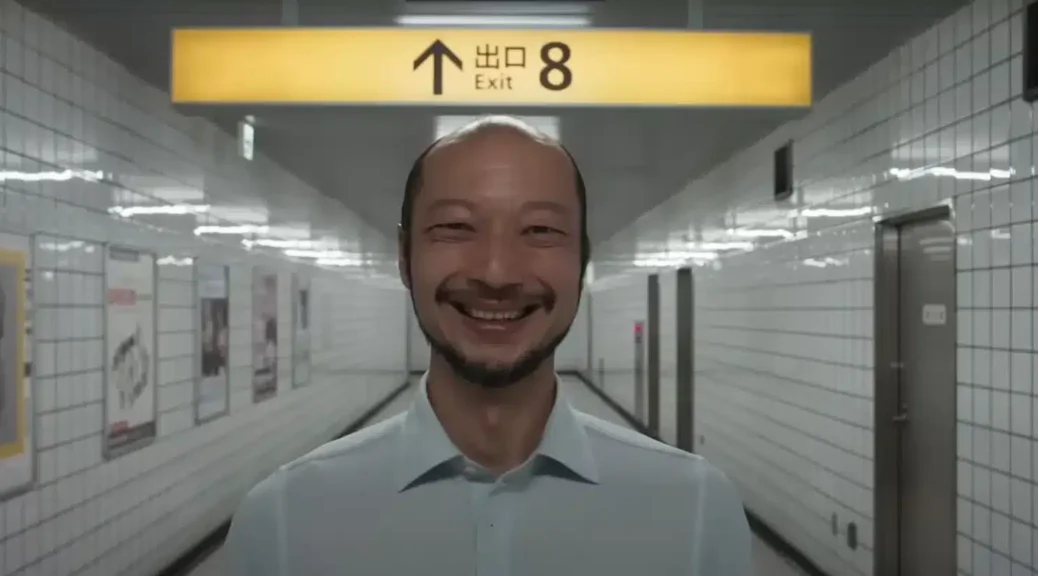
Perhaps the simplest and most unnerving is Genki Kawamura’s Exit 8, a captcha experiment in proving your humanity.
A minutes-long opening POV sequence announces the film as a video game, the first-person experience wearing thin just as Kawamura’s cinematic style alters. What has altered it? Our hero, faced with a deeply human choice, enters the bowels of the metro and loses his phone signal.
Kazunari Ninomiya is “Lost Man.” Buds in his ears, his eyes on his phone, he’s almost entirely unconnected from humanity. Even with no reception, he’s so oblivious that it takes him quite a while in the underground passages to realize he’s walking in circles, forever finding himself back at the exact same spot in search of Exit 8.
Finally, he notices an information sign. If you see an anomaly, backtrack immediately. If there’s no anomaly, keep moving forward.
The monotony and claustrophobia build as white tiled, fluorescently lit hallway after hallway deliver oppressive tension. As the numbers ascend—Exit 1, Exit 2, Exit 3—you may find yourself yelling at the screen. Slow down! Don’t get sloppy now! Because if Lost Man misses one anomaly, one misplaced doorknob, one altered advertisement, it’s back to Exit 0 and the whole nightmare begins again.
And nightmare it is. Blackouts, crying babies, frozen smiles, giant hairless rats with human noses are some of the more obvious anomalies.
It would all become too monotonous to bear were it not for the chapter breaks, which allow us to shift perspective briefly. Yes, the other two characters—Walking Man (Yamato Kôchi) and The Boy (Naru Asanuma)—are likewise trapped in the labyrinthine underground. But their presence offers some clues beyond the surface level anomalies, some hint at the quest to find our humanity.
Kawamura doesn’t dig too deep for character development, but the spare setting and liminal hellscape bring it forth. Exit 8 seems not like a game you play again and again. Likewise, the film is unlikely to be one you revisit every spooky season. But it is a uniquely challenging effort and another surprising win for horror video game adaptations.

by Hope Madden
Filmmaker Aneil Karia concerns himself with the curious, sometimes questionable responses of individual men to escalating tensions. After 2020’s Surge followed a remarkable Ben Whishaw through a harrowing, disorienting descent, Karia won an Oscar for the short film The Long Goodbye. The live action short kept its eyes on Riz (RIz Ahmed) as the dystopian present came for him and his family.
If one man’s reaction to an overwhelming situation is Karia’s passion, Hamlet seems like a proper inspirational match.
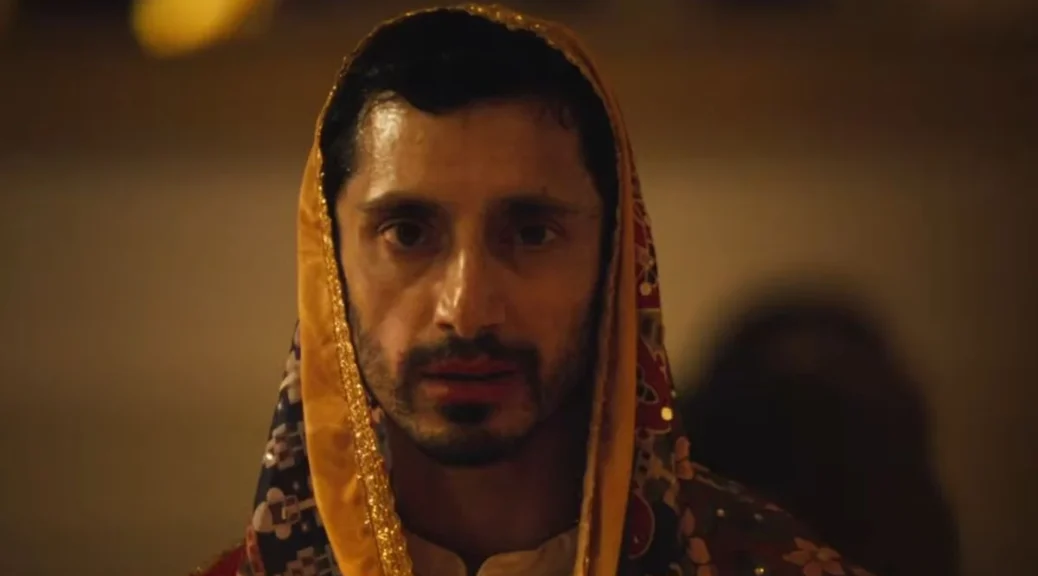
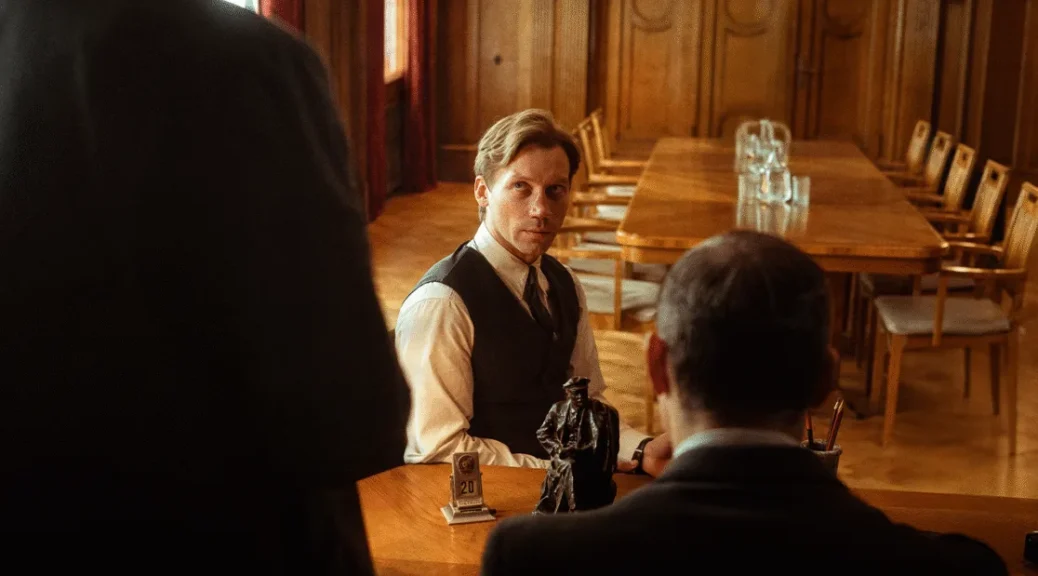
Paired again with his Long Goodbye collaborator, Karia sets Shakespeare’s great tragedy in modern London. Hamlet returns from abroad for his father’s (Avidjit Dutt) funeral. The family’s ruthless development company, Elsinore, must now change hands to the patriarch’s brother, Claudius (Art Malik), who intends to marry his widowed sister-in-law, Gertrude (Sheeba Chaddha).
Though much streamlined, the Bard’s drama is not rewritten for the times. Karia’s instincts for visual storytelling provide enough imagery to understand the modernized context, and Shakespeare’s dialog proves timeless as ever.
Karia’s dizzying visual style gives Hamlet’s psychological descent an urban flavor, while graffiti and billboards provide cheeky reference points. The entire ensemble, especially Chaddha, excel. But you will not be able to look away from Riz Ahmed.
The role of Hamlet has been a make-or-break role for actors for four centuries. Ahmed makes it look effortless, so convincing is he in the grief of losing a father, the horror of a mother’s betrayal, and the pressure of tradition.
Joe Alwyn (Hamnet – guy likes this story, I guess!) as Laertes and Morfydd Clark (Saint Maud) as Ophelia bring depth and pathos to minimized characters.
Michael Lesslie adapts the tragedy. Though the writer’s gone on to blockbusters and superheroes, his first feature length script was Justin Kurzel’s impressive 2015 take on Macbeth. Once again, Lesslie proves adept at pruning what’s necessary only for the stage, giving his director room to tell the tale cinematically.
Reconsidering the cultural background within a South Asian culture doesn’t just freshen up the familiar. It impresses the universality and timelessness of the original work upon the viewer. The play within a play—Hamlet’s gift at the wedding—is the film’s showstopper. But Karia imaginatively stages some of the play’s most remembered scenes, adding vitality and action that takes advantage of the freedom from the stage while still amplifying the hero’s anxiety.

by George Wolf
It’s almost quaint now to remember the word-of-mouth infamy achieved by the original Faces of Death in 1978. By the mid-80s it was a cult favorite at the video store, with a lurid promise to unveil shocking video of real fatalities.
Though the non-stock footage was faked (yes, even the monkey scene), hyperbolic stories of the film’s effect continued to gain traction and the sequels were cranked out.
This new Faces is not one of those. Writer/director Daniel Goldhaber smartly brings that pre-viral legend into the internet age, tucking the bloody hunt for a serial killer inside the dulling nature of modern-day voyeuristic fetishes.
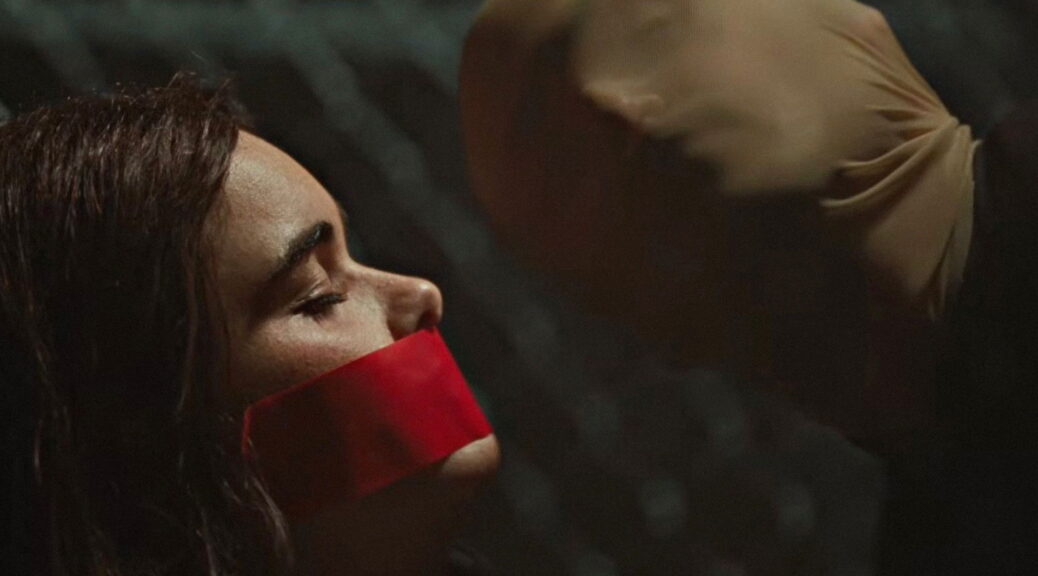
Barbie Ferreira stars as Margot, who works as a website content moderator for a company promising to protect “the young and innocent.” Though she occasionally flags a video for violations, most make it through – which is just how her manager prefers it. But when Margot sees some videos of murders that look alarmingly real, it sets her off on the trail of a killer (Dacre Montgomery) intent on recreating scenes from the original Faces of Death.
Though employees at Margot’s firm are strongly discouraged from researching the videos they moderate, she begins sleuthing. What Margot finds, of course, is an internet audience eager for the brutality, and online footprints that aren’t difficult for a tech savvy psycho to follow.
Stupid decisions (especially by young people) are a staple of horror films, and Margot makes a maddening amount. But Goldhaber (How to Blow Up a Pipeline) is able to mirror most of them alongside the questionable bargains we’ve made as a web-obsessed society.
“It’s an attention economy, and business is booming.”
Our killer (Montgomery gives him both Silence of the Lambs and Red Dragon vibes) knows his audience, and Goldhaber gives the funny games he plays with both his victims and Margot a nice sense of tension. Sure, you may want to slap some sense into most of these people, but then again, is your own browser history MENSA worthy?
The rough patches in the story go down easier thanks to the savvy, in-the-moment winks Goldhaber flashes while telling it.
Why has the explosion of technology that holds so much positive potential continued to reveal the worst parts of ourselves? If you give the people what they want, how culpable are the people that want it?
Michael Haneke may have asked the question more eloquently, but Goldhaber and Faces of Death have more trashy, finger-wagging fun.
by George Wolf
Is this a faux documentary? A true crime thriller? Found footage horror? It’s all of that, at least some of the time.
You know what, just don’t worry about it and enjoy the clever way Hunting Matthew Nichols tips its hat to a variety of genre influences.
Director and co-writer Markian Tarasiuk plays himself as a documentary filmmaker out to solve an over-two-decades-old missing persons case. Canadian teens Matthew and Jordan went missing on Halloween night of 2001, and now Matthew’s sister Tara (Miranda MacDougall) is teaming with Markian to get to the bottom of what really happened.
Early on, we come along on an engaging hunt for clues. A succession of solid supporting performances bring welcome authenticity to Tara’s fact-finding interviews, until a surprise discovery turns the film on its found footage ear.
The missing kids were big fans of the Blair Witch Project, and took a camcorder into Black Bear Forest to uncover the local legend of Roy McKenzie. This turns out to be a slyly organic way of acknowledging the big comparisons that will follow, and to setup the type of in-your-face finale that more than a few BWP naysayers may have preferred.
The ride is well-paced and impressively assembled, and the payoff is satisfying enough to make you forget about who’s manning the camera or why we’re watching reactions to a shocking videotape instead of the tape itself.
But this Hunt is a fun one, and it comes complete with a mid-credits stinger that flirts with the possibility of another chapter.
If so, count me in.
On this week’s Screening Room Podcast, Hope & George review the new releases: The Drama, The Super Mario Galaxy Movie, Pizza Movie, Blazing Fists, & Two Prosecutors.
by Rachel Willis
For anyone who has forgotten their history of Soviet Russia under Stalin, director Sergey Loznitsa is happy to remind us with his latest, Two Prosecutors.
In a provincial prison, political prisoner Stepniak (Aleksandr Flippenko) is ordered to burn hundreds of letters. We get snippets of these letters, addressed to Stalin, pleading for intervention in Stepniak’s case. He pleads his innocence and claims his confession was a result of torture.
Despite the letter burning, one of these damning letters finds its way into the hands of Kornyev (Alexander Kuznetsov), a young, idealist prosecutor.
What unfolds is a slow, but very intense look into the corruption and chaos that helped to define Stalin’s reign of terror.
And while Loznitsa’s film is set in the past, its themes are applicable to present-day Russia (as well as any other country in which oppression and authoritarianism rule the day). There is an inherent paranoia that underscores all of Kornyev’s interactions. Throughout the entire film, only his one-on-one meeting with Stepniak feels authentic.
One of the most unsettling scenes is carried out in near silence, as several prison guards attempt to intimidate the steely Kornyev. But this is not the last time the film will leave the audience squirming, unsure if the mistrust imbued throughout the film is warranted.
This is not a film that offers a new take on what it means to live under the iron fist of a ruthless dictator, but it is nonetheless effective in what it does give the audience. Kornev’s idealism is hard not to appreciate, even while it feels tremendously futile.
It’s also a stark reminder of what happens when we don’t just forget the past but idealize it.
by George Wolf
If The Drama is in your date night plans, better put the dinner after the movie.
Hoo-boy. You’re gonna need to make some time for conversation.
Writer/director Kristofer Borgli continues his social provocateur-ing with look inside a couple thrown waaay off course by a shocking confession. The aftermath – affecting not only the couple involved but other couples in their orbit – becomes a darkly funny and intentionally cringe-worthy dissection of intimacy.
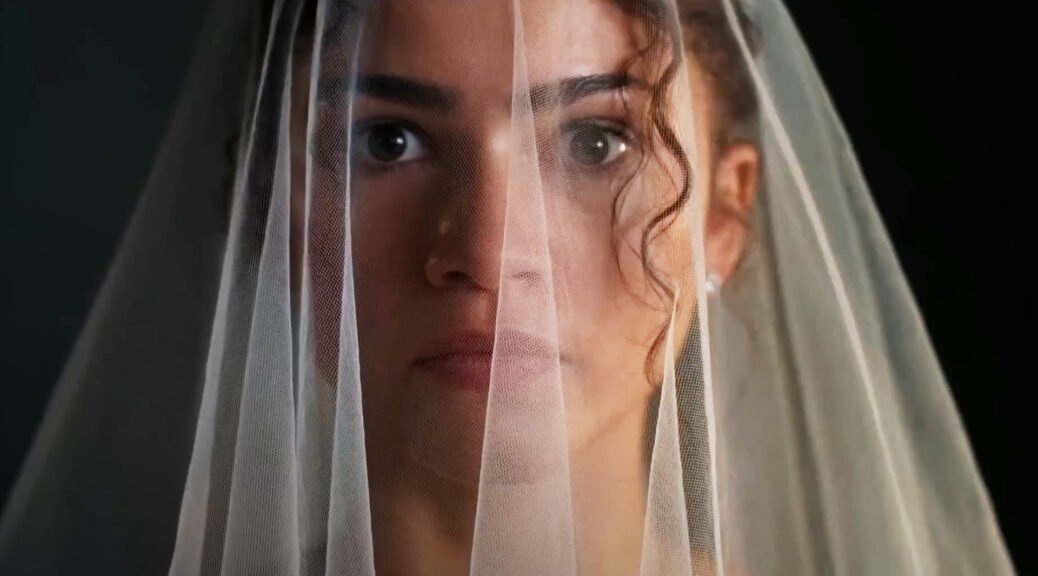
Emma (Zendaya) and Charlie (Robert Pattinson) are knee deep in wedding plans. As Charlie works on this planned remarks, his remembrances give us an organic – if one sided – primer on the Emma/Charlie relationship.
But one night while sampling food and wine menu options with their fiends Mike (Mamoudou Athie) and Rachel (Alana Haim), everyone starts confessing about “the worst thing they’ve ever done.” It’s all embarrassing fun and games, until Emma takes a a turn.
Over a decade ago, Ruben Östlund’s Force Majeure explored how relationships are changed in an instant by one man’s panicked choice. Borgli picks similar scabs, but with a more serrated and much darker edge.
Pattinson is excellent as a man struggling with the notion that his fiancé’s past should not change how he sees her. Zendaya makes the complexities of Emma’s life after the confession seem desperately authentic, and her search for support from those she trusted most achingly real.
Haim gives Rachel some serious teeth, taking instant and very personal umbrage to Emma’s reveal, and Hailey Gates impresses in a smaller role as a co-worker of Charlie’s who gets a little too close to his breakdown.
Because the thought experiment here isn’t just about Emma and Charlie. Borgli, even more-so than he did with 2023’s Dream Scenario, invites you to imagine yourself in several roles (and, of course, to judge the choices of those around you). The script is crisp, the humor is coal black, and the pacing (aided by some nifty editing and visual cues) keeps you invested at every turn.
“You always turn my drama into comedy,” Charlie says early on.
The line ends up feeling like Borgli’s own confession. The Drama is a totally different rom-com animal, one that many may find just too confrontational. But there’s a layer of hope to be found here, too, and a kind of unflinching eye that’s hard not to respect.