Animal Farm
by George Wolf
You may have questions going into the newly realized Animal Farm. And it’s a good bet you’ll have more coming out.
Who is this for exactly? What’s with these changes? Did someone think Orwell didn’t get the point across? And just…why?
For his part, director Andy Serkis has addressed some of these concerns in the weeks leading up to the film’s release. Serkis has stressed that he worked closely with Orwell’s estate, striving to update the classic tale with modern themes and a nod toward understanding “the contradictions within its author.”
That is an ambitious goal, to say the least, and one that Serkis, screenwriter Nicholas Stoller and a star-studded voice cast can’t completely bring to market.
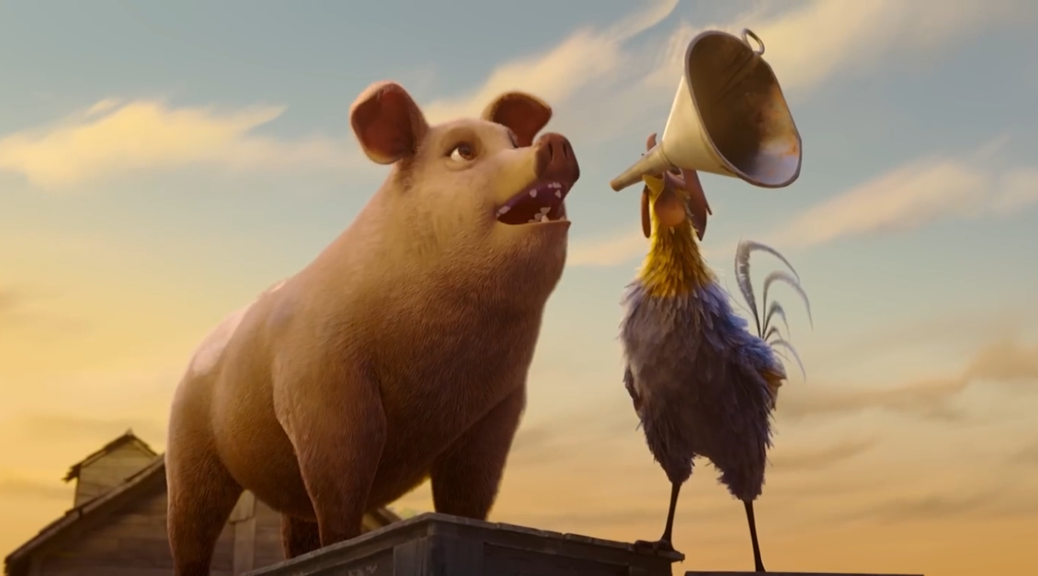
The first major adjustment is adding the character of Lucky (voiced by Gatan Matarazzo), a young pig that serves as a moral compass for younger viewers. Lucky is easily influenced by boss hog Napoleon (Seth Rogen) as the farm rules of equality and fairness are twisted and broken.
Lucky is key to Napoleon’s plan of exploitation, and to making hard working animals like Boxer (Woody Harrelson) believe Napoleon has their best interests at heart. So why is he cozying up to the cyber truck driving tycoon Frieda Pilkington (Glenn Close) and Mr. Whymper the banker (Steve Buscemi)?
Well, some animals are more equal than others. That’s always been the rule!
The fart jokes and obvious humor are a bit jarring for such cherished material, but make it clear Serkis is aiming to give younger audiences a primer in Orwell’s belief that absolute power corrupts absolutely. It’s best to keep that in mind when the movie delivers a new, hope-filled ending that’s a few pastures away from Orwell’s bleak reveal.
To adults who revere that original cautionary tale, much of this overhaul may feel like a blasphemous Chicken Run rebellion. These animals have to decide for themselves that they’ve been hoodwinked, don’t they? So isn’t Lucky’s hand-holding a bit contradictory? And as well meaning as this might be, why risk diluting the power of Orwell that will come when the kids are old enough to grasp it?
After a series of examples both pro and anti-capitalism, the end credits montage cements the message that the enemies are the absolutely corrupt of any ilk. And history has shown they can be overcome.
Some of it works, yes. But honestly, it’s just impossible to come at it with the fresh eyes and clear heads of the ones it appears to be meant for. Do I respect what this Serkis circus is trying to do? Yes.
Do I wish he did it with an original story not named Animal Farm?
Also yes.

