Brawl of the Kaiko Empire

Bad City

by Daniel Baldwin

A modern celebration of classic Japanese V-cinema (their version of DTV genre fare), director Kensuke Sonomura’s Bad City unleashes a furious, fist-flying tale of crime, corruption, and righteous retribution. The story is a tale as old as time: a diabolical businessman (Lily Franky) is in league with the Korean mafia and local politicians. His goal? To bring “prosperity” to Kaiko City by bringing in casinos that no one but the rich wants. His methods? Bribery, blackmail, and murder. All that stand in his way are a handful of good cops and some honorable Yakuza with aligned interests.

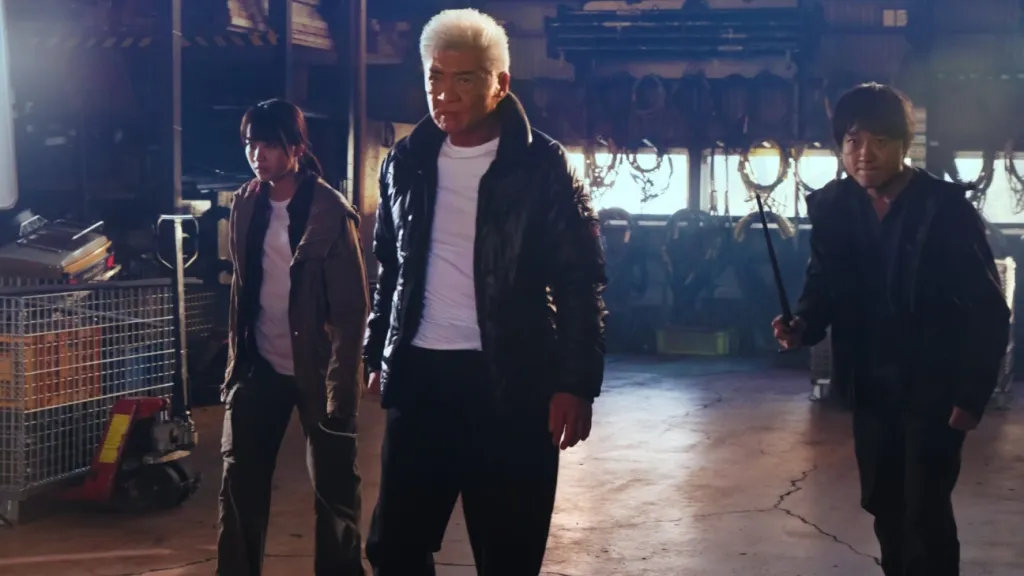
At the center of it is 60-year-old genre stalwart Hitoshi Ozawa (Dead or AliveGozu), who also wrote the screenplay. His knowledge of and experience in Yakuza cinema comes in mighty handy here, as does his charisma and still-formidable physical prowess. He’s an absolute powerhouse as the unflappable Captain Torada and he’s surrounded by equally great supporting castmates including Tak Sakaguchi, Masanori Mimoto, Katsuya, Mitsu Dan, Akane Sakanoue, Masaya Kato, and the aforementioned Franky.

There’s nothing wholly original on display in terms of narrative, but that matters not, as Sonomura and Ozawa are aiming for grandiosity over complexity, even amidst their low budget. The plot is still filled with twists, turns, and double-crosses, but the pace moves with breakneck speed. It plows through subplots and arcs like it’s tearing through an entire season of television, ultimately offering up a narrative that is as dense as it is straightforward.

Any danger of monotony in terms of pulp crime storytelling and exposition is wiped away by the action itself. While there is the occasional moment of gun violence, the bulk of the fighting is brutal hand-to-hand combat. Fists, knives, baseball bats, pipes, and even a loudspeaker are utilized as criminals and cops wail on each other to the point of exhaustion. The fights constantly swing back and forth between martial arts, vicious groundwork, and barroom-style brawls. Said action is further punctuated by some absolutely stellar foley work, making each punch, kick, and stab sound even more painful than it looks. Throw in the fact that many of the characters are wearing sneakers – one has to be comfortable on the brawling move after all – and the bouts often sound like a massacre playing out on a basketball court. 

Simply put, this is a killer slice of low budget action cinema.

Land of Old Tropes

Mob Land

by Matt Weiner

Stop if you’ve heard this one before… good-hearted, small-time criminals get caught up in a web of violence and forces far beyond their control, with a dash of social commentary and vague nods toward the senselessness of the universe and fate.

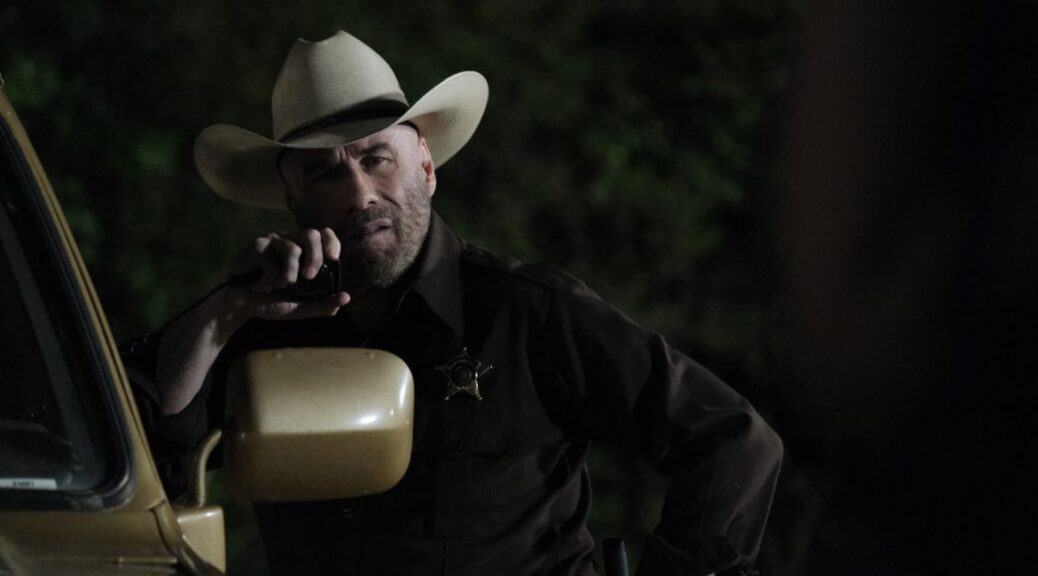
Mob Land, the feature film debut from Nicholas Maggio, could at a distance be mistaken for any number of neo-noirs it borrows heavily from. Strong, silent Shelby Conners (Shiloh Fernandez) relies on what work he can get—legal and otherwise—to support his family in rural Alabama. When his brother-in-law Trey (Kevin Dillon) comes up with a plan to rob a local pill mill, Shelby tags along as wheelman.

Both men of course end up over their heads and soon have to tangle with the ruthless New Orleans mob outfit that runs the clinic, as well as local law enforcement, headed up by a sheriff who exudes “too old for this” with each gruff word.

When it comes to showing its influences on screen, Mob Land is as unlucky as Shelby and Trey. The movie has the guts to take from more incisive forebears, and it’s hard not to make running comparisons. It’s also hampered by a script from Maggio that always feels right on the cusp of making a point about its characters and the hands they are dealt. But here again, it lacks the follow-through to turn its stars into more than the slightly off-discount versions of the brand name version.

The dialogue and character choices are likely too great for any ensemble to overcome, but Mob Land has brief flashes of a world where a less restrained pastiche might have worked. John Travolta’s performance as the tired sheriff is reserved to the point of redundancy. It serves mainly as a reminder that he deserves to find the right vehicle for this stage of his career.

But it falls to Stephen Dorff’s mob hitman Clayton as the prime example of how Mob Land stretches out the seams of the influences it wants to inhabit. Clayton is the AI output of an Anton Chigurh text generator. An unstoppable force with questionable morals who speaks almost entirely in empty aphorisms for the whole movie, Dorff tries valiantly to add dimensionality to the part. That it almost works is a testament to the actor, whose eclectic filmography belies how good he is in the right part.

Story aside, credit to Maggio as a director. Along with cinematographer Nick Matthews, Maggio elevates the film’s limited settings to deliver a believably lived-in southern noir. As by-the-numbers as much else seems, Mob Land takes an effective approach to the creeping dread and violence that tear apart Shelby’s world.

These touches aren’t enough to salvage the film, but they do keep it from being outright bad. Worse, Mob Land is mostly forgettable, perhaps the greater sin for a noir. There are echoes of the poverty porn of Hell or High Water, and more than a few heaping doses of the Coen brothers.

It’s all thrown together too haphazardly, and with little room left for Mob Land to have something to say of its own that we haven’t already heard before.

No Country for Young Women

The Night of the 12th

by George Wolf

The police work on display in The Night of the 12th (La nuit du 12) is methodical, committed, and sometimes intense. You can say the same about the filmmaking.

Director and co-writer Dominick Moll introduces his latest as a retelling of a “based on true events” unsolved case that still haunts a veteran French police captain. But as he unveils the facts of the investigation in an intimate and calculating manner, Moll deftly brings more universal concerns to the forefront.

Yohan Vives (Bastien Bouillon) rises to Le capitaine after a retirement on the force, and it’s at the going-away party for the retiree that we first glimpse the signs of a generational divide.

Not long after Yohan’s promotion, 21-year old Clara Royer (Lula Cotton-Frapier) is attacked and killed while walking home from a party. And as Yohan digs into the details of the life Clara had been living, he starts to realize that something’s also “amiss” between men and women.

Moll (With a Friend Like Harry…, Lemming, Only the Animals) pulls off a tricky balancing act here. He brings a detached, documentary-like approach to the investigation itself, but adds layers of humanity through Yohan’s growing obsession with the case, and the B story involving an older investigator named Marceau (Bouli Lanners).

Marceau’s marriage is suddenly in serious trouble, and the effect this has on his approach to Clara’s case brings the narrative threads together with a weary resignation. Bouillon and Lanners are terrific leads amid a first-rate ensemble that includes Pauline Serieys as Clara’s grieving best friend and Anouk Grinberg as a sympathetic judge who urges Yohan not to give up on the case.

Cinematographer Patrick Ghiringhelli immerses us in the imposing beauty of the French Alps, while Moll’s Memories of Murder setup gradually adopts a more Cormac McCarthy worldview, but it’s one more focused on how that world views women, young or old.

This is a completely absorbing crime drama, and one that is not afraid to reach beyond its local jurisdiction. By the end of The Night of the 12th, Moll has drawn us into a tragic mystery and left us searching for answers to questions beyond the identity of Clara’s killer.

Back to the Future

Lola

by Rachel Willis

Two sisters invent and control a time machine in director Andrew Legge’s historical sci-fi drama, Lola.

In 1941, Thom (Emma Appleon) and Martha (Stefanie Martini) can access broadcasts from the future with their device, Lola. They discover David Bowie, Bob Dylan, and other great musicians from the future. However, they also realize they can send precise warnings to fellow Britains about impending German air raids. What they do saves lives.

Though their efforts begin with mere warnings, the sisters start to reshape the future with the help of a British soldier who verifies the authenticity of each German broadcast. When Thom decides to take matters into her own hands, offering more than warnings, she loses Britain the U.S.’s support in the war effort. And that’s just the first mistake.

As with any movie about time travel, changes in the present affect not just the immediate future, but the far distant future, as well.

A 78-minute story leaves little time to make the point that some things are best left alone, but still Lola does a lot of meandering. The tension from decisions made is never allowed to build.

There is also the strange idea behind the film’s surface message that it’s best not to act, as any action you take can have unknown repercussions on the future. I’m not sure this is what the filmmaker intended to convey, but this is what comes across.

A large portion of the film comprises stock footage and montages depicting how the sisters change the war effort. It becomes tedious, making the film’s run time feel much longer than it is.

There is also the dubious notion of a found footage film that takes place in 1941. Martha’s camera is explained (it also conveniently captures sound), but several other cameras appear in places where it doesn’t make sense. You’re left wondering who exactly is behind the camera.

While Lola has a one or two stand out moments (invented superstar Reginald Watson, for example), the overall output is a mess. The theme of leaving the present unaltered based on what one knows of the future has been explored before. Lola offers nothing new save a questionable perspective on taking any action at all.

Shell Shocked

Teenage Mutant Ninja Turtles: Mutant Mayhem

by Hope Madden

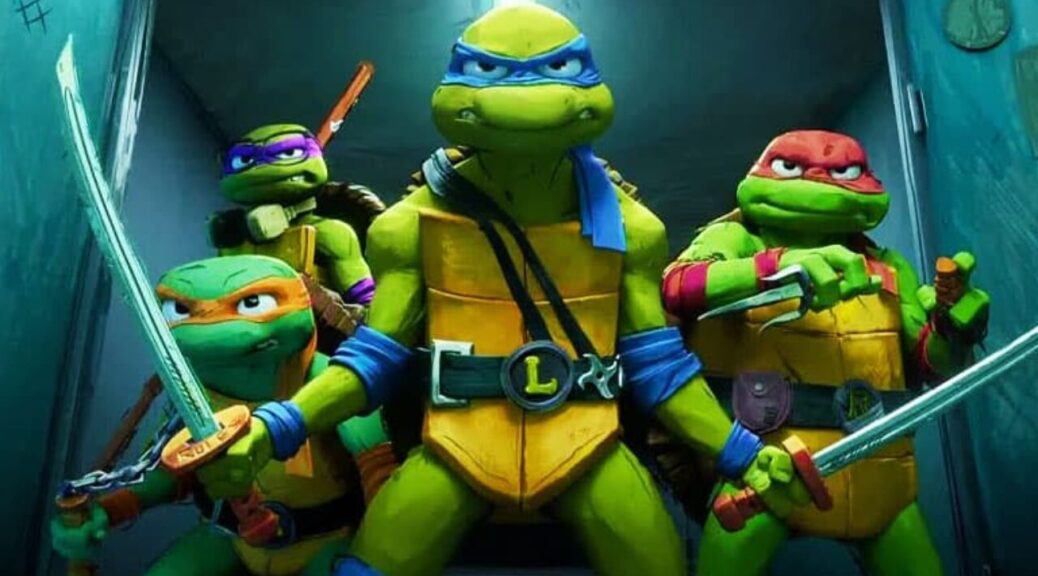
The Teenage Mutant Ninja Turtles have been done. A lot. There have been comics, the cartoon series, video games, movies, another animated series, two more movies, another animated series, that Michael Bay movie and its sequel, a fourth cartoon series, another movie and countless toys, plastic digital watches (the coolest!), lunchboxes, tee shirts and assorted whatnot.

So, why bother with Teenage Mutant Ninja Turtles: Mutant Mayhem?

Dude, it’s good.

Seth Rogan and Even Goldberg (together responsible for Superbad, Pineapple Express, This Is the End and Sausage Party) co-write with Jeff Rowe (The Mitchells vs. the Machines ­– a great movie, and also the only one of these appropriate for children). Their script delights in the silly, childish charm of the 80s series, updated to reflect a modern teenage mutant’s reality.

It’s a fun vibe that’s pulled through the animation and performances, thanks in part to Rowe, who co-directed Mitchells v Machines, again co-directing, this time with Kyler Spears.

A messy, anarchic animation style delivers on the promise of the outsider theme and especially impresses in 3D. Somehow simultaneously creepy, jubilant and cool, the look is like no other piece of animation to be seen on the big screen.

The voice talent delivers as well. Veterans include Jackie Chan as lonesome, overprotective Splinter and Ice Cube, pitch perfect as badass super villain Superfly. His posse boasts a star-studded voice cast: Rose Byrne, John Cena, Rogan, Paul Rudd, Maya Rudolph. All bring the goods, but Rudd and Byrne are the most fun.

The core four – Nicolas Cantu as Leonardo, Micah Abbey as Donatello, Shamon Brown Jr. as Michelangelo and Brady Noon as Raphael – provide infectious charm and mayhem. Ayo Edebiri, so funny in this summer’s Theater Camp, gives April a natural humor and awkward grace.

The best way to reinvent a beloved, nostalgic brand is to hire people who loved it in the first place. If they know comedy and animation, all the better. Rogan and Goldberg bring the sophomoric but undeniable wit they always do, and Lowe channels that into something inventive, giddy and family-friendly.

Sane, Financially Insecure Asians

Shortcomings

by Hope Madden

Shortcomings, the feature directorial debut from Randall Park, wants to know what you thought about Crazy Rich Asians.

Did you celebrate it as a massive commercial and critical success that centered in every respect on Asians? Did you see it as a much-needed splash of representation? Or were you unable to see past its mediocre, formulaic fairy tale “money actually does fix everything” themes?

Or could you just be happy that, although it was not a very good film, its massive success opened up opportunities that did not exist before for Asian artists?

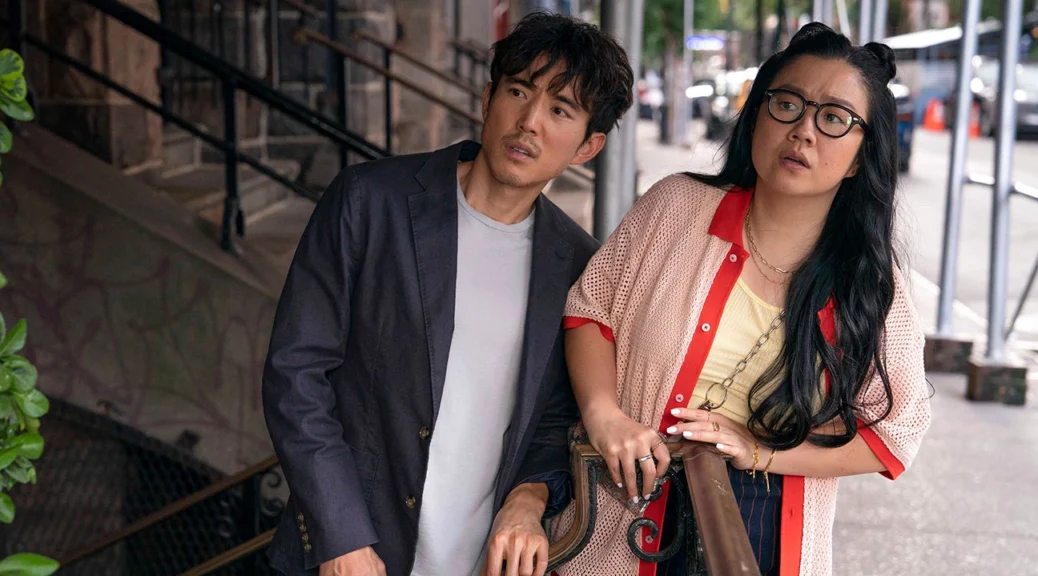
Ben (Justin H. Min, After Yang) is the second (hated it). No surprise, Ben hates everything because Ben is an asshole. He offers withering opinions of everyone and everything, so his girlfriend Miko (Ally Maki) isn’t surprised when he decides not to accompany her to New York for her internship.

Actually, she didn’t invite him.

Park’s film, based on Adrian Tomine’s insightful adaptation of his own graphic novel, does the extraordinary – thanks in large part to Min’s spectacular lead performance. They center 90 minutes of our lives around a thoroughly unlikeable protagonist and make us enjoy it.

Min haunted the liltingly lovely After Yang with a devastatingly tender performance. Ben is not Yang, and Min proves nimble with a character who has so little to offer and yet manages to compel interest throughout the tale, though he extends little energy to do it.

A spot-on ensemble helps him out, perhaps because Min reveals Ben so thoughtfully through his interactions with these characters, and partly because the minor characters are so intriguing.

Sherry Cola, hot off her hilarious turn in Joy Ride, is Alice, Ben’s equally acerbic best friend. Tavi Gevinson is inspired as the starving artist pixie Autumn adored by Ben and all the employees at the crumbling movie theater he manages. Sonoya Mizuno (Ex-Machina) and Debby Ryan also pop in for a few scenes of excellent work, while Jacob Batalon (Pete’s best friend in the new SpiderMan movies) gets to make a funny line about Spider-Man while Timothy Simons is a stitch as Miko’s new beau.

It’s smart humor, one that recognizes the defensiveness and fear at the heart of Ben’s disdain for anything that swings for the fences, and for anyone who puts themselves in the vulnerable position to try and fail.

And without succumbing to schmaltz in any measure, Shortcomings asks whether Ben – whether any of us cynics – can just move from Crazy Rich Asians viewer #2 to #3. Not because it was good, but because it opened the door for Shortcomings.