Tag Archives: Madd at the Movies

Bagheads

We’re Not Safe Here

by Hope Madden

The nightmarish images and unsettling sound design of writer/director Solomon Gray’s We’re Not Safe Here more than make up for its narrative stumbles.

A lot of films open on a scene of horror to be contextualized later in the movie. Likewise, Solomon sets the stage early with a swift, troubling little gem of a horror show. But interestingly, the tale he builds around it taps into a terror more subconscious and dreamlike than what you might expect.

Sharmita Bhattacharya is Neeta, a schoolteacher by day/artist by night who’s been unable to get started on her latest painting. Frustrated at the easel one night, she’s surprised by a visit from Rachel (Hayley McFarland), another teacher who’s been missing. Frantic and increasingly panicked, Rachel spills a story that began in her childhood. Something she thought she’d lost has found her again.

Aside from some very intimidating figures wearing bloody pillowcases over their heads (creepy!), We’re Not Safe Here is primarily a two-person show. McFarland is masterful, her paranoid madness tipped with a teacher’s command of the room. She’s mesmerizing.

Bhattacharya struggles a bit. Neeta is also troubled, and the performance feels stiff and unsure until the character gives into her demons. But there are moments between the two of them that are deeply upsetting. I mean that in a good way.

Gray’s use of setting—Neeta’s home, every wall cluttered with her sketches and paintings, every surface littered with books—creates a busy, fascinating space rich with potentially spookiness. A meandering camera and effective sound design capitalizes on what the set design has crafted: a lovingly lived-in space turned suddenly suspicious. The filmmaker evokes a kind of paranoia that feeds the perfect atmosphere for his film.

There’s a looseness to the script that often serves the film’s maniacal undercurrent. What’s delusion? What’s really happening? And is it contagious?

Gray refuses to fit all the pieces together, a choice that mostly pays off. The act structure and finale are rigid enough to give the tale a feel of completion. While a lingering vagueness in the backstory is frustrating, it also allows the imagination to veer into its own halls of madness.

Don’t Speak

Relay

by Hope Madden

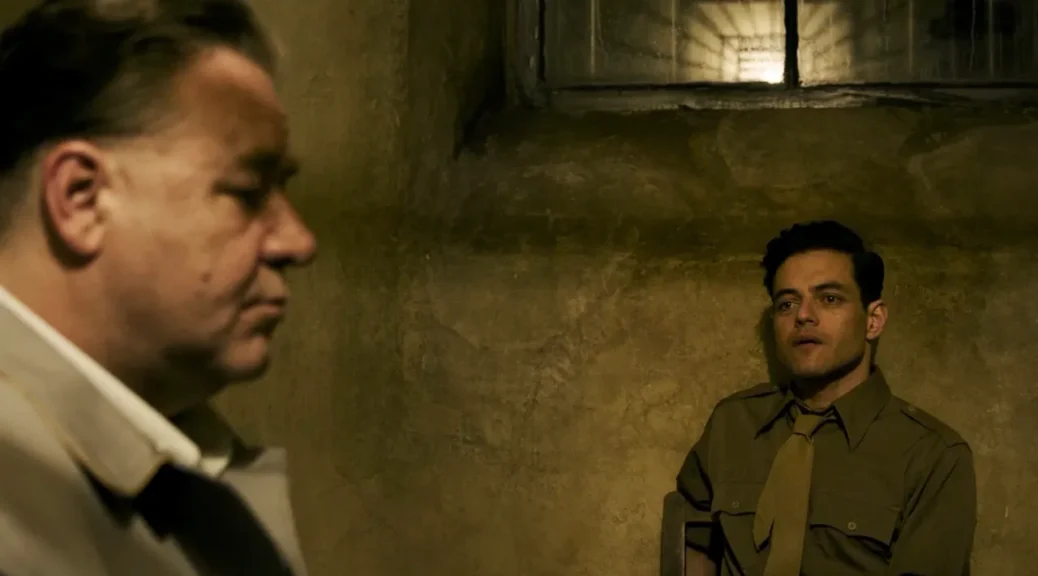
It’s been nearly a decade since director David Mackenzie’s brilliant neo-Western Hell or High Water delivered a moseying goodbye to a long-gone, romantic notion of manhood. After a successful run of TV series and miniseries, Mackenzie’s back to the big screen with the twisty thriller, Relay.

Riz Ahmed stars, though he does not speak for at least twenty minutes and we don’t learn his character’s name until the final act, as a professional middleman. Whistleblowers who turn coward under the pressure of big, ugly corporate malfeasance and cover ups rely on him to broker deals. Evildoers get back all the evidence and, for a fee, they leave their former employee alone forever. Riz keeps a copy, just to be sure everybody sticks to the deal.

What’s most important is that nobody—not the client, not the company—ever knows who Riz is. Is this middleman a man? Is it a woman? Is it a group of interchangeable people? In a clever conceit, the middleman uses a relay service intended to help the Deaf and hearing-impaired conduct phone calls, which keeps all connection to client and company separate, untraceable, and unrecorded.

That’s a good setup, and Mackenzie—working from a lean script by Justin Piasecki—takes care to show us what we need to know, regardless of his very quiet leading man.

Ahmed is characteristically excellent, easily carrying the film in silence until Act 2. His performance is nimble, clever enough to trust that he’s one step ahead, vulnerable enough to believe he has a weakness. That’s Lily James, the would-be whistleblower who just wants her life back.

Though the two rarely share the screen, they do share a lonesome chemistry that elevates moments of contrivance in an otherwise taut piece of double crossing, out maneuvering, and personal growth.

A game supporting cast including Sam Worthington, Willa Fitzgerald, Jared Abrahahamson, and Matthew Maher keeps the surprises, tension, and humanity blooming. But it’s Ahmed whose wounded performance captures your sometimes breathless attention for the full 112 minutes.

Fright Club: Weapons

Thought we’d veer slightly off course to take a deeper dive into Zach Cregger’s latest horror hit, Weapons. Poet and horror fan Scott Woods joins us!

Weapons

by Hope Madden

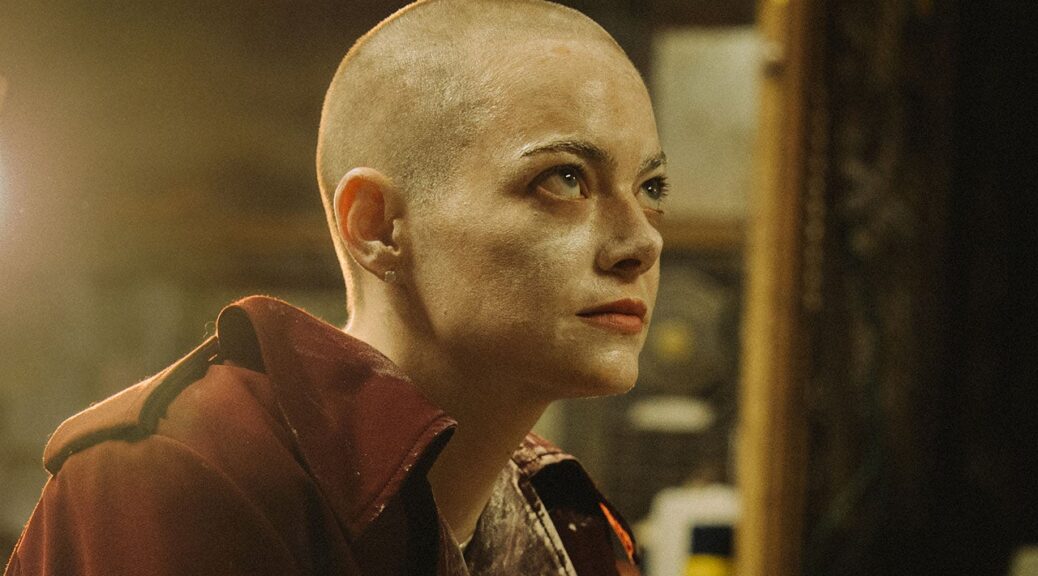
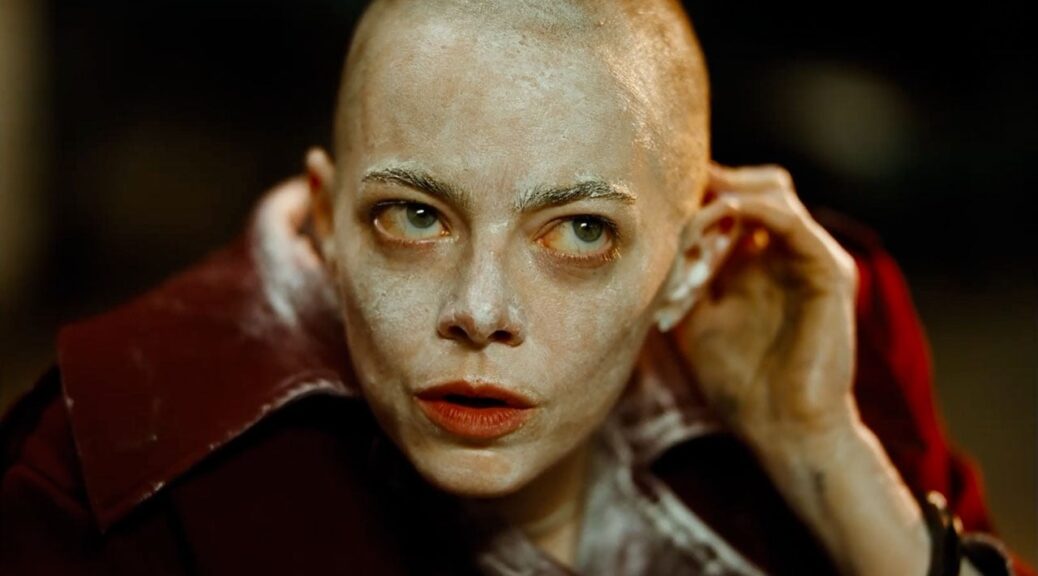
I’m not saying that Barbarian was anything less than a creepy, disturbing good time. Writer/director Zach Cregger’s 2022 bizarre, brutal minefield of surprises announced him as a master of misdirection, unsettling humor, and horror of the nastiest sort.

I’m just saying Weapons takes a lot of what worked in that film and sharpens it to a spooky edge. No throw-away laughs, no grotesque b-movie shenanigans, just an elaborate mystery slowly revealing itself, ratcheting tension, and leading to a bloody satisfying climax.

Unspooling as an epilogue followed by character-specific chapters, the film builds around a single event, developing dread as it delivers character studies of a town of hapless, fractured, flawed individuals in over their heads.

Julia Garner anchors the tale as a 3rd grade teacher who arrives to class one fateful morning with only one student in the room. Aside from little Alex (Cary Christopher, heartbreaking), none of Mrs. Gandy’s class made it to school today because every single one of them left their beds at 2:17 that morning to vanish into the night.

Since she’s what the kids have in common, the town suspects that she is to blame. This is especially true of young Matthew’s dad, Archer (Josh Brolin), who also gets a chapter.

As it did in Barbarian, this character-by-character approach allows for new information to bleed into what the audience knows, rather than what the characters know. But as each new tale opens our eyes to the mystery, it also lets this solid cast work with Cregger’s game writing to do some remarkable character work. Brolin’s angry, grieving confusion rings painfully true. And Garner seems to relish the opportunity to explore Mrs. Gandy’s unlikeable side.

Benedict Wong contributes the sweetest, and therefore most unfortunate, performance, but it’s the way Cregger lets each actor breathe and settle into idiosyncrasies and failings that keeps you invested. It’s the dark humor that’s most unsettling.

This is smartly crafted, beautifully acted horror. Those who worry Cregger’s left nasty genre work behind for something more elevated need not fear. As crafty as this film is, there’s not a lot of metaphor or social consciousness afoot. Weapons is just here to work your nerves, make you gasp, and shed some blood. It does it pretty well.

Holiday Road

Nobody 2

by Hope Madden

Hutch still has trouble getting the trash out on time, but other than that, his life is considerably different than it was four years ago when Nobody turned Bob Odenkirk into an action star and Odenkirk turned the film into the most watchable riff on John Wick ever.

Hutch’s wife Becca (Connie Nielsen) has accepted her husband’s line of work, but that doesn’t make it any easier that he is never home. Where once he was the center of his household, now he watches from the curb, garbage bag in hand, as each member of his family goes their own way without him.

Not today! Nope, Hutch is going to take his family to the very spot that meant so much to him as a kid: Summerville. It’s a water sliding, amusement parking, duck-boat riding Midwest tourist trap where nothing could possibly go wrong.

Unless this is a sequel to a fun “particular set of skills” actioner, which it is, so instead Hutch and his family stumble into a duck-boatload of trouble.

Director Timo Tjahjanto, known mainly for Indonesian folk horror, directs this with a cheery energy that may not match Ilya Naishuller’s original in terms of action, but it does the job.

Odenkirk still cuts a funny figure as an action star, and he makes Hutch’s longing for a nice, normal family feel sad and sweet.

Nielsen continues to impress in an underwritten role, and Sharon Stone lends some fun villainy, although both are hampered by the script. Derek Kolstad, working this time with Aaron Rabin, has no idea how to write women because he is so hyper-focused on the fact that these characters are women. We don’t always have to refer to our gender when we speak. No one needs to call themselves a bitch or a mama bear. It’s just a lazy man (or two) not working very hard to craft actual characters.

Still, supporting work from John Ortiz, RZA and Colin Hanks helps to offset the problem, and the whole she-bang ends in a cheap amusement part, which is undeniably fun.

Plus, who doesn’t want to see Christopher Lloyd with a Tommy gun? Isn’t that what summer is all about?

Daddy Issues

Descendent

by Hope Madden

Vampires are scary. Werewolves. Clowns! Clowns are scary. Dudes in horse head masks. You know what’s scarier still? Those last weeks leading to the birth of your first child. Damn, nothing on earth will make you feel more unprepared or likelier to die (if the baby is in your belly) than that.

Andrea (Sarah Bolger) and Sean (Ross Marquand) are feeling it. Andrea’s about 8 weeks out, and it would seem Sean’s biggest anxiety is the worry that his gig as a private school security guard won’t cut it. But as writer/director Peter Cilella slowly unveils information in his sci-fi thriller Descendent, we learn there’s a lot more plaguing Sean than underemployment.

Climbing on the roof of the school one evening to change a lightbulb, Sean is mesmerized by a light in the sky. The next thing he knows, he’s in a hospital bed trying to shake nightmares of an alien abduction and get his head straight so he can get back to work and stop being a burden on his very pregnant wife.

But Sean is not the same since the fall. Or since whatever happened that night on the roof.

Cilella shows sharp instincts for creating trippy tension. His script manages to blur reality without abandoning logic. More importantly, as Sean’s jarring bouts of unreality reach a crescendo, Cilella never lets go of the truth of the film’s emotional core. We are all terrified to become parents.

Bolger makes sure Andrea is always a partner, a full character, never the beleaguered but supportive wife. These two feel like an actual married couple, buddies and partners, each shielding the other from their own fear of inadequacy. But Descendent rises and falls with Marquand.

Haunted and occasionally frightening without ever losing your compassion, Marquand’s authentic and sympathetic performance grounds the fantastical and allows the metaphor at the center of the horror to ring true.

Descendent is an impressive piece of homegrown intergalactic horror worth your time.

Grim Tale

Went Up the Hill

by Hope Madden

In recent years, filmmakers have used the ghost story as an avenue into reflections on not simply grief, but brokenness, dependence, and an aching lonesomeness that can drive a character to desperate acts. David Lowery’s A Ghost Story and Andrew Haigh’s All of Us Strangers each delivered unique, heartbreaking hauntings aided by poignant lead performances.

Co-writer/director Samuel Van Grinsven follows suit, although his latest, Went Up the Hill, skirts a touch closer to horror as the grief-conjured specter takes on a more malevolent nature than the tragic lost souls of the other films.

Award-worthy turns from a pair of leads remains a common thread among the three.

The always effortlessly remarkable Vicky Krieps (The Phantom Thread, Corsage) is Jill, raw and recent widow to a troubled, talented artist whose estranged son Jack (Dacre Montgomery) arrives in time for the isolated New Zealand funeral. Jack claims it was Jill who invited him, but Jill knows better, because Jill’s late wife hasn’t really left.

The whispery score by Hanan Townshend matches Grinsven’s chilly, almost colorless aesthetic—something there that’s not entirely there. The vibe carries through the script and performances, Van Grinsven and his cast mournfully detached, quietly distant, like ghosts. Or like the living, too brittle for direct contact.

As Jack and Jill work through their seemingly bottomless need for the deceased, Van Grinsven, working from a script co-written by Jory Anast, mines for something more obvious than Lowery or Haigh’s films. The filmmaker embraces the genre a bit more forcefully, though it would be tough to categorize Went Up the Hill as a proper horror film.

Instead, it’s an elegant, chilly, bruised reminder that absence doesn’t necessarily mean safety.

Coked Encounters

Jimmy and Stiggs

by Hope Madden

Few filmmakers capture drug fueled horror mayhem quite like Joe Begos (Bliss, VFW). His latest is an exercise in minimalism. Not in terms of drugs or mayhem, just filmmaking.

An alien invasion horror flick, Jimmy and Stiggs sees Jimmy (Begos), an out of work filmmaker, hitting the stuff hard in his LA apartment when he blacks out and loses an entire night. Certain an alien abduction was involved, and that those slimy sardine MF’ers are coming back for him, he calls his best friend Stiggs (Matt Mercer) for advice.

The thing is, Stiggs is six months sober and hasn’t spoken to Jimmy in ages. In fact, in an opening sequence shot go-pro style from Jimmy’s inebriated point of view, we learn that Stiggs isn’t interested in producing Jimmy’s new film, news that sends Jimmy spiraling.

Still, worried for his old friend’s sanity and welfare, Stiggs shows up at Jimmy’s place just in time for the aliens to return.

What Begos creates, in a quick 80 minutes with mainly two actors and one increasingly and impressively demolished set, is DIY filmmaking at its most profanity strewn.

Given the sheer volume of cocaine and whiskey, the incoherence of the plot feels right at home. Begos amplifies the nuttiness with wild cuts, possible dream sequences, time shifts, and the periodic use of first person, go-pro POV sequences. The result is a dizzying, black-light colorful excuse to bash practical FX aliens to bits and let their day-glo goo decorate the apartment.

On the downside, Begos is no actor, and even 80 minutes of isolation with Jimmy and his coked-up ranting feels too long. Mercer fares better, leading some Apocalypse Now type insanity that plays really well in this context.

Jimmy and Stiggs was shot over 4 years, beginning during lockdown and extending until completion, mainly in Begos’s LA home. It’s a wild bit of alien fun that fades to black just before it outstays its welcome.

Fright Club: Best Black Vampire Movies

I can’t imagine what prompted us to put together this list. Oh wait, it’s because Sinners is the best film of 2025 and we could tell from its reaction that too many people have not seen nearly enough movies about Black vampires. Because there are tons, and almost all of them are worth watching, even if they’re bad movies. (We’re looking at you, Vamp.) So, here are our favorites:

5. Blade (1998)

Though we love all three Blade movies, and Guillermo del Toro’s Blade II is officially our favorite, for a straight-up vampire movie, we’ll take the original. Honestly, you had us at that opening nightclub bloodbath.

Wesley Snipes is so effortlessly badass in this, and Kris Kristofferson’s grumpy protector sidekick is as welcome as he is heartbreaking. Together they give the action and bloodshed all the heartbeat it needs. This one’s fun.

4. The Transfiguration (2016)

Milo likes vampire movies.

So, it would seem, does writer/director Michael O’Shea, whose confident feature debut shows us the relationship between the folklore and the life of a forlorn high school outcast.

Eric Ruffin plays Milo, a friendless teen who believes he is a vampire. What he is really is a lonely child who finds solace in the romantic idea of this cursed, lone predator. But he’s committed to his misguided belief.

O’Shea’s film borrows ideas from George Romero’s Martin, Tomas Alfredson’s Let the Right One In, and openly gushes over Murnau’s Nosferatu.  Inside and out, the film draws on the best in vampire cinema to help Milo deal with a world in which he is a freak no matter what he decides to do.

3. Blacula (1972)

No, he is not Dracula. He is Blacula – respect him! Fear him! Dig him!! There are few Seventies blaxploitation films that can hold a candle to this one, mostly because of one rich baritone and compelling presence. The great William Marshall is the picture of grace and elegance as Mamuwalde, the prince turned vampire.

Blacula is a tragic antihero and it’s all but impossible to root against him. Though he’s often hampered by FX as well as writing, the character remains true throughout the film, even to his death. It’s the kind of moment that could be brushed aside, in a low budget flick with a lot of plot holes and silly make up. But there’s more to Blacula than meets the eye.

The film is a cheaply made Blaxploitation classic, with all that entails. For every grimace-inducing moment (bats on strings, homophobic humor) there’s a moment of true genius, mainly because of Marshall’s command of the screen and the character. Give yourself the gift of a double feature, Blacula and its sequel, Scream Blacula Scream, co-starring Marshall and Pam Grier.

2. Ganja & Hess (1974)

Back in 1973, sandwiched between blaxsploitation classics Blacula and its sequel, Scream Blacula Scream, Philadelphia playwright Bill Gunn quietly released his own Africa-rooted vampire tale, Ganja and Hess. Critically acclaimed yet virtually unseen at the time, the film follows a woman looking for her errant husband who finds a soul mate in a wealthy vampire.

Dreamlike, with an evocative sound design and gorgeous, hallucinatory framing, the film plays far closer to Seventies arthouse than horror. Gunn, who also co-stars with Marlene Clark (Ganja) and Duane Jones (Hess), never spoonfeeds the audience.

Piece together what you can and let the dizzying experience wash over you. If you like it, check out Spike Lee’s 2015 remake, Da Sweet Blood of Jesus.

1. Sinners (2025)

Ryan Coogler reteams with longtime creative partner Michael B. Jordan to sing a song of a 1932 Mississippi juke joint. The Smoke Stack twins (Jordan) are back from Chicago, a truckload of ill-gotten liquor and a satchel full of cash along with them. They intend to open a club “for us, by us” and can hardly believe their eyes when three hillbillies come calling.

Jack O’Connell (an amazing actor in everything he’s done since Eden Lake) has a brogue and a banjo. He and his two friends would love to come on in, sing, dance, and spend some money, if only Smoke would invite them.

It’s scary. It’s sexy. The action slaps. It’s funny when it needs to be, sad just as often. It looks and sounds incredible. And there’s a cameo from Buddy F. Guy, in case you needed a little authenticity. When Ryan Coogler writes and directs a vampire movie, he gives you reason to believe there is yet new life for the old monster.

Night Moves

Weapons

by Hope Madden

I’m not saying that Barbarian was anything less than a creepy, disturbing good time. Writer/director Zach Cregger’s 2022 bizarre, brutal minefield of surprises announced him as a master of misdirection, unsettling humor, and horror of the nastiest sort.

I’m just saying Weapons takes a lot of what worked in that film and sharpens it to a spooky edge. No throw-away laughs, no grotesque b-movie shenanigans, just an elaborate mystery slowly revealing itself, ratcheting tension, and leading to a bloody satisfying climax.

Unspooling as an epilogue followed by character-specific chapters, the film builds around a single event, developing dread as it delivers character studies of a town of hapless, fractured, flawed individuals in over their heads.

Julia Garner anchors the tale as a 3rd grade teacher who arrives to class one fateful morning with only one student in the room. Aside from little Alex (Cary Christopher, heartbreaking), none of Mrs. Gandy’s class made it to school today because every single one of them left their beds at 2:17 that morning to vanish into the night.

Since she’s what the kids have in common, the town suspects that she is to blame. This is especially true of young Matthew’s dad, Archer (Josh Brolin), who also gets a chapter.

As it did in Barbarian, this character-by-character approach allows for new information to bleed into what the audience knows, rather than what the characters know. But as each new tale opens our eyes to the mystery, it also lets this solid cast work with Cregger’s game writing to do some remarkable character work. Brolin’s angry, grieving confusion rings painfully true. And Garner seems to relish the opportunity to explore Mrs. Gandy’s unlikeable side.

Benedict Wong contributes the sweetest, and therefore most unfortunate, performance, but it’s the way Cregger lets each actor breathe and settle into idiosyncrasies and failings that keeps you invested. It’s the dark humor that’s most unsettling.

This is smartly crafted, beautifully acted horror. Those who worry Cregger’s left nasty genre work behind for something more elevated need not fear. As crafty as this film is, there’s not a lot of metaphor or social consciousness afoot. Weapons is just here to work your nerves, make you gasp, and shed some blood. It does it pretty well.