Ghost in the Cell
by Hope Madden
Joko Anwar makes a lot of movies. Not all of them are worth watching, but when he hits, you can expect grimy, bloody fun. Perhaps none more unexpectedly fun than his latest, Ghost in the Cell.
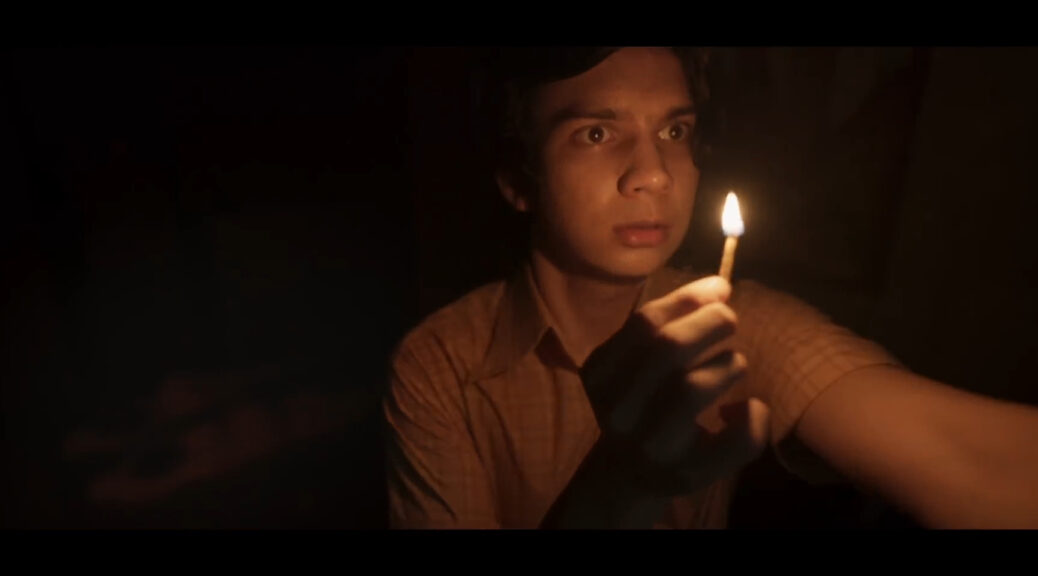
We open after midnight in a sweaty Indonesian newsroom, dedicated journalist Dimas (Endy Arfian) keying in the last sentences of his most perfect story. Capitalists are illegally mining a rainforest in Borneo where dozens of strange deaths occurred.
But the story never runs, and within a scene or two, Dimas is the new guy in an awfully unpleasant Indonesian prison.
Were it not for the gruesome opening (the reason that story didn’t run), you might not recognize Anwar’s latest as a horror film until after its midpoint. Instead, the filmmaker pits a rag tag group of not-so-badnicks (one telephone scammer, one small time robber, etc.) against more serious felons and a sadistic prison force. It’s somewhat traditional action with a bit of good-natured humor tossed around.
And then, meek little do-gooder Dimas arrives. Fresh meat. Or is he?
Though the most unhinged of the inmates, Tokek (Aming Sugandhi), has made his ill intentions clear, he meets a similarly grisly fate as that newspaper publisher. Is Dimas to blame? Or did he unwittingly bring something to the prison with him?
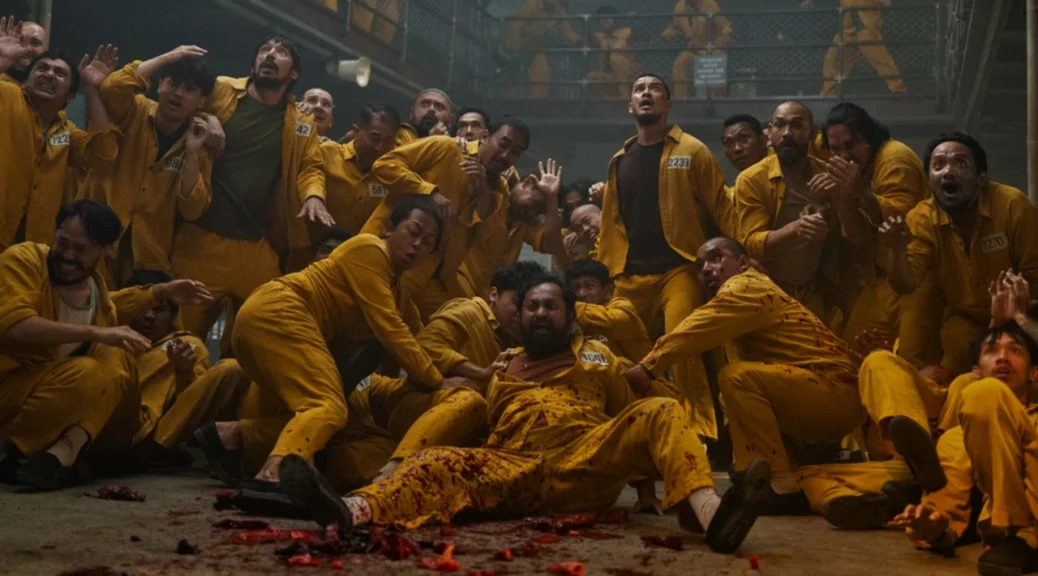
Ghost in the Cell showcases Anwar’s knack for truly ghastly body horror with a buoyant camaraderie, proletariat zeal, and well-placed bursts of comedy. His cast is up to the tonal challenge, each one carving out a memorable character, which can be tough to do in a sea of prison bars and orange jumpsuits.
There’s almost a sweetness and definitely a sense of optimism in the humor, characterizations, and storyline. The respect the inmates show the dance instructor, and Anwar’s earnest use of dancing in the film, can’t help but make you smile—even as massive chunks of inmate slide down the gore-slimed stone walls.
Pick-me-up seems like the wrong way to describe Ghost in the Cell, but for a movie boasting the sheer volume of carnage, the film has a good heart.