OK, not much gray area in that title, but it does sound fun.
It could have been, but producer Michael Bay and director Jonathan Liebesman can’t find a balance between Saturday morning sensibilities and adult superhero action.
There’s a serious origin story, as we see how the four massive turtles (and their wise sensai, a rat) come to live under the streets of New York City, battling a crime syndicate known as the Foot Clan.
Young TV reporter April O’Neil (Megan Fox) catches a glimpse of the secretive vigilantes in action, and instantly knows that unmasking them is the big story that will propel her career.
The turtles themselves still love pizza and make wisecracks, but these moments of silliness and self-aware humor seem meant for a different film. The plot that surrounds the young ninjas is full of cartoon obviousness played overly straight, with no hint of the tongue-in-cheek attitude it sorely needs.
In short, where’s the fun? The tech-savvy, 3D action sequences may be big and loud, but they’re also dull, confusing and instantly forgettable. It isn’t long before this film feels too long.
The idea of a big-budget TMNT reboot works, both on a nostalgia level and as a business model aimed at today’s kids.
Maybe it should have stayed an idea, because it lands on the big screen with a big, green, slimy thud.
You have to kind of feel for a film about tornados that comes out right now. How could they have known when they began the years long trek toward a final product that SciFi Channel would launch a flick about a tropical storm that rains great whites on actors who stopped being famous in the Nineties? And even if they did know, who could have predicted its insane success? Or a sequel?
So, no, poor Into the Storm just marched along unaware, casting grade B heroic types, developing a mediocre script, and spending some cash on special effects. For what?
To bore us to tears, that’s what.
What is essentially a rehashing of 1998’s Twister with a little Jackass side plot, Into the Storm follows a two-van storm chasing team out to document the eye of a tornado – just film right up inside that bad boy, kind of a Dorothy’s eye view. With them, we chase some crazy cloud patterns to a wholesome small town where the high school graduation ceremony is about to take place – RIGHT IN THE BELLY OF THE BEAST!
But wait? Where’s Donny, the assistant principal’s troubled son? He snuck off to film an environmental video with the girl of his dreams at that old abandoned warehouse – RIGHT IN THE BELLY OF THE BEAST!
When there are this many tornadoes, there are lots of bellies.
Director Steven Quale’s storm scenes do look great. It’s just his relentless attempts to find a reason to put his characters in harm’s way that get a bit tedious.
He hasn’t exactly drawn on a cast that elevates the material. You’ve got that kid from iCarly (Nathan Kress), the dead (and not walking) wife from Walking Dead (Sarah Wayne Callies), and a full sized Thorin Oakenshield (Richard Armitage, heroic as ever), none of whom particularly impresses.
Matt Walsh does, though, and not in a good way. Here’s a guy with a lifetime of excellent comedic character work under his belt, but a dramatic character arc – even a painfully obvious one – is still pretty far out of his reach.
But Into the Storm is not about weakly written characters or underperforming actors. It’s about living life for today. It’s about trusting your kids and appreciating what you have. It’s about the resilience of the human spirit. It’s about sharkin’!
I did not have high hopes for this movie about a young Indian cook and his family, who open a restaurant 100 feet from a famous bastion of French cuisine.
Director Lasse Hallstrom’s output has primarily offered superficial romance, trite drama and cheesecloth since What’s Eating Gilbert Grape. And the media blitz about producers Oprah Winfrey and Steven Spielberg says “sledgehammer of sentimentality” to me. Plus, it’s made by Disney, who Slumdogged it up earlier this summer with the tastefully offensive Million Dollar Arm.
But there are two glimmers of hope.
Writer Steven Knight is not faultless, but when he’s on, he is brilliant. (Please see Eastern Promises, Dirty Pretty Things, Locke. Seriously, please see them.) So there’s that.
And any script can be made better when it falls into the hands of the incomparable Helen Mirren. You saw RED, right?
And basically, The Hundred-Foot Journey is an exact sum of its parts. The frothy concoction offers seductive visuals, feel-good cultural blending, trite drama, a script that sneaks in some subtle but bright jabs at France’s recent history of violent racism as well as the high octane competition of haute cuisine, and a gem of a performance by Mirren.
Watching young Hassan (Manish Dayal) struggle with his natural cooking instincts, the culture clash his life has become, and his romantic interest in a rival sous chef pales when compared to the boisterous, enchanting battle of wills between Mirren’s Madame Mallory and Hassan’s father (Om Puri). These two acting veterans are as flavorful and tempting as any of the dishes simmering onscreen, and the film weakens whenever the story pulls away from them.
Hassan’s romantic subplot fails to deliver any heat, and when the film follows him out of town, you can’t help but feel you’re biding your time until your next visit to Pop and M. Mallory.
It’s being called Slumdog Millionaire meets Ratatouille, which isn’t far from the mark. Adapted from Richard Morias’s charming summer read, the film is as sweet as it is harmless. For foodies and folks looking for the cinematic version of a poolside paperback, The Hundred-Foot Journey delivers. If you’re seeking something with a little artistic nutrition, you’ll need to look elsewhere.
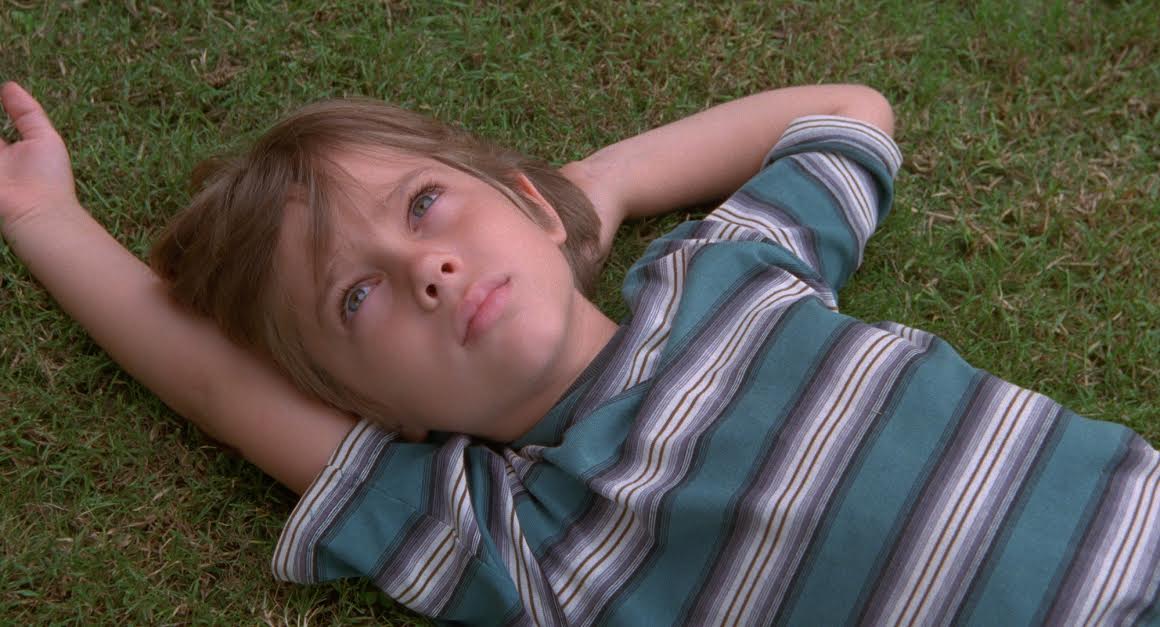
With an effort that proves Richard Linklater to be indefinable as an artist even as it feels a natural evolution of his best work, Boyhood is a movie like no other.
Linklater filmed his low key opus over twelve years, pulling cast and crew back together for a few days each year to check back in on Mason (Ellar Coltrane), his sister Samantha (Lorelei Linklater) and their parents to see how things are hanging.
And that’s it. We participate in every year of Mason’s childhood, from Grade 1 to his freshman year in college. It’s not the big events, either, but the seemingly innocuous moments that, in sum, define a childhood.
Linklater’s genius has always been his generosity and patience with his cast and his mastery in observing the small event. Many of his films feel as if they are moving of their own accord and he’s simply there to capture it, letting the story unveil its own meaning and truth. The Before series offers obvious examples, but much of his work, from Slacker and Dazed and Confused onward, benefits from a casual observational style.
Never has he allowed this perception to define a film quite as entirely or as eloquently as he does in Boyhood. With the collaborative narrative Linklater sets a tone that is as close to reality as any film has managed. It’s both sweeping and precise, with Linklater’s deceptively loose structure strengthened by his near flawless editing and use of music to transition from one year to the next. He’s the surest bet so far for an Oscar in directing, and his film is the strongest contender yet for best picture.
For his cast, Linklater returned to regular contributor Ethan Hawke, whose performance as Mason’s somewhat flaky father marks the best work the actor’s ever done. Equally wonderful is Patricia Arquette with the meatier role of Mason’s mother, a loving if flawed matriarch. Linklater’s own daughter Lorelei also impresses and absolutely entertains as the boy’s sister.
Importantly, though our primary vehicle through this childhood is Mason, we come to truly know all these characters. None is given short shrift, and each is entirely fascinating in their own right.
But the film succeeds or fails with Coltrane, and Linklater owes a debt to the movie gods for this bit of casting. What a wonderful, fascinating, tender character the young actor carves out of this experience. With nary a false note, he carries us through the unforgettably familiar and authentic moments of insecurity, love, heartbreak, longing and confusion that mark childhood.
It’s a breathtakingly understated and authentic turn, perfect for the only film of its kind.
As a broke college student at Ohio State in 1985, I saved my pennies and stood in a line halfway down High St. to see Mr. Dynamite live at the Newport Music Hall.
My first cellphone ringtone was “Sex Machine.”
The point is, I love me some James Brown, and I really liked Get On Up.
It’s a bit of a relief, because with director Tate Taylor at the helm, I feared Brown’s story would get the same clichéd, soccer-mom-feel-good treatment Taylor gave The Help. Instead, buoyed by a meaty script from veteran writers Jez Butterworth and John-Henry Butterworth (Edge of Tomorrow/Fair Game) he takes some chances that pay dividends.
Get On Up breaks the “fourth wall” early and often, as Brown (Chadwick Boseman) looks the audience in the eye and reminds everyone how big a musical influence he remains to this day. This ignites a swagger that anchors the entire film, which, considering the subject, is the absolutely perfect vibe.
It ain’t braggin’ if you back it up, and Brown, warts and all, was one of the most important musical and cultural figures of the 20th century.
Taylor shows us Brown’s rags to riches story – from growing up in a Georgia brothel to easing tensions after Martin Luther King’s assassination – in scattershot fashion, dropping in on different periods without regard to chronology. Not only does this offer a stylistic alternative to similar films such Walk the Line and Ray, but it presents Brown as a sum of equal parts while also ensuring that any overt sentimentality is never given time to add weight.
Boseman is flat-out terrific, serving notice that his fine performance as Jackie Robinson in 42 was just a warm-up act. Boseman has Brown’s speaking voice, cocksure attitude and his incredible moves down cold, combining them all for a portrayal full of an electric charisma.
Anyone who remembers Eddie Murphy’s classic “James Brown Celebrity Hot Tub” from SNL knows how easily a Brown impersonation could slip into parody, but Boseman avoids any hint of it. His is a completely authentic performance that needs to be remembered in the coming award season.
From the early “chitlin circuit” tours, to the Apollo Theater to the legendary T.A.M.I. show, Taylor frames the live performance sequences with the cracking, cold sweat-inducing urgency that music this great demands. Kudos, too, to the sound editing department, frequently mixing Brown’s original vocal tracks into new arrangements, enabling wonderfully seamless film recreations.
Okay, so Brown’s personal demons could have been given more gravity, and there are a few biopic crutches (soul- searching in a dressing room mirror, for instance), but Taylor and the Butterworth boys score with the humanity they bring to two profound relationships in Brown’s life: his longtime friend Bobby Byrd (Nelsan Ellis) and his mother Susie (Viola Davis).
There’s true poignancy to the moments that find Susie, after a long absence, visiting her triumphant son backstage. It’s the film’s non-musical highlight, and yet another reminder of how little screen time Davis needs to be unforgettable.The same can be said for Brown’s music, and while this film will certainly thrill the fans, it’s good enough to win him plenty of new ones.
As a rule, August – like January – is the month studios sweep out their bin of movies that weren’t quite good enough to make the prime time cut. Usually we can expect little more than dregs until mid-autumn, when both holiday and awards season begins in earnest and studios once again proudly populate cinemas.
And yet, in what has been the summer of SciFi, James Gunn elevates our August with one of the most entertaining films of 2014, Marvel’s Guardians of the Galaxy.
An uneasy bond connects five interstellar losers, each needing another to 1) avenge, 2) cash in, 3) survive, and 4) save the galaxy. It has to do with an orb, is all very cosmic bounty hunter-y, and includes a raccoon that sounds remarkably like 2011’s Sexiest Man Alive.
Right there – casting Bradley Cooper as the raccoon – Gunn zigs when you expect him to zag. Cooper excels as the very angry varmint, joining an entirely inspired cast.
Chris Pratt, who beefcaked up a bit for the gig, shoulders the leading role in his second relentlessly enjoyable film this year, after January’s joyousThe Lego Movie, here playing the American intergalactic scavenger and adventurer, and lover of easy listening jams.
Pratt’s endearing combination of humility and confidence charms, and with a casual goofiness he elevates every line of the admittedly clever dialog, all of it brimming with crisp pop culture humor made funnier by the context (in that no one but Pratt’s Peter Quill could possibly get the earth references). He makes a hero of Kevin Bacon in his dramatic retelling of Footloose, which only gets funnier from Zoe Saldana’s callback in the final act.
Saldana joins WWE’s Dave Bautista and the voice of Vin Diesel (as a tree) to fill out Peter Quill’s band of misfits, and together the crew offers endless amounts of ruffian charm.
As important, all evil doers – from Lee Pace’s zealot Ronan to Benicio del Toro’s creepy Collector to Michael Rooker’s dangerous Yondu – are delightfully diabolical.
Gunn nicely articulates the galaxy and its characters, keeps the humor light, the action quick and the palette colorful.
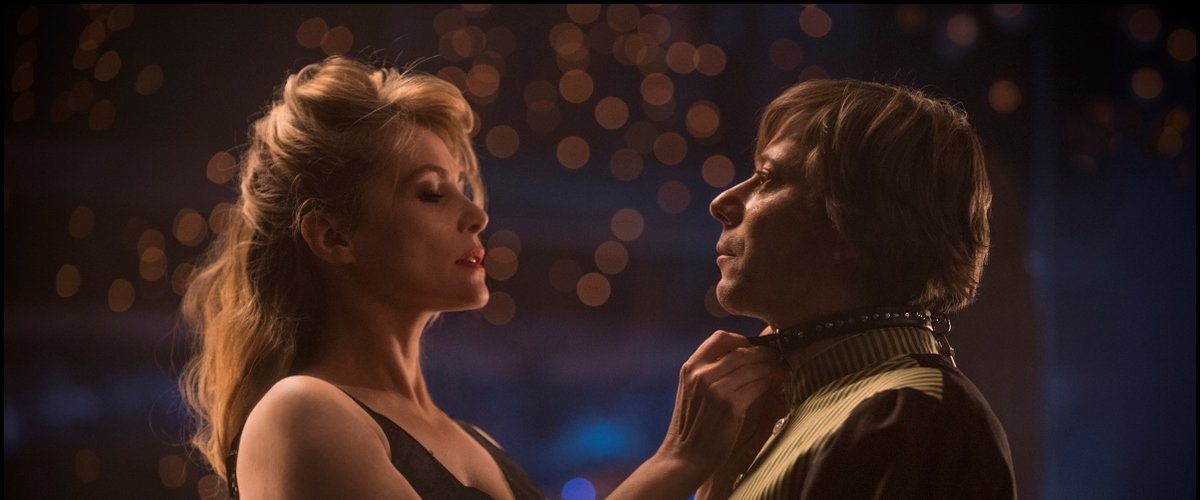
A director as accomplished as Roman Polanski doesn’t put anything on film by accident. His latest, Venus in Fur (La Vénus à la fourrure), is an intimate drama with just two, very deliberate cast members.
One is Polanski’s wife, and the other is a dead ringer for the director himself at a younger age, a combination which adds an eyebrow-raising layer of intrigue to what transpires on this psychosexual battlefield.
Polanski also co-wrote this adaptation of David Ives’s Tony award-winning play, which is set entirely within an empty theatre. Thomas (Mathieu Amalric) has finished auditions for a play he’s directing and is about to head home when Vanda (Emannuelle Seigner) appears, begging for a chance to show Thomas that she’s perfect for the lead role in his stage production of Leopold von Sacher-Masoch’s 1870 novel Venus in Furs.
And the play-within-the-play begins, as the brash, uncultured, seemingly unprepared Vanda dazzles Thomas with an uncanny understanding of the material and how best to present it onstage. The two read deeper and deeper into the script, as the line separating fact and fiction gets blurry and the balance of power between them begins to change.
Both performances are exceptional. Seigner gives her long career a new high water mark, effortlessly moving Vanda in and out of character, casting equal spells on Thomas, and on us. Amalric makes Thomas’s journey to subjugation a gradual, satisfying surrender, as he tries to keep up with Vanda in her brilliantly executed game of wits.
As with his Death and the Maiden and more recently, Carnage, Polanski seems to relish digging into these stories of psychological warfare. His touch again is masterful, keeping it light in the early going, and then twisting the screws with clinical camerawork that reflects the growing intensity.
What already was a devious essay on human nature takes on an even greater heft with Polanski at the helm. Lines such as “Maybe she wanted to be corrupted!” stop the wicked humor in its tracks, as you ponder the personal statement that may be at work here.
Is the director a master or servant? Which director exactly? Is this a feminist decree or merely a flimsy, perverse attempt to make “S&M porn” seem empowering?
Those are just some of the levels on which Venus in Fur succeeds. It’s an enthralling, almost dizzying spectacle.
Nearly ten years ago, Wedding Crashers taught us the best response to “people use only ten percent of our brains” is…”I think we use only ten percent of our hearts.”
Still, writer/director Luc Besson bases his new film Lucy on that old urban legend, and what might happen if someone could suddenly flex four, five or even ten times more grey matter muscle.
A ridiculous premise doesn’t have to sink a film, and this one actually gets off to a solid start as Lucy (Scarlett Johansson) unwillingly becomes a drug mule for ruthless Korean kingpin Mr. Jang (the always fascinating Min-sik Choi).
Jang’s henchman surgically stash a bag of his new product into Lucy’s abdomen, but the pouch breaks when she suffers a beating. In just minutes, the drug settles into Lucy’s bloodstream and begins opening countless new cognitive horizons.
It doesn’t take long to realize how much better this film is because of Johansson. She provides the terror-filled vulnerability to make us care about her character early on, then projects the right amount of wonder and determination as Lucy seeks out a famed brain researcher (Morgan Freeman, straight from Transcendence) to assist in her transformation.
Besson gets busy from the outset, as quick cuts and frenetic action are interspersed with scenes of animals in the wild, reinforcing the changing roles we see between hunter and prey. While not exactly subtle, it is stylish, and downright abstract compared to what Besson brings to the film’s second act.
As his characters begin to lament how we’ve all become more concerned with “having than being,” Besson shamelessly parrots Malick’s Tree of Life and Kubrick’s 2001, apparently believing the film to be an equally eloquent statement on mankind’s past, purpose, and future.
It isn’t, but with about 50 percent less pretension, Lucy could have been a fun guilty pleasure.
Whether you loved him or hated him, Roger Ebert was a massive cultural influence – particularly if you happen to be a film critic.
Arguably the most influential movie reviewer of all time, Ebert was also a far more unique and fascinating character than casual readers/viewers might realize. Life Itself, Steve James’s revelatory new documentary, unveils the highly complicated personality behind all those opinions.
Life Itself nearly bursts with intimacy and detail, embracing Ebert’s bawdy youth and epic ego as openly as his medical treatments and serene end. The minutia of Ebert’s life is a surprising thrill to take in, though James feels no compulsion to pretty it up. He asks an old friend at one point whether, deep down, Ebert was really a nice guy.
Yes, he says. But not that nice.
The sparring with his reluctant TV partner Gene Siskel, often taken directly from TV outtakes, is utterly hilarious, but James mines it for more than laughs. We are reminded that Ebert was a populist film critic before there was such a thing, and while we relive some of the highlights of the Pulitzer Prize winner’s eloquence, we also revisit some of his more questionable assessments, (as when he gave Full Metal Jacket a thumbs down, but pointed that digit skyward for Benji the Hunted).
James notes, sometimes hilariously and with absolutely no sugar coat, that Siskel & Ebert’s program was often derided by fellow reviewers as not being film criticism at all – at which time Ebert routinely pointed to his Pulitzer. By taking film criticism to the public, the show had more influence on ticket buying, film production, and the changing paradigm of the medium of film criticism than anyone could have predicted.
James spends a great deal of time with Ebert and his wife Chaz in the hospital during the last couple stays before Ebert’s death, detailing the medical treatments and witnessing more of the drive that motivated this prolific writer his whole life. More importantly, through these visits, as well as emails and excerpts from Ebert’s autobiography, James makes clear that he is not laying his subject naked before us, but that Ebert himself is the willing object of our scrutiny through this film – an act that takes on much power when you consider what the man did for a living.
With James, we wind and careen through Ebert’s personal and professional life and legacy, but the film never loses focus. It touches all the bases, and in the end not only offers a moving image of a life abundantly and uncommonly lived, but honors Ebert’s most enduring, most identifiable, and most tenacious attribute: his voice.
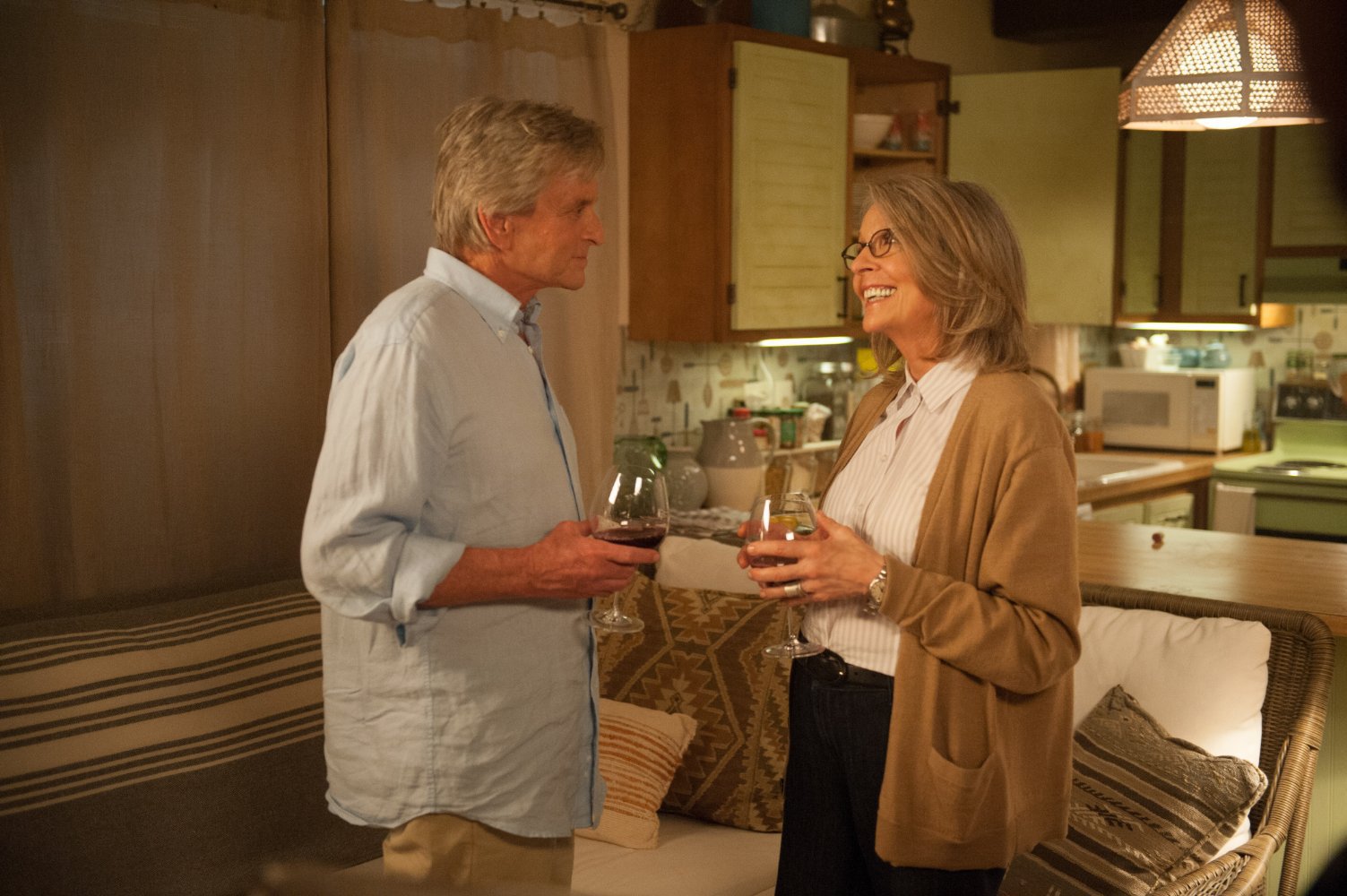
Michael Douglas turns 70 this year, and though, in younger years, he carved out some memorable characters, in his final lap he’s really found his niche. No longer dependent on the vain smolder of his unreasonably popular 90s output, the battle-tested pro has settled into a groove playing elderly scoundrels. And So It Goes offers him another opportunity, this time with Oren Little, widowed misanthrope.
Oren falls for lounge singing sweetheart Leah (Diane Keaton), but his abrasive personality and a mind-numbing series of contrivances stand in the way of true love.
Though Keaton simply recycles the same character she’s played with minor variations since 2003’s Something’s Gotta Give, the banter between these two vets is never less than charming.
But let me ask you something…when was the last time Rob Reiner made a good movie? Admittedly, he directed, bar none, cinema’s greatest mockumentary, as well as two of the best Stephen Kingadaptations on record. His whole Eighties catalog impresses and entertains. A Few Good Men doesn’t suck outright.
After that, meh.
Even Douglas and all his geriatric charisma can’t overcome Reiner’s schmaltz or writer Mark Andrus’s insulting screenplay.
In 1997, Andrus wrote As Good As It Gets, a yarn about a curmudgeonly loner whose heart is warmed by a series of humanizing obstacles and the love of a good woman. In 2014 it’s the same story, different obstacles.
Conflict appears and conveniently disappears as soon as it’s served its purpose. One hollow plot device after another springs up to teach lessons and warm hearts, yet keep the two love birds apart. The lazy scripting is almost as offensive as the way the film casually embraces the stereotype that the elderly are racist. Reiner gives Andrus’s lines an eye rolling “oh those racist scamps” kind of spin that’s beneath the characters these actors are trying so valiantly to create.
The whole team is simply cashing in on the new market for old talent, films like Something’s Gotta Give and BestExotic Marigold Hotel having proven that there is an audience for late life romances. The great thing about that revelation is that it allows talents like Keaton, Douglas and others the opportunity to lead films.
The unfortunate side effect – one felt in any proven cinematic market – is the soulless cash grab.