Tag Archives: Rachel Willis

Be Loud

Marlee Matlin: Not Alone Anymore

by Rachel Willis

In 1986, Marlee Matlin won the Academy Award for her performance in the film Children of a Lesser God. Nearly three decades later, she remained the only Deaf actor to win an Oscar. This, as well as Matlin’s trailblazing career, is the focus of director Shoshannah Stern’s documentary, Marlee Matlin: Not Alone Anymore.

Stern herself is also Deaf, and there are many wonderful moments when she and Matlin (as well as Stern with other Deaf actors) converse on screen without sound. The film makes extensive use of subtitles and closed captioning, but if a hearing audience member were to simply watch the two communicate on screen it’s a good example of how a Deaf person may feel when surrounded by hearing people who may forget to include them in conversation.

This is something Matlin addresses, as she was the only Deaf member of her family. It is also a reminder that this sort of exclusion can lead to significant language deprivation for individuals with hearing impairment. This is a critical issue that the documentary touches on when speaking to Matlin about some of the situations in which she was unable to name her experiences.

Like the 2000 documentary, Sound and Fury, Matlin and others are quick to point out that they are not limited in their abilities. It’s the world around them that tries to force them into a box where their “disability” is a problem to be solved not a difference to be celebrated.

The bulk of the documentary focuses on Matlin’s career and role as an advocate for the Deaf community. Closed captioning, something modern audiences may take for granted, was once a rarity. Matlin’s efforts, including a hearing before Congress, ensured that closed captioning would be a given moving forward.

There isn’t a dull moment in this documentary. Stern expertly weaves Matlin’s career and activism into an overall conversation about the needs of Deaf people, and the ways in which we can all do better moving forward. It’s certainly a film worth watching.

God Defend New Zealand

Prime Minister

by Rachel Willis

New Zealand’s former prime minister, Jacinda Ardern, is the subject of directors Lindsay Utz and Michelle Walshe’s documentary, Prime Minister.

The film starts with Ardern’s election as leader for her country’s Labour Party, seeking to rescue it from gloomy poll numbers. That she actually wins the position of Prime Minister just a few weeks later comes as a bit of a shock, most of all to Ardern.

Ardern is an interesting central figure for the film. She was only 37 when elected, and even more fascinatingly, was pregnant at the time. She becomes the second woman in history to give birth while in a position of government leadership at that level.

But the documentary leans into the personal over the political, seeking to humanize Ardern and understand her approach to governance. It captures intimate moments in which Ardern gives voice to those emotions that leaders often have to hide from public view.

However, Utz and Walshe never dig too deeply into any one subject. Prime Minister neither focuses long enough on her political leadership nor her family life. At times, it even drags as it hops from one event to the next.

That’s not to say that the events that took place during Ardern’s time in office were without consequence. While leaders may always experience tumultuous events over the course of their tenure, Ardern’s seems especially marked by tragedy.

The film picks up speed in the second half, as Ardern faces an unprecedented event with the arrival of Covid-19 virus to New Zealand. The filmmakers devote the most time and attention here, rightfully, as it becomes Ardern’s biggest challenge as Prime Minister.

If the point of the documentary is to humanize those we elect to power, then it hits the nail on the head. Ardern herself opens the film with a plea to humanize those with whom we disagree. It’s a poignant message in a world that seems increasingly fraught with political turmoil.

It’s unfortunate that message will likely be lost to those who most need to hear it.

Inconvenient Arrangement

Sister Midnight

by Rachel Willis

Watching the trailer for writer/director Karan Kandhari’s film Sister Midnight did not prepare me for the wild ride I was about to take. It is best to go into this movie knowing as little as possible, so each change in direction allows for surprise. For that reason, I will give away as little as I can.

When Uma (Radhika Apte) travels into the city to marry Gopal (Ashok Pathak) in an arranged marriage, she doesn’t know exactly what to expect. She and Gopal knew each other as children, but it’s clear they no longer have any idea what makes the other one tick.

We’re treated to several comedic moments as these two newlyweds navigate their shared space in one very tiny apartment on a busy street. However, the comedy quickly gives way to Uma’s despair.

As her misery grows, she finds herself unable to eat, but the only thing her female neighbors seem to notice is how pale she appears. Many of them ask her which whitening cream she uses.

This is one example of how deeply embedded into the culture the film lies. While most of the film’s details transcend culture, Kandhari doesn’t beat anyone over the head with extraneous information. Some things will likely go over the heads of anyone unfamiliar with India’s cultural history and background, but the audience can still identify with how Uma feels, which keeps the story relatable.

Though Sister Midnight retains its humor, it’s impossible to deny the sadness that underlies it. As the film progresses, Kandhari peppers in horror elements. A couple of scenes even reminded me of Ari Aster’s Midsommar, though Sister Midnight never delves so deeply into outright terror.

Apte excels as the woman whose husband is incomprehensible to her. Equally enjoyable is Pathak’s turn as the bumbling spouse who is just as perplexed by his new wife.

Sister Midnight is funny, horrifying, and a little sad—a nice blend for an interesting take on surviving an unhappy marriage.

Fatherhood of the Future

Daddy

by Rachel Willis

In a sterile conference room, a man speaks to a disembodied voice coming from a speaker. The voice is trying to determine if the man is the right kind of person to go on a government retreat that will decide if he would make a suitable father. If he’s not chosen, he will instead receive a vasectomy. So begins the dystopian comedy, Daddy.

Writers/directors Neal Kelley and Jono Sherman have crafted a new kind of hellscape with their look at toxic masculinity, the fear of vulnerability, and the competition that springs from the kind of scarcity that would lead a government to screen potential parents.

As four men arrive at the scenic mountain home, we’re given bits and pieces of the world that has given rise to such a scenario.  Mo (Pomme Koch) tells the others his girlfriend is at the female version of the retreat. The two decided to be screened at the same time. But while the men are housed in the lap of luxury, the women are apparently put through a more intense screening process. The subtle details that we pick up during the film’s run time make what we see on screen more interesting.

The men begin to descend into paranoia, leading to a certain amount of comedy as they try to decide what will make them seem like they’d be good fathers. The discovery of a realistic baby doll amps up the comedy.

Each actor brings a certain rigidity to their character that plays well with the idea that men have a hard time embracing their emotions. Scenes when the characters do display some vulnerability feel awkward – perfectly encapsulating how difficult some men find it to open up to other men.

When the film remembers that there is humor to be mined from such a situation, it shines. When it forgets, it becomes tedious.

However, it’s not hard to imagine this world, and Kelley and Sherman have fun wondering how men might react to the absurdity of it all.

I’ll Make Sandwiches

Relative Control

by Rachel Willis

Sara (Teri Polo) has her hands full. Her adult son is living on the other side of the country and is still dependent on her. Her aging parents are beginning to show signs of mental and physical decline. And she was just hired to handle the biggest case of her career as a corporate attorney.

How can one woman balance all of this? This is the focus of director Dafna Yachin’s film, Relative Control. Working from a script by Charlene Davis, Yachin understands how much of a family’s responsibilities fall to women, even when they have lives of their own to consider.

More and more, this scenario has become the reality for middle-aged Americans. Sara, a single woman with no partner to rely on for financial or emotional support, is lucky enough to have a high-powered job that allows her son to live off – rather than with – her as she juggles work and familial obligations.

There’s an exasperated humor that lies at the heart of the movie. As Sara interacts with her stubborn parents, her father especially, you can’t help but chuckle at the situation. It’s very relatable.

Sara’s age is a significant factor. For those with careers, this tends to be the time in life when the demands of work rise as one climbs the corporate ladder. As the sole child responsible for her parents, Sara’s worlds start to collide with more and more frequency. There are a lot of things an audience can relate to as we watch Sara struggle to maintain balance.

But not everything in Sara’s life is so easy to identify with. Most working adults don’t have the kind of career that affords a son to fly home from the other side of the country at seemingly every crisis.

The characters do help to keep the story familiar. They likely resemble members of your own family, and as we watch the family interact, it’s not hard to care about them.

Relative Control is not a perfect representation of the “sandwich generation”—the one still supporting adult children when the need to support their own parents comes around—but it resonates nonetheless.

Dream Scenario

Shudderbugs

by Rachel Willis

The ability to dream of things that happened or will happen is part of the family mythology that permeates writer/director (and star), Johanna Putnam’s film, Shudderbugs.

As we learn from Sam (Putnam), shudderbugs was what her mother, Eliza, called the eerie premonitions and feelings that allowed her to know when something was going to happen. After Eliza’s death, Sam begins having these same feelings as she explores what happened to her mom.

Grief, and the whys that surround death, are the main focus of Putnam’s quiet, contemplative film. We learn through a slow unfolding that Eliza’s death was unexpected. A visit with Sam for her birthday was big on Eliza’s mind, as we see reminders throughout the house of the expected visit.

The first inkling that something isn’t quite right occurs when Sam can’t find her mother’s dog. Then, the neighbor acts very strangely. The results from her mother’s autopsy require further tests. Sam’s suspicions grow as she uncovers new pieces of information while spending several days in her mother’s rural house.

The setting of Putnam’s film, upstate New York, speaks to tranquility. The gorgeous surroundings make it hard to feel that something is amiss, but there are moments that unnerve: sounds from inside the creaky old house, dolls set up in cribs and highchairs around the garage attic, and the neighbor who is wonderfully “off.” It’s hard not to be sucked in to the mystery, especially as Sam starts to experience her own shudderbugs.

The film starts off very strong, but it never quite pulls off the sense of dread that’s expected with such unusual circumstance. Sam carries the vast majority of the film. Unfortunately, Putnam’s talents are far better behind the camera. Her acting is fine, but not the caliber needed for such a quiet character study.

However, for all the weaknesses, the film’s strengths are far more engaging. The writing is exceptional, and the unsettling questions that surround an unexpected death lend themselves well to the film. While there are some moments that stumble, the overall experience is worth the time.

We Infected a Zoo

Night of the Zoopocalypse

by Rachel Willis

Young wolf Gracie (Gabbi Kosmidis) is put to the test in directors Ricardo Curtis and Rodrigo Perez-Castro’s Night of the Zoopocalypse.

Gracie’s elder pack leader is insistent that something bad is coming, making the pack run drills and practice maneuvers in preparation. But Gracie is skeptical that anything will ever happen at their zoo. Of course, she quickly learns better once an asteroid crashes nearby.

Thrown together with a mountain lion (David Harbour), an ostrich, and a wily lemur with knowledge of late-night horror movie tropes, Gracie must figure out how to defeat the sudden threat.

The animation is not especially creative, but some creepy creatures help liven things up. Some of the monsters may be a bit scary for young viewers, but older kids might be delighted to see fluffy bunnies turn into sharp-toothed, voracious beasts.

The action kicks off quickly, making it tough to catch the names of all the animals who help Gracie, but also helping to move the film forward.

The ancillary characters tend to be the most interesting and the funniest parts of the film. Because the rapport between Gracie and Dan takes a while to manifest, when the focus shifts to them, the film is less fun.

Night of the Zoopocalypse references classic and contemporary horror, from The Thing to Stranger Things, and while kids might not catch every Easter egg, adults enjoy trying to identify the various influences.

But it’s not quite enough to make the film worth the 90 minute investment. With so many excellent animated films these days, Night of the Zoopocalypse is easy to overlook.

Success Is No Accident

Trigger Happy

by Rachel Willis

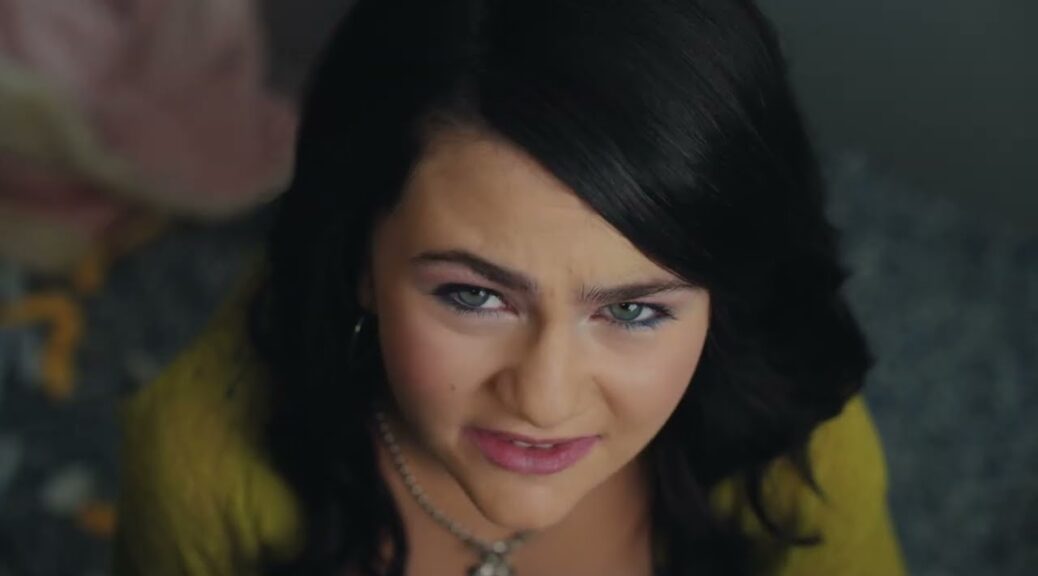
Unhappy George (Tyler Poelle) has a plan. Miserable at work, miserable at home, George needs a change. His chosen method for changing his life becomes a madcap adventure of sorts in director Tiffany Kim Stevens’s film, Trigger Happy.

Since misery loves company, George isn’t alone in his dissatisfaction. George’s wife, aspiring actor Annie (Elsha Kim), is as annoyed with George as he is with her. Several others express their frustrations and despairs in various ways as well.

Thankfully, Stevens isn’t interested in making us miserable. Rather than wallow with unhappy characters, we watch as George, Annie, and their friends find ways to improve their circumstances through torrid affairs, spouse murder fantasies, and hilarious professional accomplishments.

Of course, because none of the characters are honest with each other, or even themselves, misunderstandings abound. What could almost be described as comedic hijinks occur, except they’re a little too bloody to be truly called hijinks.

Stevens, co-writing with Daniel Moya, pens dialog with a strange, melodic poetry that gives it a musical quality, adding a level of surrealism to the film. George’s increasing frustrations play well with this quality.

Adding to Trigger Happy‘s uncanniness is the slyly revealed reality of George’s world, which isn’t quite the same as ours. It’s not obvious at first, but as the film progresses, more hints are dropped. And as the title of the movie suggests, guns abound (not so different from our world in that way).

Each person in George’s world is compelling in their own unique way. Though some play a bigger part in George’s misery than others, none of the ancillary characters feel unnecessary. From his coworkers to his boss, to the friendly shop owner, each person has a place in George’s orbit.

Still, it’s Annie, as both his antagonist and his wife, who has the most commanding presence in George’s life. It’s easy to love and loathe both characters.

Trigger Happy is, overall, a winning parody about the miseries of everyday living.

Driver’s Seat

Something Is About to Happen

by Rachel Willis

After losing her job as IT support staff for a dental supplies company, Lucía (Malena Alterio) seeks employment as a taxi driver in Antonio Méndez Esparza’s Something is About to Happen.

I’ll admit I was immediately intrigued by the opening credits. The black text on red background and the string-heavy score sets a compelling tone for the film.

Following the energetic opening, things slow down a bit. We follow Lucía through several day-to-day tasks, including supporting her elderly father. But a fleeting conversation with a taxi driver sets Lucía on a new path.

And what could very easily be a mundane venture into new territory for Lucía is anything but. It sometimes starts to feel a little like Taxicab Confessions, but rather than something tawdry and banal, instead we watch a woman opening herself to a new world in exciting, curious, sometimes dangerous ways.

The film’s naturalism helps ground it as sinister elements weave their way into the fabric of Lucía’s life. There’s a haunting melancholy underneath Lucía seemingly boundless enthusiasm. As her façade slips, we can’t help but watch in fascinated horror.

There are some scenes that are a bit too long, but on the whole, each one compliments the next as we follow our hero as she navigates life, love, and loss in the driver’s seat of her taxi. More often than not, we’re given new information with each scene, learning more and more about Lucía and what makes her tick.

Crows populate the film, sometimes in unexpected ways. The birds have often been used as symbolism, and it’s not too difficult to tease out what they represent to Lucía and the film overall. Their appearance in the film, however, fluctuates between non-existent or heavy-handed. It’s a bit much when they could have been utilized in subtler ways. It’s hard to anticipate what might come next for Lucía, which makes the film and enjoyable watch even as it meanders off course from time to time.

Nothing to See Here

Like Father, Like Son

by Rachel Willis

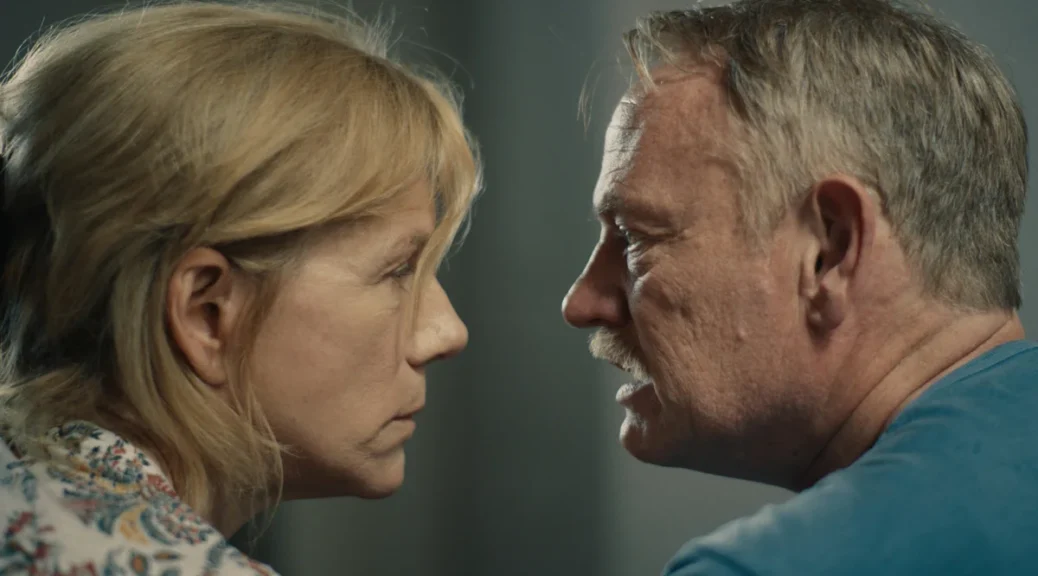
After witnessing his father (Dermot Mulroney) commit an act of extreme violence, Eli (Dylan Flashner) confronts the idea he might be capable of similar brutality in writer/director Barry Jay’s film, Like Father, Like Son.

Eli’s rage is apparent early on. But initially, a lot of it seems to come in response to bad situations. A boss who denigrates his employees on a regular basis. A repossessed car. A stolen wallet. A father in prison who taunts Eli when he comes to visit. However, the outsized reactions speak to something damaged within Eli.

Shaky camera movements and quick cuts to past memories intersect with moments when Eli comes close to losing it. It’s a distracting feature that suggests Flashner is unable to convey inner turmoil on his own.

The movie’s biggest issue, however, is the lack of depth given to any of the characters. All we really know about Eli’s father is his penchant for violence. All we know about Eli is his penchant for violence. It’s impossible to sympathize with Eli as he struggles with his “inherent” cruelty. The ancillary characters that orbit Eli’s world aren’t given anything much to do either.

Dialogue would make it seem like Eli struggles with his violent nature, but the actions of the film do not communicate this. If anything, he seems to enjoy his aberrant nature. We spend most of the film watching Eli embrace what appears to be his “true” self. While examining the ways in which violence begets violence can be interesting, Like Father, Like Son doesn’t have anything new to say on the subject.