Tag Archives: Logan Miller

C’est Ce Se

Psycho Killer

by Hope Madden

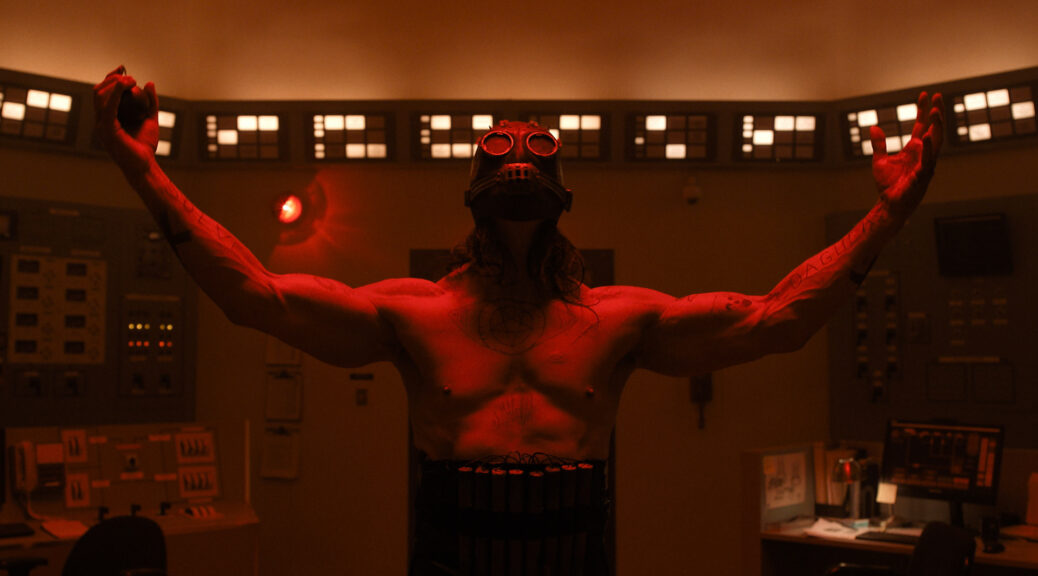
Gavin Polone’s Psycho Killer had one strike against it going in, for me. The film takes us along for the ride on the Satanic Slasher’s cross-country killing spree.

And while James Preston Rogers cuts an impressive figure as the serial killer at the center of this cat and mouse chase, a Satanic murderer is a conservative straw dog cliché as tired and damaging as witches, maybe worse.

That aside, Polone, working from a script by Andrew Kevin Walker (Se7en, The Killer, Metalocaplyse: Army of the Doomstar), crafts a taut thriller.

Georgina Campbell (Barbarian) is Trooper Jane Archer. After witnessing her husband’s murder, Archer determines to take the shot she missed and put an end to the Satanic Slasher.

Campbell delivers a properly heroic performance. Smart, driven, and with an aggressive lack of cooperation from the FBI and other law enforcement agencies but nothing to divide her attention, Archer figures out the psycho’s trajectory.

And though her story involves one almost inescapable cliché, having a woman play the cop who misses the shot that could save their spouse and then, job be damned, scours the country to kill the bastard—it’s a nice gender role reversal.

The villain’s concept impresses: the hair, the mask, the coats, the voice. His mythology is sometimes clunky, other times lazy, but it’s rarely the backstory that makes a villain memorable. This guy’s creepy.

Logan Miller offers solid support with limited screentime. Likewise, Malcolm McDowell lends his unmistakably infernal voice to great effect, providing the film with a bit of dramatic flourish. But otherwise, Psycho Killer blends police procedural and revenge flick with plenty of tension and not a lot of fanfare.

There’s fairly little onscreen violence. Though an awful lot of grisly carnage is mentioned, there are only a few scenes in the film depicting it. Two of them are grimly subversive and worth the ticket price.

The third act comes seems to come from nowhere, but it’s a big capper to the slow building momentum of the Slasher’s bloody journey. Psycho Killer isn’t perfect, but it’s a tight, entertaining bit of a thrill.

Mighty Neighborly

The Good Neighbor

by Hope Madden

Youngsters agitate an old hermit who has a padlocked basement. Things don’t go well.

Yes, this sounds strangely familiar, and comparisons to the far superior Don’t Breathe will haunt Kasra Farahani’s feature debut The Good Neighbor. The two films vary wildly, though, for a number of reasons.

One of those is the pop psychology fueling Good Neighbor. The film’s premise is slight – two high school knuckleheads wire up a neighbor’s house to make it seem haunted, with the goal of observing his behavior and somehow becoming famous. Undergirding the plot, though, are a handful of interesting if underdeveloped themes.

Social media celebrity and the lacking morality that seems to come with it is certainly a thematic influence at work here, although Farahani doesn’t know how to weave it into his story. Ethan (Logan Miller) sees himself as a budding filmmaker and believes this unconscionable tormenting of the elderly as his road to YouTube fame.

His bestie Sean (Keir Gilchrist) is in it for – what, exactly? Science? Hard to say, and when Ethan wants to push things beyond Sean’s comfort zone, Sean’s unclear motive is one reason the film begins to unravel.

James Caan plays grumpy old Harold Grainey, the mean geezer across the road that the boys subject to the “haunting.” His character is primarily viewed from a distance – he’s entirely alone and being watched via surveillance cameras. Still, Caan delivers a skilled and deeply lonesome performance.

Generation gaps, the slippery nature of privacy as well as perception, and “what the hell is wrong with kids these days?” are all concepts toyed with in the film – none of them very successfully.

The problem is not solely the fault of Mark Bianculli and Jeff Richard’s screenplay, although it does begin there. The film doesn’t boast nearly enough jumps to register as scary, and the bend toward drama is too obvious to be effective.

The larger issue, though, is Farahani’s shifting tone. From found footage horror to courtroom drama to melodramatic flashback sequences, the film spins in so many directions you’re never sure what you’re watching.

You should probably just be watching Don’t Breathe.

Verdict-2-5-Stars