Tag Archives: Cristian Mungiu

Rocky Ground

Fjord

by George Wolf

Fjord is a film that feels out of step with the world that exists today, and that’s one of the many reasons it is so quietly riveting.

What is this nuance, this juggling of social complexities that acknowledges opposing forces and the unyielding march of time? Where is the moral absolutism that demands lines drawn with a knee jerk commitment to whataboutism and tribal boundaries?

And the title suggests, writer/director Cristian Mungiu is interested in navigating the small spaces between rocky, mountainous terrain that threatens to overwhelm anything up against it. Inspired by the 2015 case of one Romanian couple in his native Norway, Mungiu (4 Months, 3 Weeks, 2 Days) reportedly spent years researching other child welfare cases in Europe to craft his Palme d’Or winning dissection of a tragic culture clash.

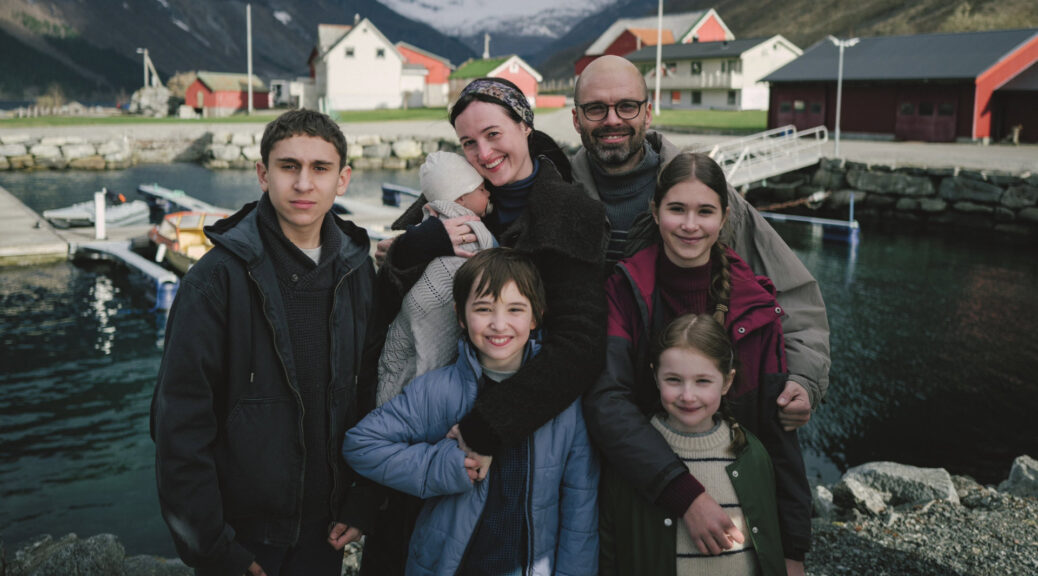
Sebastian Stan and Renate Reisve star as Mihai and Lisbet Gheorghius, a Romanian couple who move to Norway with their five children. They are deeply religious and strict with their parenting, and soon find themselves pitted against a local judicial system at odds with their beliefs.

After a teacher notices bruises on one of the Gheorghius children, an investigation is launched that leads to putting them in foster care, and possible criminal charges for Mihai and Lisbet. Their culture, their religion, their entire worldview falls under scrutiny of a small group of new neighbors.

Mungiu’s camera gracefully asserts the titular metaphors with gorgeous framing of the imposing Norwegian landscapes, then allows Oscar nominees Stan and Reinsve to move throughout a stellar ensemble with astounding intimacy. Though dialog-heavy, the film’s frequent points and counters are thoughtful and organic, with some smaller moments made impactful via pointed production and set design choices.

This is thoughtful, assured and deeply felt storytelling. Most importantly, there are no easy answers here and no tidy bows, and the film is better for it. Fjord gives you plenty of stones in the road to one family’s reunion – religious values, secular social orders, the right to live, love and end life as you wish. How you stack them is up to you.

Sadness Lies Beyond the Hills

Beyond the Hills

By Hope Madden

Cristian Mungiu once again drops us into the world of two desperate women coping with the brutal realities of Romanian culture. Beyond the Hills leaves behind the urgent pace of his stellar 2007 output 4 Months, 3 Weeks and 2 Days, but the outlook for vulnerable women is no less grim.

Alina (Cristina Flutur) and Voichita (Cosmina Stratan) grew up together in a Romanian orphanage. Now adults, both young women have sought security in different places. Alina moved to Germany to work, and returns for Voichita and a chance for the two to waitress on a vacation boat.

Voichita, however, has found a very different kind of solace as a novice nun.

At its core, Beyond the Hills is a potent story of two people who love, but ask too much of, each other. With clandestine love as his compelling core, Mungiu goes on to paint a picture of all that works against the weak as they seek happiness.

What goes unsaid holds more power than anything else in the film, and Mungiu vividly depicts the danger of their love in this community. More than an indictment of religion – although it certainly is that – Mungiu’s film begs you to look deeper. Without fanfare or editorialization, we witness the damage done by childhood abandonment, lifelong institutionalization, an inadequate healthcare system, and the culminating effect of a dangerous desperation to be loved, accepted and safe.

The leads balance each other beautifully. Flutur animates a suspicious, stubborn and alarmingly authentic mix of naïveté and world-wearied cynicism while Stratan’s soulful quiet betrays one more willing to submit for the sake of survival. Their love is never less than genuine, and Mungiu’s canvas of brutal primitivism versus soulless progress would have fallen part without that.

His eye remains impartial, misguided as the behavior onscreen may be. It allows the audience to delay judgment, but also makes it a struggle to find connections with characters. The resolutely unhurried pace also allows the story to open up in its own time, while it tests audience patience. But his tale is worth the effort.

Mungiu has a tragic love story to share, tragic because it finds itself inside a culture in which progress and superstition embrace, perhaps because neither serves the population particularly well on its own.

Verdict-3-5-Stars

http://www.youtube.com/watch?v=auY8X8hguYM
