Tag Archives: Christie Robb

Curious Why Mt. Rushmore Can Be Seen as a Monument to White Supremacy?

Lakota Nation vs. United States

by Christie Robb

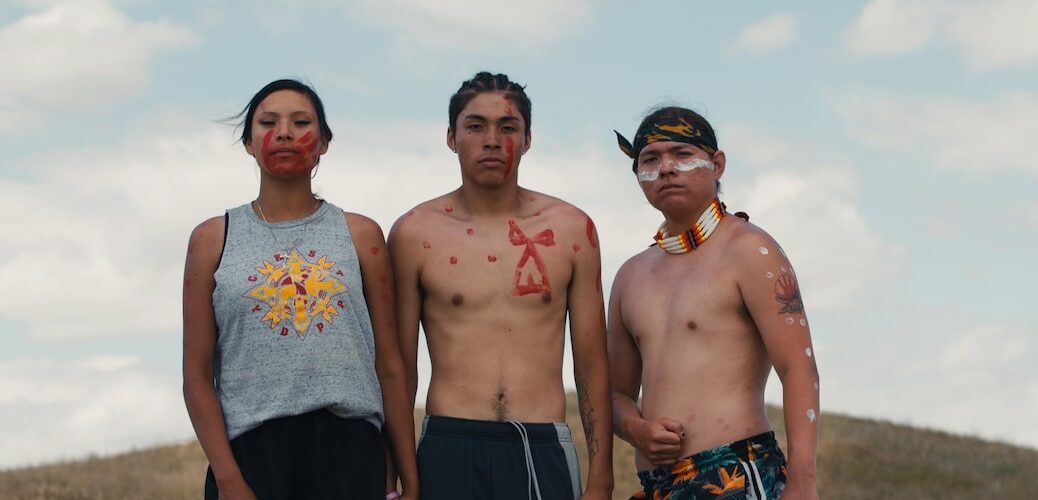
A compelling documentary providing context for the Očeti Šakówin’s[1] Land Back movement, Lakota Nation vs. the United States aims to help viewers understand the past so that remedies can be made to redress historical wrongs.

If I can beg your indulgence for a moment, I’m going to break the fourth wall of movie reviewership a bit.

I graduated high school in the late 1900s (as my kid would say). At that time, the school’s mascot was the Redskin. A six-foot-tall mannequin dressed in buckskins and feathers stood in the lobby opposite the administration offices to greet the almost entirely (at the time) White student body. There was a vocal minority of folks who viewed the mascot as pretty tasteless at the time, but it didn’t get retired and exchanged until 2021. You’d think that would be a sign that the district was moving in the right direction. And things did seem hopeful.

Until the school district passed a resolution banning so-called “critical race theory” in 2022.

Teachers there are no longer allowed to give assignments that ask students to question (among other things) their race, ethnicity, or culture in a way that might be “derogatory.” They can’t ask kids to question possible privilege or reflect on oppression. And this kind of thing is happening in other districts around the country.

How, then, can we talk about the history of the United States? How can we grow as individuals and as a nation without reflecting on our past? Identifying what worked and what didn’t and trying to make better choices as we make contemporary decisions?

Directors Jesse Short Bull and Laura Tomaselli lay out why it’s important to look critically at the past as it relates specifically to the Očeti Šakówin’s ownership of the area around the Black Hills in Lakota Nation vs. the United States.

See, in 1868 the US made a nation-to-nation treaty with the Očeti Šakówin to wrap up a war that the indigenous folks were doing really well at. In the treaty, the US specified a territory that was for the exclusive use of the indigenous folks and that US citizens had no right to step foot on.

But, shortly thereafter gold was discovered in them thar’ hills and the US started breaking its word so folks could weasel their way back in there and start pocketing shiny rocks. Land was stolen. To mark their supremacy over the land, four white guy’s faces were carved into the Očeti Šakówin’s sacred Black Hills. The US still wants that land, but this time it’s more for fossil fuels.

In Part 1, Extinction, the directors explain how initial contact with White settlers impacted native people and how the educational system and White-created pop culture helped reframe a story of invasion as a White self-defense narrative. In Part II, Assimilation, they describe how systematic economic destabilization, land allotment, and an abusive boarding school system tried to destroy Lakota culture so that it would be easier for Whites to take the land and resources. In Part III, Reparation, they describe the development of the modern Land Back movement and how the Očeti Šakówin’s refused a meager offer from the US to pay them for the stolen land. They want the land itself.

Short Bull and Tomaselli weave together vintage educational film strips, old Hollywood movies, news clips, poetry, interviews with members of the Očeti Šakówin, and stunning views of the Black Hills landscape to create a beautiful visual essay about the value of reflecting on the mistakes of American history.

Does it address uncomfortable truths? Yes. Does it require thinking about privilege and oppression? Yes. But it’s also an opportunity to look back, understand a different point of view, and try to do better moving forward.

It’s an invitation to think about the land differently. It’s an opportunity to learn how to treat people better. It’s moving portrait of a resilient, hopeful, people. It’s a movie that should be shown in schools.

It’s just too bad that the history teachers at my high school and schools in similar districts around the country are now banned from showing anything like it.


[1] The name for the Lakota, Nakota, and Dakota indigenous peoples.

Don’t Take Sex Advice from These Guys

The Crusades

by Christie Robb

Adolescent boys flex, fight, and run feral in Leo Milano’s high school comedy, The Crusades.

In a world devoid of parents, three friends—Leo (Rudy Pankow, Netflix’s Outer Banks), Sean (Khalil Everage, Netflix’s Cobra Kai), and Jack (Ryan Ashton, School for Boys) – are eager to establish themselves in the social hierarchy at their all-boys Catholic high school before the institution merges with the school from the inner city. The city boys are rumored to be bigger, stronger, and faster.

As the merger grows closer and with a school social mixer with the local all-girls school on the horizon, the main three boys are determined to have one last epic weekend together before the social landscape changes forever.

There are a lot of familiar tropes in this one—administrators with personal vendettas against students, kids trying to lose their virginity the night of the big dance, teachers with dubious moral authority, bloodthirsty bullies, Jackass-style pranks, kids fleeing through backyards…

That being said, the slapstick stupidity is sometimes pretty amusing, particularly Pankow’s increasingly broad wince and recoil from perceived attack. Which is good, because the movie is super violent. The main three are throwing punches, getting whacked in the nuts, or trying to stem their bleeding for the majority of the film. And when they aren’t, they are exchanging quips and dispensing dubious sex advice. (“Dong bags” are apparently reversible!)

Although there are girls and women in the cast, like Sean’s Girlfriend (Indiana Massara), Hot Teacher (Anna Maiche), and Girl Run Over by a Bike (Ashley Nicole Williams), they aren’t given much to do or any real character development. But then it’s not like any of the boys get character arcs either, despite the fact that the main three are fictionalized versions of co-writers Milano, Shaun Early, and Jack Hussar. (who also collaborate on the TV series School for Boys, which features many of the same characters from The Crusades.)

The flick is a lot of heteronormative, violent, masculine shenanigans with not much else to offer besides decent fight choreography and some quippy one-liners.

https://www.youtube.com/watch?v=kDIr_cCZS08

He Is Heavy, He’s My Grandpa

Prisoner’s Daughter  

by Christie Robb

In Catherine Hardwicke’s newest film, the title character, Maxine (Kate Beckinsale), is struggling. She’s got two jobs, but still can’t afford the epilepsy medicine her son Ezra (Christopher Convery) needs. The kid’s dad is no help. He’s a drug-addicted man-child squatting in what looks like an abandoned factory, showing up only to cause trouble and get Maxine fired by one of her managers.

So, when her prisoner father, Max (Brian Cox), is diagnosed with Stage 4 pancreatic cancer and offered compassionate release and house arrest for his last four months if his estranged daughter is up for it, Maxine agrees – but only if he pays rent promptly, stays out of the way, and keeps his exact relationship to her quiet around her kid. Ezra thinks his grandfather died before he was born, and Maxine doesn’t want her ruse upended.

Although Max, a former boxer turned enforcer/probable hit man, was a shit dad whose presence and absence from Maxine’s life during her childhood left her with many emotional scars, we are given to understand that he’s changed in the last 12 years, gotten sober, and been an asset to those prisoners trying to do the same. And, now that he’s back in his daughter’s life, he’s out to make some serious amends.

Much of the film is a thinly-written fairytale—the rekindling of a healthy relationship within an estranged family with minimal effort and no therapy required. Apologies are freely offered. Money is exchanged without strings. But strings are pulled to put Maxine’s career back on track. Whimsical adventures are had. And grandpa bonds with grandson, passing down valuable life lessons to help him navigate tough stuff that mom just doesn’t understand.

See, Ezra is being bullied at school. So, Max, the former boxer, is more than ready to step up and teach him to fight. The last act is interesting. but sometimes as heavy-handed as Max’s fists. And it makes you wonder what kind of legacy Max has passed on to the next generation and whether it’s really that easy to change oneself, much less stop the cycle of generational trauma.

Wild Case of Mismanagement

Wild Beauty: Mustang Spirit of the West

by Christie Robb

Did you know that, in the United States, wild horses run free on publicly-owned land in 10 states? These lands are managed by the Bureau of Land Management (BLM), charged by a 1971 Concessional Act signed into law by Nixon to protect the horses and keep them in balance with the overall ecosystem in which they live.  

In shooting footage of wild horses for her 2020 Disney+ film Black Beauty, Ashley Avis became familiar with the Onaqui mountain herd outside of Salt Lake City, Utah and was shocked to find that instead of prospering under BLM’s care, the horses were disappearing. According to the filmmaking team, privately-owned cattle and sheep (often owned by rich ranchers and  large corporations) are being allowed to graze on the land in large numbers. They are much harder on the ecosystem, but it’s the horses that are scapegoated for the damage done to the land. The horses are rounded up via helicopters owned by private contractors, and herded into holding facilities, then sold at auction, often to slaughterhouses. The film alleges that up to one half of the BLM’s budget is spent on long- and short-term holding facilities, rather than on maintaining the horses on the public land itself.

The BLM often argues that the horses are overpopulated and in poor body condition. The herd sizes must be reduced to avoid future starvation. If this justification is undercut by the robust physical appearance of the horses once penned up, another rationale is adopted, for example, upcoming drought conditions.

Shot on location in various states including Oregon, Wyoming, North Dakota, Arizona, Colorado, and Utah, the film features breathtaking cinematography of the diverse wild landscapes across the American west and the majestic horses that inhabit them. So, of course, it is equally devastating to watch the horses running terrified from whirring helicopter blades, bloodied in cages, and separated from and screaming for their families.

Avis certainly does an effective job of spotlighting the plight of these animals and tugging at our heart strings. Hopefully her storytelling leads to positive change.

It’s Not Just Vampires You Gotta Be Worried About

R.M.N.

by Christie Robb

In Cristian Mungiu’s R.M.N, Transylvania is a tense place. The landscape is bleak. The light is weak and casts blue shadows over the snow-covered ground. The people are lean and tense. But it’s not vampires that have them concerned.

It’s the European Union.

Many of the locals are working at exploitative jobs abroad while the businesses at home are struggling to find workers who are willing to labor for minimum wage. The EU will provide assistance, but only for certain projects. Parks can get funding, but forget money to update the sewer system. And they are willing to help local businesses who hire workers from countries out East, but only if the businesses can fill out the right forms.

When the local bakery hires three Sri Lankan immigrants after weeks of unanswered advertising for local workers, the town’s quiet desperation flares into xenophobia. Ethnic tensions going back generations erupt back to the surface. 

Mungiu’s film allows the drama to unfold slowly. There is a wide cast of characters whose agendas and relationships overlap and clash in interesting ways. The most arresting scene, by far, is a long one, done in one shot,  of a community meeting to discuss whether the town will vote to kick out the Sri Lankans. It’s ugly and full of recognizable hypocrisy.

Melodrama is somehow, miraculously, avoided despite topics including selective mutism caused by childhood trauma, tumors, suicide, ethnic cleansing, racism, the legacies of the Cold War, and toxic masculinity. But this comes at the risk of it being almost too cold and underwritten. 

The two main characters are Mattias (Marin Grigore) and Csilla (Judith State). He’s a menacing former meat packer who has come back to town after assaulting his boss in Germany and is on a mission to toughen up his young son. She’s in management at the bakery, a classical musician, and a mother figure to the Sri Lankans. That the two have some sort of romantic relationship is a source of confusion that writer/director Mungiu doesn’t seem particularly interested in explaining.

The ending, similarly, isn’t especially enlightening. But, I suppose, dealing with the complex impacts of an emerging global economy on a struggling rural town, a straightforward ending might have been an odd choice, too.

Solo Act

Chrissy Judy

by Christie Robb

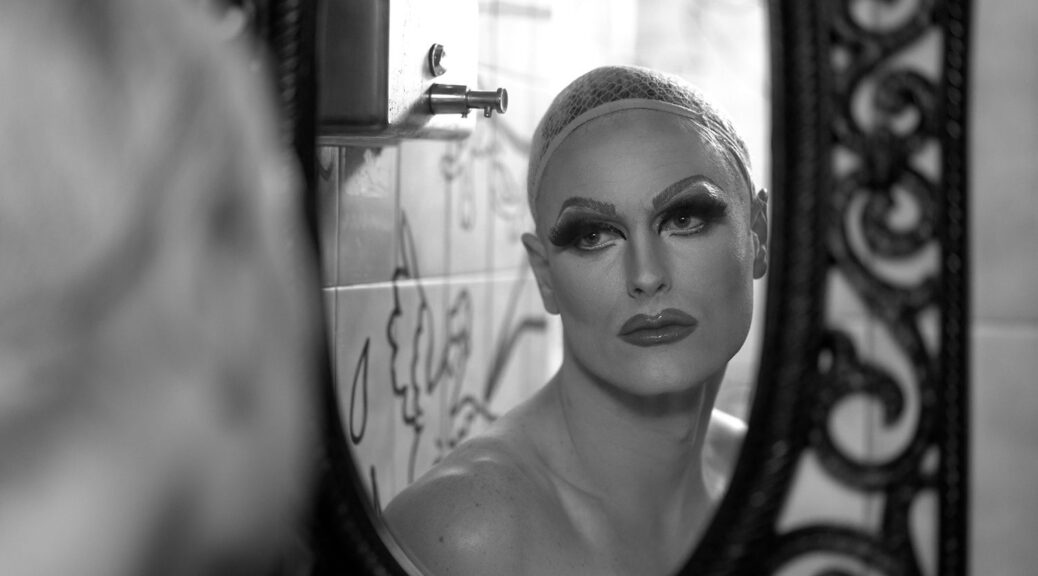
Judy (Todd Flaherty) and his partner Chrissy (Wyatt Fenner) are co-stars of an underwhelming New York drag act. Then, Chrissy up and quits and moves to the hinterlands of Philadelphia to make a go of it with his on-again-off-again long-distance boyfriend Shawn, leaving behind the remains of a humdrum double act.

Judy, still ambitious, but now 30 and feeling out of step with the young, struggles to choreograph the next act in their life.

Judy is obsessed with nostalgia and the vintage glamor of old Hollywood, so it’s fitting that the film itself is beautifully shot in black and white and scored in a mix of old standards and jazz. The dialogue often harkens back to the fast-talking banter of old screwball comedies, updated with modern slang, a lot more cursing, and the occasional references to douching.

Written, directed, edited, produced by AND starting Flaherty, there’s a real emotional depth to this one. Flaherty and Fenner manage to convey the complex layers of a long-term and somewhat complicated friendship.

Avoiding the heteronormative tropes of typical romantic movies, this one feels like part rom-com, part coming-of age while offering a novel take on a love story.

Glorious Madness

I’m an Electric Lampshade

by Christie Robb

Oh man, what can I say about this one? That it’s a celebration of the confidence of mediocre White men? That it’s an inspiring hero’s journey toward self-love and acceptance? It’s kinda both. And a bunch of other stuff.

It’s like a mix of The Office, Spinal TapAlice in Wonderland, and RuPaul’s Drag Race.

And the music videos. My God, the music videos.

I’m an Electric Lampshade follows Doug (Doug McCorkle), a 60-year-old corporate accountant, as he retires from office life to pursue his dream of becoming a concert performer. Director/writer John Clayton Doyle mines this material for all that it is worth—finding the humor, the heart, the beauty, and the weirdness in his cast and locations (the States, Mexico, and the Philippines).

The movie is based on the true story of Doug and is, at least in part, a documentary. But it also incorporates many fictional elements that give it a dreamy, hallucinogenic quality that at times verges on the cartoonish. This isn’t a “conventionally” good movie. It has the makings of a cult classic and is definitely a weird and wonderful little gem.

Dark Academia

The Tutor

by Christie Robb

An academic coach to the children of the one percent, Ethan (Garrett Hedlund, Tulsa King), agrees to take a job that’s too good to be true.

A $2,500 a day under-the-table paycheck and housing on premises lures him into the life of Jackson (Noah Schnapp, Stranger Things), a highly-strung 17-year-old with boundary issues and a murky family life. But, Ethan has a baby on the way and the promise of extra cash helps him to tamp down his misgivings.

All is not as it seems, however. As Ethan spends more time with his client and the weird inhabitants of the mansion, it becomes clear that someone’s life is in danger.

Jordan Ross’s (Thumper) thriller doesn’t exactly tread new ground, but it is a solid entry in the genre. The movie has a dark academia aesthetic with a score that plays like classical music’s greatest hits.

Writer Ryan King’s story is a bit sketchy at the beginning. Some of the characters could have been developed more in the earlier scenes. Ethan and Jackson’s relationship, in particular, could have profited from a smidgen more screen time together before things start to take a turn.

But the final acts are rewarding enough to watch and there are plenty of red herrings scattered throughout to make guessing at the ending enjoyable. Hedlund becomes wonderfully unhinged as the film goes on and he plays off of  Schnapp’s creepy kid-in-a-turtleneck pretty well.

Overall, the film could have used more character development, but it nails the vibe.

On the Ropes

Punch

by Christie Robb

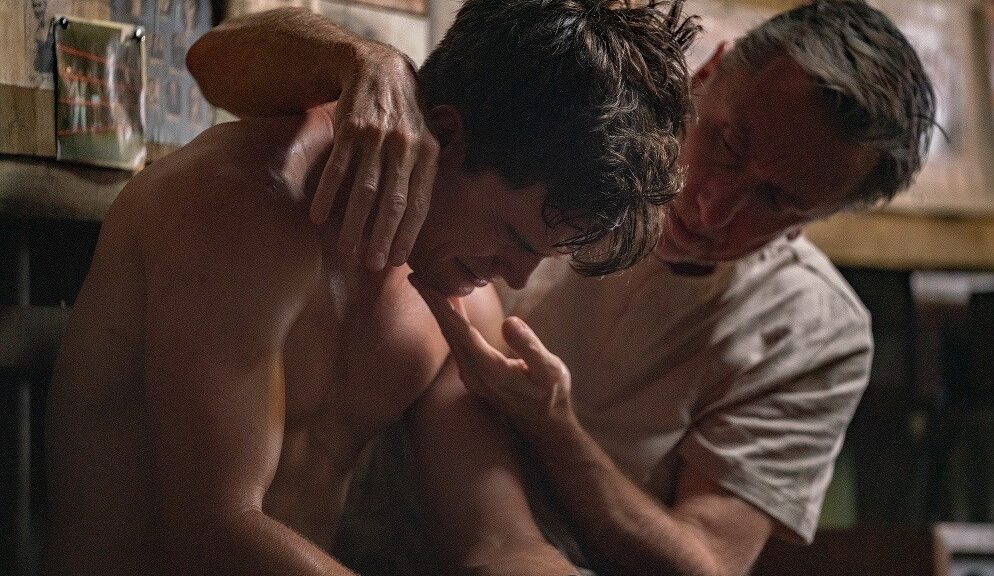
If Tim Roth is attached to a project, I’m intrigued. In Punch, he’s playing Stan, the alcoholic father of 17-year old up-and-coming boxer Jim (Jordan Oosterhof). Stan’s been training Jim since elementary school. It’s a familiar story—small town kid hoping to get out by nurturing his athletic talent. 

In this case, the small town is located in picturesque New Zealand and what the town has going for it in terms of rolling grassland and beaches is more than ruined by the small-minded racism and rampant homophobia of its residents. 

One day, while blowing off his training to pursue his true passion of shooting footage for music videos, young Jim is stung by a jellyfish and is rescued by Whetu (a resplendent Conan Hayes). Whetu is both Maori in what appears to be a majority White town and openly gay.

Jim will have to navigate his growing feelings for Whetu, the pressure of his dad’s dreams for his future, and the demands of all the various folks around town who want to define the man he will become.

The first feature written and directed by Welby Ings, Punch‘s story and timeline feel a bit uneven. Most of the film has a meandering, dreamy pace that is an appropriate touch for the organic way the boys’ relationship develops.  But, this is set in contrast to the ticking clock established at the beginning of the film with an upcoming crucial boxing match and, later on, by Stan’s growing ill health.

Some of the character development is uneven as well, and sadly Roth is a let down here as Stan veers dramatically from a tyrannical figure to an empathetic shoulder for Jim to cry on without earning that moment. Similarly, the ending seems abrupt and also, perhaps, not quite earned. 

Matt Henley’s cinematography, though,  is atmospheric and gorgeous and elevates the film, especially in the scenes  Whetu and Jim spend together. They are a delight to watch.