Butts did not fill seats when Tom Hardy and James Gandolfini’s small time mobster flick The Drop screened theatrically, which is a shame. But the film releases today for home consumption, so eat up, people! The two play cousins running a bar used to launder Chechan mob money, with Hardy adding layers and layers to a fascinating, maybe simple bartender. Shady characters, double crosses, symbolism and meager redemption keep your attention, plus there’s an incredibly cute dog. It’s worth a look.
The Drop writer Dennis Lehane has penned a number of Boston-based crime dramas, including Shutter Island and Mystic River, but the best of the bunch is Gone Baby Gone. The film that shocked us all with the knowledge that Ben Affleck is a genuinely talented director follows two private investigators working a missing kid case. Morally complicated, brilliantly filmed and boasting a career-best turn from Amy Ryan, this is a surprisingly great crime drama.
David Fincher makes a lot of good films, but in his best films, he seems to be having wicked fun. Such is the case with Gone Girl.
Don’t let the trailers fool you. This is not a dour whodunit tragedy. It’s a brightly crafted melodrama that embraces its pulpy center as lovingly as its razor sharp edges. Infused with acerbic wit and delivered with stellar performances, Gone Girl is an absorbing twist-and-turn-athon and a ton of fun.
Ben Affleck stars as Nick Dunne, suspect #1 in the disappearance of his beautiful wife Amy (Rosamund Pike), and he’s never been better. That’s not such a strong statement, because in general his performances are blandly likeable, but here he’s able to channel his inner douchiness and it works wonders. He’s the exact mix of endearing everyman and disappointing schmuck the film needs to work.
But Pike is the reason to watch this movie. It’s easy to see why every heavy hitter in Hollywood – including the film’s producer Reese Witherspoon – banged on Fincher’s door in search of this role. Amy Dunne is a hell of a character and Rosamund Pike gives a hell of a performance – fluid enough to meet the high, constantly changing demands.
Fincher’s casting throughout is slyly wonderful, with unexpected faces in exactly the right roles. Tyler Perry is a hoot as Nick’s high-powered ambulance chaser and Neil Patrick Harris is just as unconventionally cast and just as enjoyably spot-on.
Fincher takes aim at current American culture – tragedy groupies, local law enforcement, the media and Nancy Grace-style “news” programs, in particular – and scores bull’s eyes every time. It gives the film an air of self-satisfaction, sure, but the barbs are so very precise and relevant that any smugness can be forgiven.
Fincher’s craft is on full display here, dreamily weaving multiple points of view and saturating the mystery with wit and tension. What feels stilted and flat in early scenes evolves into a series of “aha!” moments for viewers.
Gone Girl is not a heavy, thoughtful awards season drama. At its heart, it’s paperback trash, and in Fincher’s exceedingly capable hands, that’s all it needs to be to amount to a memorable, satisfying, constantly surprising movie.
From 1973 to 1998, Terrence Malick created a grand total of three films. He must be slamming down the energy drinks, because it just the last eight years, he’s finished three, with three more currently in post-production.
The latest release is To the Wonder, a sort of companion piece to the brilliant and beautiful The Tree of Life from 2011. This time, Malick’s mind is on the mysteries of love, both physical and spiritual.
Those who were perplexed by the abstract nature of The Tree of Life will be even more challenged by To The Wonder. Unlike Tree, it does not have a tangible narrative at its core, existing mainly as a series of exquisite montages undercut with whispers of philosophical dialogue.
Of course, writer/director Malick does have a philosophy degree from Harvard, so he’s in his element.
The film’s abstract centerpeice is the relationship of Neil (Ben Affleck) and Marina (Olga Kurylenko). They meet while Neil is traveling in Marina’s native Ukraine, eventually settling (along with her 10 year old daughter) in his home state of Oklahoma.
When things get rocky, she finds emotional comfort through Father Quintana (Javier Bardem), a priest who has begun to question his own faith. As Neil and Marina pull farther from each other, Neil reconnects with Jane (Rachel McAdams), a girlfriend from years past.
Malick is often elusive, and it would be easy to dismiss To the Wonder as a beautifully filmed commercial for a dating service, as lovers playfully chase after one another, romping in tall grass with adoration in their eyes.
Look deeper, and you’ll find a meditation on troubled souls struggling for spiritual fulfillment. Affleck is rarely held in the frame and barely heard, suggesting his character may not represent flesh and blood at all, but rather a faith-based spirit with which the other characters are striving to bond.
Much like the love Malick is exploring, his film requires a certain amount of surrender. Though not the wondrous success The Tree of Life was, To the Wonder is worthy of a white flag.
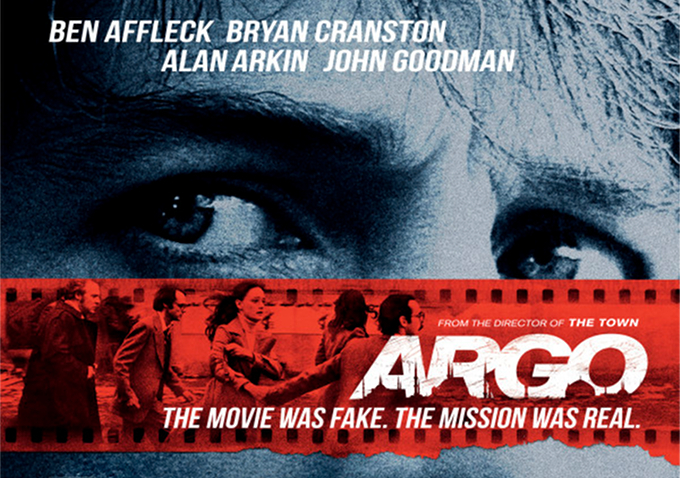
After racking up several big wins this awards season, Argo has emerged as the favorite to win Best Picture this Sunday at the Academy Awards. If you didn’t catch it in theaters, you can bring it home this week on DVD, and you’ll be glad you did. The true story of how a CIA operative got six hostages out of Iran in 1979 by posing as a film producer, Argo is simply fantastic moviemaking.
Working with a smart, taut script by Chris Terrio, director Ben Affleck expertly layers political intrigue with Hollywood deal-making. He also crafts an effective period piece, with a sharp eye for details that not only recreate an important slice of history, but also foreshadow more recent international events.
Though you already know how it ends, Affleck infuses Argo with tension and urgency. Regardless of his perplexing snub in Oscar’s Best Director category this year, Affleck, after just three directing efforts, has emerged as one of the best in the business.
Honestly, he showed the skill right from his directing debut in Gone Baby Gone…
Four-year-old Amanda McCready has gone missing in one of Boston’s rougher neighborhoods. Not the neighborhood of Will Hunting and his buddies, because this is not Ben Affleck’s Oscar winning turn as screenwriter. This film is Gone Baby Gone, Affleck’s first, hauntingly successful attempt at directing a feature film.
The director’s kid brother Casey, in fine form, plays a baby-faced PI working his neighborhood connections to find the girl as the mystery plays out among Boston’s nickel-and-dime drug dealers, mules, perverts and ex-cons.
Gone Baby Gone is a complex work examining place as an existential determiner, using setting as character, and plumbing the validity of conscience, all the while developing a disturbingly absorbing mystery. And though the mystery itself tailspins into something less than the story deserves, the final moments of the film remind the audience again of the craftsmanship that went into creating a film you may have missed back in 2007, but you need to see now.