Tag Archives: Australian horror

Halloween Countdown, Day 13

Wolf Creek (2005)

Some of the best scares in film have come as the reaction to urbanites’ fear of losing the tentative grasp on our own link in the food chain once we find ourselves in the middle of nowhere. No one in recent memory has applied this ideology to horror cinema as effectively as writer/director Greg McLean with his Outback opus Wolf Creek. It’s as if McLean looked at American filmmakers’ preoccupation with backwoods thrillers and scoffed, in his best Mick Dundee, “That’s not the middle of nowhere. This is the middle of nowhere.”

A quick glimpse at a map of Australia points out that nearly every city with a population higher than that of an Ohio State University dorm is along the coastline. McLean explores the isolated beauty of this vast, empty middle with spectacularly creepy results.

Using only digital cameras to enhance an ultra-naturalistic style, McLean’s happy backpackers find themselves immobile outside Wolf Creek National Park when their car stops running. As luck would have it, friendly bushman Mick Taylor (John Jarratt) drives up offering a tow back to his camp, where he promises to fix the vehicle.

If this sounds predictable and obvious to you, rest assured that McLean has plans to burst every cliché in the genre, and he succeeds on almost every level.

His first triumph is in the acting. Jarratt’s killer is an amiable sadist who is so real it’s jarring. You find yourself hoping he’s an actor. His performance singlehandedly shames the great Tobe Hooper and Wes Craven, whose backwoods horror films relied so completely on caricatures for villains.

A horror film this realistic is not only hard to watch, but a bit hard to justify. What makes an audience interested in observing human suffering so meticulously recreated? This is where, like a true artist, McLean finally succeeds. What is as unsettling as the film itself is that its content is somehow satisfying.
 

Halloween Countdown, Day 8

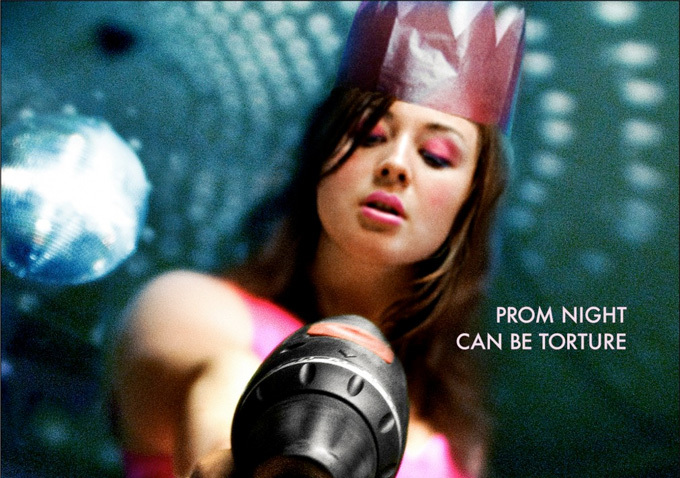
The Loved Ones (2009)

Psycho may have asked us to look at the weird relationships possible with mothers and sons, but fathers and daughters can develop dangerously close bonds, as well. For proof, just gander at this Aussie freakshow.

Writer/director/Tasmanian Sean Byrne upends high school clichés and deftly maneuvers between angsty, gritty drama and neon-colored, glittery carnage in a story that borrows from other horror flicks but absolutely tells its own tale.

Brent (Xavier Samuel) is dealing with guilt and tragedy in his own way, and his girlfriend Holly tries to be patient with him. Oblivious to all this, Lola (a gloriously wrong-minded Robin McLeavy) asks Brent to the school dance. He politely declines, which proves to be probably a poor decision.

Byrne quietly crafts an atmosphere of loss and depression in and around the school without painting the troubles cleanly. This slow reveal pulls the tale together and elevates it above a simple work of outrageous violence.

Inside Lola’s house, the mood is decidedly different. Here, we’re privy to the weirdest, darkest image of a spoiled princess and her daddy. The daddy/daughter bonding over power tool related tasks is – well – I’m not sure touching is the right word for it.

Byrne’s framing and use of color – especially pink – is truly inspired. His script is endlessly, horrifyingly quotable and his cast manages  to balance gritty realism and absolute lunacy with aplomb.

The Loved Ones is a cleverly written, unique piece of filmmaking that benefits from McLeavy’s inspired performance as much as it does its filmmaker’s sly handling of subject matter. It’s a wild, violent, depraved to spend 84 minutes. You should do so now.

The Snowtown Murders

The Snowtown Murders (2011)

Very quietly, Australia is putting out some of the most troublingly honest films on earth, The Snowtown Murders among them.

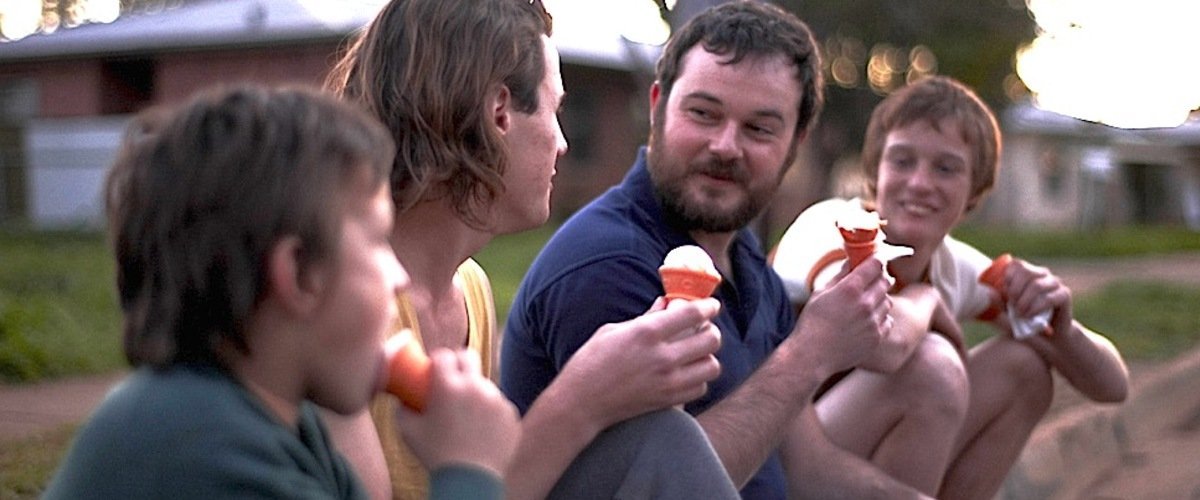
First time filmmaker Justin Kurzel’s movie bears more than a passing resemblance to 2010 Aussie import Animal Kingdom. Both boast unreasonably realistic performances focused on Australia’s seedier side; both examine one family’s functional disregard for the law; both hinge on the relationship between a charismatic psychopath and a quiet, wayward teen.

But Kurzel’s film, unfortunately, mines a true story.

John Bunting tortured and killed eleven people during his spree in South Australia in the Nineties. We only watch it happen once on film, but that’s more than enough.

The director seems less interested in the lurid details of Bunting’s brutal violence than he is in the complicated and alarming nature of complicity. Ironically, this less-is-more approach may be why the movie leaves you so shaken.

An unflinching examination of a predator swimming among prey, Snowtown succeeds where many true crime films fail because of its understatement, its casual observational style, and its unsettling authenticity. More than anything, though, the film excels due to one astounding performance.

Daniel Henshall cuts an unimpressive figure on screen – a round-faced, smiling schlub. But he brings Bunting an amiability and confrontational fearlessness that provides insight into what draws people to a sadistic madman.

There’s not a false note in his chilling turn, nor in the atmosphere Kurzel creates of a population aching for a man – any adult male to care for them, protect them and tell them what to do.

Once he has the trust of his neighbors in this low-income suburb, Bunting picks and chooses: who dies, who helps, who lives another day. What begins as exceedingly brutal neighborhood vigilantism turns quickly to a sort of thinning of the herd, and eventually to simple, unfathomably horrific entertainment.

The Snowtown Murders is a slow boil, and painfully tense. It’s hard to watch and harder to believe, but as a film, it offers a powerful image of everyday evil that will be hard to shake.

https://www.youtube.com/watch?v=fvu_tBQgZyI