Wicker
by Hope Madden
Even if the Wicker trailer didn’t have you salivating over an Alexander Skarsgård shaped basket, this cast list should do it: Olivia Colman, Peter Dinklage, Elizabeth Debicki, Richard E. Grant, and, of course, under a lot of titular twigs, Skarsgård.
Writers/directors Alex Huston Fischer and Eleanor Wilson (Save Yourselves!) take full advantage of that cast to bring Ursula Wills’s short story “Wicker Husband” to silver screen life.
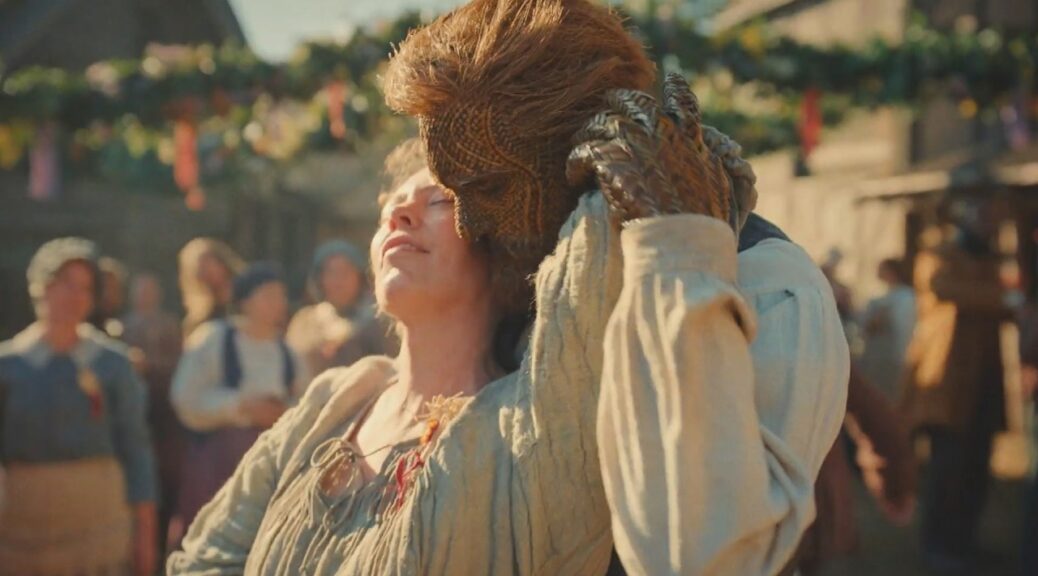
In some fairy tale village, the ostracized Fisherwoman (Colman, magnificent as always), tired of being both alone and the butt of village jokes, commissions a husband from Master Basket Weaver (Dinklage). He makes her a Skarsgård.
Fischer and Wilson’s script lengthens and complicates the source material with rich characters, cheeky situations, and frighteningly authentic peril. Told as a fable, Wicker picks the patriarchy scab, particularly its heroic efforts to undermine human connections and respect. This remarkable cast mines the clever script for laughs and pathos and a couple of real surprises, some of them with bite.
The Fisherwoman’s happiness, the genuine love and respect shared by the pair, stirs a frenzy of jealousy, lust, and insecurity in the village. Debicki’s conniving Tailor’s Wife (or Doctor’s Daughter, depending on who you ask) delivers subtle, controlled malice and ensemble players—Ella Bruccoleri and Ben Ashenden, in particular—give the village real flavor.
Dinklage is a saucy delight and Skarsgård’s believable tenderness leaves you feeling very protective of Mr. Wicker. Though he delivers his lines as an innocent, the writing itself is so sharp and poetic and Skarsgård is so expressive despite the prosthetics, that Wicker easily becomes the most romantic film of 2026.
But of course, it’s Colman who owns the film. Able to glide from comedy to heart wrenching drama in the blink of an eye, she delivers a deeply human performance that ensures the winky concept never feels like a gimmick.
There is much depth and beauty, as well as recognizable human fault, beneath the witty concept. And if that doesn’t do it for you, this cast will have you swooning.



