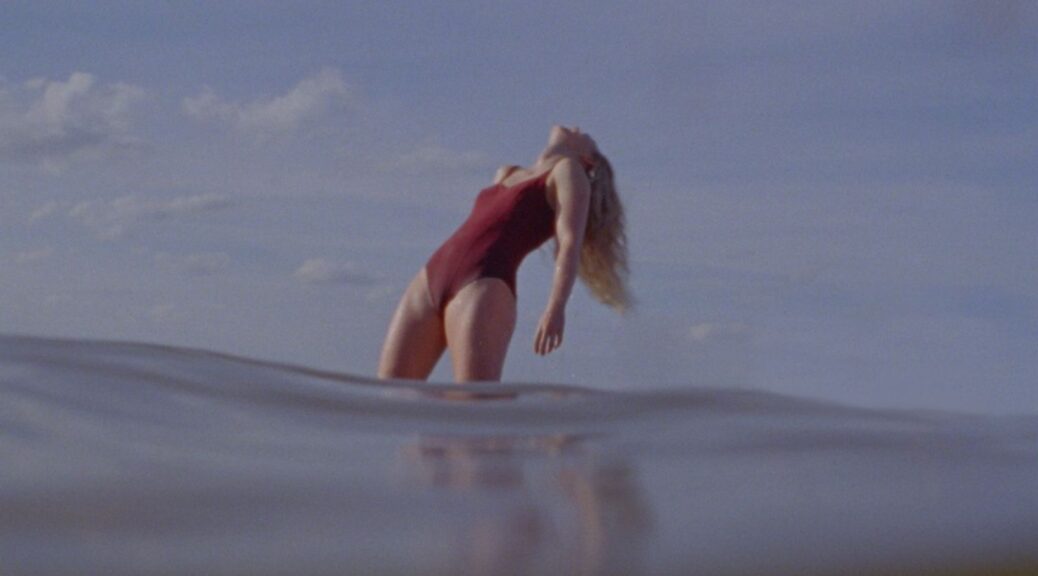
The Chronology of Water
by Hope Madden
Since becoming the reluctant icon of a franchise equally adored and loathed, Kristen Stewart has made a career out of fascinating decisions.
As an actor, Stewart’s veered from dark comedy (American Ultra) to awards contenders (Still Alice, The Clouds of Sils Maria) to genre (Lizzie, Underwater). She worked with some of the greatest indie filmmakers in the business (David Cronenberg’s Crimes of the Future, Olivier Assayas’s Personal Shopper, Kelly Reichardt’s Certain Women, Rose Glass’s Love Lies Bleeding) and finally shook that angsty adolescent image with an Oscar nomination for her stunning work in Pablo Larraín’s 2021 film, Spencer.
Since becoming an undisputed acting heavyweight, Stewart’s moved on to a new challenge: filmmaker. Her leap to the big screen feature format is an adaptation of Lidia Yuknavitch’s memoir, The Chronology of Water.
Imogen Poots plays Lidia. It’s the kind of a role that would simultaneously entice and worry an actor—survivor of abuse who numbs her trauma with self-destructive behavior. And for Stewart, Lidia’s is a tale told in close-up. The filmmaker has apparently never met a wide shot she liked. Her approach creates a wild intimacy, taking a story told in flashback and requiring us to see every second’s urgent immediacy.
It’s also a choice that disallows any kind of acting cheat. No matter, because Poots is no cheat. The actor has impressed in a wide range of characters but never has she brought such raw agony to the screen.
Stewart’s made a punishing film, and in Poots’s more ferocious moments, it’s difficult to watch. The actor externalizes pain as rage brilliantly, making her moments of vulnerability that much more heartbreaking.
A supporting cast goes often nameless, existing as fragments of Lidia’s reality. Still, Stewart draws wonderful performances from everyone. Thora Birch is understated excellence, a perfect counterpoint to Poots’s explosive passion. And Jim Belushi offers an affable, caring turn as Ken Kesey.
Together, cast and filmmaker find beauty in Yuknavitch’s tale, though at times The Chronolog of Water feels like it’s wallowing. Still, Stewart’s touch is lyrical, offsetting the brutality of the film’s content with images that are delicately wondrous, contradictorily peaceful, sometimes even lightly but discordantly funny.

