Tag Archives: Kit Harington

Monster-in-Law

The Dreadful

by Hope Madden

Have you ever seen Kaneto Shindô’s1964 masterpiece Onibaba? Dude, you should!

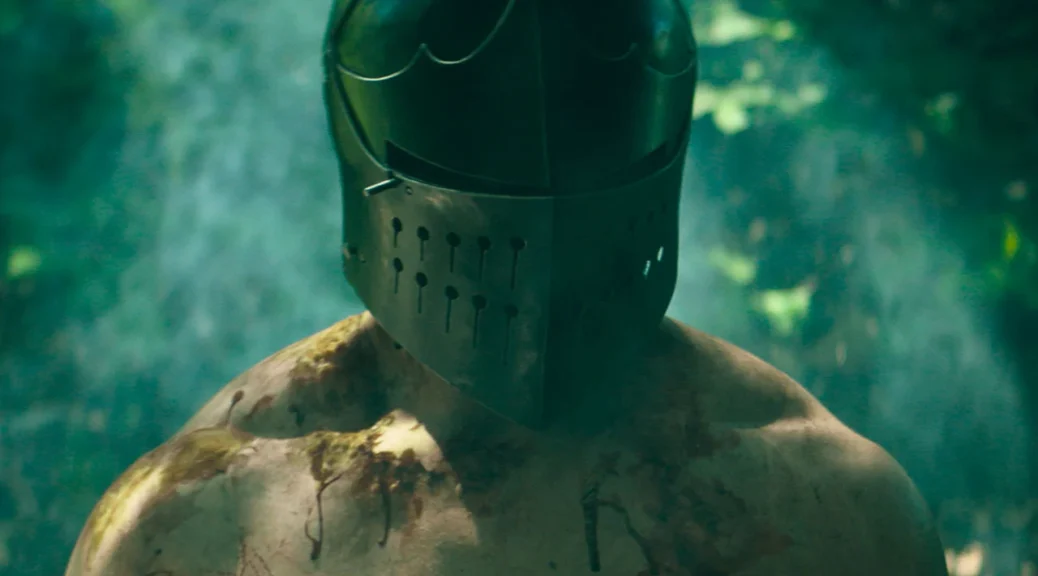
Writer/director Natasha Kermani’s latest film, The Dreadful, reteams Game of Thrones stars Sophie Turner and Kit Harington, alongside the flawless as ever Marcia Gay Harden, in a medieval retelling of the same Buddhist parable that inspired Shindô’s tale.

Turner is Anne, a pious young woman whose husband Seamus (Laurence O’Fuarain) has been called up to fight in 15th Century England. She lives on the outskirts of a tiny hamlet near the sea, in a hovel with her mother-in-law, Morwen (Harden).

Times are tough for the two women, and before too long, Morwen’s exploiting Anne’s naivete with ever darker schemes to earn money. But when Seamus’s friend returns home without him, Morwen sees a future without a son, without Anne, and with very little hope for survival.

Morwen tries to convince Anne that leaving her would be an unforgivable sin, damning Anne to hell. Out of the other side of her mouth, Morwen contends that the increasingly bloody criminal activity the women are involved in is, in fact, entirely forgivable.

Seamus’s friend Jago (Harington), the bearer of bad news, has other plans for Anne and they definitely do not include her mother-in-law. Because Kermani’s take on the parable sees Anne as the protagonist, the battle then is her own fight between piety, devotion and pity, and a second chance at love.

Unfortunately, Anne is an impossible character. There is no conceivable logic to a choice to stay with Morwen, so no real conflict of any kind. While she seems to feel pity and some fear for her mother-in-law, she doesn’t seem to harbor any guilt for her own complicity in the crimes, or worry over punishment of any sort, criminal or spiritual.

If Turner never manages to convey a clear character, Kermani seems equally mystified. The final act of the film is unearned and unsatisfying.

It might be too much to hope for some of the visual majesty and honest to God horror of Shindô’s film, but Kermani can’t find her own way through the parable well enough to leave an impression.

You should definitely watch Onibaba, though.

Mama Mia

Baby Ruby

by Rachel Willis

Becoming a new mother is a joy. The sleepless nights, constant crying, bleeding heavily from your vagina for weeks, having a new human you’ve been entrusted to keep alive in your house.

Did I say joy? I meant horror show.

Writer/director Bess Wohl has turned new parenthood, particularly motherhood, into a tense, sometimes funny, horror movie with Baby Ruby.

New parents Jo and Spencer (Noémie Merlant and Kit Harington) have a lot to be thankful for when they bring new daughter Ruby home. Jo is a very successful blogger who is eager to prove her mettle as a new mom.

However, problems start right away. It’s unclear, to both Jo and the audience, if certain horrific events are real or dreams. Jo begins losing time. Ruby never stops crying.

There’s a certain amount of confusion and plenty of red herrings peppered through the film. Though it seems obvious what plagues Jo, the filmmakers want you off-balance. Is husband, Spencer, supportive – or is that smile vaguely sinister? Is someone whispering to Ruby through the baby monitor? Is Ruby angry with Jo?

These are the things that rattle Jo’s confidence. On top of her struggles with Ruby, all the other new moms make it look easy. Jo is introduced to several new moms at a local café. They’re all perfectly coifed in summer dresses, and their babies must sleep long enough for them to do their makeup. In comparison, Jo feels even more like a failure.

There’s a certain subtle humor to the film, even as it works to rachet up the tension.

Because of the desire to keep the audience guessing, there are a few moments when it feels like Wohl is trying too hard to scare you. Some of the horror works well, some segments are too heavy-handed. There is a dog and a dog-related low blow.

No offense to the parents of the babies playing Ruby, but they’re perfectly cast as they’re both adorable and a little creepy. Part of you wants to reach out and pick her up, while the other part is a bit put off by that weird little face.

The film nails several aspects of what makes being a new parent feel like a nightmare. It’s not surprising that many parents look back at those early days with hindsight and laugh. Otherwise, we might all feel like we’ve lived through a horror movie.

Volcano Dead Ahead!


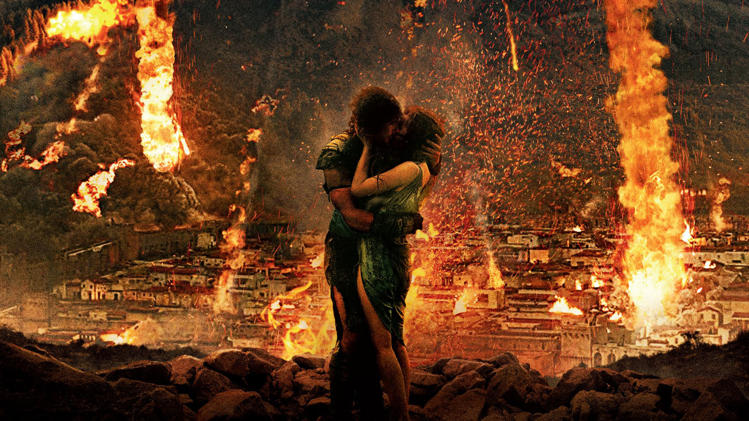
POMPEII


by George Wolf


Two doomed lovers kept apart by the strict class system of their era, fighting to be together as disaster looms. Plus there’s a scene with handcuffs and a haunting love theme at the end.

This remake of Titanic is called Pompeii, with a CGI Mt. Vesuvius showing tremendous range in the role of the iceberg.

The smoldering Milo (Kit Harington) is a gladiator/slave who catches the eye of Cassia (Emily Browning) , the daughter of a wealthy Pompeii businessman. Trouble is, she is unwillingly betrothed to the menacing Corvus, a visiting senator from Rome (Keifer Sutherland, unapologetically hammy).

As Milo and the other gladiators begin combat in the crowded arena, Vesuvius uncorks in very angry fashion, leaving an entire city scrambling for a seat on one of the boats to safety..seriously.

There’s just no way to watch this film without thinking of Titanic, except in the moments when a Sutherland is standing before a crowd to “open the games” and then you’re thinking of The Hunger Games and wouldn’t you rather be watching that?

Pompeii offers very little substance. Harington (staying in his Games of Thrones comfort zone) and Browning (Sucker Punch, Sleeping Beauty) fail to generate any chemistry or emotion, while the screenplay relies on empty cliches such as, “Welcome to your new home, savages!”

Director Paul W.S. Anderson (Resident Evil series, Event Horizon) is a bit lost in the quieter scenes, as if he’s just impatient, and hankerin’ to get back to the action. The abundance of shirtless hunks, along with Anderson’s knack for keeping M’lady cleavage in the frame whenever possible rank as weak attempts to keep attention from waning.

He’s much more at home creating a spectacle, and once the volcano erupts and madness ensues, Anderson does manage a few scenes that are visually impressive. So there’s that.

Still, Pompeii continues to ignore the most pressing issue.

Wasn’t there enough room on that piece of shipwreck for both Jack and Rose?


Verdict-2-0-Stars