Tag Archives: Ken Watanabe

A House Divided

Kokuho

by Matt Weiner

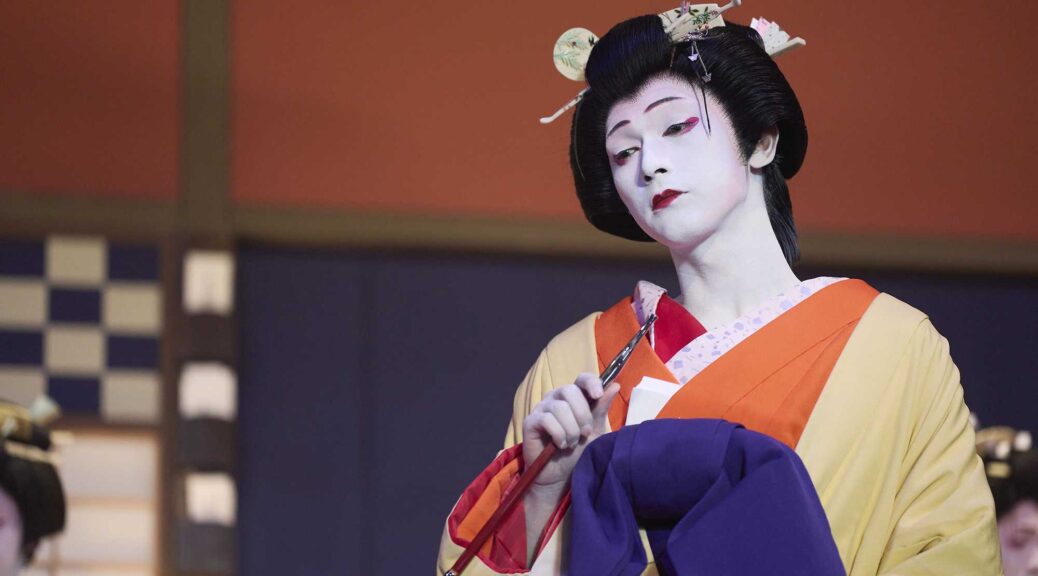
A sprawling epic about the orphaned son of a yakuza boss and his single-minded dedication to becoming the greatest kabuki actor of his era is now Japan’s highest grossing live-action movie. After three hours of near total immersion in the kabuki world, it’s easy to see why.

Sang-il Lee’s adaptation of Shuichi Yoshida’s novel Kokuho kicks off with a gripping gangster showdown that leaves Kikuo (Ryo Yoshizawa) without a family or direction in life. An impromptu performance on that fateful night provides a lifeline to a different path when his innate acting talent is recognized by the revered kabuki actor Hanai Hanjiro II (Ken Watanabe).

Hanjiro offers the boy a home—along with a rigorous, even physically abusive apprenticeship—much to the chagrin of Hanjiro’s son, Shunsuke (Ryusei Yokohama). Where Kikuo has the otherworldly talent and dedication of an outsider, Shunsuke is cocky and lazy, his status protected by the conservative traditions of kabuki and family bloodlines.

When Kikuo’s fortunes rise as Hanjiro’s favorite heir, a confrontation with Shunsuke seems inevitable. And so it is, but in ways that end up being far more complex, moving and unexpected than the pair’s rivalry first suggests. The story (adapted by Satoko Okudera) has the length and breathing room to pack in its fair share of rises and falls, but a deftness is always there to defuse the melodrama in favor of a slow burn that the rivals carry with them across decades.

Kokuho is after a more spiritual catharsis, made all the more potent with the demanding strictures of kabuki that fill almost all the time spent with the stage actors. Lee provides only glimpses of a rapidly modernizing country beyond the walls of the stage. And yet the weight of these changes is felt all around, as patrons come and go, living legends die and families grapple with what this artistic pursuit means and whether or not it’s worth it.

Watanabe is born to his role, with an uncanny ability to summon warmth, fear and regret with the briefest of expressions. His sons, both chosen and adopted, are locked into a replay of the sins of the father, and Yoshizawa and Yokohama play off each other to heartbreaking effect.

Kokuho devotes extensive time to the kabuki performances themselves, not just the rehearsals. The art direction from Yohei Taneda is a stunning highlight of the film, and goes a long way toward explaining even to an audience unfamiliar with kabuki why Kikuo believes the sacrifice to be worth it in the name of art. And that is the question being asked, by Kikuo and those whose lives he alters for better and worse. What if we’ve misunderstood the Faustian bargain all these years? Maybe the devil can have our best interests at heart too, if it means achieving the sublime for even a moment.

Pika Pika

Pokémon Detective Pikachu

by Hope Madden

When my son was small and we played pretend, I made believe I was Snorlax so I could lay on the couch and do nothing. Does that make me a bad parent? Well, a lazy one, anyway, but the point is, I logged countless hours on that couch watching all manner of pocket monster.

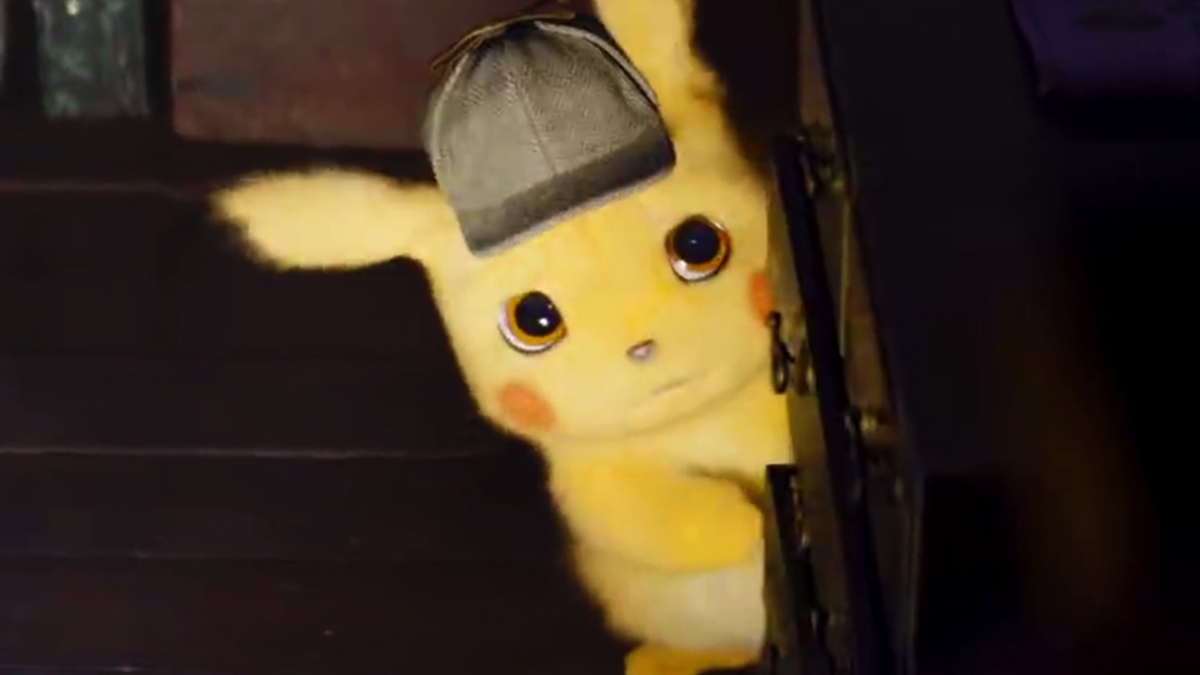
I was dragged unwillingly into the world of Pokémon. No, I am not exactly the target audience for Pokémon Detective Pikachu (read: I am in no way the target audience for this movie). But, when Pikachu (voiced by Ryan Reynolds at his Ryan Reynoldsiest) says, “Mr. Mime is the worst,” I know enough to understand that shit’s the truth.

So, there is a plot. It involves loads upon loads of daddy issues, primarily (but not exclusively) those that hang over Tim Goodman (Justice Smith). In looking for his father he falls into a mystery involving a Pikachu who is not only adorable (he admits as much himself at least twice), but is also connected to Tim. Tim can understand him.

For the uninitiated, Pokémon just repeat their own names over and over and over again in a manner that makes you want to take your own life, and yet you tolerate it because you really do love your son.

But not this Pikachu! Sure, others can only hear his cute “pika pika,” but Tim can hear actual words, and those words are telling Tim, in a humorously snarky way, that he needs to unravel this mystery and work on his interpersonal skills.

Bill Nighy shows up as an entrepreneur/philanthropist/genius. Meanwhile, Ken Watanabe languishes with bafflingly limited screen time as a detective who is, let’s be honest, not very good at his job.

Kathryn Newton is a plucky would-be investigative journalist, her trusty Psyduck in tow. (Note: Psyduck is also the worst.)

Part of the entertainment value here is the genuine fondness for the content director Rob Letterman and his army of screenwriters bring to the table. Good looking CGI, committed performances and a solidly comedic but not too ironic tone also help.

The film doesn’t shoot over the heads of the youngest fans, does embed scads of references and homages for those there for nostalgia, and throws around enough kid-friendly Reynoldsisms to entertain parents who mercifully missed out on Pokémon Gen 1 and 2.

Is it a colossal waste of Ken Watanabe’s talent? Oh God, yes. Terrible.

But honestly, otherwise I don’t have a lot of complaints.

Drowning in Sap

The Sea of Trees

by Hope Madden

In 2002, filmmaker Gus Van Sant released one of his more polarizing and thoughtful films. In Gerry, two guys named Gerry (Casey Affleck and Matt Damon) hike ill-prepared into the desert to find themselves fighting for survival.

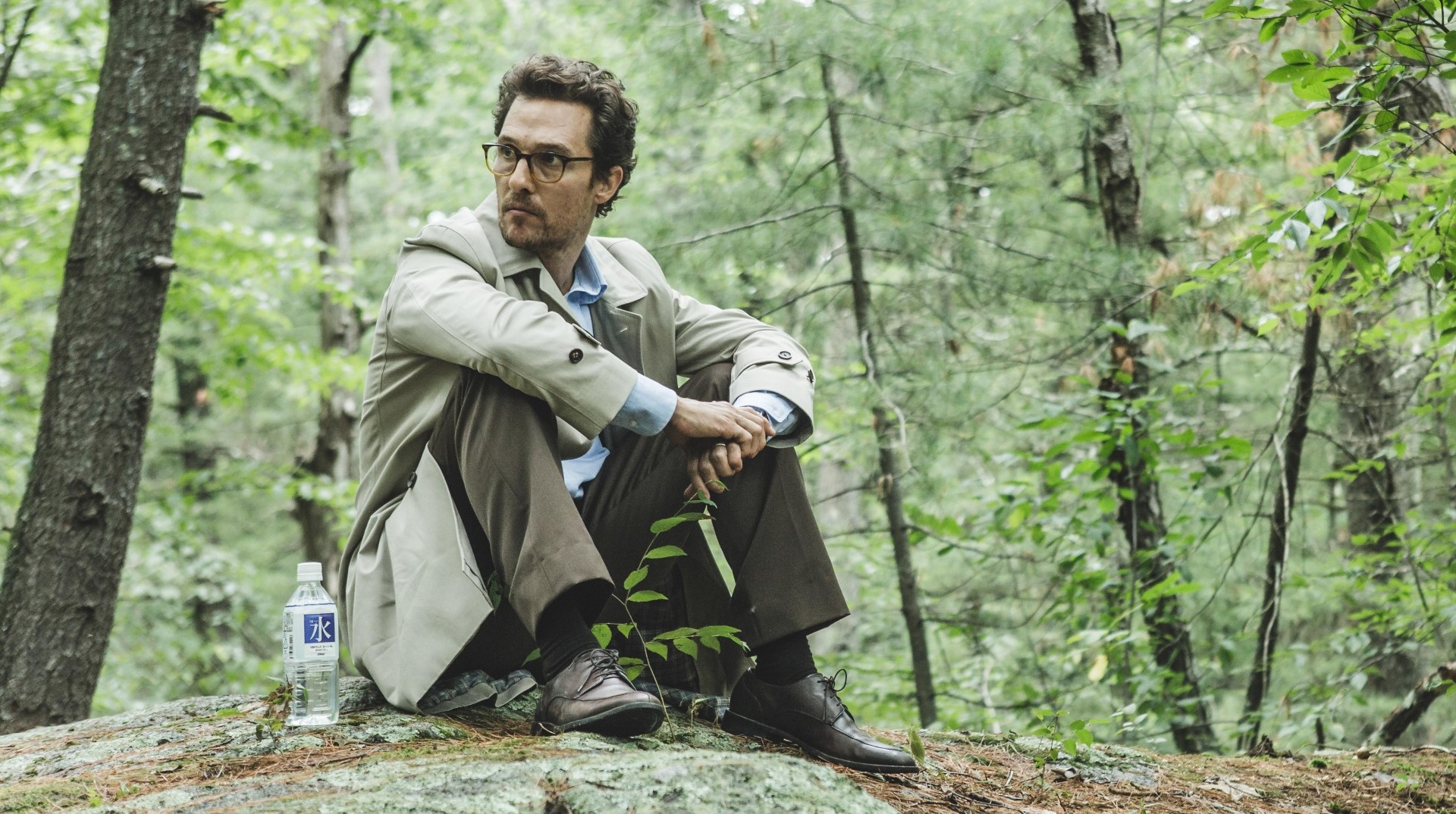
A quick glance at The Sea of Trees suggests that perhaps Van Sant returned to these themes. Matthew McConaughey loses himself in a Japanese forest, befriends another wayward traveler (Ken Watanbe), their treacherous journey offering life lessons aplenty.

Because horror writer Chris Sparling penned The Sea of Trees, I was kind of hoping the film would be a cross between Gerry and The Blair Witch Project.

It is not.

No, it’s an overtly sentimental, culturally patronizing waste of one Oscar winner and two Oscar nominees.

We wander Aokigahara, Japan’s “suicide forest,” with McConaughey’s Arthur Brennan. Brennan’s a scientist, and you know that that means. That’s right – atheist.

Van Sant falls back on the crutch of the flashback to help us understand what this handsome scientist is doing in the suicide forest. It’s in these segments that we meet Naomi Watts’s Joan Brennan and begin to unravel the mystery behind Arthur’s trip into the woods.

Watts suffers most from Sparling’s hackneyed dialog. Her few scenes need to be pivotal and weighty – we know this because of her utterly unrealistic speeches as well as Mason Bates’s condescending score.

Van Sant is no stranger to schmaltz. As great a filmmaker as he has been, sentimentality tripped him up in Promised Land, Finding Forrester and others. His career is peppered with other writers’ projects, many of them with a point to make, and those statement films tend to be Van Sant’s weakest.

Perhaps it’s because, rather than finding his own language for the story via camerawork or score, he relies on an existing style. The Sea of Trees certainly suffers from a heavy handed score. Van Sant also misses opportunities to create a sense of foreboding, claustrophobia, isolation or even redemption with the forest itself, Kasper Tuxen’s photography instead offering irrelevant yet lovely images of windblown treetops.

Trees can definitely be sappy.

Verdict-2-5-Stars