Tag Archives: Catherine Walker

Fighting Nazis Since 2020

The Last Temptation of Becky

by Hope Madden

One of the best things about The Last Temptation of Becky is that it will introduce a lot of people to a very fun action/horror/comedy series.

Since 2020, Lulu Wilson has portrayed the angry—really, really angry—Becky. In the first episode, an unhinged 13-year-old lays waste to the skinheads who break into her family’s vacation rental. Three years later, a local group of white supremacists runs afoul of the violent teen. Indeed, so effective was Becky with the carnage that the CIA decided they had a spot for her.

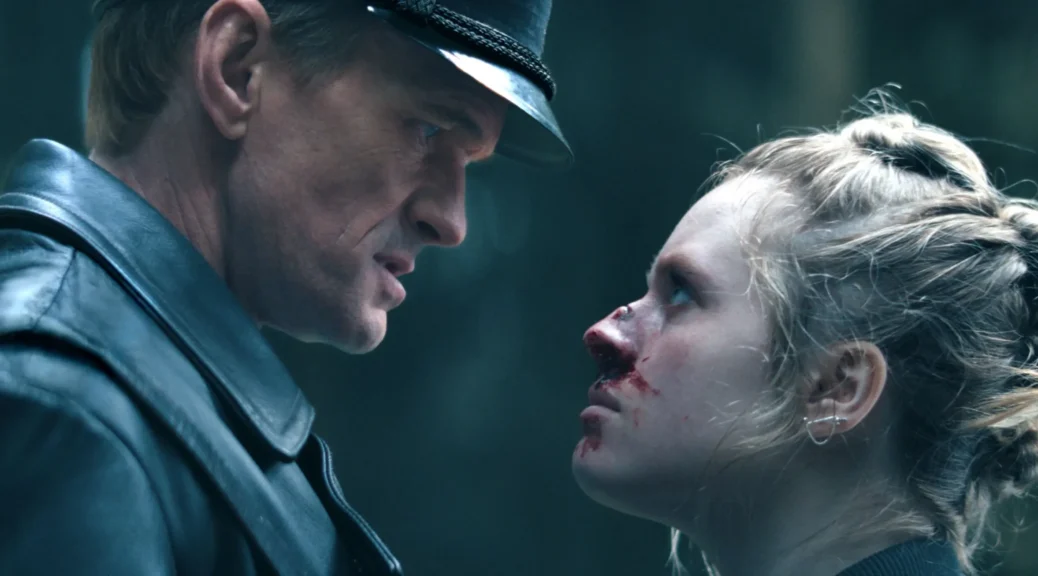
Which brings us to Episode 3. Becky, still weak at reining in her temper, is sent undercover into Poland to check out what’s going on at the Wolf’s Lair, an inn and museum that was once Hitler’s base of operations.

Jenn Wexler co-writes and directs the third installment with the same punk rock energy that made her 2018 feature The Ranger such fun. Wexler amplifies the chaotic violence and campy humor of the franchise with a throwback B-movie vibe that suits it.

Neil Patrick Harris is General Wilhelm Reuss, and he’s been waiting a long time for the key Kevin James tried to steal from Becky’s family back in 2020. What does it do? I’m not spilling the kraut, but it’s an over-the-top riot that leads to several triumphs of horror comedy.

Harris delivers the contemptible arrogance you’ve come to expect, and Catherine Walker is an icy delight as his wife, Helga. The Reuss children (Noah Leggott and Aoife Hughes) give our young heroine more age-appropriate foes, and Wexler takes advantage with some of the film’s funniest and bloodiest fight choreography.

The Last Temptation of Becky delivers laughs aplenty but the film is unapologetically violent as well. It doesn’t seek to teach or tame Becky, just to point her in the direction where doing harm will do the most good.

Wexler and her game ensemble lean hard into everything the previous two efforts did so well: kill Nazis. It’s possible that nothing is more cathartic to watch on screen. The result is a wild, unpredictable, lawless pleasure.

See How High She Flies

The Curse of Audrey Earnshaw

by Hope Madden

Who’s the villain?

A vampire didn’t choose that destiny, nor the zombie, nor even the werewolf. All three are victims of fate.

The witch, however, comes to her dark powers by choice. And maybe – as Robert Eggers pointed out in his 2015 masterpiece The VVitch—that choice might even make some sense.

Since Eggers’s beguiling horror show, a number of filmmakers have joined him in his ruminations. Lukas Fiegelfeld’s mesmerizing 2017 debut Hagazussa and Luca Guadagnino’s 2018 feminist reprise of Suspiria represent the strongest among the resulting films.

Few if any will ever tell the tale so powerfully or so well as Eggers, but writer/director Thomas Robert Lee has a go with The Curse of Audrey Earnshaw. His film is interested in women’s agency, their oddness, what they owe, what they should and shouldn’t be deciding for themselves, and what they are willing to sacrifice.

It’s August of 1973, but it could just as easily be the 1950s or the 1880s. (So why 1973? It was a big year in women’s rights, after all.) A rugged woman, isolated from the nearby religious community, stands silhouetted against her barn, ax and woodpile.

She is Agatha Earnshaw (Catherine Walker), and she has a secret.

Things haven’t been right in the village since the eclipse 17 years back, but things have been especially troubling lately. Agatha has the only farm that’s producing, the only animals that haven’t taken sick.

Performances are wonderful in a film that looks rustic and spooky, creating a time out of time. Walker, who was so effective in the wonderful little Irish horror Dark Song, cuts an impressive figure of maternal ferocity. She’s orbited by consistently impressive turns, whether the sincere pastor (Sean McGinley), entitled patriarch (Tom Carey), distraught husband (Jared Abrahamson), or young woman finding her voice (Jessica Reynolds).

Each man, however sympathetic or compassionate, represents danger. Like a lot of horror films, The  Curse of Audrey Earnshaw is a coming-of-age cautionary tale: fear the power of womanhood. But Lee is careful to keep asking who, exactly, is the villain here?

The direction is too often obvious: a cough, a handkerchief, blood. At other times, cinematic choices betray the film’s low budget. The Curse of Audrey Earnshaw will never reach the ranks of classic, but it makes a lot of bold choices and leaves an impression.
