Category Archives: Shudder Premiere

Day for Night of the Living Dead

One Cut of the Dead

by Hope Madden

For about 37 minutes, you may feel like Shin’ichirô Ueda’s One Cut of the Dead delivers, cleverly enough, on a very familiar promise.

One Cut opens as a micro-budget zombie movie, which soon reveals itself to be a film within a film when real zombies show up on set. As the bullying egomaniac director continues filming, ecstatic over the authenticity, Ueda appears to deconstruct cinema.

And though that may sound intriguing on the surface, the truth is that what transpires after that 37 minute mark officially defines Ueda as an inventive, gleeful master of chaos and lover of the magic of nuts and bolts filmmaking.

To detail any additional plot points—as tempting as that is—would spoil the enjoyable lunacy One Cut has in store.

Suffice it to say, Ueda improves upon that opening act without really losing the themes he introduces. Everything that feels like a misstep blossoms into an inspired bit, all of it highlighting Ueda’s true love for what he’s doing.

Likable and silly, One Cut is brightly economical, embracing rather than hiding its shoestring – in fact, Ueda’s camera jubilantly closes in on shoestrings. His movie giddily exposes the neuroses, dangers, tribulations and mistakes—he really, deeply loves the mistakes—inherent in genre filmmaking. If nothing else, this movie is a mash note to artistic compromise.

The manic comedy proves as infectious as the zombiism on the screen, and much of the reason is the committed cast. Ueda allows each performer the opportunity to grow and discover, and every actor at one point or another takes full advantage of his or her moment to shine.

Harumi Shuhama particularly impresses as, well, let’s just say she’s the make up artist and self defense hobbyist. Yuzuki Akiyama delivers the most layered performance, but, playing the director, Takayuki Hamatsu steals every scene. He’s hilarious, adorable, compassionate, and incredibly easy to root for.

Like this movie.

Tale of Two Mothers

The Wrath

by Hope Madden

This week, Shudder premieres a Korean ghost story, and there is always reason to be optimistic about a Korean ghost story.

Young-sun Yoo’s The Wrath revisits Hyeok-su Lee’s somewhat obscure 1986 period thriller, Woman’s Wail. A young woman of humble birth is brought to the ancient home of a high ranking Korean official, ostensibly to marry his youngest son. In truth, she’s been brought here to trick a vengeful spirit.

What unspools is a historically set spectral tale of family dysfunction, classism, sexism, and women who hate other women—or, in a single label, the horrors of patriarchy. All of which has been done before, and better. (Please see Jee-woon Kim’s masterpiece A Tale of two Sisters. Seriously, please see it.) But The Wrath is a very pretty film that delivers a fairy tale quality and solid performances.

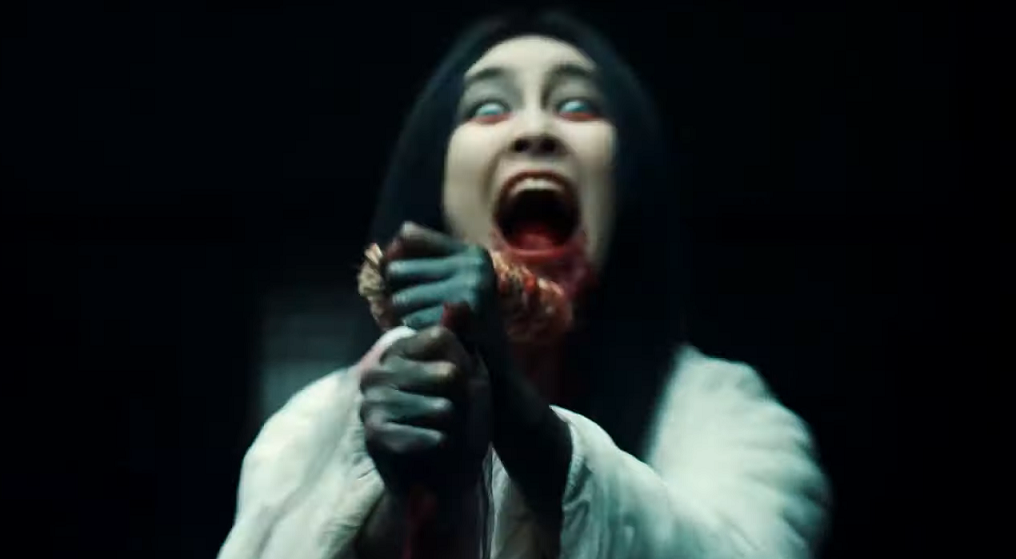
The Wrath is more of a spook show than Two Sisters, with lots of wraiths and jump scares, lots of blood spitting and black ooze spitting and blood spatter and arterial spray, plus gorgeous costumes and a well-designed and well-used set.

The film drops us into a story in progress. A young girl (Na-eun Son) traveling to the secluded property is intercepted by a well to do son returning home. His step-mother (Young Hee Seo, wonderful), who appears to be head of the household, offers a chilly reception to both travelers.

Soon the girl is pregnant, the son is dead, and there’s something suspicious out in the storage shed.

Yoo’s film works best when he doesn’t try to explain too much. Heavy-handed flashbacks to the events that led to the family’s curse feel perfunctory and uninspired, while the hinted at spookiness generates more atmosphere.

For a period film, Yoo contains the environment to create something both believable and economical, the image of a very pretty yet desolate trap.

Na-eun Son, whose role offers the most layers, particularly impresses, but the whole cast embraces these somewhat slightly written characters. Each performer draws on period appropriate attitudes and, more importantly, finds a way to generate chemistry with the others trapped in the same confined quarters.

If you’ve seen much from Korea’s deep cinematic closetful of wronged-women-turned-vengeful-spirit options, there are few real surprises to be found in The Wrath. It’s a capably made film that wastes little time, boasts strong performances and offers familiar but creepy fun.