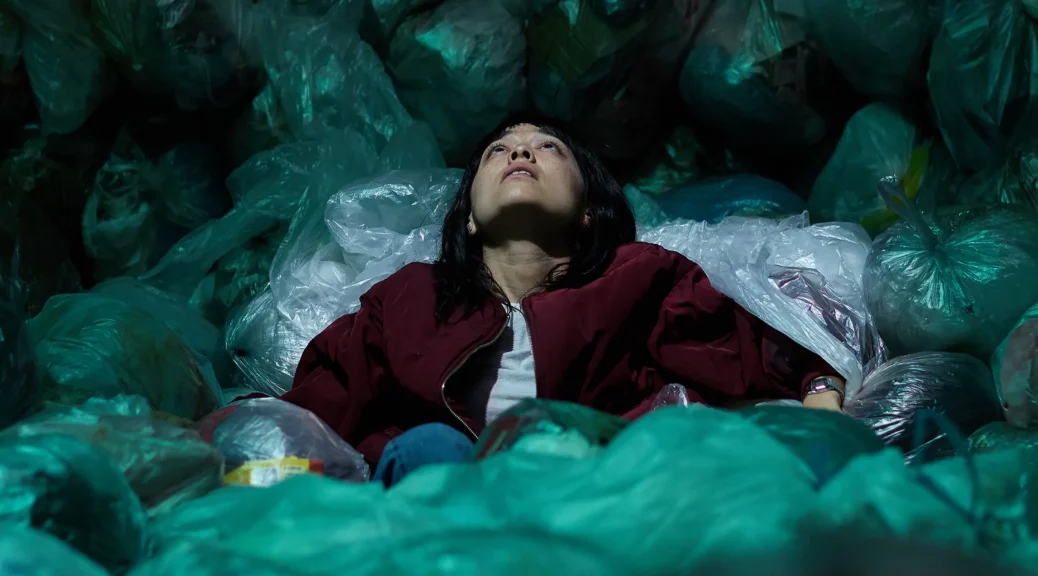
Saccharine
by Hope Madden
Body image, binge behavior, shame, and desire fuel Natalie Erika James’s (Relic) third feature, Saccharine. From its fascinating opening sequence, you’ll be glad if you don’t buy popcorn.
That opening, scored with sensual moaning, cuts between extreme close ups of various body parts of a lithe woman on an elliptical, and extreme close ups of binge eating, but in reverse. As if the eater is removing those sloppy snacks rather than inhaling them.
Hana (Midori Francis) is the eater. She’s also the person eyeing the woman on the elliptical, Alanya (Madeleine Madden), a trainer who invites Hana to join her 12-week diet and exercise program. Profoundly self-conscious but smitten, Hana agrees.
Then she runs into old high school classmate Melissa (Annie Shapero), unrecognizable thanks to weight loss brought about by a technically illegal supplement called grey. What Melissa doesn’t know but med student Hana figures out is that the supplement is human ash.
Hana takes it anyway, loses weight, but the side effects are hardly what she bargained for. In the Ozempic era, the idea that someone might swallow pills of human ash to lose weight without regard to consequences feels right.
There’s a fetishistic quality to many of the film’s sequences. These become the sticky residue holding together a ghost story, a tale of generational and cultural identity crisis, and some serious body horror. That’s an awful lot for James to pack into her 112-minute run time. Though she doesn’t resolve everything, it’s the surprises and loose ends that are most intriguing.
Francis impresses as the fractured main character, driven and yet unable to control her binging, however hard she tries. James expertly uses the sympathetic, believable central figure to wind viewers through startling sensual indulgences punctuated by family drama.
It would feel overpacked were it not for Francis’s grounded, compelling turn, supported nicely by the film’s small ensemble (Madden, Danielle Macdonald, Showko Showfukutel). Just when it looks like the family drama horror trope has won out, James surprises again, and the film leaves you stunned and wondering.
Objectification, internalized beautify standards, and the fetishistic nature of consumption drive Hana’s behavior and James’s film. Art over the post credits amplifies an aesthetic that James might have used to better effect throughout the movie. Still, Saccharine delivers something intimate and disturbing—too unsettling to be solved with Pepto Bismol.

