Kokuho
by Matt Weiner
A sprawling epic about the orphaned son of a yakuza boss and his single-minded dedication to becoming the greatest kabuki actor of his era is now Japan’s highest grossing live-action movie. After three hours of near total immersion in the kabuki world, it’s easy to see why.
Sang-il Lee’s adaptation of Shuichi Yoshida’s novel Kokuho kicks off with a gripping gangster showdown that leaves Kikuo (Ryo Yoshizawa) without a family or direction in life. An impromptu performance on that fateful night provides a lifeline to a different path when his innate acting talent is recognized by the revered kabuki actor Hanai Hanjiro II (Ken Watanabe).
Hanjiro offers the boy a home—along with a rigorous, even physically abusive apprenticeship—much to the chagrin of Hanjiro’s son, Shunsuke (Ryusei Yokohama). Where Kikuo has the otherworldly talent and dedication of an outsider, Shunsuke is cocky and lazy, his status protected by the conservative traditions of kabuki and family bloodlines.
When Kikuo’s fortunes rise as Hanjiro’s favorite heir, a confrontation with Shunsuke seems inevitable. And so it is, but in ways that end up being far more complex, moving and unexpected than the pair’s rivalry first suggests. The story (adapted by Satoko Okudera) has the length and breathing room to pack in its fair share of rises and falls, but a deftness is always there to defuse the melodrama in favor of a slow burn that the rivals carry with them across decades.
Kokuho is after a more spiritual catharsis, made all the more potent with the demanding strictures of kabuki that fill almost all the time spent with the stage actors. Lee provides only glimpses of a rapidly modernizing country beyond the walls of the stage. And yet the weight of these changes is felt all around, as patrons come and go, living legends die and families grapple with what this artistic pursuit means and whether or not it’s worth it.
Watanabe is born to his role, with an uncanny ability to summon warmth, fear and regret with the briefest of expressions. His sons, both chosen and adopted, are locked into a replay of the sins of the father, and Yoshizawa and Yokohama play off each other to heartbreaking effect.
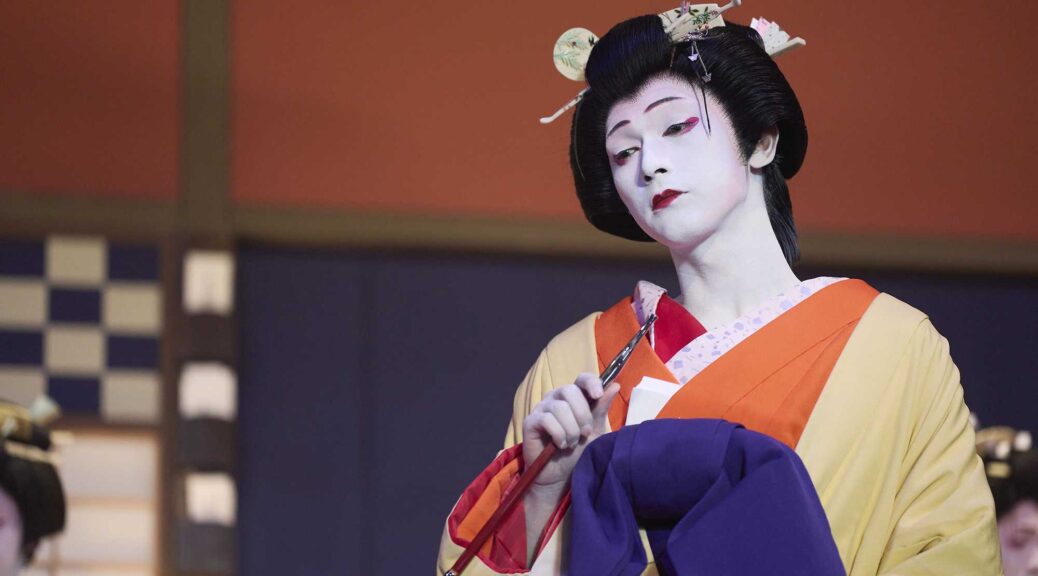
Kokuho devotes extensive time to the kabuki performances themselves, not just the rehearsals. The art direction from Yohei Taneda is a stunning highlight of the film, and goes a long way toward explaining even to an audience unfamiliar with kabuki why Kikuo believes the sacrifice to be worth it in the name of art. And that is the question being asked, by Kikuo and those whose lives he alters for better and worse. What if we’ve misunderstood the Faustian bargain all these years? Maybe the devil can have our best interests at heart too, if it means achieving the sublime for even a moment.

